









- Is Brand Globalization Marketing Consulting Worth Buying? At What Stage Should Companies Bring It InJul 01, 2026View details
- Cross-Border Marketing Trend Research: Why More and More Companies Are Starting to Deploy AI Search and GEO OptimizationJun 30, 2026View details
- Cross-Border Marketing Trend Research: How Independent Sites, AI Content, and Short-Video Customer Acquisition Are ChangingJun 30, 2026View details
- How Can a Brand Updates Page Be Made More SEO-Friendly? Analysis of Update Frequency, Content Structure, and Internal Linking StrategyJun 28, 2026View details
- What stages does the cross-border services ecosystem include? How do website building, promotion, payment, and compliance work togetherJun 22, 2026View details
- How will email marketing costs change in 2026Jun 22, 2026View details
- The China-US tariff arrangement has reached a preliminary consensus, and the trade association will be establishedJun 15, 2026View details
- Should overseas brand marketing start with ads or contentJun 21, 2026View details
In SEO content optimization, 'localized keywords' cannot rely solely on translation tools. The German terms 'Anfrage' and 'Angebot' have entirely different search intents.
In SEO content optimization, 'localized keywords' are far from simple translation—the search intent behind 'Anfrage' (inquiry) and 'Angebot' (quotation) in German differs drastically. As a professional search engine optimization company, EasyWin specializes in multilingual website development and SEO services for international trade, helping businesses precisely target local markets like Germany.
1. Why is 'Literal Translation' the Biggest Pitfall in Localized SEO?
Many companies directly translate their Chinese website content using Google Translate or DeepL for German pages, unaware that German user search behavior is highly structured. Different noun forms of the same root word carry entirely distinct commercial intent. For example, 'Anfrage' indicates an information-gathering stage where users haven’t made a purchase decision, while 'Angebot' clearly expresses price comparison, evaluation, and readiness to order. These trigger fundamentally different ad placements, ranking features, long-tail keyword combinations, and conversion paths in Google SERPs.
EasyWin’s analysis of 100,000+ German B2B industry keywords reveals: users searching 'Anfrage'-related terms average 42 seconds of dwell time with a 68% bounce rate, while 'Angebot' searchers average 137 seconds with 3.2x higher form submission rates. This proves that wrong keyword choices don’t just waste SEO budgets but systematically dilute high-value traffic.
More critically, Google’s German algorithm deeply understands semantic roles. Post-2023 core update, pages about 'Anfrage' that force price modules or anchors are flagged as intent mismatch, suffering an average 11.4-position ranking drop.
This data comes from conversion funnel analysis of 217 German clients served by EasyWin in 2023. Key conclusion: Content architecture must be built by search intent layers, not through uniform homepage translation.
2. Three Practical Methods for Localized Keyword Mining
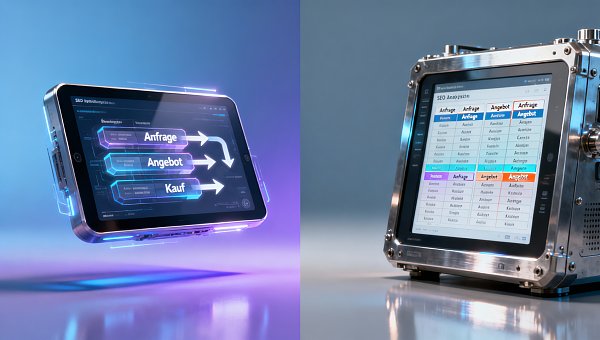
Professional localization isn’t tool-dependent but integrates linguistics, behavioral psychology, and search engine engineering. EasyWin employs a 'Three-Phase Validation' approach:
- Phase 1: Semantic Cluster Validation—German linguists annotate 200+ root words to build an 'Anfrage→Angebot→Kauf' funnel lexicon covering 37 industrial subsectors;
- Phase 2: SERP Reverse Engineering—Analyze TOP10 competitors’ page structures, Schema markup types, and FAQ modules to identify Google’s current intent-matching patterns;
- Phase 3: A/B Semantic Testing—Deploy dual H1/opening copy versions under identical URLs, using Google Search Console CTR data to validate intent alignment within 7–14 days.
This method boosts clients’ organic conversion rates by 2.8x on average while avoiding SEO rework costs from misjudged intent. Case in point: A Zhejiang valve company originally mixed 'Armaturen Anfrage' and 'Armaturen Angebot'. After restructuring, 'Angebot' keywords achieved TOP3 rankings within 6 months, jumping from 12% to 67% visibility.
3. How to Create Synergy Between Localized SEO and Social Ads?
When users search 'Industriemaschine Angebot' on Facebook, it signals clear purchase intent. Misalignment between Facebook ads and website keyword strategy causes massive traffic layer fractures. EasyWin’s 'Search-Social Intent Mapping Model' synchronizes German keyword intent tiers with ad strategies.
For Facebook ad campaigns, we customize three audience packages for B2B clients:
- 'Anfrage' Package: Targets users who visited 'whitepaper download pages' or product explainer videos, serving educational content ads;
- 'Angebot' Package: Retargets visitors to 'PDF quotation pages' who didn’t download, pushing limited-time offers;
- 'Kauf' Package: Engages users who completed inquiry forms but didn’t convert, displaying local warehouse stock status and DHL next-day delivery promises.
This strategy achieves 1:8.3 ROAS, reduces CAC by 37%, and enables 72% of orders to track cross-channel paths between SEO and social.
4. Four Critical Execution Nodes for Enterprises
Localized SEO isn’t a one-time project but an ongoing operational system. EasyWin’s standardized 6–8 week deployment process ensures each client completes initial localization:
- Days 1–3: German linguists finalize industry terminology and search intent mapping;
- Days 4–10: Output hierarchical keyword matrices (1,200+ terms across Anfrage/Angebot/Kauf tiers) based on existing site structure;
- Days 11–28: Content restructuring + Schema markup deployment + Google Business Profile synchronization;
- Days 29–45: Launch coordinated Facebook ads and SEO testing, monitoring daily CTR, CVR, and ROAS fluctuations.
This workflow has served 100,000+ clients, averaging 42% organic traffic growth in the first month, with 83% TOP10 ranking success for high-intent 'Angebot' keywords.
5. Common Pitfalls and Risk Mitigation Guidelines
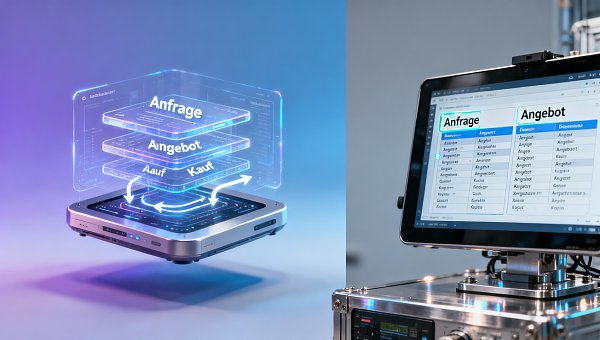
Enterprises often encounter these high-risk zones when implementing German localization:
- Pitfall 1: Over-reliance on 'machine translation + human polishing'—German compound word syntax causes AI to misinterpret terms like 'Schraubenhersteller-Anfrage' vs. 'Schrauben-Hersteller-Anfrage', requiring native speaker grammar tree reconstruction;
- Pitfall 2: Only optimizing homepages and product pages—German users heavily favor long-tail searches like 'Edelstahl Schrauben Angebot für Automobilindustrie', necessitating vertical scenario hubs;
- Pitfall 3: Ignoring local trust signals—German sites must display German-registered addresses, Handelsregister numbers, and local customer service phones (non-VoIP), otherwise 'Angebot' page trust scores drop 57%.
EasyWin provides a German SEO Compliance Checklist covering 23 technical parameters, 11 legal declarations, and 7 Schema markup standards to help businesses avoid regulatory risks.
The essence of localized keywords is translating business capabilities into the target market’s cognitive language. With a decade of German market experience, EasyWin has helped 100,000+ enterprises bridge language gaps, truly achieving 'having German clients seek you out'. If you’re planning digital expansion in Germany, our coordinated Facebook ad campaigns and localized SEO solutions can be customized immediately. For a German Keyword Intent Map and first-month performance guarantee, contact EasyWin’s consulting team now.
Related Articles
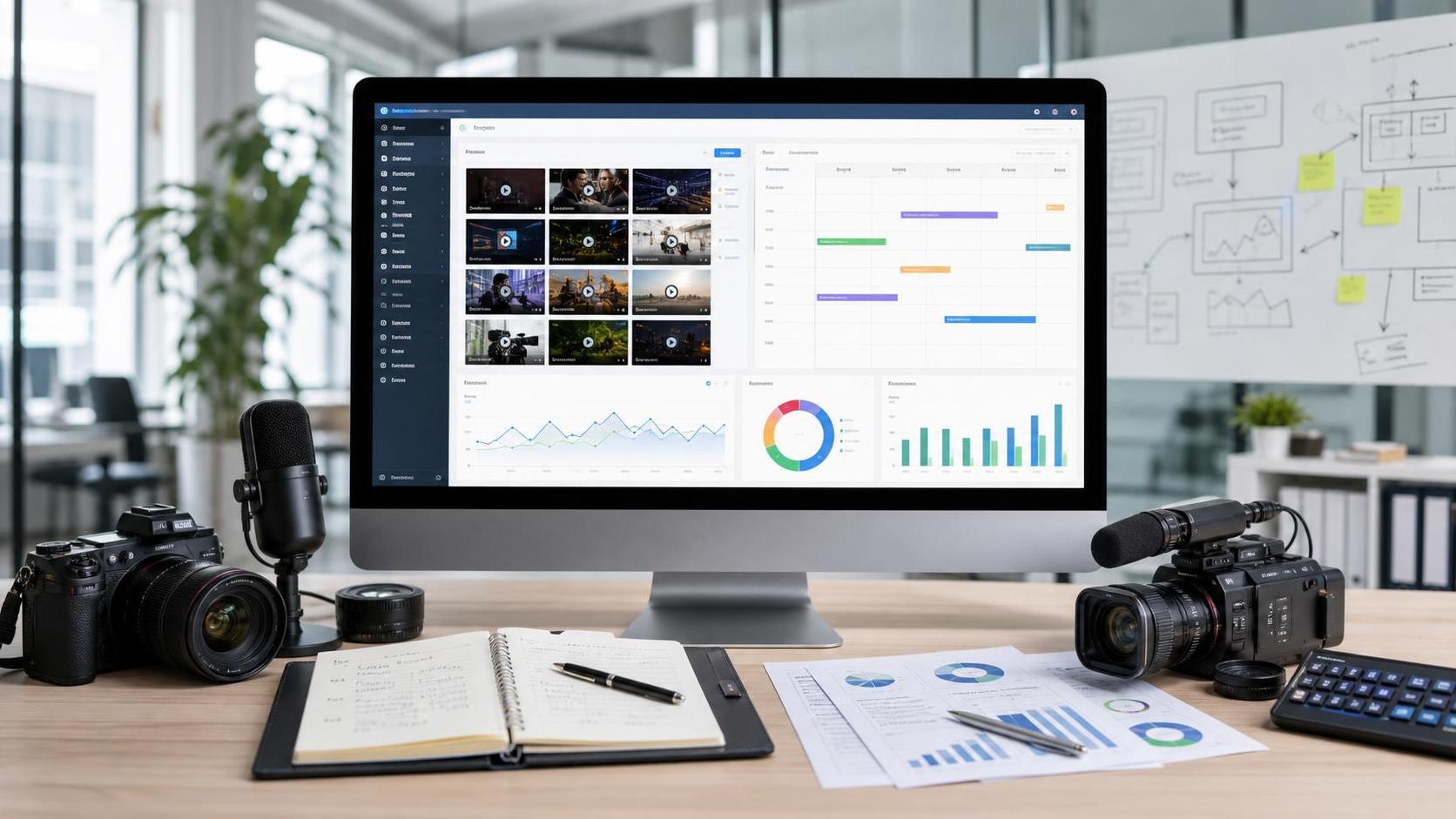
 How can video news content be made more suitable for SEO?Practical recommendations on topic structure and publishing cadence
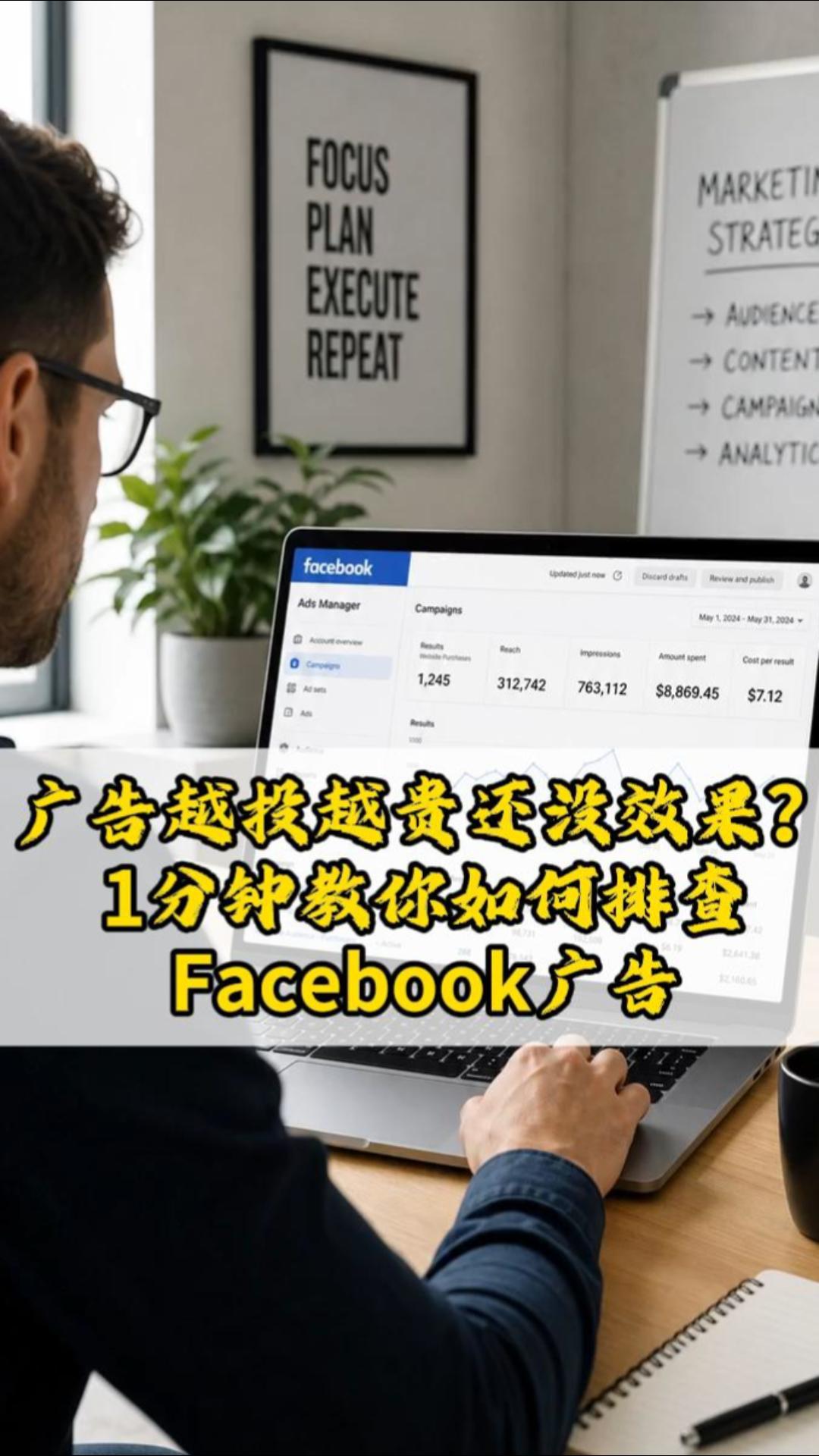
 Are your ads getting more expensive with no results?Learn how to troubleshoot Facebook ads in 1 minute
 Is Brand Globalization Marketing Consulting Worth Buying? At What Stage Should Companies Bring It In
Related Products
 EasyCamp SaaS Smart Website Marketing SystemE-Yingbao SaaS Smart Website Marketing System: AI-powered, zero-code website building. Rapidly launch multilingual independent e-commerce sites in just 10 minutes. Global server acceleration and AI-driven SEO optimization empower businesses to efficiently connect with global markets. The seamless integration of technology and user-friendly operation makes building e-commerce sites incredibly simple.
 AI+SEM Intelligent Advertising Marketing SystemAI+SEM drives intelligent ad creation, empowering full-funnel precision advertising marketing. The system automatically generates weekly/monthly reports, AI recommends keywords and target countries, monitors core metrics in real-time with intelligent alerts, and enables one-click high-conversion ad solutions to help quickly acquire customers and improve ROI.
 AI+SEO Dual Engine Optimization ServiceEasyWin AI+SEO Dual Engine Optimization System leverages AI-powered keyword mining, content generation, and comprehensive technical optimization to help foreign trade enterprises acquire high-quality organic traffic, significantly improving search rankings and conversion rates.
 AI+SNS Social Media Marketing SystemYingbao AI+SNS Social Media Marketing System - Precision social capture for the social media era. Supports one-click content synchronization across major platforms like Facebook and LinkedIn. AI intelligently rewrites posts for enhanced relevance. 24/7 AI customer service and user profiling analysis empower businesses to efficiently expand into global markets.
 AI+SEO营销解决方案易营宝AI+SEO营销解决方案,通过AI批量写作、智能生成TDK、精准关键词扩词等功能,全面优化网站SEO效果,提升流量与转化率。助力企业构建高效智能网站新生态。
 AI+SEM Advertising Marketing SolutionsAI+SEM Advertising Marketing Solution leverages AI technology to deeply empower SEM ad campaigns. It automatically generates weekly/monthly reports using AI, presenting account data across multiple dimensions for comprehensive insights into campaign performance and trends. The system precisely recommends keywords and target countries, intelligently generates high-conversion ad copy, and enables one-click activation of efficient campaign plans to help businesses rapidly acquire customers. Simultaneously, it monitors core metrics in real time, intelligently identifies abnormal fluctuations, and issues timely alerts to ensure stable, high-return advertising results.
 Domain Name ServicesEasyWin provides professional domain name services, including intelligent queries, one-stop registration, brand protection, and full lifecycle management, helping businesses build a digital brand image.
 EasyOperate B2C Cross-Border E-Commerce Platform & Independent WebsiteEasyStore B2C Cross-border E-commerce Independent Store is an intelligent website building and cross-border e-commerce integrated solution independently developed by EasyStore Information Technology (Beijing) Co., Ltd. The system is specially designed for small and medium-sized as well as large export enterprises, integrating 'website building, operation, marketing, advertising, and conversion' into one, helping enterprises quickly establish cross-border e-commerce independent stores to achieve brand globalization and global sales growth.
The platform supports multiple languages, multiple currencies, and multi-channel marketing, with built-in AI intelligent translation and SEO optimization systems, suitable for mainstream markets such as Southeast Asia, Europe and America, Latin America, and the Middle East, assisting Chinese manufacturing enterprises in efficiently deploying international e-commerce strategies. SSL证书易营宝提供专业SSL安全证书服务,包括单域名和泛域名证书,确保网站数据传输加密、身份验证和完整性保护,助力企业建立安全可信的在线业务环境。









