









- How Can a Brand Updates Page Be Made More SEO-Friendly? Analysis of Update Frequency, Content Structure, and Internal Linking StrategyJun 28, 2026View details
- What stages does the cross-border services ecosystem include? How do website building, promotion, payment, and compliance work togetherJun 22, 2026View details
- How will email marketing costs change in 2026Jun 22, 2026View details
- The China-US tariff arrangement has reached a preliminary consensus, and the trade association will be establishedJun 15, 2026View details
- Should overseas brand marketing start with ads or contentJun 21, 2026View details
- What determines B2C cross-border e-commerce website development costs? A breakdown of features, interfaces, and deployment methodsJun 17, 2026View details
- China-Morocco zero-tariff access, a breakthrough in the cost of Moroccan goods exports to ChinaJun 11, 2026View details
- What signal should be released for the suspension of exports to JapanJun 10, 2026View details
RCEP Releases the Cross-border Official Website Trusted Interaction Guidelines
On May 16, 2026, RCEP member states jointly issued the Cross-Border Official Website Trusted Interaction Guidelines, marking that regional digital trade compliance has entered a new stage of interface-level regulation. For the first time, the Guidelines embed the verifiability of localization service provider qualifications into the technical architecture of B2B official websites, directly affecting the service ecosystem for website building, translation, compliance, and supply chains serving the RCEP market.
Event Overview
On May 16, 2026, the RCEP Secretariat, together with regulatory authorities from China, Japan, South Korea, Australia, New Zealand, and six ASEAN countries, issued the Cross-Border Official Website Trusted Interaction Guidelines, requiring for the first time that B2B official websites targeting the RCEP market must open a real-time reverse query API for LSP (localization service provider) qualification certification status, ensuring that buyers can verify with one click the compliant entity and validity period of translations and localized content. Chinese website service providers are required to complete API integration filing within 72 hours.

Which Segmented Industries Will Be Affected
Direct trading enterprises: As the operating entities of B2B official websites, they must assume joint responsibility for interface deployment and LSP cooperation qualifications; the impact is reflected in compressed official website technical upgrade cycles, upgraded LSP selection standards (such as requiring simultaneous possession of filing numbers with regulators in at least two countries), and the possibility that failed buyer verification may lead to interrupted inquiries or increased contract performance risks.
Raw material procurement enterprises: Although they do not directly operate official websites, if their procurement platforms entrusted to third parties for construction/maintenance target the RCEP market, they fall within the scope of application; the impact is that localization modules in procurement systems must also support synchronized LSP status feedback, otherwise downstream manufacturers may regard their compliance capability as questionable, weakening their bargaining position.
Processing and manufacturing enterprises: Many rely on their own official websites to undertake overseas B2B orders, and often translate key content such as product documents and compliance statements by themselves; after implementation of the Guidelines, if such content is not processed by certified LSPs and no verification interface is provided, the technical parameters, RoHS declarations, and CE declarations of conformity disclosed on their official websites will face buyer skepticism, materially affecting order conversion rates.
Supply chain service enterprises: Including cross-border website service providers, SaaS platform providers, and localization technology middle platforms, they must complete API filing within 72 hours and provide standardized access solutions; the impact is reflected in tighter delivery timelines, the need to add LSP certification metadata fields to technical documentation, and increased risk of claims for project delays caused by clients whose interfaces are not ready.
Key Points of Attention and Response Measures for Relevant Enterprises or Practitioners
Confirm whether your official website falls within the scope of application
The criteria are: whether it proactively displays product catalogs, quotations, compliance certificates, or ordering portals to enterprises in any RCEP member country. Static promotional pages and subdomains accessible only domestically are not mandatorily covered, but if they include multi-language switching functionality and the target languages cover RCEP countries, they are by default included within the regulatory scope.
Check the certification status and country coverage of current partner LSPs
You need to obtain the RCEP six-country joint certification number and validity period issued by the LSP, and verify whether it is searchable in the RCEP LSP public registry (https://lsp.rcepsec.org); single-country certifications (such as only China CATTI or Japan JLPT) do not meet the requirements of the Guidelines.
Launch official website interface upgrades and filing procedures
Website service providers must submit information such as the API endpoint URL, invocation authentication method, and response field structure (including LSP number, issuing country, validity end date, and status code) through the RCEP Digital Trade Coordination Platform (DTCP) before 24:00 on May 19, 2026. For those that fail to complete filing by the deadline, their clients' official websites will display a warning label of “Localization qualification pending verification” on the RCEP buyer side.
Editorial Viewpoint / Industry Observation
显然, this guideline does not merely add a verification layer—it redefines the boundary between content localization and regulatory compliance. The requirement for real-time reverse query shifts accountability from “having certified partners” to “enabling verifiable trust at point of interaction.” Analysis shows that SMEs with fragmented localization workflows (e.g., using different vendors for Japanese website translation vs. ASEAN product labeling) face disproportionate technical integration costs. From industry perspective, the 72-hour deadline is less about urgency and more about signaling that interface-level interoperability is now a baseline expectation—not an optional enhancement.
Conclusion
The Cross-Border Official Website Trusted Interaction Guidelines are not an isolated technical specification, but a critical implementation node for RCEP digital rules moving from “paper commitments” to “system embedding.” Their true significance lies in bringing language service compliance forward from back-end qualification management to an instant verification action in procurement decision-making. What is currently more worthy of attention is whether LSP verification will subsequently be extended to deeper scenarios such as API invocation log auditing and multilingual privacy policy consistency comparison. It is more appropriate to understand this as an upgrade of regional digital infrastructure anchored in “machine-readable trust.”
Information Sources
- Announcement on the official website of the RCEP Secretariat (2026-05-16, document number: RCEP/DT/2026/08)
- Ministry of Commerce of China, Notice on Matters Related to the Implementation of the Cross-Border Official Website Trusted Interaction Guidelines (Shangfumaohan〔2026〕112)
- Pending continued observation: Japan's Ministry of Economy, Trade and Industry and South Korea's Ministry of Trade, Industry and Energy will begin the first round of updates to the mutual recognition list for LSP certification in June 2026; the ASEAN Digital Ministers' Meeting plans to review in Q3 the feasibility of adapting the Guidelines to B2C scenarios.
Related Articles
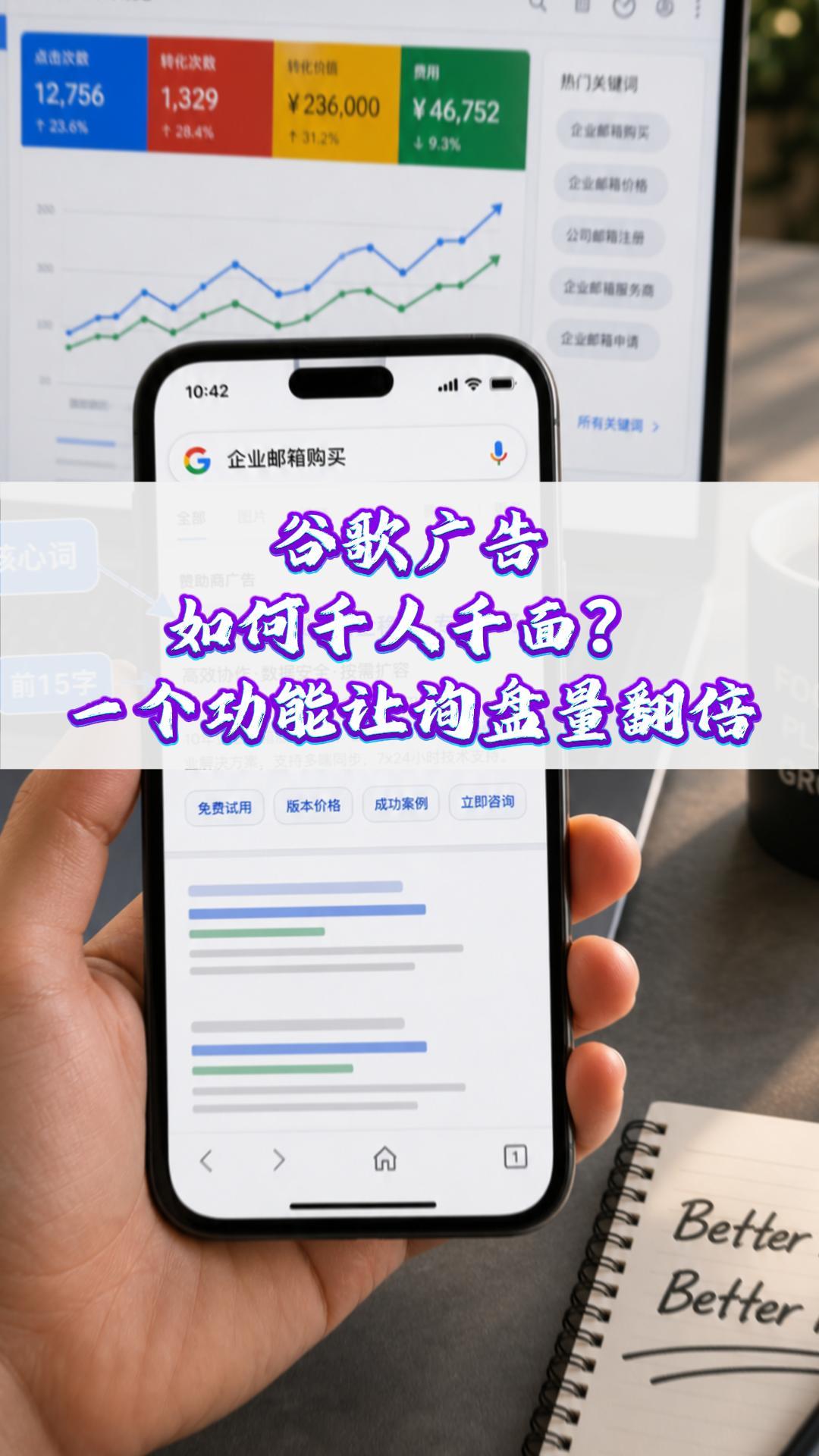
 How Can Google Ads Personalize Content for Every User? One Feature That Doubles Your Inquiry Volume
 Why a Google-optimized independent website is essential for trailer exports
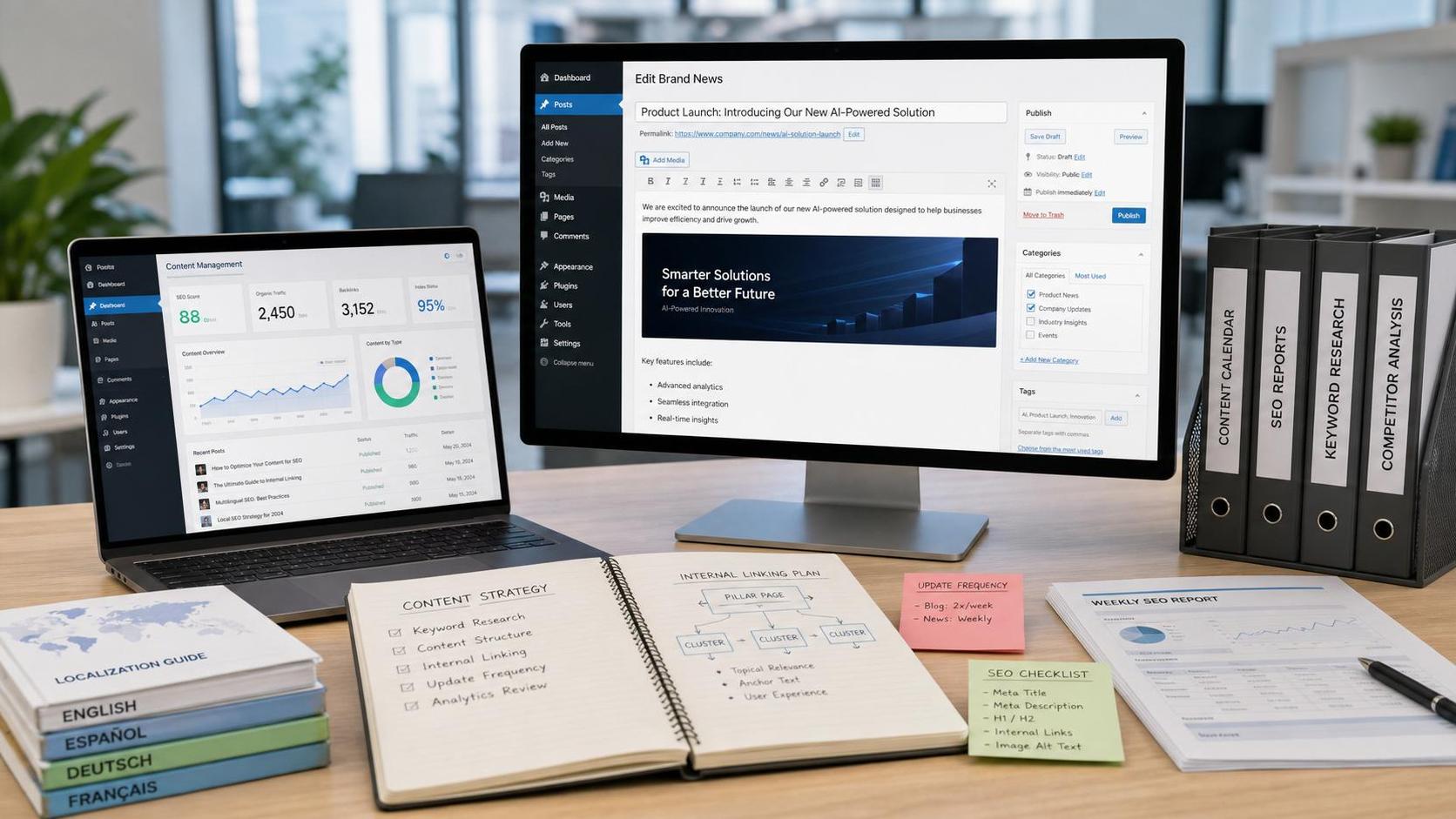
 How Can a Brand Updates Page Be Made More SEO-Friendly? Analysis of Update Frequency, Content Structure, and Internal Linking Strategy

Related Products
 EasyCamp SaaS Smart Website Marketing SystemE-Yingbao SaaS Smart Website Marketing System: AI-powered, zero-code website building. Rapidly launch multilingual independent e-commerce sites in just 10 minutes. Global server acceleration and AI-driven SEO optimization empower businesses to efficiently connect with global markets. The seamless integration of technology and user-friendly operation makes building e-commerce sites incredibly simple.
 AI+SEM Intelligent Advertising Marketing SystemAI+SEM drives intelligent ad creation, empowering full-funnel precision advertising marketing. The system automatically generates weekly/monthly reports, AI recommends keywords and target countries, monitors core metrics in real-time with intelligent alerts, and enables one-click high-conversion ad solutions to help quickly acquire customers and improve ROI.
 AI+SEO Dual Engine Optimization ServiceEasyWin AI+SEO Dual Engine Optimization System leverages AI-powered keyword mining, content generation, and comprehensive technical optimization to help foreign trade enterprises acquire high-quality organic traffic, significantly improving search rankings and conversion rates.
 AI+SNS Social Media Marketing SystemYingbao AI+SNS Social Media Marketing System - Precision social capture for the social media era. Supports one-click content synchronization across major platforms like Facebook and LinkedIn. AI intelligently rewrites posts for enhanced relevance. 24/7 AI customer service and user profiling analysis empower businesses to efficiently expand into global markets.
 AI+SEO营销解决方案易营宝AI+SEO营销解决方案,通过AI批量写作、智能生成TDK、精准关键词扩词等功能,全面优化网站SEO效果,提升流量与转化率。助力企业构建高效智能网站新生态。
 AI+SEM Advertising Marketing SolutionsAI+SEM Advertising Marketing Solution leverages AI technology to deeply empower SEM ad campaigns. It automatically generates weekly/monthly reports using AI, presenting account data across multiple dimensions for comprehensive insights into campaign performance and trends. The system precisely recommends keywords and target countries, intelligently generates high-conversion ad copy, and enables one-click activation of efficient campaign plans to help businesses rapidly acquire customers. Simultaneously, it monitors core metrics in real time, intelligently identifies abnormal fluctuations, and issues timely alerts to ensure stable, high-return advertising results.
 Domain Name ServicesEasyWin provides professional domain name services, including intelligent queries, one-stop registration, brand protection, and full lifecycle management, helping businesses build a digital brand image.
 EasyOperate B2C Cross-Border E-Commerce Platform & Independent WebsiteEasyStore B2C Cross-border E-commerce Independent Store is an intelligent website building and cross-border e-commerce integrated solution independently developed by EasyStore Information Technology (Beijing) Co., Ltd. The system is specially designed for small and medium-sized as well as large export enterprises, integrating 'website building, operation, marketing, advertising, and conversion' into one, helping enterprises quickly establish cross-border e-commerce independent stores to achieve brand globalization and global sales growth.
The platform supports multiple languages, multiple currencies, and multi-channel marketing, with built-in AI intelligent translation and SEO optimization systems, suitable for mainstream markets such as Southeast Asia, Europe and America, Latin America, and the Middle East, assisting Chinese manufacturing enterprises in efficiently deploying international e-commerce strategies. SSL证书易营宝提供专业SSL安全证书服务,包括单域名和泛域名证书,确保网站数据传输加密、身份验证和完整性保护,助力企业建立安全可信的在线业务环境。









