









- Can Zhejiang foreign trade independent websites still be developed today? Look at changes in traffic and lead generationJul 28, 2026View details
- What New Signals Are Emerging in Enterprise Services SaaS Marketing ReportsJul 27, 2026View details
- What Does a Global Traffic Ecosystem Service Provider Do? What Are the Differences from a Single Advertising AgencyJul 16, 2026View details
- What should you focus on in the latest enterprise SaaS report? From renewal rates and delivery costs to overseas growth opportunitiesJul 12, 2026View details
- What signals are worth paying attention to in a cross-border marketing trend report? B2B companies should look at these 6 signalsJul 11, 2026View details
- How to Read a Cross-Border Marketing Trends Report? Five Key Dimensions for Evaluating Channel OpportunitiesJul 11, 2026View details
- Which channel has the highest ROI in the global traffic ecosystem? Comparative analysis of search, social media, and advertisingJul 10, 2026View details
- What multilingual website services are available in Sanya? Which model is more suitable for local businesses going global?Jul 08, 2026View details
Phase II of the EU Digital Product Passport is launched: Chinese exporters' official websites must support EN 15343-2026 structured data output
On May 16, 2026, the European Commission officially announced the launch of the Phase II implementation plan for the Digital Product Passport (DPP). This phase will bring machinery, industrial equipment, and intermediate goods into the mandatory coverage scope, and for the first time requires non-EU manufacturers—especially Chinese export enterprises—to output structured metadata in their official website product pages for the EU market in accordance with the EN 15343:2026 standard. This move marks a substantive upgrade of the EU's green trade barriers from 'reporting requirements' to 'systematic data infrastructure embedding', directly affecting more than 120,000 export-oriented manufacturing and trading entities serving Europe.
Event Overview
On May 16, 2026, the European Commission issued the DPP Phase II Implementation Roadmap, clarifying that from January 1, 2027, all machinery placed on the EU market (including equipment covered by CE Directive 2006/42/EC), industrial intermediate products (such as transmission assemblies, hydraulic valve blocks, modular control units, etc.), and specific industrial equipment (including high-risk equipment defined by ISO 12100) must have manufacturers or authorized representatives ensure that their product information pages support machine-readable metadata output defined by the EN 15343:2026 standard. Such data must include carbon footprint (calculated according to EN 15804+A2:2023), material composition (at the life cycle inventory level according to ISO 14040), and a repairability index (including weighted values across three dimensions: spare parts availability, disassembly difficulty, and firmware openness), and must complete semantic validation through W3C Schema.org extension markup (schema.org/Product + custom attributes such as dpp:CarbonFootprint and dpp:MaterialComposition). Corporate websites that fail the automatic validation of the EU-designated third-party verification platform (EUDPP-Validator v2.1) will be systematically marked as 'data unreliable', and will then be automatically removed from the EU Green Public Procurement List.
Which Sub-sectors Will Be Affected
Direct trading enterprises: Exporters that deliver products to EU end customers, distributors, or system integrators under their own brands or as OEMs will be directly affected. The impact is reflected not only in compliance costs (requiring CMS reconstruction or DPP middleware integration), but more critically in market access qualifications—losing whitelist status will result in the inability to participate in key EU tenders such as municipal infrastructure and energy transition projects, and some countries (such as Germany and the Netherlands) have already made whitelist inclusion a prerequisite threshold for government procurement.
Raw material procurement enterprises: Upstream suppliers providing key raw materials such as metal alloys, engineering plastics, and permanent magnets for export finished goods must simultaneously provide LCA baseline data packages compliant with the requirements of EN 15343 Annex B (including raw material carbon intensity, recycled material ratio, and hazardous substance declarations). At present, most domestic material manufacturers have not yet established verifiable digital LCA databases, causing downstream manufacturers to be unable to generate complete DPP metadata due to 'data chain breaks'.
Processing and manufacturing enterprises: Contract factories responsible for machining, surface treatment, final assembly, and other processes (including Taiwan-funded and Hong Kong-funded operating entities in mainland China), although not directly facing EU customers, have already had DPP data collaboration obligations added by leading brand owners into contract terms. For example, a certain German engineering machinery brand has already required its Tier 1 suppliers in China to embed DPP field mapping modules into their ERP systems and upload monthly repairability index calculation logs notarized via blockchain.
Supply chain service enterprises: Including LCA consulting firms, carbon accounting SaaS service providers, customs compliance agents, etc. Their business focus is shifting from 'single-point report preparation' to 'DPP data pipeline construction', such as developing lightweight API gateways compatible with EN 15343, or providing automated plugins for Schema.org markup. However, the current market lacks service tools certified under EU EUDPP-Validator v2.1, creating a risk of lagging technical adaptation.
Key Focus Areas and Response Measures for Relevant Enterprises or Practitioners
Immediately conduct a diagnosis of the official website data architecture
Check whether the existing product page HTML source code has the basic Schema.org structure (such as itemtype="https://schema.org/Product"), and test whether dpp namespace attributes can be extended. Focus on testing the CMS system's (such as Shopify, Magento, WordPress+Woocommerce) support for dynamic JSON-LD injection, so as to avoid relying on static HTML hardcoding.
Clarify the boundary differences between EN 15343-2026 and existing standards
This standard is not a simple overlay of EN 15804 (construction LCA) or IEC 62430 (eco-design) requirements, but is the first to create a quantitative model for the 'repairability index' (see Clause 7.3 of the standard for the formula), and it also mandatorily requires carbon footprint data granularity to reach the 'process level' (such as welding energy consumption and heat treatment temperature curves), rather than whole-machine average values. Enterprises must reorganize the corresponding relationships between process BOMs and energy metering points.
Prioritize pilot validation for high-value product categories
According to the EU transition arrangements, in the first year of 2027 only product lines within the top 10% of procurement value on the whitelist will be spot-checked. It is recommended that enterprises first select 3–5 flagship models with annual exports exceeding 5 million euros and already included in municipal catalogs in Germany/France, complete closed-loop validation of DPP metadata (including archived screenshots of third-party platform validation), and then replicate across the full product range after forming an internal implementation template.
Editorial Viewpoint / Industry Observation
Observably, DPP Phase II is not merely a data disclosure mandate but a structural shift toward 'regulatory-by-design' in EU trade policy — it embeds compliance into digital infrastructure rather than relying on post-hoc audits. Analysis shows that Chinese firms with mature PLM systems (e.g., those already using Siemens Teamcenter or PTC Windchill) face lower integration costs, while SMEs reliant on Excel-based BOM management confront disproportionate technical debt. From an industry perspective, this accelerates consolidation: mid-tier exporters lacking DPP readiness may be absorbed as contract manufacturers by larger peers with certified data pipelines. It is more accurate to interpret EN 15343:2026 not as a static standard, but as a living framework — its Annex C explicitly reserves rights for annual algorithmic updates to repairability scoring, meaning continuous monitoring of European Commission technical working group outputs is non-negotiable.
Conclusion
The implementation of Phase II of the Digital Product Passport is essentially transforming environmental performance from 'voluntary corporate disclosure' into 'market access operating system-level parameters'. For China's manufacturing industry, this is both a touchstone for green competitiveness and a critical opportunity to force upgrades to the digital foundation. Rationally speaking, short-term compliance pressure is indeed real, but in the long run, enterprises that take the lead in building trustworthy DPP data capabilities may gain derivative policy benefits such as priority access to EU green subsidies and certificates for cross-border carbon tariff deductions. The real watershed does not lie in whether the 2027 milestone can be met, but in whether DPP requirements can be internalized into a new paradigm for full life cycle product management.
Source Information Notes
Official announcement of the European Commission (COM(2026) 289 final), full text of the EN 15343:2026 standard (public version on the CEN official website), and the technical specification of EUDPP-Validator v2.1 (issued by EU-JRC). Content to continue monitoring: the progress of issuing domestic implementation rules by EU member states (especially DPP penalty clauses in the amendment to Germany's Circular Economy Act), updates to the list of qualified third-party verification bodies, and the supplementary notice from the European Commission in Q3 2026 regarding the exemption list for intermediate goods.

Related Articles
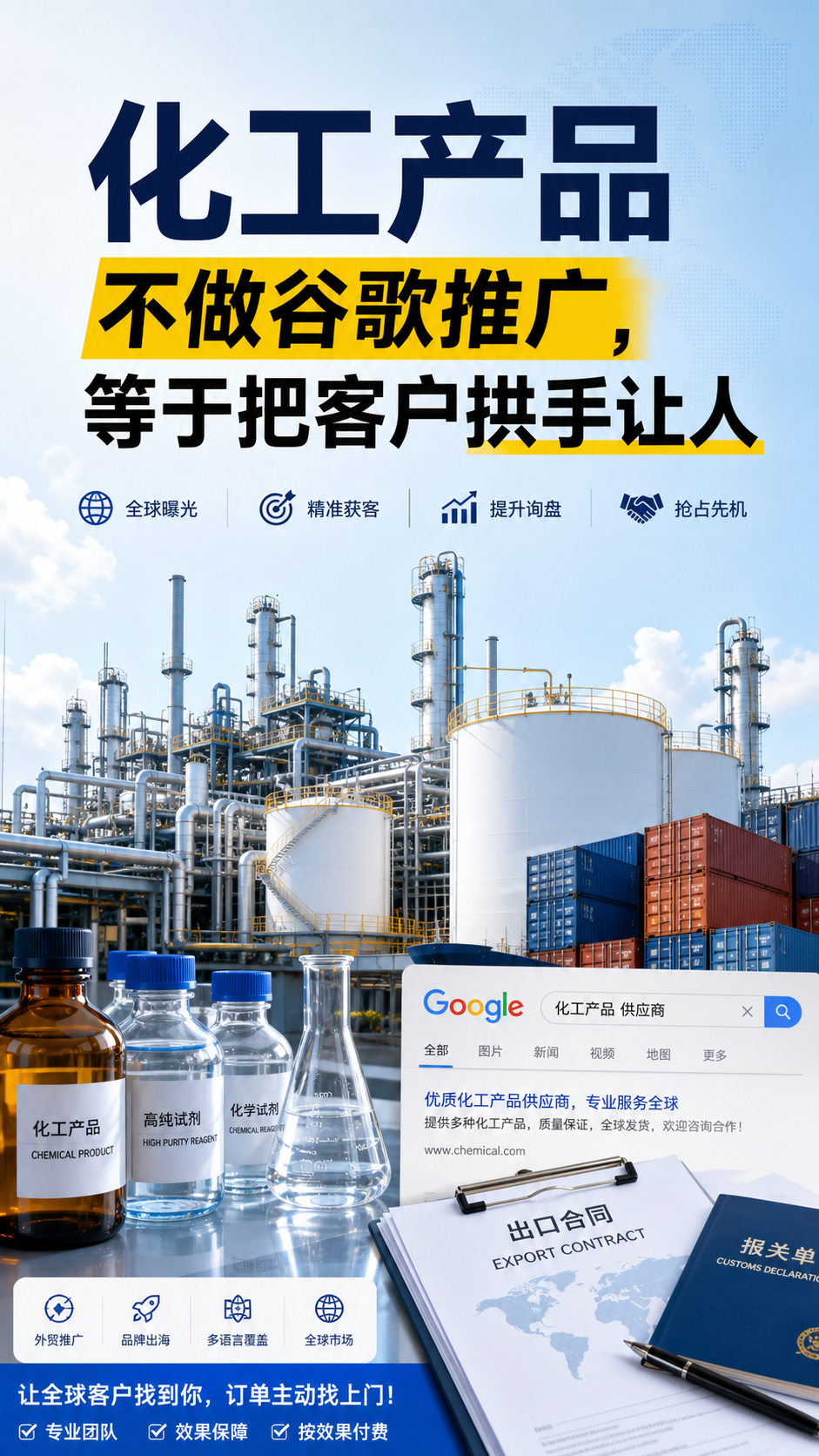
 Promoting chemical products on Google is essential—otherwise, you are effectively handing your customers over to competitors
 Can Zhejiang foreign trade independent websites still be developed today? Look at changes in traffic and lead generation
 What New Signals Are Emerging in Enterprise Services SaaS Marketing Reports


Related Products
 EasyCamp SaaS Smart Website Marketing SystemE-Yingbao SaaS Smart Website Marketing System: AI-powered, zero-code website building. Rapidly launch multilingual independent e-commerce sites in just 10 minutes. Global server acceleration and AI-driven SEO optimization empower businesses to efficiently connect with global markets. The seamless integration of technology and user-friendly operation makes building e-commerce sites incredibly simple.
 AI+SEM Intelligent Advertising Marketing SystemAI+SEM drives intelligent ad creation, empowering full-funnel precision advertising marketing. The system automatically generates weekly/monthly reports, AI recommends keywords and target countries, monitors core metrics in real-time with intelligent alerts, and enables one-click high-conversion ad solutions to help quickly acquire customers and improve ROI.
 AI+SEO Dual Engine Optimization ServiceEasyWin AI+SEO Dual Engine Optimization System leverages AI-powered keyword mining, content generation, and comprehensive technical optimization to help foreign trade enterprises acquire high-quality organic traffic, significantly improving search rankings and conversion rates.
 AI+SNS Social Media Marketing SystemYingbao AI+SNS Social Media Marketing System - Precision social capture for the social media era. Supports one-click content synchronization across major platforms like Facebook and LinkedIn. AI intelligently rewrites posts for enhanced relevance. 24/7 AI customer service and user profiling analysis empower businesses to efficiently expand into global markets.
 AI+SEO营销解决方案易营宝AI+SEO营销解决方案,通过AI批量写作、智能生成TDK、精准关键词扩词等功能,全面优化网站SEO效果,提升流量与转化率。助力企业构建高效智能网站新生态。
 AI+SEM Advertising Marketing SolutionsAI+SEM Advertising Marketing Solution leverages AI technology to deeply empower SEM ad campaigns. It automatically generates weekly/monthly reports using AI, presenting account data across multiple dimensions for comprehensive insights into campaign performance and trends. The system precisely recommends keywords and target countries, intelligently generates high-conversion ad copy, and enables one-click activation of efficient campaign plans to help businesses rapidly acquire customers. Simultaneously, it monitors core metrics in real time, intelligently identifies abnormal fluctuations, and issues timely alerts to ensure stable, high-return advertising results.
 Domain Name ServicesEasyWin provides professional domain name services, including intelligent queries, one-stop registration, brand protection, and full lifecycle management, helping businesses build a digital brand image.
 EasyOperate B2C Cross-Border E-Commerce Platform & Independent WebsiteEasyStore B2C Cross-border E-commerce Independent Store is an intelligent website building and cross-border e-commerce integrated solution independently developed by EasyStore Information Technology (Beijing) Co., Ltd. The system is specially designed for small and medium-sized as well as large export enterprises, integrating 'website building, operation, marketing, advertising, and conversion' into one, helping enterprises quickly establish cross-border e-commerce independent stores to achieve brand globalization and global sales growth.
The platform supports multiple languages, multiple currencies, and multi-channel marketing, with built-in AI intelligent translation and SEO optimization systems, suitable for mainstream markets such as Southeast Asia, Europe and America, Latin America, and the Middle East, assisting Chinese manufacturing enterprises in efficiently deploying international e-commerce strategies. SSL证书易营宝提供专业SSL安全证书服务,包括单域名和泛域名证书,确保网站数据传输加密、身份验证和完整性保护,助力企业建立安全可信的在线业务环境。









