









- What should you focus on in the latest enterprise SaaS report? From renewal rates and delivery costs to overseas growth opportunitiesJul 12, 2026View details
- What signals are worth paying attention to in a cross-border marketing trend report? B2B companies should look at these 6 signalsJul 11, 2026View details
- How to Read a Cross-Border Marketing Trends Report? Five Key Dimensions for Evaluating Channel OpportunitiesJul 11, 2026View details
- Which channel has the highest ROI in the global traffic ecosystem? Comparative analysis of search, social media, and advertisingJul 10, 2026View details
- What multilingual website services are available in Sanya? Which model is more suitable for local businesses going global?Jul 08, 2026View details
- How to view the complete list of China SaaS companies in the top 100? Practical methods for screening website-building and marketing service providersJul 08, 2026View details
- How to view pricing in the global traffic ecosystem? Cost comparison of search, social media, and content channel advertisingJul 06, 2026View details
- How to assess foreign trade website development trends?Looking at 2026 changes from multilingual,AI content to conversion pathsJul 04, 2026View details
Can Meta advertising techniques solve the problem of high clicks but low inquiries
Can Meta advertising techniques solve the problem of high clicks but low inquiries? The key lies in coordinated efforts across social media platform marketing strategies, Facebook ad optimization, landing pages, and search engine optimization services, so that traffic can truly be converted into effective business opportunities.
Why Meta ads typically suffer from the problem of high clicks but low inquiries
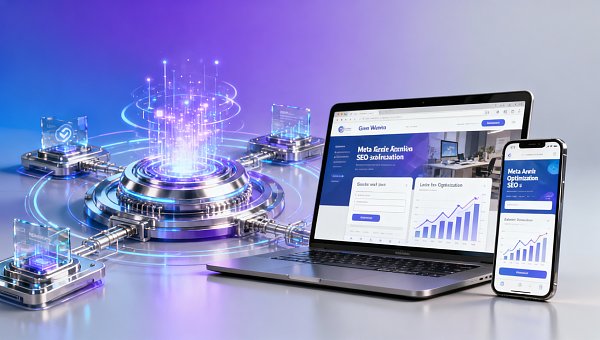
When many companies run Meta ads, the top-of-funnel data often does not look bad. Click-through rates, impressions, and even engagement can meet expectations, but once prospects enter the actual sales stage, the number of inquiries is noticeably low. This issue is very common in integrated website + marketing service projects, especially for B2B companies, engineering-related projects, and overseas expansion businesses across multiple regions, where a disconnect between “hot traffic and cold leads” is more likely to occur.
The root cause is usually not a single ad creative, but an imbalance across 3 stages at the same time: first, audience targeting is too broad, bringing in a large number of non-procurement clicks; second, the ad promise is inconsistent with the information on the landing page; third, the website lacks conversion capacity, such as complex forms, slow loading speed, and missing trust information. Optimizing only 1 of these usually improves only surface-level metrics.
For information researchers and technical evaluators, after clicking an ad they care more about specifications, solutions, delivery timelines, and the logic behind case studies; business decision-makers care more about ROI, channel quality, and budget controllability. If the page only emphasizes creative appeal but lacks these 3 categories of core information, inquiry conversion will naturally decline.
EasyBiz Information Technology (Beijing) Co., Ltd. has long served global marketing scenarios. Leveraging artificial intelligence and big data capabilities, it connects smart website building, SEO optimization, social media marketing, and ad placement, rather than treating Meta ads as an isolated media buying tool. For companies with relatively fast annual growth and campaign cycles typically optimized in units of 2 weeks to 6 weeks, this full-funnel approach is better suited to controlling customer acquisition quality.
What 4 categories can the common causes of high clicks but low inquiries be divided into
- Traffic issues: overly broad interest targeting, overly wide regional settings, and excessive placement expansion result in visitors who are not real buyers.
- Content issues: ad copy highlights discounts or selling points, but the landing page does not continue to prove capability, qualifications, process, and delivery terms.
- Website issues: when page load time exceeds 3 seconds to 5 seconds, bounce rates usually rise significantly, and the mobile form experience is especially critical.
- Sales handoff issues: lead follow-up times exceeding 24 hours, confusing form fields, and lack of lead segmentation will all cause qualified opportunities to be lost.
Therefore, Meta advertising techniques are indeed important, but if they are not designed together with landing pages, website structure, conversion paths, and SEO content assets, a higher click-through rate may instead bring more invalid visits and further increase customer acquisition costs.
From ads to account structure: how to do more effective Facebook ad optimization
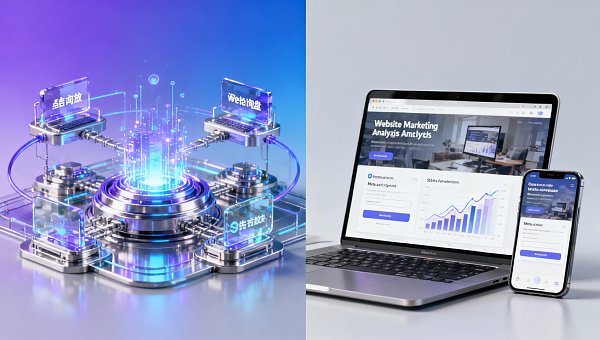
To solve the problem of high clicks but low inquiries, the first step is not simply increasing the budget, but rebuilding the campaign logic. A more reliable approach is to split the Meta ad account into 3 stages: cold-start testing, lead filtering, and remarketing conversion. Each stage should have different objectives, typically observed over 7-day, 14-day, and 30-day cycles, rather than being adjusted frequently every day.
The cold-start stage is better suited for testing audiences, creatives, and page matching; the filtering stage focuses on form completion rate, effective dwell time, and button click depth; the remarketing stage targets people who have browsed key pages, watched a certain proportion of a video, or submitted but not completed a form. This is closer to real procurement behavior than one-time broad targeting.
For groups such as distributors, agents, and project managers, ad content cannot just emphasize “consult now”; it must also provide a basis for judgment, such as delivery time, service process, industry fit, and after-sales support scope. If a company also operates consulting, software, or training businesses at the same time, it should also distinguish different entry points to avoid mixed leads.
In content design, short videos, carousels, and case-study image-text formats each have their roles, but the key is not the format, but whether they answer the user’s core questions. For example, technical evaluators want to see implementation milestones, decision-makers want to see budget ranges, and end users want to see proof of results. Mismatch between creatives and audiences is a common source of waste.
5 dimensions recommended for key review during account optimization
The table below is suitable for determining whether Meta ad placement truly has the ability to generate inquiry conversions, rather than merely pursuing superficial click metrics.
If more than 2 of the above 5 dimensions have obvious weaknesses, then continuing to increase the budget usually will not improve valid inquiries, but will instead amplify invalid clicks. The optimization sequence should be to fix the path first, then scale traffic.
Why the integration of “website building + SEO + advertising” is more stable than running ads alone
Advertising is responsible for bringing potential customers in, the website is responsible for explaining value, and SEO content is responsible for building lasting trust. Once the 3 work together, companies can simultaneously cover 3 behavioral paths: immediate search, social recommendation, and brand revisit. Especially in B2B procurement, where the decision cycle commonly ranges from 2 weeks to 3 months, multi-touchpoint collaboration is more likely to drive inquiries.
EasyBiz’s advantage lies precisely in its integrated capabilities. For companies that need to simultaneously advance overseas customer acquisition, brand presentation, and lead collection, a single ad placement service often cannot solve on-site conversion and subsequent search visibility issues, while full-funnel services are more conducive to continuously improving conversion quality.
Landing pages and website conversion capacity are the real key to turning clicks into inquiries
Many companies believe the core of Meta advertising techniques lies in creatives and bidding. In fact, the landing page is the “second conversion battlefield” that ultimately determines the number of inquiries. If the page structure is chaotic, the information hierarchy is unclear, and the first screen does not provide a clear call to action, then even if the click cost is not high, it is still difficult to generate effective conversions.
The value of integrated website + marketing services lies in the unified planning of ad promises, page structure, SEO content, and conversion components. A typical high-converting page usually includes 4 basic modules: first-screen value proposition, solution capability display, trust proof, and inquiry action entry. For engineering and service businesses, delivery processes and after-sales mechanisms should also be added.
If visitors come from overseas markets or campaigns across multiple regions, the page must also consider language versions, device adaptation, and loading speed. A common recommendation is that first-screen core information should be completed within 1 screen, the main selling points should not exceed 3, the primary conversion button should appear at least 2 times to 3 times, and it should be paired with a simple form and instant communication methods.
For industries that need content-based proof, landing pages can also embed studies, white papers, or thematic materials to increase professionalism and dwell time. For example, on pages related to budget management, public administration, or training consulting, appropriately adding an entry such as Comprehensive Budget Management Research for Administrative Institutions can help attract more clearly research-oriented users and improve lead screening efficiency.
6 content items recommended for review on high-inquiry pages
- Whether the first screen explains within 5 seconds “who you are, what you can solve, and who it is for.”
- Whether there is clear distinction by industry scenario, for example, distributors, project owners, and end customers seeing different content.
- Whether implementation timelines are displayed, such as common service milestones like going live in 7 days, testing in 2 weeks, and iterations in 4 weeks.
- Whether credible evidence is provided, such as service processes, customer types, and delivery mechanisms, rather than vague slogans.
- Whether SEO layout is also considered, so the page not only serves advertising traffic but also accumulates organic search traffic.
- Whether multiple conversion entry points are set, including forms, phone calls, instant messaging, and document downloads.
If a company already has an official website but has long faced the problem of high traffic with few inquiries, prioritizing an on-site conversion diagnosis is often more effective than continuing to add advertising budget. This is because inquiry growth often comes from improved conversion rates, not simply increased traffic.
During procurement and decision-making, how companies should evaluate integrated marketing service solutions
For business decision-makers, project managers, and technical evaluators, when choosing a Meta advertising service provider, they should not compare only media buying prices, but also judge whether the provider has capabilities in website building, SEO optimization, content planning, data tracking, and lead management. This is because the problem of high clicks but low inquiries often spans at least 3 team boundaries.
During procurement, it is recommended to evaluate from 5 dimensions: service scope, delivery cycle, optimization mechanism, data transparency, and collaboration capability. In common projects, basic diagnosis requires 3 days to 7 days, coordinated page and campaign adjustments usually require 2 weeks to 4 weeks, and if multilingual sites and multi-region advertising are involved, the preparation cycle will be even longer.
The table below can help companies distinguish the difference in inquiry outcomes between “ads only” and “integrated website + marketing services.” This comparison is especially important for companies with limited budgets but high requirements for lead quality.
From a procurement perspective, although integrated solutions require more detailed communication in the early stage, they usually reduce repeated rework later. Especially for companies with requirements in quality control, safety management, and after-sales maintenance, a unified data chain and content caliber are more helpful in reducing communication risks.
4 key questions to ask when choosing a service provider
- Whether they can simultaneously diagnose advertising data, website structure, and organic search performance, rather than only reporting click results.
- Whether they have multilingual website building and localization content capabilities suitable for communication in different regional markets.
- Whether they can provide clear 2-week, 4-week, and 8-week optimization rhythms, as well as acceptance criteria for each stage.
- Whether they can stratify sales leads by source, quality, industry, and region to support subsequent decision-making.
If these questions cannot be answered clearly, then the so-called Meta ad optimization is very likely still staying at the traffic level and cannot truly solve lead quality issues.
Common misconceptions, implementation recommendations, and why choose us
One common misconception is treating high clicks as high intent. In fact, clicks can only show that the creative is attractive, not that the user is ready to buy. The second misconception is treating the number of form submissions as the only goal, while ignoring invalid leads, duplicate submissions, and low-quality inquiries. The third misconception is continuing to increase the budget before on-site optimization is completed, causing costs to rise month by month.
A more reliable implementation method is to conduct a complete diagnosis first, and then move into phased optimization. Stage 1 uses 3 days to 7 days to review the account, pages, and data tracking; Stage 2 uses 2 weeks to 4 weeks to complete coordinated testing of creatives, audiences, and landing pages; Stage 3 then determines whether to scale based on the proportion of valid inquiries. This path is more suitable for companies with limited budgets but requirements for stable results.
For companies that need to balance brand presentation, inquiry acquisition, and overseas expansion, EasyBiz can provide coordinated solutions ranging from smart website building, SEO optimization, and social media marketing to advertising. Since its establishment in 2013, the company has continuously built capabilities around technological innovation and localized service construction, and has served more than 100,000 companies in global digital marketing, making it suitable for clients seeking to establish a long-term growth system.
If you are currently facing issues such as “Meta ads get many clicks but poor inquiry quality,” “Facebook ad costs are rising,” or “the official website cannot effectively receive ad traffic,” you can prioritize discussion on the following: account structure diagnosis, landing page conversion path, website redesign recommendations, SEO coordinated layout, multilingual page planning, delivery cycle evaluation, and quotation range. If you need content-driven traffic pages, you can also combine materials such as Comprehensive Budget Management Research for Administrative Institutions to design thematic pages and improve target audience identification efficiency.
FAQ: The 4 questions companies ask most often
If Meta ad clicks are high but there are no inquiries, should you fix the ads first or the website first?
It is usually recommended to first investigate the website’s conversion capacity. As long as the page information is unclear, the form is complex, or the first screen lacks persuasive power, even highly accurate Meta ads will be difficult to convert. It is recommended to first judge by 3 basic data points: bounce condition, dwell time, and form completion rate, and then decide the priority of ad adjustments.
How long does Facebook ad optimization usually take before results can be seen?
If the account foundation is normal, changes in click quality can usually be seen within 7 days to 14 days; if landing page reconstruction, event tracking, and multi-creative testing are involved, a full evaluation cycle is more commonly 2 weeks to 4 weeks. In B2B industries, because the decision chain is longer, a longer observation period is also needed from inquiry to deal closing.
Which companies are more suitable for integrated website + marketing service solutions?
It is suitable for 3 types of companies: the first type is overseas expansion companies that need multilingual website building combined with localized advertising; the second type is B2B companies that need to educate the market and accumulate content assets; the third type is companies with high requirements for lead quality, which cannot look only at quantity but must also consider industry fit and deal potential.
What information should be prepared before consultation?
It is recommended to prepare advertising data from the past 30 days to 90 days, the official website link, main target regions, target customer profiles, current inquiry form content, and the budget range you hope to control. This makes it easier to quickly determine whether the issue is traffic, content, or on-site conversion, and to provide a solution that is closer to your business needs.
Related Articles
Related Products
 EasyCamp SaaS Smart Website Marketing SystemE-Yingbao SaaS Smart Website Marketing System: AI-powered, zero-code website building. Rapidly launch multilingual independent e-commerce sites in just 10 minutes. Global server acceleration and AI-driven SEO optimization empower businesses to efficiently connect with global markets. The seamless integration of technology and user-friendly operation makes building e-commerce sites incredibly simple.
 AI+SEM Intelligent Advertising Marketing SystemAI+SEM drives intelligent ad creation, empowering full-funnel precision advertising marketing. The system automatically generates weekly/monthly reports, AI recommends keywords and target countries, monitors core metrics in real-time with intelligent alerts, and enables one-click high-conversion ad solutions to help quickly acquire customers and improve ROI.
 AI+SEO Dual Engine Optimization ServiceEasyWin AI+SEO Dual Engine Optimization System leverages AI-powered keyword mining, content generation, and comprehensive technical optimization to help foreign trade enterprises acquire high-quality organic traffic, significantly improving search rankings and conversion rates.
 AI+SNS Social Media Marketing SystemYingbao AI+SNS Social Media Marketing System - Precision social capture for the social media era. Supports one-click content synchronization across major platforms like Facebook and LinkedIn. AI intelligently rewrites posts for enhanced relevance. 24/7 AI customer service and user profiling analysis empower businesses to efficiently expand into global markets.
 AI+SEO营销解决方案易营宝AI+SEO营销解决方案,通过AI批量写作、智能生成TDK、精准关键词扩词等功能,全面优化网站SEO效果,提升流量与转化率。助力企业构建高效智能网站新生态。
 AI+SEM Advertising Marketing SolutionsAI+SEM Advertising Marketing Solution leverages AI technology to deeply empower SEM ad campaigns. It automatically generates weekly/monthly reports using AI, presenting account data across multiple dimensions for comprehensive insights into campaign performance and trends. The system precisely recommends keywords and target countries, intelligently generates high-conversion ad copy, and enables one-click activation of efficient campaign plans to help businesses rapidly acquire customers. Simultaneously, it monitors core metrics in real time, intelligently identifies abnormal fluctuations, and issues timely alerts to ensure stable, high-return advertising results.
 Domain Name ServicesEasyWin provides professional domain name services, including intelligent queries, one-stop registration, brand protection, and full lifecycle management, helping businesses build a digital brand image.
 EasyOperate B2C Cross-Border E-Commerce Platform & Independent WebsiteEasyStore B2C Cross-border E-commerce Independent Store is an intelligent website building and cross-border e-commerce integrated solution independently developed by EasyStore Information Technology (Beijing) Co., Ltd. The system is specially designed for small and medium-sized as well as large export enterprises, integrating 'website building, operation, marketing, advertising, and conversion' into one, helping enterprises quickly establish cross-border e-commerce independent stores to achieve brand globalization and global sales growth.
The platform supports multiple languages, multiple currencies, and multi-channel marketing, with built-in AI intelligent translation and SEO optimization systems, suitable for mainstream markets such as Southeast Asia, Europe and America, Latin America, and the Middle East, assisting Chinese manufacturing enterprises in efficiently deploying international e-commerce strategies. SSL证书易营宝提供专业SSL安全证书服务,包括单域名和泛域名证书,确保网站数据传输加密、身份验证和完整性保护,助力企业建立安全可信的在线业务环境。









