









- What Does a Global Traffic Ecosystem Service Provider Do? What Are the Differences from a Single Advertising AgencyJul 16, 2026View details
- What should you focus on in the latest enterprise SaaS report? From renewal rates and delivery costs to overseas growth opportunitiesJul 12, 2026View details
- What signals are worth paying attention to in a cross-border marketing trend report? B2B companies should look at these 6 signalsJul 11, 2026View details
- How to Read a Cross-Border Marketing Trends Report? Five Key Dimensions for Evaluating Channel OpportunitiesJul 11, 2026View details
- Which channel has the highest ROI in the global traffic ecosystem? Comparative analysis of search, social media, and advertisingJul 10, 2026View details
- What multilingual website services are available in Sanya? Which model is more suitable for local businesses going global?Jul 08, 2026View details
- How to view the complete list of China SaaS companies in the top 100? Practical methods for screening website-building and marketing service providersJul 08, 2026View details
- How to view pricing in the global traffic ecosystem? Cost comparison of search, social media, and content channel advertisingJul 06, 2026View details
What’s holding up your SSL certificate application process is usually not a technical issue
Many companies repeatedly get stuck in the SSL certificate application process. The issue is often not technical, but rather related to permissions, coordination, and procurement judgment. This article will break down common bottlenecks by combining SSL certificate purchase, SSL certificate pricing, and validity periods, and extend the discussion to the overall impact on website SEO optimization solutions and search engine optimization services.
Why does the SSL certificate application process always get stuck at steps that “seem uncomplicated”

For technical evaluators, the SSL certificate application process usually involves only a few steps: selection, document submission, domain validation, deployment, and launch. But in actual business operations, what really slows progress is often neither the encryption algorithm nor the server configuration, but whether cross-department collaboration runs smoothly.
A common situation is that the marketing department is eager to launch a campaign landing page, the information security department requires compliance review, the procurement department focuses on SSL certificate pricing, and the operations team needs to confirm the deployment window. What could originally be advanced within 1–3 working days is often stretched to 7–15 days, or even longer.
For the integrated website + marketing service industry, SSL certificates are not just a security configuration. They also directly affect landing page credibility, form submission willingness, ad review approval, and search indexing efficiency. If the certificate is not deployed in time, browsers often display risk warnings, and user drop-off rates rise accordingly.
This is especially true when a corporate website, overseas independent site, inquiry-based site, and campaign microsite are operated in parallel. One certificate issue may have a cascading impact on SEO optimization, ad conversion, and brand reputation. This is why many project owners discover that SSL certificate purchase may look like a small matter, but is actually a critical node in the launch chain.
The 4 types of non-technical issues most likely to cause delays
- Domain management rights are scattered: the domain may be under an agency, IT, the brand department, or a former employee, so DNS validation cannot be carried out promptly.
- Procurement standards are inconsistent: only SSL certificate pricing is considered, while certificate type, the number of covered domains, and renewal planning are ignored.
- The approval chain is too long: legal, finance, security, and business teams all need to confirm, causing submitted materials to be repeatedly returned.
- Launch schedules conflict: after certificate issuance is completed, the deployment window does not match the code release or CDN switchover timing.
Therefore, when evaluating the SSL certificate application process, companies should not only ask “Can it be applied for?” but also “Who needs to cooperate, how long will it take, and how much will it affect the business launch?” This is also where professional service providers can demonstrate their value: moving technical actions forward into process management actions.
How to choose SSL certificate purchase options: first look at the business scenario, then at the certificate type

When purchasing SSL certificates, the mistake companies most often make is comparing prices directly without first sorting out the number of websites, domain structure, usage cycle, and display requirements. For marketing websites and corporate websites, the rework cost caused by choosing the wrong type is often higher than the procurement cost of the certificate itself.
From common scenarios, single-domain sites, multi-subdomain business groups, and multiple brand sites operating in parallel do not require the same certificate type. A company should at least confirm 3 core indicators: validation level, domain coverage method, and renewal difficulty, in order to avoid repeated procurement.
The table below is suitable for researchers, procurement staff, and project managers to compare quickly, helping determine the suitability of different SSL certificate purchase options in integrated website + marketing service scenarios.
On the surface, DV certificates seem more suitable for fast launch. But if a corporate website is responsible for customer acquisition, brand endorsement, distributor recruitment, or form conversion tasks, an overly simple choice may fail to meet the expectations of security managers and decision-makers. In this case, OV certificates or a unified management solution are more reliable.
When purchasing, don’t just look at the price—also consider 4 cost variables
1. Renewal cost
The validity period of SSL certificates is usually managed on a standard annual basis. Companies need to consider renewal reminders, approval, and deployment arrangements once every 12 months. The more sites there are, the higher the manual maintenance cost, especially for group enterprises managed by multiple departments.
2. Downtime and switchover cost
If certificate deployment is linked with CDN, load balancing, reverse proxy, or WAF, a failed switchover will affect access continuity. For landing pages under active advertising campaigns, even 2–4 hours of downtime may also result in lead loss.
3. Approval communication cost
If IT, legal, procurement, and business teams need to be temporarily brought together for every purchase, the organizational cost will be far higher than the fee for a single certificate. Professional service providers can usually help companies establish standard checklists and responsible-person mechanisms in advance.
4. Search and conversion cost
If HTTPS is not deployed or is deployed abnormally, users will encounter “Not Secure” warnings, affecting dwell time, form submissions, and brand trust. For SEO optimization and search engine optimization services, this is not a single-point issue, but an underlying trust issue.
How SSL certificate pricing and validity periods affect budgeting, launch schedules, and SEO performance
When companies discuss SSL certificate pricing, they cannot look only at the amount on the purchase order. They must also consider the validity period, management method, and deployment scope. For budget-sensitive teams, low-cost options may seem more economical, but if there is repeated rework, missed renewals, or repeated purchases for multiple sites within a year, the overall cost is actually higher.
From a marketing operations perspective, HTTPS stability is closely related to search engine crawling, page credibility, and form submission rates. For corporate websites that rely on organic search and paid traffic, one certificate failure may bring several days of recovery time and affect lead handling efficiency.
The table below is intended to help companies place SSL certificate pricing, validity management, and business impact on the same decision map, making it suitable for joint evaluation by procurement, operations, and management teams.
If a corporate website is only a display page, the impact of a certificate anomaly may first show up in brand impression. But if the website handles inquiries, payments, registration, reservations, and other conversion actions, certificate status is directly linked to business results. When managing budgets, “certificate cost + maintenance cost + traffic loss risk” should be considered together.
The linked impact in integrated website + marketing service scenarios
In the typical scenarios served by Yiyingbao Information Technology (Beijing) Co., Ltd., intelligent website building, SEO optimization, social media marketing, and advertising placement are often advanced in coordination. If certificate management lags behind, projects where the website is completed, content is published, and ads are approved may suddenly stop at the very last step.
Therefore, mature teams usually incorporate the SSL certificate application process into website building and marketing implementation plans. They confirm domain ownership in Phase 1 of the project, complete validation in Phase 2, and carry out deployment and regression checks 7 days before launch, avoiding problems at the final moment.
Some companies also refer to management research materials when preparing budget justification to improve their process perspective. For example, the budget coordination approach emphasized in Research on Comprehensive Budget Management for Administrative Institutions can be applied as a reference in cross-department digital project management to help reduce repeated communication caused by isolated procurement.
How to incorporate SSL certificate issues into a website SEO optimization solution instead of treating them as isolated firefighting
Many companies treat certificates as a one-time configuration and only think about fixing them when access warnings, mixed content errors, or search performance fluctuations appear. In fact, the SSL certificate application process should become a foundational item in a website SEO optimization solution, planned together with site structure, speed optimization, content publishing, and redirect rules.
For search engine optimization services, HTTPS is not the only ranking factor, but it is a basic prerequisite for trustworthy site access. If HTTP and HTTPS coexist, 301 redirects are chaotic, or the certificate chain is incomplete, search engine crawling efficiency will decline, and indexing stability may also be affected.
If a company simultaneously operates a Chinese website, a foreign trade website, campaign pages, and a distribution platform, checklist-based management should be adopted. It is recommended to establish a routine mechanism around at least 5 inspection items: certificate validity period, DNS permissions, redirect status, mixed content, and the person responsible for renewal, so as to avoid repeated failures.
Recommended 4-step implementation process
- Site inventory: count primary domains, subdomains, CDN nodes, and business systems, and define 1 unified responsible person.
- Procurement evaluation: combine SSL certificate pricing, validity period, and business importance to confirm certificate type and renewal rhythm.
- Deployment coordination: complete installation, redirects, caching, and compatibility testing 3–7 days before launch.
- Ongoing operations and maintenance: establish 30-day, 15-day, and 7-day three-level reminders to avoid passive handling when certificates expire.
If a company lacks a dedicated team, it is best to have website building, SEO, operations and maintenance, and advertising placement coordinated through the same service chain. This not only reduces communication breakpoints, but is also more suitable for project managers to control schedules and acceptance standards. Mentioning again Research on Comprehensive Budget Management for Administrative Institutions, its cross-stage coordination thinking is also inspiring for digital project scheduling.
What signals indicate that you need overall optimization instead of just replacing one certificate
- The certificate has already been deployed, but some resources on the page still show “Not Secure” warnings.
- 2–4 weeks after a new site goes live, indexing is slow, and redirect rules change repeatedly.
- The ad landing page can be accessed, but the form submission success rate is low and user trust is insufficient.
- Renewals for multiple group sites still rely heavily on manual memory, creating obvious operations and maintenance risks.
Such problems often indicate that what a company needs is a complete website SEO optimization solution, rather than a temporary one-time certificate purchase. Reviewing certificates, website building, traffic acquisition, and the conversion chain together will solve the problem more thoroughly.
Common misconceptions and FAQ: if application is slow, pricing is confusing, and renewal is troublesome, how should you judge?
Regarding SSL certificate purchase and deployment, the most common confusion for companies is not “Is there a solution?” but “Which solution is suitable for the current stage of the business?” The FAQ below is closer to real search intent and is suitable for direct reference during research, evaluation, and internal reporting.
How long does the SSL certificate application process usually take, and why are others fast while I am slow?
Usually, from document confirmation to issuance, the common cycle is about 1–7 working days. If domain permissions are clear and validation cooperation is timely, the speed will be faster. But if cross-department approvals are involved, the domain is hosted by a third party, or company materials need repeated verification, it is also common for the cycle to extend to 7–15 days.
SSL certificate prices vary greatly. What should be prioritized first?
First look at the business purpose, then the certificate type, and finally the maintenance cost. If the website is used for brand display and inquiry conversion, you cannot look only at the low price. If there are many sites, you should also consider whether subsequent renewals, unified deployment, and management records are easy to execute. Price is only one procurement dimension, not the whole picture.
What is most easily overlooked in certificate validity management?
What is most easily overlooked is that “expiry reminders do not equal completed renewal.” Companies should reserve at least 30 days to prepare for renewal, including 4 stages: approval, validation, installation, and testing. If handling begins only a few days before expiration, it is very easy to conflict with holidays, launch windows, or staff absence.
Do certificate issues really affect SEO and marketing conversion?
Yes. Certificate anomalies affect user trust, page access continuity, and search engine crawling stability. For companies that rely on official websites for customer acquisition, content marketing, ad landing pages, and cross-border business, HTTPS issues are often not purely technical incidents, but traffic efficiency and brand experience issues.
Why choose us: from certificate application to coordinated advancement of website building, SEO, and ad placement
Yiyingbao Information Technology (Beijing) Co., Ltd. was established in 2013 and is headquartered in Beijing, China. It has long focused on global digital marketing services driven by artificial intelligence and big data as core engines. The company builds full-chain solutions around intelligent website building, SEO optimization, social media marketing, and advertising placement, making it more suitable for enterprise clients who need unified coordination rather than single-point procurement.
For teams handling the SSL certificate application process, SSL certificate purchase, SSL certificate pricing evaluation, or website SEO optimization solutions, we can assist in sorting out 3 levels: domain and permission confirmation, certificate and deployment solutions, and search and conversion chain coordination, helping reduce repeated rework.
If you are currently facing needs such as multi-site renewal management, official website redesign and launch, overseas site deployment, ad landing page review, or supporting search engine optimization services, it is recommended to prioritize consultation on the following: certificate type suitability, delivery schedule arrangement, renewal reminder mechanism, website building and SEO coordination plan, quotation, and implementation boundaries.
Before the project starts, clarifying these issues is often more time-saving and budget-saving than making fixes after launch. For business decision-makers, technical evaluators, and project owners, one complete communication session can usually clarify the website security and marketing coordination path for the next 3–12 months.
Related Articles
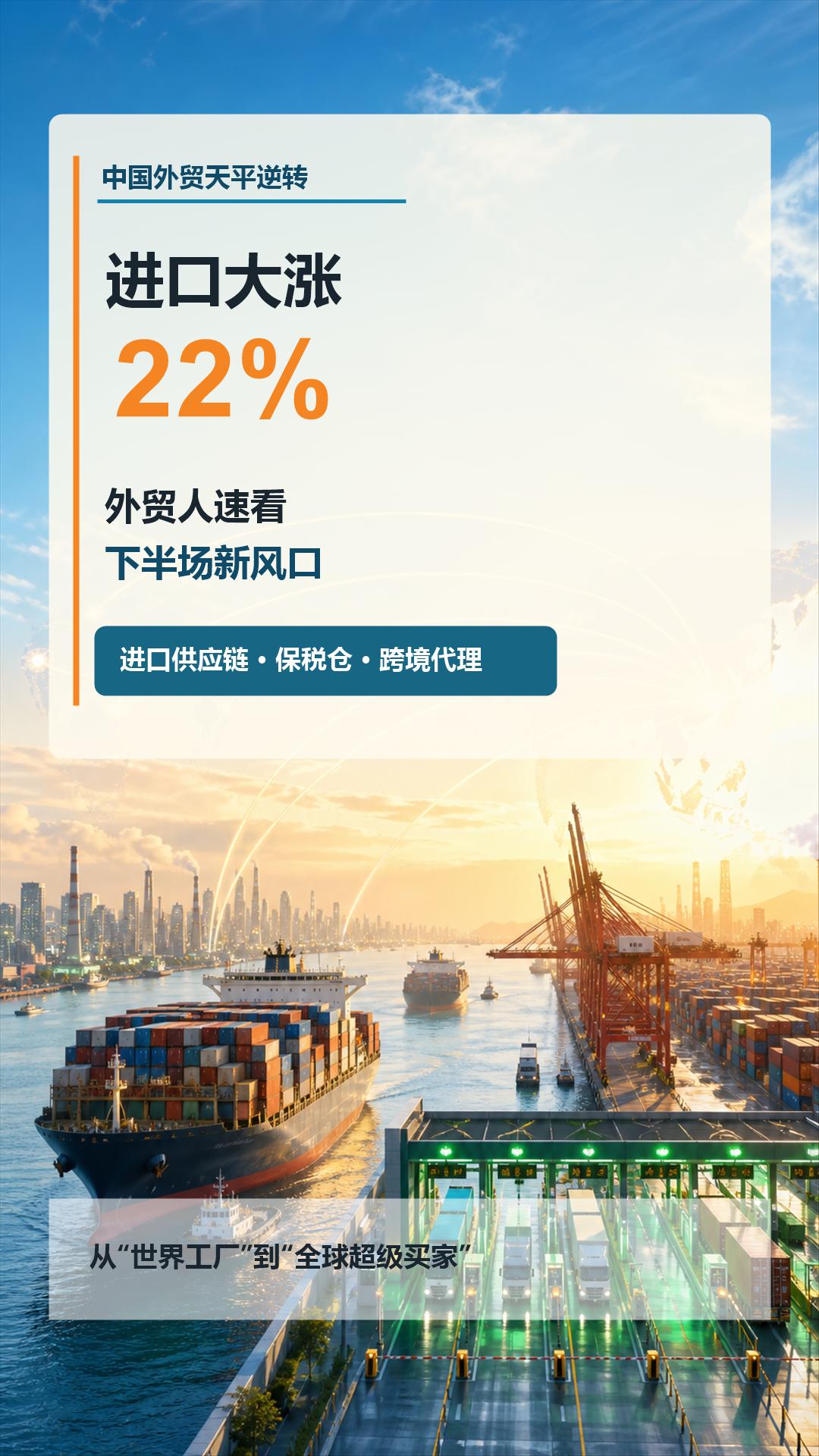
 China's foreign trade sees a turnaround: imports surge by 22%! Foreign trade professionals should quickly take note of the new trends in the second half of the year
 What Does a Global Traffic Ecosystem Service Provider Do? What Are the Differences from a Single Advertising Agency
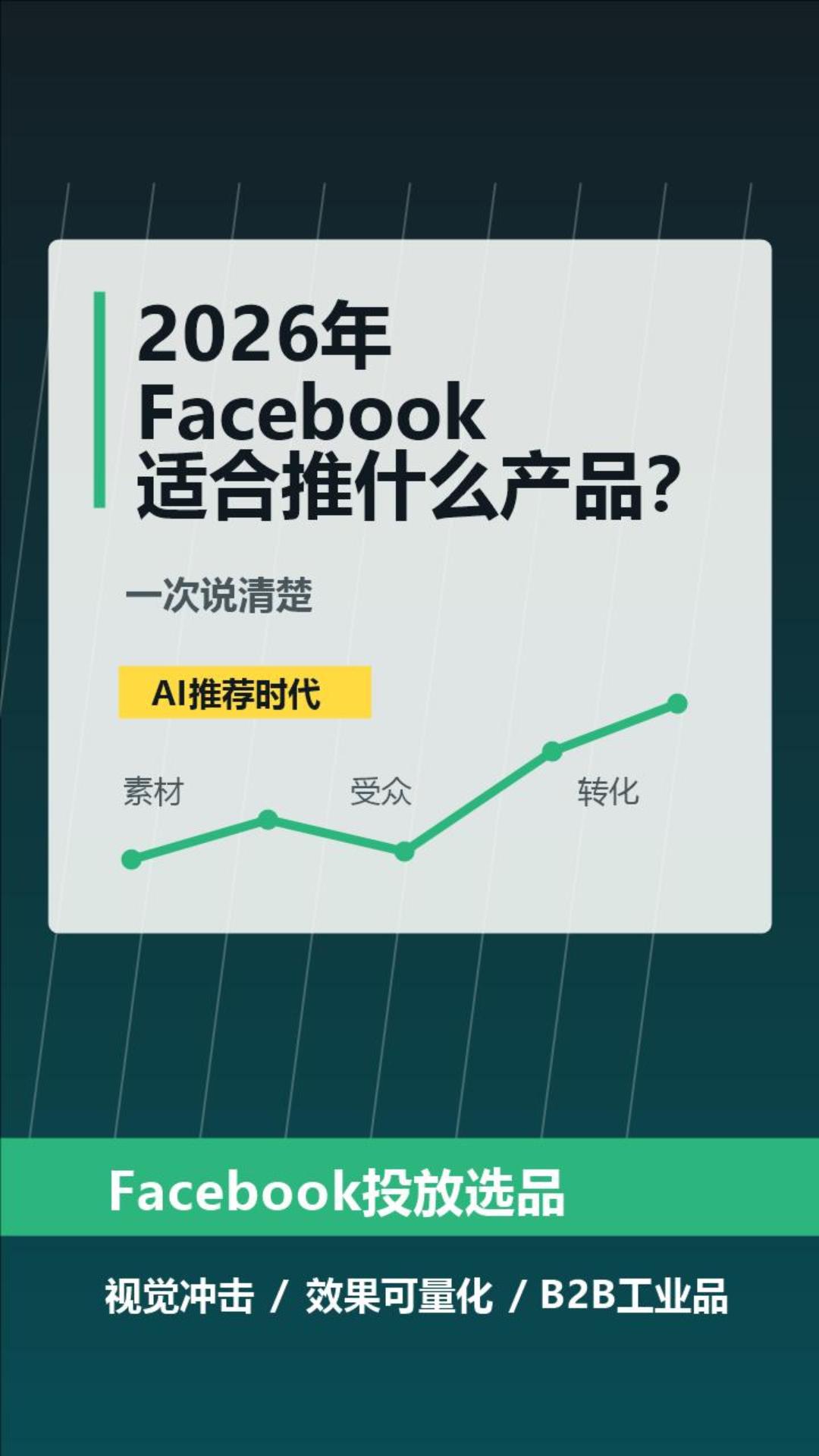
 What Products Are Suitable for Facebook in 2026? Explained Clearly at Once

Related Products
 EasyCamp SaaS Smart Website Marketing SystemE-Yingbao SaaS Smart Website Marketing System: AI-powered, zero-code website building. Rapidly launch multilingual independent e-commerce sites in just 10 minutes. Global server acceleration and AI-driven SEO optimization empower businesses to efficiently connect with global markets. The seamless integration of technology and user-friendly operation makes building e-commerce sites incredibly simple.
 AI+SEM Intelligent Advertising Marketing SystemAI+SEM drives intelligent ad creation, empowering full-funnel precision advertising marketing. The system automatically generates weekly/monthly reports, AI recommends keywords and target countries, monitors core metrics in real-time with intelligent alerts, and enables one-click high-conversion ad solutions to help quickly acquire customers and improve ROI.
 AI+SEO Dual Engine Optimization ServiceEasyWin AI+SEO Dual Engine Optimization System leverages AI-powered keyword mining, content generation, and comprehensive technical optimization to help foreign trade enterprises acquire high-quality organic traffic, significantly improving search rankings and conversion rates.
 AI+SNS Social Media Marketing SystemYingbao AI+SNS Social Media Marketing System - Precision social capture for the social media era. Supports one-click content synchronization across major platforms like Facebook and LinkedIn. AI intelligently rewrites posts for enhanced relevance. 24/7 AI customer service and user profiling analysis empower businesses to efficiently expand into global markets.
 AI+SEO营销解决方案易营宝AI+SEO营销解决方案,通过AI批量写作、智能生成TDK、精准关键词扩词等功能,全面优化网站SEO效果,提升流量与转化率。助力企业构建高效智能网站新生态。
 AI+SEM Advertising Marketing SolutionsAI+SEM Advertising Marketing Solution leverages AI technology to deeply empower SEM ad campaigns. It automatically generates weekly/monthly reports using AI, presenting account data across multiple dimensions for comprehensive insights into campaign performance and trends. The system precisely recommends keywords and target countries, intelligently generates high-conversion ad copy, and enables one-click activation of efficient campaign plans to help businesses rapidly acquire customers. Simultaneously, it monitors core metrics in real time, intelligently identifies abnormal fluctuations, and issues timely alerts to ensure stable, high-return advertising results.
 Domain Name ServicesEasyWin provides professional domain name services, including intelligent queries, one-stop registration, brand protection, and full lifecycle management, helping businesses build a digital brand image.
 EasyOperate B2C Cross-Border E-Commerce Platform & Independent WebsiteEasyStore B2C Cross-border E-commerce Independent Store is an intelligent website building and cross-border e-commerce integrated solution independently developed by EasyStore Information Technology (Beijing) Co., Ltd. The system is specially designed for small and medium-sized as well as large export enterprises, integrating 'website building, operation, marketing, advertising, and conversion' into one, helping enterprises quickly establish cross-border e-commerce independent stores to achieve brand globalization and global sales growth.
The platform supports multiple languages, multiple currencies, and multi-channel marketing, with built-in AI intelligent translation and SEO optimization systems, suitable for mainstream markets such as Southeast Asia, Europe and America, Latin America, and the Middle East, assisting Chinese manufacturing enterprises in efficiently deploying international e-commerce strategies. SSL证书易营宝提供专业SSL安全证书服务,包括单域名和泛域名证书,确保网站数据传输加密、身份验证和完整性保护,助力企业建立安全可信的在线业务环境。









