









- What Does a Global Traffic Ecosystem Service Provider Do? What Are the Differences from a Single Advertising AgencyJul 16, 2026View details
- What should you focus on in the latest enterprise SaaS report? From renewal rates and delivery costs to overseas growth opportunitiesJul 12, 2026View details
- What signals are worth paying attention to in a cross-border marketing trend report? B2B companies should look at these 6 signalsJul 11, 2026View details
- How to Read a Cross-Border Marketing Trends Report? Five Key Dimensions for Evaluating Channel OpportunitiesJul 11, 2026View details
- Which channel has the highest ROI in the global traffic ecosystem? Comparative analysis of search, social media, and advertisingJul 10, 2026View details
- What multilingual website services are available in Sanya? Which model is more suitable for local businesses going global?Jul 08, 2026View details
- How to view the complete list of China SaaS companies in the top 100? Practical methods for screening website-building and marketing service providersJul 08, 2026View details
- How to view pricing in the global traffic ecosystem? Cost comparison of search, social media, and content channel advertisingJul 06, 2026View details
In Meta ad placement strategies, the most easily overlooked issue is audience overlap
When discussing Meta advertising techniques, many people focus only on creatives and bids, while overlooking the hidden cost of audience overlap. It not only drives up advertising costs, but also weakens the effectiveness of social media marketing strategies, affecting website traffic growth plans and search engine optimization deployment.
Why audience overlap becomes a hidden cost in Meta advertising
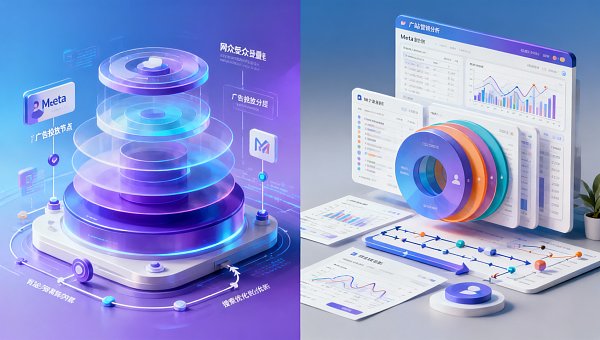
In integrated website + marketing service projects, Meta advertising is often not an isolated action, but advances in sync with landing page conversion, SEO content deployment, and remarketing funnels. If multiple ad sets cover similar audiences at the same time, the system will “compete with itself” in the same bidding environment, causing cost per click, cost per mille, and cost per conversion to continue rising.
When many companies set up accounts in the early stage, they split out 3 to 6 audience segments by interest, region, age, and behavior. It may look well-structured, but in reality there is 20%—50% overlapping coverage. For accounts with daily budgets ranging from 500 yuan to 5000 yuan, this overlap is even more obvious, because learning-phase data is diluted, making it difficult for the system to quickly determine which audience group deserves more budget.
Information researchers care about whether the method is reproducible, business decision-makers focus on budget efficiency, after-sales maintenance staff care more about whether subsequent optimization is sustainable, while distributors and agents need stable lead costs. The reason audience overlap is easily overlooked is that it is not as intuitive as creative click-through rate, yet it gradually eats away at advertising efficiency within 7 to 14 days.
For end consumers, excessive repeated exposure may also cause experience fatigue. If the same user sees similar ads 3 to 5 times within 2 days, purchase intent may not increase, and brand favorability may instead decline. For websites that rely on their official site to receive inquiries, RFQs, or orders, this means the advertising budget has increased, but the quality of website traffic has not improved accordingly.
Audience overlap usually appears in these 4 account structures
- Over-segmentation by interest keywords: for example, splitting “cross-border e-commerce,” “independent site,” and “overseas shopping” into multiple ad sets, while the actual user profiles are highly similar.
- Running new customer and lookalike audiences in parallel: when a 1% lookalike audience and a broad interest package run at the same time, cross-bidding often occurs.
- Shared creative strategy across multiple regions: countries, languages, and time zones differ, but audience exclusions are not properly set, making it easy for the algorithm to distribute repeatedly.
- Confusing remarketing window settings: 7-day, 14-day, and 30-day website visitor segments are enabled at the same time, but without layered exclusions.
If a company is also simultaneously promoting a multilingual official website, overseas content outreach, and social media customer acquisition, the audience overlap problem becomes even more complex. This is because pages in different languages, campaigns in different regions, and different product lines all make the account structure more fragmented, thereby affecting the overall marketing synergy.
How to identify audience overlap: don’t look only at surface-level click-through rates
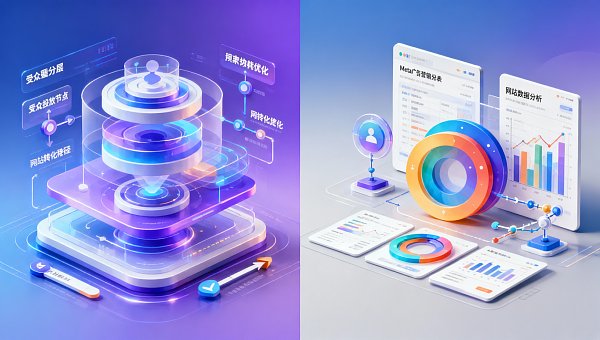
To determine whether Meta advertising has audience overlap, you cannot just look at whether CTR is high or low. More importantly, you need to see whether the account shows the combined signals of “budget increase, no conversion growth, and rising frequency.” Usually, checks can be carried out at 3 levels: audience definition, advertising results, and website behavior. Only by combining ad data with on-site behavior can you truly see the issue clearly.
The first level is audience definition. If multiple ad sets use similar interest tags, the same age group, and the same region, while the exclusion logic is empty, it indicates that overlap risk already exists. The second level is performance results. If frequency keeps rising within 7 days, but lead rate and conversion rate do not improve, it indicates the ads may be repeatedly reaching the same group of users. The third level is website behavior. If visits increase, but bounce rate, dwell time, and inquiry conversions do not improve, then you should recheck audience quality.
In actual optimization, it is recommended to conduct at least 1 account structure review every week and a more complete audience segmentation review every month. For projects with campaign cycles longer than 2 weeks, search term performance, landing page dwell time, and form submission rate should also be included in the assessment to avoid drawing conclusions based only on a single set of data from the ad platform.
For companies that need to continue expanding overseas, language versions are also an important variable. For example, when the same advertising campaign targets multiple national markets, if multilingual content on the official website is not updated in time, the ads may bring clicks, but if the page content does not match the user’s language, it will also lead to inefficient exposure that “looks like overlap, but is not entirely overlap.” In this case, multilingual conversion efficiency directly affects ad judgment.
Core indicator comparison for investigating audience overlap
The table below is suitable for information researchers and business decision-makers to quickly judge whether an account has entered the stage of “hidden internal friction,” and is also suitable for after-sales maintenance teams to use as a weekly inspection checklist.
The value of this type of investigation method lies in upgrading Meta advertising techniques from “just adjusting the account” to “integrated coordination of advertising, website, and content.” In the service logic of EasyBiz Information Technology (Beijing) Co., Ltd., ad optimization is not patching a single point, but full-funnel correction combining intelligent website building, SEO optimization, social media marketing, and data tracking, which is more suitable for companies that are budget-sensitive yet emphasize long-term growth.
How to break down audience overlap under different business scenarios
Cross-border e-commerce, B2B foreign trade, and overseas service expansion are 3 common business types, and their requirements for Meta advertising techniques are not the same. Cross-border e-commerce places more emphasis on short-cycle conversions, B2B foreign trade values lead quality more, while overseas service expansion usually requires a longer nurturing period. If audience overlap is handled in the same way across all of them, it often mistakenly harms valid traffic.
Taking B2B foreign trade as an example, the customer decision-making journey may last from 2 weeks to 8 weeks, and an ad click does not necessarily lead to an inquiry immediately. If a company quickly includes all website visitors in remarketing, it will not only cause audience stacking, but also dilute truly high-intent users with low-quality clicks. In this case, it is more appropriate to create 3-level segmentation based on page depth, dwell time, and form actions, rather than using a one-size-fits-all rule of “visited the website.”
For dealer, distributor, and agent projects, multilingual differences across regions are another challenge. If ads are launched in multiple countries, but the official website still relies on manual page-by-page translation, the update cycle often takes 3 to 7 days, and campaign pages, policy pages, and parameter pages can easily fall out of sync. In this way, even if the front-end ad audience settings are reasonable, inconsistent back-end page reception will still distort data feedback.
At this point, tools with the ability to rapidly deliver multilingual content are no longer just a “translation add-on,” but a part of advertising efficiency. For example, EasyBiz AI Translation Center can be used for cross-border e-commerce, B2B foreign trade, and overseas service scenarios, supports translation across 249 languages, covers 98% of global internet users, and can dynamically synchronize site content, reducing traffic loss caused by delayed page language updates.
Configuring audience strategies by business type is more reliable
If a company wants to reduce advertising internal friction while improving the executability of its website traffic growth plan, it can prioritize splitting accounts by business type rather than by “assumed audience tags.” This is more conducive to subsequent budget allocation and content coordination.
The key point of the table is not “the finer the segmentation, the better,” but “after segmentation, audiences must be mutually exclusive.” Especially for projects with longer service cycles, it is recommended to keep 2 to 4 layers of core audiences, and not spread out too many ad sets at the initial stage all at once, otherwise both the learning phase and budget consumption will be prolonged.
During procurement and implementation, which capabilities should companies focus on
For business decision-makers, Meta advertising techniques should not be judged only by whether the media buyer can adjust bids. More importantly, they should assess whether the service provider has coordinated capabilities in website, content, data, and media buying. This is because the essence of audience overlap is often not an account-level issue, but an incomplete business strategy, page structure, and data feedback mechanism.
During the procurement stage, at least 5 key items should be checked: whether audience segmentation logic can be sorted out, whether website data tracking can be integrated, whether SEO content planning can be coordinated, whether multilingual page support is available, and whether an implementation process of more than 4 steps can be provided. If a provider only promises to “help you get the ads running,” it is often difficult to solve subsequent efficiency issues.
Since its establishment in 2013, EasyBiz Information Technology (Beijing) Co., Ltd. has formed a full-funnel solution around intelligent website building, SEO optimization, social media marketing, and advertising placement, making it more suitable for companies that need integrated website + marketing services. For the experience accumulated from serving more than 100,000 companies, the key value lies not in a single tool, but in the ability to combine technological innovation and localized services into specific delivery.
If the project involves frequent content updates in overseas markets, multilingual website maintenance can also be included in the overall implementation process. Related tools integrate Google neural translation technology, improving translation accuracy by 60% compared with traditional engines, increasing efficiency by 500 times, and helping reduce 70% of maintenance costs. In this way, ad testing cycles, landing page update cycles, and content calibration cycles are easier to keep synchronized.
4-step implementation process for integrated service delivery
- Initial diagnosis: complete a review of account structure, website pages, tracking status, and historical campaign data within 3 to 5 days.
- Solution design: define a 2 to 4-layer structure of core audiences, and sort out landing page content, conversion paths, and exclusion logic.
- Test launch: usually use 7 days as one observation cycle, control the budget pace, and verify the match among creatives, pages, and audiences.
- Continuous optimization: adjust ad sets weekly, and review website traffic, lead cost, keyword coverage, and content performance monthly.
This process is also very important for after-sales maintenance personnel, because it determines whether the project will be easy to take over later. Accounts with clear structure, explicit segmentation, and complete documentation are more suitable for long-term maintenance, and are also easier for dealers and agents to replicate across different regional markets.
Common misconceptions and FAQ: why many accounts become more expensive the more they are optimized
Many teams are not failing because they do not work hard, but because the optimization direction is off. The following questions cover almost all the common pitfalls that information researchers and corporate buyers are most likely to encounter in Meta advertising techniques. Clarifying these issues often improves overall performance more than simply changing creative assets.
Does having more ad sets mean more sufficient testing?
Not necessarily. For accounts with limited budgets, increasing ad sets from 2 to 8 does not mean testing becomes more scientific. Instead, it may prevent each set from gathering enough data. The conventional approach is to first keep 2 to 4 core audience groups, and only add segmented tests after stability is achieved, otherwise audience overlap and an extended learning phase will occur at the same time.
Does high frequency definitely mean audience overlap?
Not absolutely. High frequency may come from an excessively large budget, an audience range that is too small, creatives being updated too slowly, or remarketing windows being set too densely. Judgment should combine click-through rate, conversion rate, page dwell time, and lead quality. Only if frequency rises continuously for 7 days with no improvement in conversions is it more worthwhile to focus on checking overlap issues.
What is the relationship between a multilingual website and Meta ad optimization?
The relationship is very direct. Ads are responsible for bringing people in, while the website is responsible for keeping them and prompting action. If multilingual pages are updated slowly, regional wording feels unnatural, or date, measurement, and unit formats are not adapted, users may leave the page within 10 to 30 seconds even after clicking the ad. Tools like EasyBiz AI Translation Center, which support human-machine collaborative editing, dynamic content synchronization, and region-specific language optimization, are essentially improving ad conversion efficiency.
What should companies avoid most when purchasing Meta media buying services?
What should be avoided most is comparing only the “agency media buying price.” If the service solution lacks website conversion support, SEO content coordination, data tracking, and audience exclusion design, it is easy to fall into a situation where “the longer you advertise, the more expensive it gets.” A more reliable approach is to require the service provider to clearly define the delivery cycle, account structure, review frequency, and optimization boundaries, and to clearly assess at least 3 types of capabilities: media buying capability, website building capability, and content operation capability.
Why choose us: optimize everything together from media buying to account structure to website conversion
If you are evaluating whether Meta advertising techniques can still be further improved, what is truly worth prioritizing is often not “whether to add more budget,” but whether the account has audience overlap, whether the website can receive high-quality traffic, and whether the content supports coordinated growth across search and social media. This is exactly the core value of integrated website + marketing services.
Driven by artificial intelligence and big data as its core engine, EasyBiz Information Technology (Beijing) Co., Ltd. has long provided full-funnel solutions around intelligent website building, SEO optimization, social media marketing, and advertising placement. For companies hoping to increase website traffic, optimize lead costs, and penetrate overseas markets, this coordinated method from front-end customer acquisition to back-end conversion is more suitable for long-term growth.
If you need further communication, you can focus on consulting the following topics: whether your existing Meta account has audience overlap, how website landing pages should coordinate with campaign adjustments, how long multilingual website delivery cycles usually take, how advertising and SEO can work together, how to localize content reception for different national markets, and how to allocate budgets more reasonably when monthly spending ranges from 10,000 yuan to 100,000 yuan.
Whether you are an information researcher, a business decision-maker, or a team member responsible for subsequent maintenance, you can start with account structure diagnosis, parameter confirmation, delivery cycle evaluation, and customized solution comparison. Seeing the problem clearly before deciding how to invest is usually more cost-saving than blindly scaling up, and also makes it easier to truly turn advertising performance into sustainable growth.
Related Articles
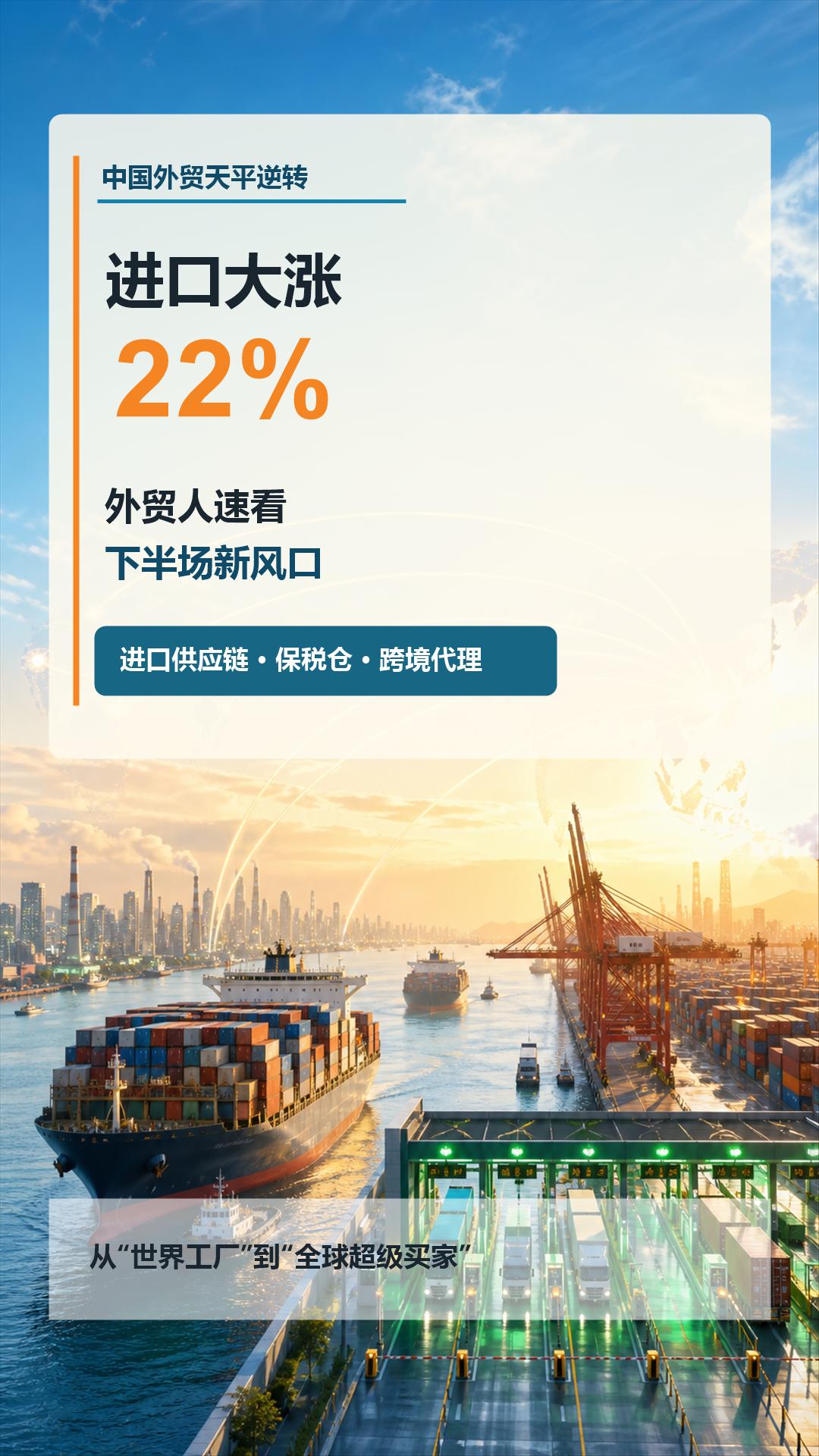
 China's foreign trade sees a turnaround: imports surge by 22%! Foreign trade professionals should quickly take note of the new trends in the second half of the year
 What Does a Global Traffic Ecosystem Service Provider Do? What Are the Differences from a Single Advertising Agency
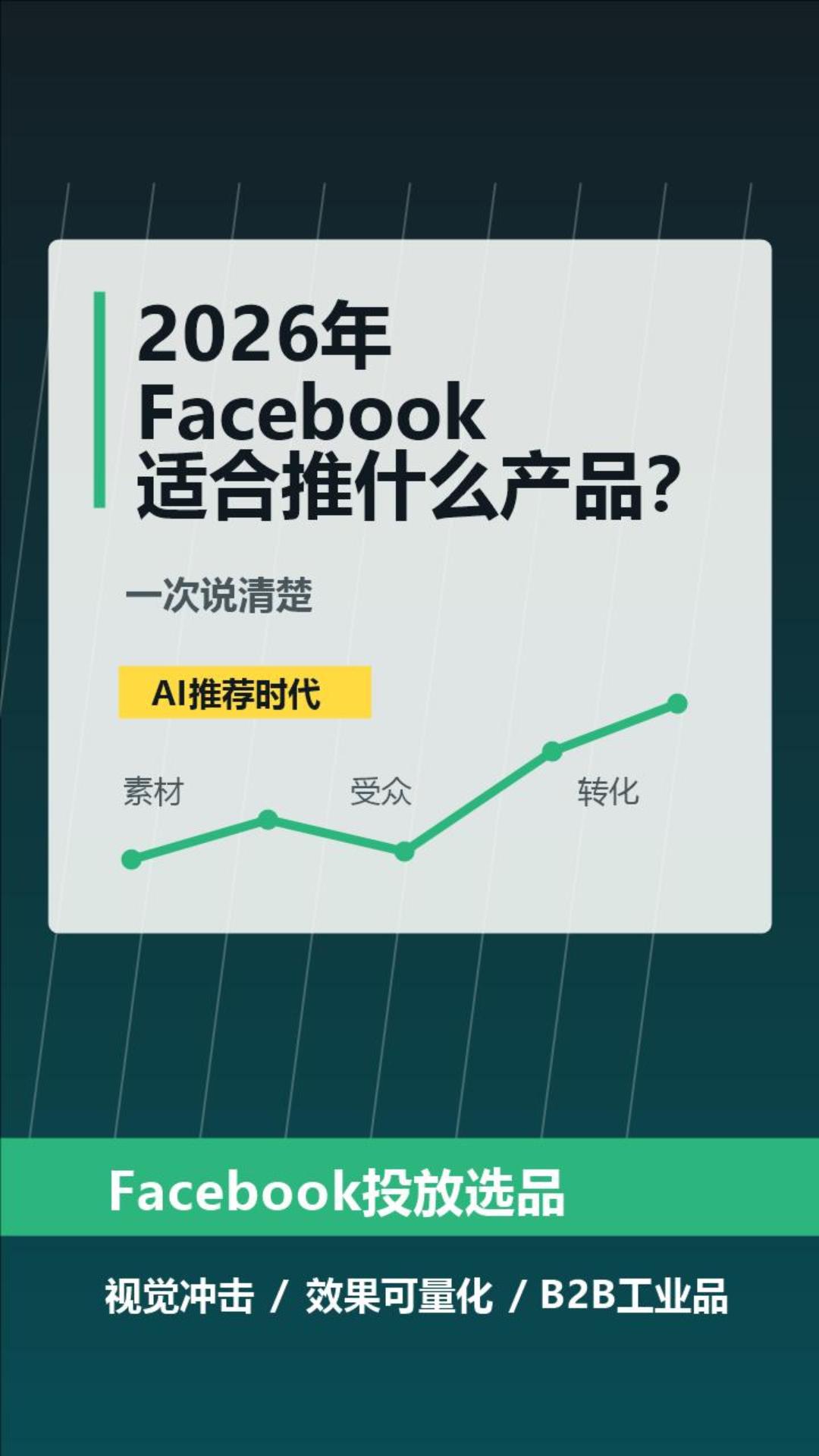
 What Products Are Suitable for Facebook in 2026? Explained Clearly at Once

Related Products
 EasyCamp SaaS Smart Website Marketing SystemE-Yingbao SaaS Smart Website Marketing System: AI-powered, zero-code website building. Rapidly launch multilingual independent e-commerce sites in just 10 minutes. Global server acceleration and AI-driven SEO optimization empower businesses to efficiently connect with global markets. The seamless integration of technology and user-friendly operation makes building e-commerce sites incredibly simple.
 AI+SEM Intelligent Advertising Marketing SystemAI+SEM drives intelligent ad creation, empowering full-funnel precision advertising marketing. The system automatically generates weekly/monthly reports, AI recommends keywords and target countries, monitors core metrics in real-time with intelligent alerts, and enables one-click high-conversion ad solutions to help quickly acquire customers and improve ROI.
 AI+SEO Dual Engine Optimization ServiceEasyWin AI+SEO Dual Engine Optimization System leverages AI-powered keyword mining, content generation, and comprehensive technical optimization to help foreign trade enterprises acquire high-quality organic traffic, significantly improving search rankings and conversion rates.
 AI+SNS Social Media Marketing SystemYingbao AI+SNS Social Media Marketing System - Precision social capture for the social media era. Supports one-click content synchronization across major platforms like Facebook and LinkedIn. AI intelligently rewrites posts for enhanced relevance. 24/7 AI customer service and user profiling analysis empower businesses to efficiently expand into global markets.
 AI+SEO营销解决方案易营宝AI+SEO营销解决方案,通过AI批量写作、智能生成TDK、精准关键词扩词等功能,全面优化网站SEO效果,提升流量与转化率。助力企业构建高效智能网站新生态。
 AI+SEM Advertising Marketing SolutionsAI+SEM Advertising Marketing Solution leverages AI technology to deeply empower SEM ad campaigns. It automatically generates weekly/monthly reports using AI, presenting account data across multiple dimensions for comprehensive insights into campaign performance and trends. The system precisely recommends keywords and target countries, intelligently generates high-conversion ad copy, and enables one-click activation of efficient campaign plans to help businesses rapidly acquire customers. Simultaneously, it monitors core metrics in real time, intelligently identifies abnormal fluctuations, and issues timely alerts to ensure stable, high-return advertising results.
 Domain Name ServicesEasyWin provides professional domain name services, including intelligent queries, one-stop registration, brand protection, and full lifecycle management, helping businesses build a digital brand image.
 EasyOperate B2C Cross-Border E-Commerce Platform & Independent WebsiteEasyStore B2C Cross-border E-commerce Independent Store is an intelligent website building and cross-border e-commerce integrated solution independently developed by EasyStore Information Technology (Beijing) Co., Ltd. The system is specially designed for small and medium-sized as well as large export enterprises, integrating 'website building, operation, marketing, advertising, and conversion' into one, helping enterprises quickly establish cross-border e-commerce independent stores to achieve brand globalization and global sales growth.
The platform supports multiple languages, multiple currencies, and multi-channel marketing, with built-in AI intelligent translation and SEO optimization systems, suitable for mainstream markets such as Southeast Asia, Europe and America, Latin America, and the Middle East, assisting Chinese manufacturing enterprises in efficiently deploying international e-commerce strategies. SSL证书易营宝提供专业SSL安全证书服务,包括单域名和泛域名证书,确保网站数据传输加密、身份验证和完整性保护,助力企业建立安全可信的在线业务环境。









