









- What Does a Global Traffic Ecosystem Service Provider Do? What Are the Differences from a Single Advertising AgencyJul 16, 2026View details
- What should you focus on in the latest enterprise SaaS report? From renewal rates and delivery costs to overseas growth opportunitiesJul 12, 2026View details
- What signals are worth paying attention to in a cross-border marketing trend report? B2B companies should look at these 6 signalsJul 11, 2026View details
- How to Read a Cross-Border Marketing Trends Report? Five Key Dimensions for Evaluating Channel OpportunitiesJul 11, 2026View details
- Which channel has the highest ROI in the global traffic ecosystem? Comparative analysis of search, social media, and advertisingJul 10, 2026View details
- What multilingual website services are available in Sanya? Which model is more suitable for local businesses going global?Jul 08, 2026View details
- How to view the complete list of China SaaS companies in the top 100? Practical methods for screening website-building and marketing service providersJul 08, 2026View details
- How to view pricing in the global traffic ecosystem? Cost comparison of search, social media, and content channel advertisingJul 06, 2026View details
Your social media marketing strategy never seems to work? The problem may be the timing.
Many companies fail to see results from their social media marketing strategies for a long time, not because the content is insufficient, but because the rhythm is out of balance. Whether it is social media content marketing or Meta advertising techniques, only by developing a website traffic growth plan around the user decision-making cycle can conversion results truly be amplified.
Why social media marketing strategies always fail: look at the rhythm first, instead of blaming the content first
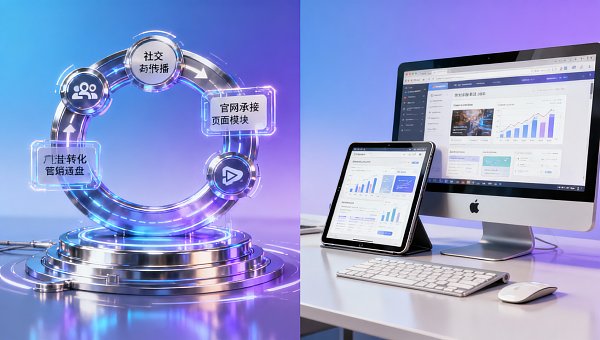
In integrated website + marketing service scenarios, many companies treat social media as a single-point exposure tool, but fail to connect it with the official website, inquiry pathways, and lead nurturing into a closed loop. As a result, there is often content at the front end but no conversion at the back end, advertising spend is consumed but business opportunities remain unstable, and in the end they mistakenly believe the platform is not suitable for them.
The real problem often lies in the rhythm. From the first time a user sees a brand, to entering the official website, and then to submitting an inquiry, they usually go through 3 stages: awareness, comparison, and decision-making. If a company keeps selling continuously within 7 days, but fails to build trust in the first 2 weeks, conversions will naturally be low.
For information researchers, what they need is verifiable information; for business decision-makers, they care about budget allocation and ROI logic; after-sales maintenance personnel are more concerned with whether post-delivery content updates are convenient; distributors and agents focus on whether the brand can continuously bring effective leads; end consumers care about whether the product is reliable and easy to understand.
Yiyingbao Information Technology (Beijing) Co., Ltd. has long served global growth scenarios. Its core value does not lie in operating only one platform, but in connecting smart website building, SEO optimization, social media marketing, and advertising into one complete chain. When companies do social media marketing, they cannot look only at weekly data, but should at least evaluate whether the rhythm over 2–4 weeks is properly aligned.
The 4 most common signs of rhythm imbalance
- Posting frequency swings sharply: posting 6 times in one week and stopping updates the next week makes it difficult for both platform algorithms and user memory to form stable feedback.
- Traffic and landing pages are disconnected: social content talks about scenarios, while the website only piles up parameters, making it hard for users to continue understanding the value after clicking.
- Pushing for conversion too early: when users are still comparing options, they are asked to leave their information or place an order immediately, which easily causes bounce.
- The review cycle is too short: judging success or failure after only 3 days of advertising does not cover the full cycle of reach, return visits, and secondary conversion.
For B2B companies, especially in industries such as heavy industry, equipment manufacturing, and channel招商, the marketing rhythm needs to be layered even more. This is because from the first visit to quotation communication, the cycle of one inquiry is commonly not completed within 24 hours, but may take 14 days, 30 days, or even longer.
How to arrange content, website, and advertising rhythm around the user decision-making cycle
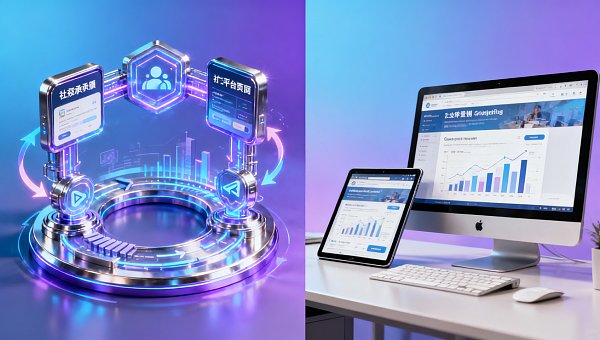
To improve social media marketing performance, the key is not to “post more,” but to align the content rhythm with user decision-making actions. A more stable approach is to divide social media, official website, search entry points, and advertising remarketing into a 4-step implementation process, so that each step takes on a different task.
The first step is to build awareness, usually with a cycle of 1–2 weeks, and the content mainly focuses on industry pain points, application scenarios, and procurement misconceptions. The second step is to guide comparison, with a cycle of 2–3 weeks, focusing on presenting solution differences, delivery capabilities, and service processes. The third step is to drive decisions, concentrated on actions such as quotations, consultations, and sample support. The fourth step is remarketing and secondary reach.
In this process, the website cannot be just a display page, but should become a digital base. For example, website pages aimed at heavy industry customers should enable users to quickly see brand endorsement, core data indicators, product guides, application scenarios, and high-intent inquiry entry points, instead of making users repeatedly search through multi-level menus.
If a company deals in large-scale equipment and engineering products, solution pages like heavy machinery equipment, heavy industry are more suitable for adopting a single-column layout, large industry-scenario banners, customer testimonial modules, and service commitment lists, turning complex parameters into understandable construction solutions.
What problems the 4-step rhythm design solves respectively
The table below is suitable for companies to refer to directly when formulating social media marketing strategies. It is not simply a content schedule, but considers the website traffic growth plan together with conversion nodes.
The key point behind the table is: different stages cannot use the same expression method. Social media is responsible for seeding interest and reach, the website is responsible for explanation and conversion handoff, and advertising is responsible for amplifying high-intent audiences. Only after the three are synchronized can the marketing rhythm become truly stable.
Minimum configuration recommendations for content and website handoff
- Maintain 2–4 content updates per week, and avoid posting intensively only during advertising periods.
- Each key campaign should be equipped with at least 1 independent landing page. It is not recommended to direct all traffic back to the homepage.
- Control website form fields within 3–5 items, which is more conducive to mobile conversion.
- Observe advertising reviews for at least 7 days. In B2B high-ticket scenarios, this can be extended to 14 days or more.
Yiyingbao's advantage lies in advancing through the dual engines of technological innovation and localized services. It is not about optimizing only one link, but about enabling companies to execute website building, search, social media, and advertising collaboratively under the same business goal, reducing the problem of each channel speaking its own language.
The comparison companies most easily overlook: high-frequency posting does not equal high-quality conversion
When reviewing performance, many teams only look at two numbers: how much content was posted and how much budget was spent. But for business decision-makers, what matters more is lead quality, sales cycle, and channel collaboration efficiency. Especially under the integrated website + marketing service model, having the right rhythm is more critical than simply increasing frequency.
For example, for the same social media promotion, one approach is to post promotional messages continuously for 30 days; another approach is to use the first 10 days for awareness content, the middle 10 days to promote official website solutions, and the last 10 days to combine remarketing ads for recall. Although the latter may not necessarily have more content, it better matches the user decision-making path.
For distributors, agents, or end customers, they do not necessarily make inquiries immediately upon the first touchpoint. Many people only focus on checking cases, parameters, after-sales support, and delivery cycles during the 2nd or 3rd visit to the official website. Therefore, conversion judgment cannot rely on just one click.
The comparison table below is suitable for judging whether a company's current social media content marketing is “busywork operations” or “growth-oriented operations.”
Related Articles
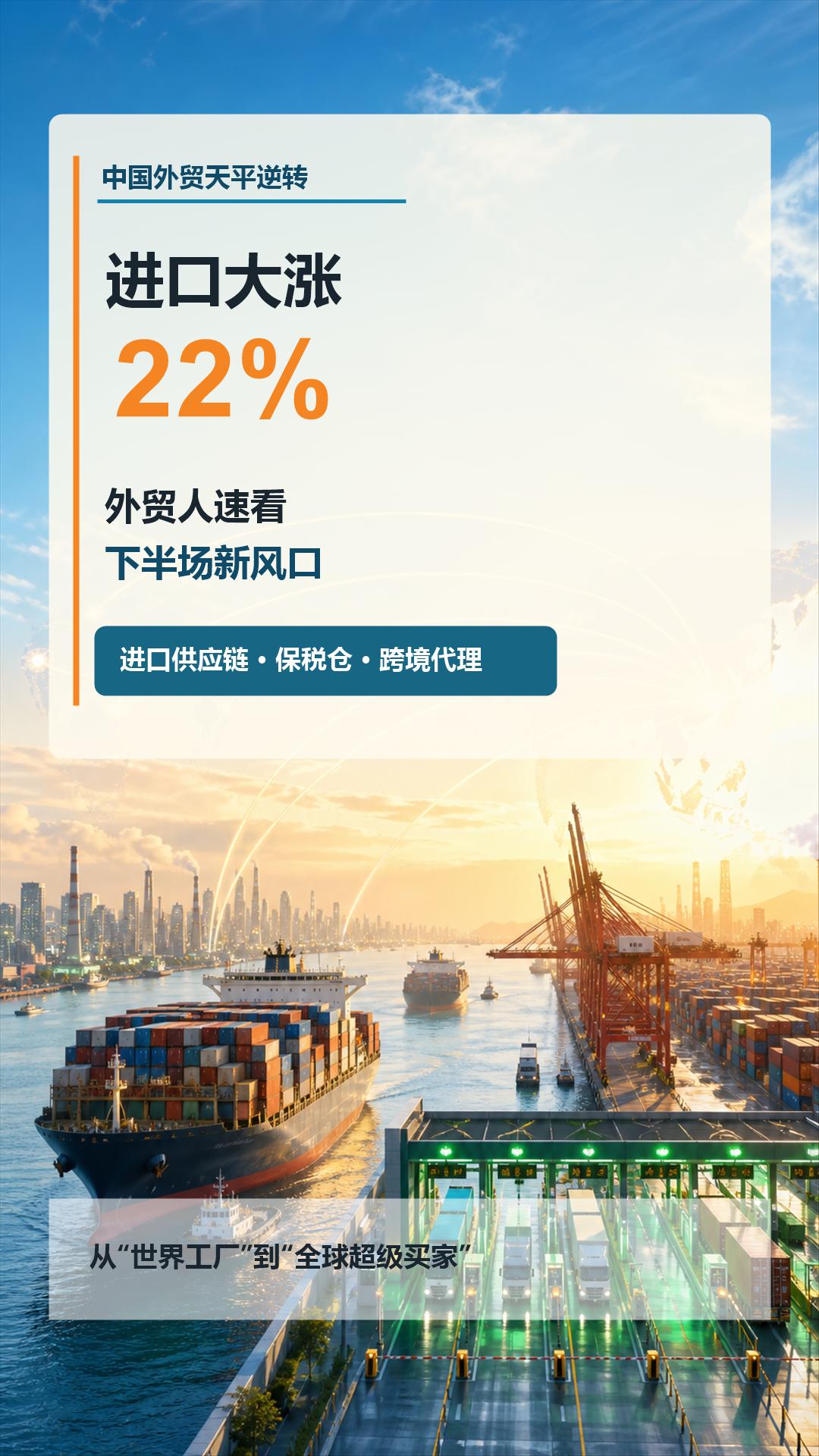
 China's foreign trade sees a turnaround: imports surge by 22%! Foreign trade professionals should quickly take note of the new trends in the second half of the year
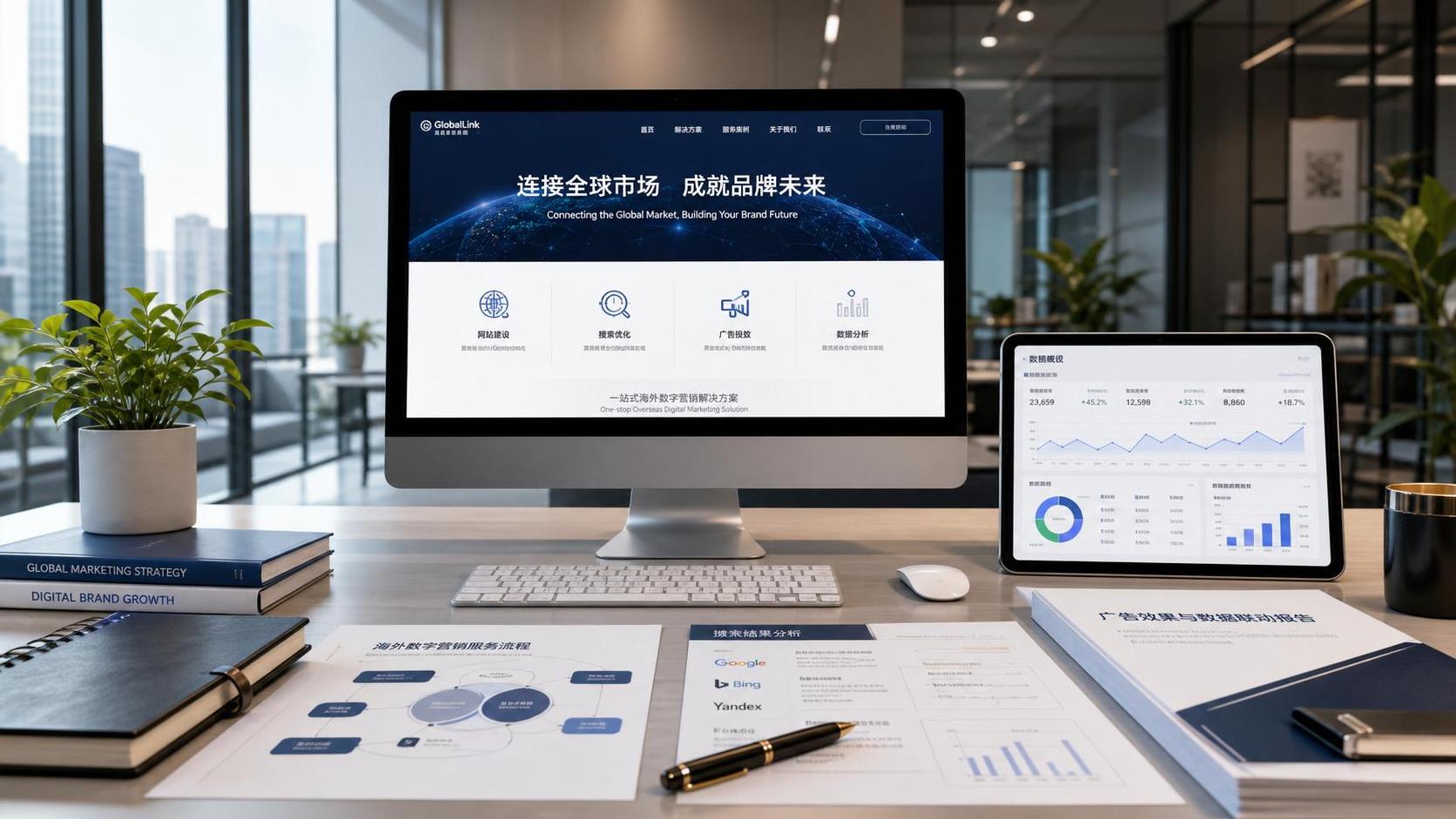
 What Does a Global Traffic Ecosystem Service Provider Do? What Are the Differences from a Single Advertising Agency
 What Products Are Suitable for Facebook in 2026? Explained Clearly at Once
Related Products
 EasyCamp SaaS Smart Website Marketing SystemE-Yingbao SaaS Smart Website Marketing System: AI-powered, zero-code website building. Rapidly launch multilingual independent e-commerce sites in just 10 minutes. Global server acceleration and AI-driven SEO optimization empower businesses to efficiently connect with global markets. The seamless integration of technology and user-friendly operation makes building e-commerce sites incredibly simple.
 AI+SEM Intelligent Advertising Marketing SystemAI+SEM drives intelligent ad creation, empowering full-funnel precision advertising marketing. The system automatically generates weekly/monthly reports, AI recommends keywords and target countries, monitors core metrics in real-time with intelligent alerts, and enables one-click high-conversion ad solutions to help quickly acquire customers and improve ROI.
 AI+SEO Dual Engine Optimization ServiceEasyWin AI+SEO Dual Engine Optimization System leverages AI-powered keyword mining, content generation, and comprehensive technical optimization to help foreign trade enterprises acquire high-quality organic traffic, significantly improving search rankings and conversion rates.
 AI+SNS Social Media Marketing SystemYingbao AI+SNS Social Media Marketing System - Precision social capture for the social media era. Supports one-click content synchronization across major platforms like Facebook and LinkedIn. AI intelligently rewrites posts for enhanced relevance. 24/7 AI customer service and user profiling analysis empower businesses to efficiently expand into global markets.
 AI+SEO营销解决方案易营宝AI+SEO营销解决方案,通过AI批量写作、智能生成TDK、精准关键词扩词等功能,全面优化网站SEO效果,提升流量与转化率。助力企业构建高效智能网站新生态。
 AI+SEM Advertising Marketing SolutionsAI+SEM Advertising Marketing Solution leverages AI technology to deeply empower SEM ad campaigns. It automatically generates weekly/monthly reports using AI, presenting account data across multiple dimensions for comprehensive insights into campaign performance and trends. The system precisely recommends keywords and target countries, intelligently generates high-conversion ad copy, and enables one-click activation of efficient campaign plans to help businesses rapidly acquire customers. Simultaneously, it monitors core metrics in real time, intelligently identifies abnormal fluctuations, and issues timely alerts to ensure stable, high-return advertising results.
 Domain Name ServicesEasyWin provides professional domain name services, including intelligent queries, one-stop registration, brand protection, and full lifecycle management, helping businesses build a digital brand image.
 EasyOperate B2C Cross-Border E-Commerce Platform & Independent WebsiteEasyStore B2C Cross-border E-commerce Independent Store is an intelligent website building and cross-border e-commerce integrated solution independently developed by EasyStore Information Technology (Beijing) Co., Ltd. The system is specially designed for small and medium-sized as well as large export enterprises, integrating 'website building, operation, marketing, advertising, and conversion' into one, helping enterprises quickly establish cross-border e-commerce independent stores to achieve brand globalization and global sales growth.
The platform supports multiple languages, multiple currencies, and multi-channel marketing, with built-in AI intelligent translation and SEO optimization systems, suitable for mainstream markets such as Southeast Asia, Europe and America, Latin America, and the Middle East, assisting Chinese manufacturing enterprises in efficiently deploying international e-commerce strategies. SSL证书易营宝提供专业SSL安全证书服务,包括单域名和泛域名证书,确保网站数据传输加密、身份验证和完整性保护,助力企业建立安全可信的在线业务环境。









