









- What Does a Global Traffic Ecosystem Service Provider Do? What Are the Differences from a Single Advertising AgencyJul 16, 2026View details
- What should you focus on in the latest enterprise SaaS report? From renewal rates and delivery costs to overseas growth opportunitiesJul 12, 2026View details
- What signals are worth paying attention to in a cross-border marketing trend report? B2B companies should look at these 6 signalsJul 11, 2026View details
- How to Read a Cross-Border Marketing Trends Report? Five Key Dimensions for Evaluating Channel OpportunitiesJul 11, 2026View details
- Which channel has the highest ROI in the global traffic ecosystem? Comparative analysis of search, social media, and advertisingJul 10, 2026View details
- What multilingual website services are available in Sanya? Which model is more suitable for local businesses going global?Jul 08, 2026View details
- How to view the complete list of China SaaS companies in the top 100? Practical methods for screening website-building and marketing service providersJul 08, 2026View details
- How to view pricing in the global traffic ecosystem? Cost comparison of search, social media, and content channel advertisingJul 06, 2026View details
Should LinkedIn marketing training focus on content or prospecting
When conducting LinkedIn marketing training, should the focus be on content marketing on the social platform or on customer development? For enterprises, LinkedIn marketing training needs to balance content value and conversion pathways, and integrate social media marketing strategies to truly improve LinkedIn corporate marketing performance.
First define the direction: Why LinkedIn marketing training cannot focus only on content or only on outreach
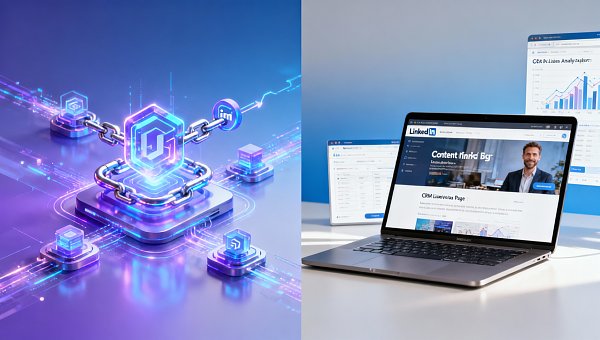
When many companies conduct LinkedIn marketing training, their first reaction is often to choose one of two options: either concentrate on training for content publishing, or strengthen customer outreach scripts. The problem is that the B2B procurement chain usually spans 4–8 weeks and involves information research, technical evaluation, management approval, and commercial price comparison, so single-point capability is rarely enough to support full conversion.
For the integrated website + marketing services industry, LinkedIn is not an isolated channel, but a customer acquisition touchpoint that works in coordination with the corporate website, landing pages, forms, SEO content, and advertising remarketing. If training only covers posting, it can easily lead to “visibility without leads”; if it only covers outreach, it can create the problem of “frequent contact but insufficient trust.”
Especially when targeting business decision-makers, project leaders, distributors, and technical evaluators, what buyers care about most is not whether your account is active, but whether you can clearly answer three questions: what problems you can solve, how the delivery process is arranged, and how long it will take to see phased results after investment.
EasyBiz Information Technology (Beijing) Co., Ltd. has long served global digital marketing scenarios. Relying on artificial intelligence and big data capabilities, it places LinkedIn marketing training into an integrated framework of “website building—content—leads—conversion,” making it more suitable for corporate clients pursuing executability, measurability, and reviewability.
How to divide the responsibilities of content and outreach in training
The core task of content marketing is to quickly establish professional credibility when customers first see a company profile, employee page, or industry viewpoint. Common content types can be divided into 4 categories: industry insights, case analysis, product applications, and delivery capability showcases. During training, teams should be taught to break down content by audience role, rather than repeatedly using one set of materials.
The core task of customer outreach is to further move people who have already followed, visited the official website, or interacted with the company toward inquiries, scheduled communication, and needs confirmation. Outreach training should not stop at sending private messages, but should also include list screening, script pacing, follow-up frequency, CRM records, and lead scoring.
- Content-side focus: improve trust, reduce unfamiliarity, and build search visibility, usually requiring a continuous 4–12 weeks to become more stable.
- Outreach-side focus: shorten the contact path, increase reply rates, and drive meeting scheduling, usually with reviews at the 7-day, 14-day, and 30-day milestones.
- Training objective: not one-time exposure, but forming a continuous action chain of “see content—visit page—start inquiry”.
How should companies allocate priorities in training: different stages have different answers

If a company is just starting LinkedIn corporate marketing, the training focus should first fall on content infrastructure, including homepage optimization, unified employee image, industry keyword layout, and official website conversion page preparation. Without these foundational elements, the more outreach actions are taken, the more likely it is to expose problems such as incomplete brand messaging and weak page conversion.
If a company already has an official website, multilingual pages, case content, and a basic follower base, then the training can gradually shift toward customer outreach. Usually, when a company can steadily produce 2–3 effective pieces of content per week and maintain clear lead sources, the priority of outreach training will increase significantly.
For teams with limited budgets, it is more suitable to adopt a training sequence of “the first 60% content, the latter 40% outreach”. For companies that already have a sales system and need to improve the efficiency of overseas inquiries, it can shift to a “40% content, 60% outreach” model, but only on the premise that the official website, case pages, forms, and tracking mechanisms are already in place.
The table below is suitable for information researchers, project leaders, and corporate decision-makers to quickly judge how training priorities should be allocated, so as to avoid investing manpower in social media marketing without forming trackable business results.
The key point of the table is not the ratio itself, but whether it matches the company’s stage. If the official website has not yet formed a clear inquiry entry point, training should first strengthen content handoff and page conversion; if sales follow-up is chaotic, then outreach processes and data review mechanisms should be established first, so that LinkedIn marketing training does not remain superficial.
Which roles most need to participate in training as a priority
LinkedIn corporate marketing is not only the responsibility of the marketing department. Technical evaluators can participate in content review to ensure that parameters, processes, and compliance information are expressed accurately; project managers can provide delivery process materials; after-sales maintenance personnel can supplement common questions to help content better reflect customers’ real concerns.
For dealer, distributor, and agent systems, training should also add requirements for unified brand messaging, such as homepage introductions, contact paths, case phrasing, and inquiry transfer mechanisms. Only in this way can companies avoid a situation where the front end generates leads through outreach, but the back end loses them due to inconsistent information.
An integrated approach from website to social media: which actions LinkedIn marketing training really needs to implement
Truly effective LinkedIn marketing training does not teach teams merely “how to post,” but rather “where users will go after the post, what they will see, and what they should do next.” This is exactly the value of integrated website + marketing services: enabling social media reach and official website conversion to form a closed loop instead of operating separately.
In actual execution, it is recommended to divide the training into 4 steps: account and homepage diagnosis, content topic planning, outreach process design, and official website handoff optimization. Each step should have clear checkpoints, such as whether the homepage covers 3 categories of core keywords, and whether the landing page has an inquiry form, case explanation, and call-to-action button.
EasyBiz Information Technology (Beijing) Co., Ltd. has full-chain capabilities in intelligent website building, SEO optimization, social media marketing, and advertising placement. This means that LinkedIn training can serve not only platform operations, but can also simultaneously optimize independent site structure, content entry points, and subsequent remarketing, thereby improving lead utilization efficiency.
When selecting content topics, companies can also supplement materials from management and performance perspectives, for example by turning management topics such as implementation barriers and optimization paths of the Balanced Scorecard in budget assessment for aluminum processing enterprises into insight content aimed at industry decision-makers, so as to strengthen professional depth and account differentiation.
4-step training implementation process
- Step 1, diagnose the current situation: use 3–5 days to review the homepage, employee profiles, official website redirects, content history, and private message processes to identify weaknesses.
- Step 2, define the content framework: plan monthly themes around 4 directions—brand awareness, application scenarios, procurement concerns, and case proof.
- Step 3, build the outreach rhythm: set 4 touchpoints—initial contact, second interaction, material sending, and meeting scheduling—to avoid frequent disturbance.
- Step 4, establish a review mechanism: track visits, interactions, replies, inquiries, and meeting conversions on weekly and monthly dimensions.
Conversion pages that need to be checked simultaneously during training implementation
If social media content talks about solutions, the official website cannot contain only a company profile; if the outreach target is an engineering project leader, then the page should include the delivery process, service scope, and response time. In general, it is recommended to prepare 2–4 types of conversion pages for industry, product, case study, and inquiry conversion respectively.
For quality control personnel and safety management personnel, the page should also explain quality control, service standards, and common delivery boundaries; for end consumers or small and medium-sized buyers, terminology density should be reduced and the clarity of inquiry entry points should be improved. If training ignores this point, it often leads to effective front-end LinkedIn corporate marketing but poor back-end performance.
From procurement and management perspectives, how to evaluate whether a set of LinkedIn marketing training is worth the investment
When corporate decision-makers choose LinkedIn marketing training, they should not only look at whether the instructor can operate an account, but more importantly whether the training can connect to business goals. For technical evaluators, the key is whether the method can be reused; for project managers, the key is whether the rhythm is executable; for procurement teams, the key is whether the investment can form sustainable assets.
It is recommended to evaluate from at least 5 dimensions: whether it covers both content and outreach modules, whether it connects to official website conversion, whether it provides implementation processes, whether it can train by role division, and whether it has review and optimization mechanisms. If 2 or more of these 5 items are missing, the implementation quality of the training will usually be discounted.
The table below is more suitable for procurement decisions and solution comparison. It is not simply about looking at price, but about helping companies distinguish between “platform skills training” and “growth system training,” especially for teams hoping to incorporate LinkedIn into their overseas customer acquisition system.
From the perspective of procurement return, the latter is more suitable for companies that need long-term customer acquisition, because what it accumulates is not only operational skills, but also official website content assets, lead screening methods, and organizational collaboration processes. Once this capability is formed, whether the traffic comes from organic sources or advertising, the conversion efficiency will be higher.
Common misconceptions: why many companies still see no results after training
First, mistakenly treating content quantity as content quality. Posting 5 items a week does not mean effectiveness; if industry keywords, real scenarios, and clear action guidance are missing, users still will not inquire after reading. Second, mistakenly equating outreach with mass messaging, resulting in brand image decline and continuously falling reply rates.
Third, ignoring website handoff. Many companies do a good job with LinkedIn content, but their landing pages have no case studies, no quotation communication entry points, and no structure suitable for mobile reading, causing customers who have already been convinced to drop off at the final step. Fourth, there is no 30-day and 90-day review after training, making it difficult for teams to continue optimizing.
FAQ and action recommendations: how companies should launch more effectively now
If you are evaluating LinkedIn marketing training, the most practical approach is not to first ask “content or outreach,” but to first identify which part of the current chain is missing. Is brand messaging weak, is official website handoff poor, or do you have a list but do not know how to move it forward? Once the diagnosis is clear, then design the training priorities, and the efficiency will be much higher.
FAQ 1: Which companies are more suitable to start LinkedIn marketing training first?
It is suitable for 3 types of companies to launch first: first, B2B companies that already have overseas business or plan to expand overseas customers; second, companies whose official websites are already live but whose traffic and inquiry conversion are unstable; third, teams that have technology, case studies, and delivery capabilities but lack a systematic social media approach. Usually, a preparation cycle of 2–4 weeks is more appropriate.
FAQ 2: What materials need to be prepared before training starts?
It is recommended to prepare at least 6 basic materials: company introduction, product or service categories, typical customer scenarios, frequently asked questions, official website links, and existing case materials. If you can also supplement quotation processes, delivery cycles, and after-sales scope, the training content will be easier to implement, and the outreach scripts will be closer to real business situations.
FAQ 3: Which is easier to see results from first, content or customer outreach?
In the short term, customer outreach is often more likely to show changes in replies and meetings within 7–30 days; in the medium to long term, content marketing brings more stable improvement to brand search, official website visits, and lead quality. The ideal approach is not to lean toward one side, but to simultaneously build the content foundation and outreach rhythm within 90 days.
Why choose us
Since 2013, EasyBiz Information Technology (Beijing) Co., Ltd. has continuously focused on global digital marketing services, and is able to place LinkedIn marketing training into the complete chain of intelligent website building, SEO optimization, social media marketing, and advertising placement, providing companies with implementation solutions that are closer to business results.
If your current focus is on LinkedIn corporate marketing training priorities, official website conversion page revamping, content planning, customer outreach rhythm, delivery cycles, or customized solution design, we can communicate further. We can combine your industry, target market, and team structure to help confirm training modules, execution steps, phased goals, and quotation methods, making your investment clearer and implementation more reliable.
Related Articles

Related Products
 EasyCamp SaaS Smart Website Marketing SystemE-Yingbao SaaS Smart Website Marketing System: AI-powered, zero-code website building. Rapidly launch multilingual independent e-commerce sites in just 10 minutes. Global server acceleration and AI-driven SEO optimization empower businesses to efficiently connect with global markets. The seamless integration of technology and user-friendly operation makes building e-commerce sites incredibly simple.
 AI+SEM Intelligent Advertising Marketing SystemAI+SEM drives intelligent ad creation, empowering full-funnel precision advertising marketing. The system automatically generates weekly/monthly reports, AI recommends keywords and target countries, monitors core metrics in real-time with intelligent alerts, and enables one-click high-conversion ad solutions to help quickly acquire customers and improve ROI.
 AI+SEO Dual Engine Optimization ServiceEasyWin AI+SEO Dual Engine Optimization System leverages AI-powered keyword mining, content generation, and comprehensive technical optimization to help foreign trade enterprises acquire high-quality organic traffic, significantly improving search rankings and conversion rates.
 AI+SNS Social Media Marketing SystemYingbao AI+SNS Social Media Marketing System - Precision social capture for the social media era. Supports one-click content synchronization across major platforms like Facebook and LinkedIn. AI intelligently rewrites posts for enhanced relevance. 24/7 AI customer service and user profiling analysis empower businesses to efficiently expand into global markets.
 AI+SEO营销解决方案易营宝AI+SEO营销解决方案,通过AI批量写作、智能生成TDK、精准关键词扩词等功能,全面优化网站SEO效果,提升流量与转化率。助力企业构建高效智能网站新生态。
 AI+SEM Advertising Marketing SolutionsAI+SEM Advertising Marketing Solution leverages AI technology to deeply empower SEM ad campaigns. It automatically generates weekly/monthly reports using AI, presenting account data across multiple dimensions for comprehensive insights into campaign performance and trends. The system precisely recommends keywords and target countries, intelligently generates high-conversion ad copy, and enables one-click activation of efficient campaign plans to help businesses rapidly acquire customers. Simultaneously, it monitors core metrics in real time, intelligently identifies abnormal fluctuations, and issues timely alerts to ensure stable, high-return advertising results.
 Domain Name ServicesEasyWin provides professional domain name services, including intelligent queries, one-stop registration, brand protection, and full lifecycle management, helping businesses build a digital brand image.
 EasyOperate B2C Cross-Border E-Commerce Platform & Independent WebsiteEasyStore B2C Cross-border E-commerce Independent Store is an intelligent website building and cross-border e-commerce integrated solution independently developed by EasyStore Information Technology (Beijing) Co., Ltd. The system is specially designed for small and medium-sized as well as large export enterprises, integrating 'website building, operation, marketing, advertising, and conversion' into one, helping enterprises quickly establish cross-border e-commerce independent stores to achieve brand globalization and global sales growth.
The platform supports multiple languages, multiple currencies, and multi-channel marketing, with built-in AI intelligent translation and SEO optimization systems, suitable for mainstream markets such as Southeast Asia, Europe and America, Latin America, and the Middle East, assisting Chinese manufacturing enterprises in efficiently deploying international e-commerce strategies. SSL证书易营宝提供专业SSL安全证书服务,包括单域名和泛域名证书,确保网站数据传输加密、身份验证和完整性保护,助力企业建立安全可信的在线业务环境。









