









- What Does a Global Traffic Ecosystem Service Provider Do? What Are the Differences from a Single Advertising AgencyJul 16, 2026View details
- What should you focus on in the latest enterprise SaaS report? From renewal rates and delivery costs to overseas growth opportunitiesJul 12, 2026View details
- What signals are worth paying attention to in a cross-border marketing trend report? B2B companies should look at these 6 signalsJul 11, 2026View details
- How to Read a Cross-Border Marketing Trends Report? Five Key Dimensions for Evaluating Channel OpportunitiesJul 11, 2026View details
- Which channel has the highest ROI in the global traffic ecosystem? Comparative analysis of search, social media, and advertisingJul 10, 2026View details
- What multilingual website services are available in Sanya? Which model is more suitable for local businesses going global?Jul 08, 2026View details
- How to view the complete list of China SaaS companies in the top 100? Practical methods for screening website-building and marketing service providersJul 08, 2026View details
- How to view pricing in the global traffic ecosystem? Cost comparison of search, social media, and content channel advertisingJul 06, 2026View details
Lazada launches a dedicated traffic entry point for official websites of Chinese industrial clusters (April 19, 2026)
On April 19, 2026, the Lazada platform officially launched the 'China Industrial Belt Gateway' (official websites for China's industrial belts) initiative, opening dedicated search entry points and homepage exposure slots in the Southeast Asian market for the B2B official websites of 12 major Chinese industrial belts, including Dongguan electronics, Yiwu small commodities, and Shaoxing textiles. This move directly affects the operators of manufacturing official websites targeting cross-border B2B business in Southeast Asia, marking the shift of Chinese industrial belt official websites from information display pages to regional pre-procurement touchpoints, and is worth continued attention from export-oriented niche industries such as electronic manufacturing, light industrial consumer goods, and textiles and apparel.
Event Overview
On April 19, 2026, the Lazada platform launched the 'China Industrial Belt Gateway' initiative, providing dedicated search entry points and homepage exposure resources on the Lazada platform for the B2B corporate websites of 12 major Chinese industrial belts (including Dongguan electronics, Yiwu small commodities, and Shaoxing textiles). The prerequisites for obtaining this traffic entry are: ① the title (Title), description (Description), and keywords (Keywords) of core product pages on the official website must support AI-generated trilingual content in English + Thai/Indonesian/Vietnamese; ② the official website inquiry form must integrate a localized AI routing engine to automatically distribute inquiries to customer service or regional sales managers for the corresponding language. Official websites that do not complete certification will not be able to enter this dedicated traffic pool.
Which niche sectors will be affected
Direct trading enterprises
For manufacturing enterprises that sell directly to Southeast Asian B-end buyers under their own brands or through OEM/ODM models, their official website is the first point of contact. If they do not complete multilingual TDK configuration and AI inquiry routing integration, they will lose the structural opportunity of traffic driven by the Lazada platform, making it impossible for potential buyers to accurately locate their official website within the platform and substantially weakening product selection efficiency and trust-building pathways.
Processing and manufacturing enterprises
Factories focused on contract manufacturing, without independent foreign trade teams but with official website capabilities, have traditionally relied on third-party channels for customer acquisition. This certification requirement directly targets the localization service capability of official websites, which means factories with only Chinese-language websites or simple translated pages will find it difficult to be included in the 'front-end sourcing hub' system built by Lazada, potentially accelerating the marginalization of their visibility in Southeast Asia's B-end supply chain.
Channel distribution enterprises
Intermediary service providers engaged in cross-border distribution, overseas warehousing and fulfillment, and localized services, whose clients are mostly small and medium-sized manufacturing enterprises. This initiative raises the rigid requirements for official website technical compliance, driving their service offerings to extend from website building and design toward advanced operational links such as multilingual SEO architecture, AI customer service integration, and localized inquiry management, thereby shifting the center of service value.
Supply chain service enterprises
For technology service providers offering ERP, CRM, multilingual SAAS tools, or AI routing middleware, whether their products are compatible with Lazada's certification standards (such as trilingual TDK auto-generation logic and language-region-personnel mapping rules) will become a key compatibility indicator in customer purchasing decisions. Service solutions that do not cover the relevant certification interfaces may face the risk of customer replacement.
What key points should relevant companies or practitioners pay attention to, and how should they respond now
Pay attention to the certification implementation details and whitelist mechanism to be announced by Lazada
At present, only the certification direction is clear (multilingual TDK + AI inquiry routing), while the specific technical interface documentation, review cycle, failed retry mechanism, and dynamic update rules for the industrial belt whitelist have not yet been disclosed. Companies need to continuously follow Lazada's official announcements to avoid certification preparations deviating from actual acceptance standards due to delayed information.
Differentiate the priority between core product pages and full-site multilingual construction
The certification only requires 'core product pages' to meet AI-generated trilingual standards, rather than full-site translation. Companies should prioritize identifying and systematically organizing the main SKU pages for the Southeast Asian market, ensuring that their TDK fields can be accurately parsed and generated by the AI engine, and avoiding redundant investment in unnecessary page localization.
Verify whether the current inquiry system supports three-level routing logic of language-region-personnel
The AI routing engine needs to automatically assign Thai-language inquiries to local sales managers in Thailand, rather than merely forwarding them by language to English-speaking customer service. Companies need to check whether their current CRM or form system has the capability to configure rules at this level; if they rely on manual distribution, they need to reserve a time window for system modification or middleware integration.
Note that certification results do not equal a guarantee of organic traffic
Obtaining entry qualification only solves the issue of 'whether you can be seen' and does not mean stable exposure volume. Subsequent efforts still need to optimize landing pages based on actual data such as Lazada on-site search keyword popularity, category competition intensity, and official website conversion rates. Certification is an entry threshold, not a guaranteed traffic commitment.
Editor's Viewpoint / Industry Observation
From an industry perspective, this Lazada move is better understood as a structural attempt by the platform to digitally upgrade the B2B procurement chain, rather than a simple traffic support policy. It pushes the role of Chinese supplier websites from a 'passive display end' to an 'active response end,' testing the dual infrastructure capabilities of localized content generation and real-time response. From an analytical perspective, this initiative currently looks more like a clear signal: mainstream Southeast Asian e-commerce platforms are gradually moving B2B procurement decision-making forward to supplier official websites, rather than keeping it only on platform product pages. This means official websites are no longer just corporate business cards, but are taking on front-end procurement funnel functions such as preliminary screening, language adaptation, and demand reception. What the industry needs to continue watching is whether more platforms (such as Shopee B2B and TikTok Shop Wholesale) will follow up with similar certification mechanisms, and whether this mechanism will open to companies outside industrial belts.
Conclusion: Lazada's establishment of an official website certification threshold this time is not simply about increasing the burden on enterprises, but an attempt to reconstruct the digital connection between Chinese manufacturers and Southeast Asian buyers. Its industry significance lies in the fact that, for the first time in the form of platform rules, multilingual content production and localized service response capabilities are included as core evaluation dimensions for B2B traffic allocation. At present, it is more appropriate to understand it as a forced alignment mechanism for capabilities—it does not guarantee results, but it clearly defines the basic capability boundaries for the next stage of cross-border B2B official website operations.
Source note: Official announcement from the Lazada platform (launch information on April 19, 2026); items pending continued observation: certification technical details, review cycle, dynamic whitelist update mechanism, and whether it will later expand to other industrial belts or markets.
Related Articles
 Attention! Builders' must-see: Yibingbao AI components updated, design efficiency directly doubled!
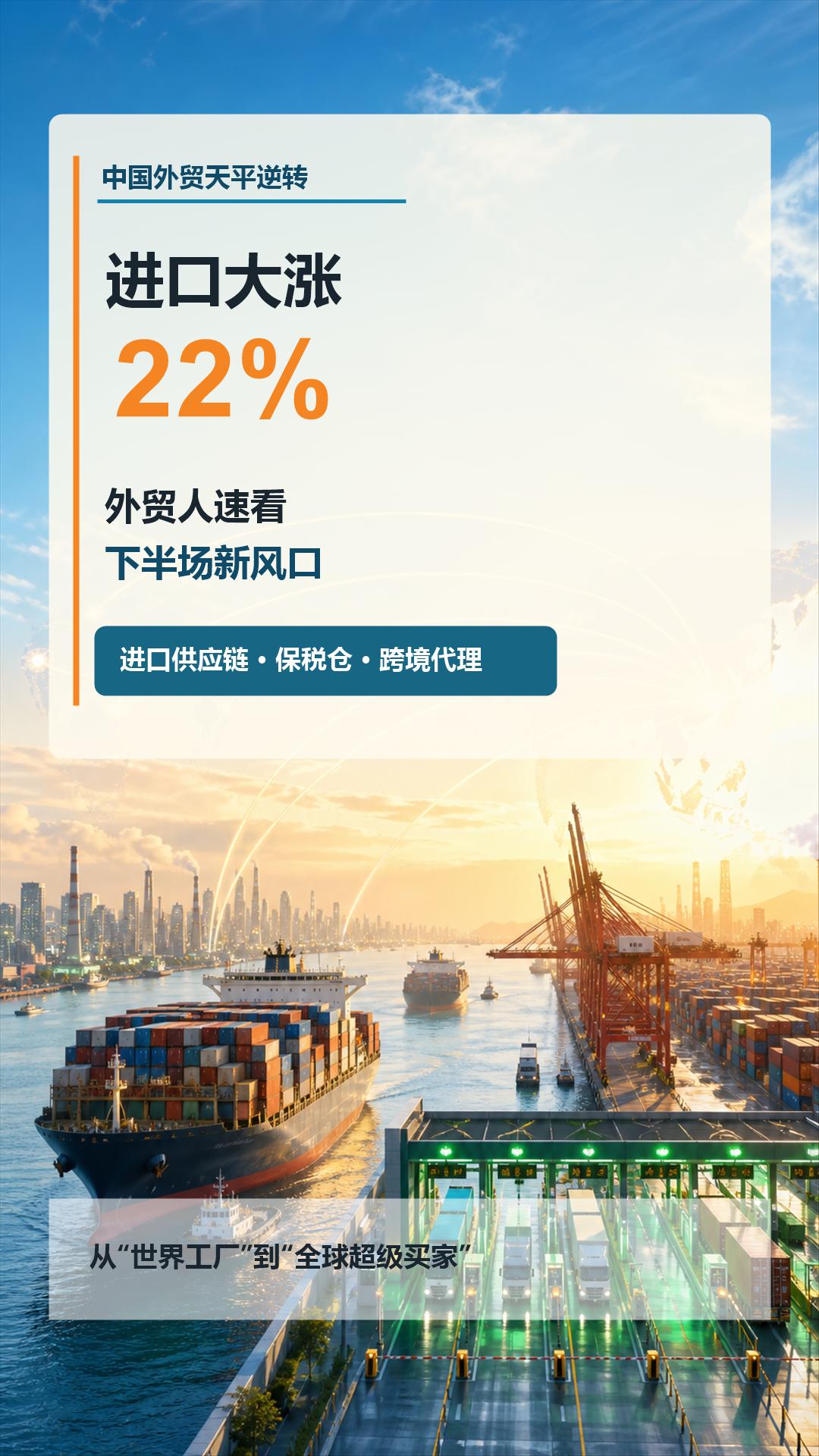
 China's foreign trade sees a turnaround: imports surge by 22%! Foreign trade professionals should quickly take note of the new trends in the second half of the year
 What Does a Global Traffic Ecosystem Service Provider Do? What Are the Differences from a Single Advertising Agency

Related Products
 EasyCamp SaaS Smart Website Marketing SystemE-Yingbao SaaS Smart Website Marketing System: AI-powered, zero-code website building. Rapidly launch multilingual independent e-commerce sites in just 10 minutes. Global server acceleration and AI-driven SEO optimization empower businesses to efficiently connect with global markets. The seamless integration of technology and user-friendly operation makes building e-commerce sites incredibly simple.
 AI+SEM Intelligent Advertising Marketing SystemAI+SEM drives intelligent ad creation, empowering full-funnel precision advertising marketing. The system automatically generates weekly/monthly reports, AI recommends keywords and target countries, monitors core metrics in real-time with intelligent alerts, and enables one-click high-conversion ad solutions to help quickly acquire customers and improve ROI.
 AI+SEO Dual Engine Optimization ServiceEasyWin AI+SEO Dual Engine Optimization System leverages AI-powered keyword mining, content generation, and comprehensive technical optimization to help foreign trade enterprises acquire high-quality organic traffic, significantly improving search rankings and conversion rates.
 AI+SNS Social Media Marketing SystemYingbao AI+SNS Social Media Marketing System - Precision social capture for the social media era. Supports one-click content synchronization across major platforms like Facebook and LinkedIn. AI intelligently rewrites posts for enhanced relevance. 24/7 AI customer service and user profiling analysis empower businesses to efficiently expand into global markets.
 AI+SEO营销解决方案易营宝AI+SEO营销解决方案,通过AI批量写作、智能生成TDK、精准关键词扩词等功能,全面优化网站SEO效果,提升流量与转化率。助力企业构建高效智能网站新生态。
 AI+SEM Advertising Marketing SolutionsAI+SEM Advertising Marketing Solution leverages AI technology to deeply empower SEM ad campaigns. It automatically generates weekly/monthly reports using AI, presenting account data across multiple dimensions for comprehensive insights into campaign performance and trends. The system precisely recommends keywords and target countries, intelligently generates high-conversion ad copy, and enables one-click activation of efficient campaign plans to help businesses rapidly acquire customers. Simultaneously, it monitors core metrics in real time, intelligently identifies abnormal fluctuations, and issues timely alerts to ensure stable, high-return advertising results.
 Domain Name ServicesEasyWin provides professional domain name services, including intelligent queries, one-stop registration, brand protection, and full lifecycle management, helping businesses build a digital brand image.
 EasyOperate B2C Cross-Border E-Commerce Platform & Independent WebsiteEasyStore B2C Cross-border E-commerce Independent Store is an intelligent website building and cross-border e-commerce integrated solution independently developed by EasyStore Information Technology (Beijing) Co., Ltd. The system is specially designed for small and medium-sized as well as large export enterprises, integrating 'website building, operation, marketing, advertising, and conversion' into one, helping enterprises quickly establish cross-border e-commerce independent stores to achieve brand globalization and global sales growth.
The platform supports multiple languages, multiple currencies, and multi-channel marketing, with built-in AI intelligent translation and SEO optimization systems, suitable for mainstream markets such as Southeast Asia, Europe and America, Latin America, and the Middle East, assisting Chinese manufacturing enterprises in efficiently deploying international e-commerce strategies. SSL证书易营宝提供专业SSL安全证书服务,包括单域名和泛域名证书,确保网站数据传输加密、身份验证和完整性保护,助力企业建立安全可信的在线业务环境。









