









- What Does a Global Traffic Ecosystem Service Provider Do? What Are the Differences from a Single Advertising AgencyJul 16, 2026View details
- What should you focus on in the latest enterprise SaaS report? From renewal rates and delivery costs to overseas growth opportunitiesJul 12, 2026View details
- What signals are worth paying attention to in a cross-border marketing trend report? B2B companies should look at these 6 signalsJul 11, 2026View details
- How to Read a Cross-Border Marketing Trends Report? Five Key Dimensions for Evaluating Channel OpportunitiesJul 11, 2026View details
- Which channel has the highest ROI in the global traffic ecosystem? Comparative analysis of search, social media, and advertisingJul 10, 2026View details
- What multilingual website services are available in Sanya? Which model is more suitable for local businesses going global?Jul 08, 2026View details
- How to view the complete list of China SaaS companies in the top 100? Practical methods for screening website-building and marketing service providersJul 08, 2026View details
- How to view pricing in the global traffic ecosystem? Cost comparison of search, social media, and content channel advertisingJul 06, 2026View details
Germany Proposes B2B Data Transparency Law: Official Websites Must Disclose Supply Chain Carbon Footprints
On 19 April 2026, the German Federal Ministry for Economic Affairs submitted the draft B2B Digital Transparency Act to parliament, requiring suppliers engaged in B2B trade with German companies (including Chinese manufacturers) to embed a standardized carbon footprint module on product pages. This measure will directly affect subsectors such as construction, industrial equipment, building materials, mechanical components, and green supply chain services, as it is directly linked to ESG compliance capabilities and German corporate procurement access mechanisms.
Event Overview
On 19 April 2026, the German Federal Ministry for Economic Affairs formally submitted the draft B2B Digital Transparency Act (B2B Data Transparency Act) to parliament. The draft proposes to mandate that all B2B official websites selling products to German companies (including Chinese supplier platforms) embed a ‘Carbon Footprint Module’ on product detail pages. The module data must be based on the EN 15804 standard (applicable to life cycle assessment of construction and industrial products), support German/English bilingual dynamic charts, and provide verifiable third-party audit links. If passed, the draft is expected to take effect in the third quarter of 2026. At present, more than 230 German buyers have already cited this module in tender documents in advance as a technical scoring item.
Which Subindustries Will Be Affected
Direct Trading Enterprises
Companies that directly export finished products to German end customers or system integrators will bear the brunt of module deployment and data disclosure obligations. The impact is reflected in the following: product pages will need newly added structured carbon data interfaces; data must comply with the LCA (life cycle assessment) methodology under EN 15804; and companies must be prepared for on-site inspections by German procurement teams regarding module accessibility, language support, and audit traceability.
Raw Material Procurement Enterprises
Upstream suppliers providing key raw materials for export products (such as steel, aluminum, chemical additives, insulation materials, etc.), although not directly displaying official websites to German companies, will have their LCA data become the foundational input for downstream manufacturers preparing EN 15804 reports. The impact is reflected in the following: German buyers may require raw material suppliers to simultaneously provide certified EPDs (Environmental Product Declarations) or LCA summaries; otherwise, this will affect the carbon footprint compliance determination of complete machines/components.
Processing and Manufacturing Enterprises
Companies engaged in OEM/ODM contract manufacturing, customized machinery assembly, prefabricated component production, and similar businesses must integrate their own process energy consumption, transport routes, and upstream material data to complete full life cycle modeling in compliance with EN 15804. The impact is reflected in the following: existing ERP/MES systems usually lack LCA data fields, so additional short-term investment will be needed in data collection, modeling, and verification; some small and medium-sized enterprises still lack dedicated sustainability positions and will face internal capability gaps.
Channel Distribution Enterprises
Trading companies entering the German market through distribution and agency models are also covered if their websites serve as actual sales entry points (for example, independent sites displaying model parameters and delivery information). The impact is reflected in the following: even if they do not possess original production-end data, they must still coordinate with manufacturers to obtain and embed compliant carbon footprint modules; if unable to provide them, they may lose eligibility for technical scoring in German tenders.
Supply Chain Service Enterprises
Organizations providing services such as EPD preparation, LCA modeling, carbon data management SaaS, and third-party verification and certification will face a trend of demand shifting forward. The impact is reflected in the following: the pace of German procurement is accelerating, pushing manufacturers to start compliance preparation earlier; service demand is shifting from “project-based response” to “embedded support,” such as providing carbon data API integration modules for official website CMS platforms.
What Key Points Should Relevant Companies or Practitioners Watch, and How Should They Respond Now
Monitor Follow-up Official Statements or Policy Changes
The draft is still in the parliamentary review stage, and detailed provisions (such as applicable company size thresholds, transition period length, and exemption scenarios) have not yet been finalized. It is recommended to continuously track the official website of the German Federal Ministry for Economic Affairs and the legislative agenda of the German Bundestag, with a focus on draft revision notes and hearing summaries to be released before June 2026.
Pay Attention to Changes in Key Product Categories, Key Markets, or Key Business Links
The EN 15804 standard mainly covers construction products and industrial structural components, and clear signals have already emerged: major German construction groups (such as Hochtief and Züblin), industrial equipment integrators (such as the Siemens Energy supply chain department), and automotive Tier-1 suppliers (involving metal parts and plastic parts) are taking the lead in listing the carbon footprint module as a mandatory tender requirement. It is recommended to prioritize sorting out product category lists that account for more than 15% of exports to Germany and identify the first batch of high-risk product lines.
Differentiate Between Policy Signals and Actual Business Implementation
230 German companies have already referenced this module in tender documents, which is a voluntary forward-looking practice and does not mean that the legal obligation has already taken effect. However, such behavior has already formed a substantive procurement threshold—companies that have not deployed the module may lose points during the technical review stage, thereby affecting tender outcomes. Companies should understand it as a “quasi-mandatory business practice” rather than merely a legislative trend to wait and see.
Prepare Procurement, Supply Chain, Communication, or Contingency Plans in Advance
It is recommended to immediately initiate three basic actions: (1) verify whether existing suppliers can provide EN 15804-compliant LCA baseline data or EPDs; (2) assess whether the website CMS supports structured data embedding (such as JSON-LD format carbon data markup); (3) establish initial contact with third-party organizations qualified for EN 15804 certification to understand modeling cycles and cost ranges, so as to avoid scheduling delays caused by concentrated applications.
Editorial Viewpoint / Industry Observation
From an industry perspective, the draft is currently better understood as an “institutional pressure test” rather than a purely technical compliance requirement. It marks that German B2B procurement logic is rapidly shifting from the dimensions of price and delivery toward the dimension of “verifiable environmental performance.” From an analytical perspective, its core intention is not to increase administrative burdens, but to force the entire cross-border supply chain to improve LCA data governance capabilities through front-end data transparency. Observationally, the module itself is only the carrier; behind it lies a systematic requirement for closed-loop capabilities in product-level carbon data collection, modeling, verification, and disclosure. What the industry needs to continuously monitor is not whether a single bill is passed, but the irreversible upward trend in the weighting of environmental data in German corporate procurement standards.
Conclusion: the draft has not yet become law, but it has already substantively reshaped the rhythm of technical preparation in China-Germany B2B trade. It currently signifies a compliance expectation with strengthened certainty—regardless of how the final provisions are fine-tuned, a data transparency mechanism based on EN 15804, using official websites as disclosure nodes and third-party audits as trust anchors, has already become one of the structural market access conditions for the German market. At present, it is more appropriately understood as a systematic preparation process covering product definition, data infrastructure, and cross-language communication capabilities, rather than an isolated webpage revamp task.
Information source note:
Main sources: legislative proposal announcement by the German Federal Ministry for Economic Affairs (BMWK) on 19 April 2026; German Bundestag legislative document number Drucksache 20/XXXXX (initial draft); sample analysis of German tender documents (as of April 2026, a total of 232 public tender texts containing technical clauses for the Carbon Footprint Module).
Parts requiring continued observation: final voting date of the draft, detailed rules for effectiveness and implementation, exemption clauses applicable to small and medium-sized enterprises, and interpretive standards for EN 15804 in non-construction industrial products.
Related Articles
 Attention! Builders' must-see: Yibingbao AI components updated, design efficiency directly doubled!
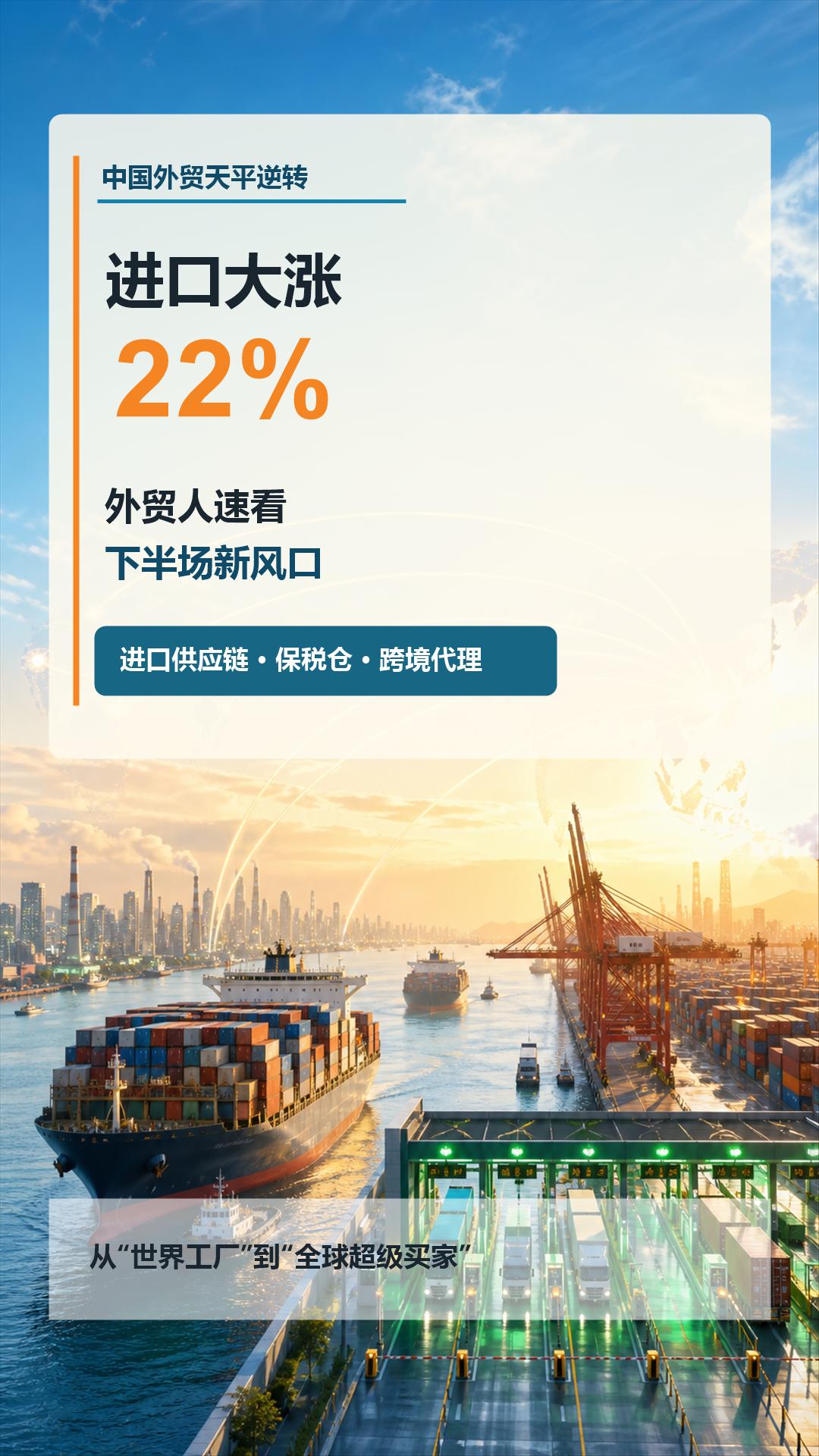
 China's foreign trade sees a turnaround: imports surge by 22%! Foreign trade professionals should quickly take note of the new trends in the second half of the year
 What Does a Global Traffic Ecosystem Service Provider Do? What Are the Differences from a Single Advertising Agency


Related Products
 EasyCamp SaaS Smart Website Marketing SystemE-Yingbao SaaS Smart Website Marketing System: AI-powered, zero-code website building. Rapidly launch multilingual independent e-commerce sites in just 10 minutes. Global server acceleration and AI-driven SEO optimization empower businesses to efficiently connect with global markets. The seamless integration of technology and user-friendly operation makes building e-commerce sites incredibly simple.
 AI+SEM Intelligent Advertising Marketing SystemAI+SEM drives intelligent ad creation, empowering full-funnel precision advertising marketing. The system automatically generates weekly/monthly reports, AI recommends keywords and target countries, monitors core metrics in real-time with intelligent alerts, and enables one-click high-conversion ad solutions to help quickly acquire customers and improve ROI.
 AI+SEO Dual Engine Optimization ServiceEasyWin AI+SEO Dual Engine Optimization System leverages AI-powered keyword mining, content generation, and comprehensive technical optimization to help foreign trade enterprises acquire high-quality organic traffic, significantly improving search rankings and conversion rates.
 AI+SNS Social Media Marketing SystemYingbao AI+SNS Social Media Marketing System - Precision social capture for the social media era. Supports one-click content synchronization across major platforms like Facebook and LinkedIn. AI intelligently rewrites posts for enhanced relevance. 24/7 AI customer service and user profiling analysis empower businesses to efficiently expand into global markets.
 AI+SEO营销解决方案易营宝AI+SEO营销解决方案,通过AI批量写作、智能生成TDK、精准关键词扩词等功能,全面优化网站SEO效果,提升流量与转化率。助力企业构建高效智能网站新生态。
 AI+SEM Advertising Marketing SolutionsAI+SEM Advertising Marketing Solution leverages AI technology to deeply empower SEM ad campaigns. It automatically generates weekly/monthly reports using AI, presenting account data across multiple dimensions for comprehensive insights into campaign performance and trends. The system precisely recommends keywords and target countries, intelligently generates high-conversion ad copy, and enables one-click activation of efficient campaign plans to help businesses rapidly acquire customers. Simultaneously, it monitors core metrics in real time, intelligently identifies abnormal fluctuations, and issues timely alerts to ensure stable, high-return advertising results.
 Domain Name ServicesEasyWin provides professional domain name services, including intelligent queries, one-stop registration, brand protection, and full lifecycle management, helping businesses build a digital brand image.
 EasyOperate B2C Cross-Border E-Commerce Platform & Independent WebsiteEasyStore B2C Cross-border E-commerce Independent Store is an intelligent website building and cross-border e-commerce integrated solution independently developed by EasyStore Information Technology (Beijing) Co., Ltd. The system is specially designed for small and medium-sized as well as large export enterprises, integrating 'website building, operation, marketing, advertising, and conversion' into one, helping enterprises quickly establish cross-border e-commerce independent stores to achieve brand globalization and global sales growth.
The platform supports multiple languages, multiple currencies, and multi-channel marketing, with built-in AI intelligent translation and SEO optimization systems, suitable for mainstream markets such as Southeast Asia, Europe and America, Latin America, and the Middle East, assisting Chinese manufacturing enterprises in efficiently deploying international e-commerce strategies. SSL证书易营宝提供专业SSL安全证书服务,包括单域名和泛域名证书,确保网站数据传输加密、身份验证和完整性保护,助力企业建立安全可信的在线业务环境。









