









- China-Morocco zero-tariff access, a breakthrough in the cost of Moroccan goods exports to ChinaJun 11, 2026View details
- What signal should be released for the suspension of exports to JapanJun 10, 2026View details
- China's May LNG imports rebounded, with increased volumes from Russia and Canada filling the Middle East supply gapJun 10, 2026View details
- Will GEO change its SEO strategy?Jun 04, 2026View details
- What types of businesses are end-to-end solutions suitable for?Jun 03, 2026View details
- 2026 Global Growth Channel TrendsJun 02, 2026View details
- Changes in Search Engine Ranking Factors in 2026Jun 06, 2026View details
- Which stages is the brand visibility enhancement service suitable forMay 29, 2026View details
How can B2B inquiry lead generation channels be combined more effectively
B2B inquiry customer acquisition wants to be more stable, first don't put all your hopes on a single channel
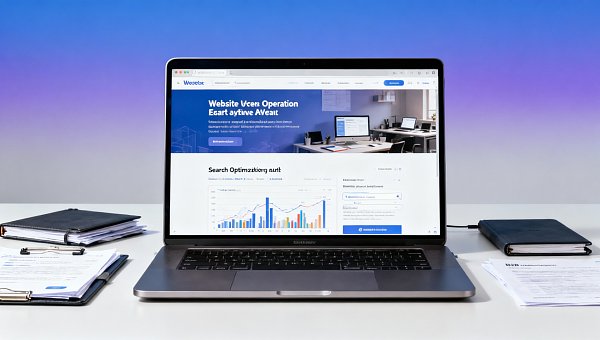
How should B2B inquiry customer acquisition channels be combined to be more stable? The core is not to “run more platforms”, but to make traffic sources, the website, and the conversion path work in sync with one another. Many companies in the early stage are used to relying only on advertising, with quick short-term results, but once the cost per click rises, the number of inquiries will fluctuate significantly.
A more common situation is that after the website goes live, content is not updated for a long time, SEO is not continuously accumulated, and social media is only used for display, eventually creating a situation where “every channel has been used, but no closed loop has been formed”. Although this seems like diversified investment, in reality B2B inquiry customer acquisition is not stable.
In actual applications, whether a channel mix is stable often depends on the business stage, target market, product decision-making chain length, and the website’s own conversion capability. Yiyingbao has long served foreign trade enterprises and brand globalization projects, which is why it emphasizes smart website building, SEO, advertising, and social media collaboration; in essence, it is to reduce the risks brought by fluctuations from a single channel.
At different business stages, the focus of B2B inquiry customer acquisition is naturally different
If you are still testing the waters in a new market, the key consideration is usually not “where is the traffic largest”, but where it is easier to validate demand. At this stage, it is more suitable to use advertising to quickly test keywords, regions, and landing pages, and then feed the effective data back into the website structure and SEO content.
If there is already a certain brand foundation, the focus will shift to long-term customer acquisition cost and inquiry quality. At this time, relying solely on paid promotion is not enough; the depth of website content, natural search coverage, and social media trust will directly affect the stability of B2B inquiry customer acquisition.
Another easily overlooked situation is synchronizing multi-language markets. Search habits, content preferences, and conversion rhythms in North America, Europe, Southeast Asia, and the Middle East are not the same. If channel combinations are not segmented by market, it is very easy to waste budget, and even generate many inquiries but few valid ones.
First use a table to see the common differences
In high-frequency landing scenarios, the website is often not just a “supporting role”
Many projects treat the website as a business card page, which directly weakens B2B inquiry customer acquisition results. Because traffic brought in by advertising, SEO, and social media ultimately needs to return to the page to complete judgment. Incomplete page information, overly long inquiry forms, and mismatched cases all lower the effectiveness of channel performance.
A website that is truly suitable for overseas customer acquisition does not focus on visual piling, but on indexing, loading, content organization, and conversion actions. Relying on its self-developed cloud intelligent website building system and AI+SEO/GEO optimization system, Yiyingbao’s common approach is to first build the website into a foundation that is “promotable, indexable, and convertible”, and then decide how each channel should drive traffic, so that B2B inquiry customer acquisition has room for sustained expansion.
If the business involves cross-border compliance, technical patents, or overseas legal communication, the website content also needs to appropriately supplement risk awareness and professional information. For example, in knowledge-content layouts, naturally linking to the construction of a corporate overseas risk early-warning system under the digital economy backgroundsuch a topic is more likely to enhance professional trust than simply stacking product parameters.
Advertising is suitable for boosting volume, but not for independently bearing all stability
The first value of advertising in B2B inquiry customer acquisition is speed. When a new site has just launched and SEO has not yet taken shape, advertising can quickly validate regions, keyword groups, and page topics, helping determine where real demand is concentrated.
The problem is also obvious. The stability of ad traffic is built on budget, bids, and continuous creative optimization. Once industry competition intensifies and cost per click rises, inquiry costs will immediately increase. If there is no SEO and brand search support, the overall customer acquisition will become fragile.
A more stable approach is to use advertising for two types of tasks: one is rapid validation of new products and new markets; the other is precise coverage of high-intent keywords and key countries. The remaining traffic is better left to SEO content and website topic pages for continuous support.
SEO and social media are not slow moves, but the “base layer” for stable inquiries
Many people think SEO works slowly, so they put it last. In fact, SEO determines whether, over the next six months to one year, B2B inquiry customer acquisition can still maintain a reasonable cost.
This is especially true in the foreign trade industry, where many search demands contain obvious regional terms, process terms, and application terms; continuous optimization will create a stronger compounding effect.
Social media is not only for “posting updates”. In a complex decision-making chain, social media is more like an auxiliary trust-validation channel. After visitors enter the official website through search, they often go on to check social media update frequency, case presentations, and interaction traces to judge whether the business is long-term and stable.
- SEO is more suitable for carrying long-term search demand and reducing subsequent lead generation costs.
- Social media is more suitable for supplementing trust information and shortening the hesitation time before the first communication.
- The combination of the two with website case pages and topic pages is more likely to improve B2B inquiry customer acquisition quality.
What really easily causes problems are often these misunderstandings
A common misunderstanding is equating “having traffic” with “having inquiries”. Some keywords bring a lot of visits, but they do not correspond to real purchasing demand. The ad results may seem good, but in reality B2B inquiry customer acquisition does not improve, and sales follow-up pressure becomes even greater.
Another misunderstanding is treating similar markets as the same approach. The European and American markets usually value qualifications, cases, and page logic, while some markets in the Middle East and Southeast Asia place more emphasis on response speed and communication convenience. Website language, form fields, and content depth all need to be adjusted accordingly.
There are also some projects that focus too much on first-month results while ignoring data accumulation. Without landing pages, without source analysis, and without form-source tracking, it is difficult to know which types of pages are actually bringing effective leads. Naturally, the channel mix cannot be optimized.
If you want B2B inquiry customer acquisition to be more stable, you can promote it according to this logic
A more practical approach is not to fill all channels at once, but to first establish a verifiable combination. Use a marketing-oriented website as the unified landing point first, then split keywords, content, and ad strategies according to the target region, gradually forming a dual structure of “short-term traffic boost” and “long-term accumulation”.
- First check whether the website is suitable for conversion, including speed, structure, content, and form design.
- Then define the roles of each channel, with advertising responsible for validation, SEO responsible for accumulation, and social media responsible for trust supplementation.
- Build independent vocabularies and pages for different regions, and do not mix the same set of content.
- Include inquiry quality in the evaluation, not just visits and clicks.
- For information involving technology and overseas risks, the content can be appropriately extended to the construction of a corporate overseas risk early-warning system under the digital economy backgroundto strengthen professional recognition.
In the end, there is no single answer to how to combine B2B inquiry customer acquisition channels for greater stability. More important is to first clarify which stage the business is in, then determine whether the website foundation is sufficient to support it, and finally let SEO, advertising, and social media operate together around the same conversion chain. Only by clearly sorting out the scenarios, costs, cycles, and risks can the channel combination become more and more stable, rather than experiencing stage-like ups and downs.
Related Articles


Related Products
 EasyCamp SaaS Smart Website Marketing SystemE-Yingbao SaaS Smart Website Marketing System: AI-powered, zero-code website building. Rapidly launch multilingual independent e-commerce sites in just 10 minutes. Global server acceleration and AI-driven SEO optimization empower businesses to efficiently connect with global markets. The seamless integration of technology and user-friendly operation makes building e-commerce sites incredibly simple.
 AI+SEM Intelligent Advertising Marketing SystemAI+SEM drives intelligent ad creation, empowering full-funnel precision advertising marketing. The system automatically generates weekly/monthly reports, AI recommends keywords and target countries, monitors core metrics in real-time with intelligent alerts, and enables one-click high-conversion ad solutions to help quickly acquire customers and improve ROI.
 AI+SEO Dual Engine Optimization ServiceEasyWin AI+SEO Dual Engine Optimization System leverages AI-powered keyword mining, content generation, and comprehensive technical optimization to help foreign trade enterprises acquire high-quality organic traffic, significantly improving search rankings and conversion rates.
 AI+SNS Social Media Marketing SystemYingbao AI+SNS Social Media Marketing System - Precision social capture for the social media era. Supports one-click content synchronization across major platforms like Facebook and LinkedIn. AI intelligently rewrites posts for enhanced relevance. 24/7 AI customer service and user profiling analysis empower businesses to efficiently expand into global markets.
 AI+SEO营销解决方案易营宝AI+SEO营销解决方案,通过AI批量写作、智能生成TDK、精准关键词扩词等功能,全面优化网站SEO效果,提升流量与转化率。助力企业构建高效智能网站新生态。
 AI+SEM Advertising Marketing SolutionsAI+SEM Advertising Marketing Solution leverages AI technology to deeply empower SEM ad campaigns. It automatically generates weekly/monthly reports using AI, presenting account data across multiple dimensions for comprehensive insights into campaign performance and trends. The system precisely recommends keywords and target countries, intelligently generates high-conversion ad copy, and enables one-click activation of efficient campaign plans to help businesses rapidly acquire customers. Simultaneously, it monitors core metrics in real time, intelligently identifies abnormal fluctuations, and issues timely alerts to ensure stable, high-return advertising results.
 Domain Name ServicesEasyWin provides professional domain name services, including intelligent queries, one-stop registration, brand protection, and full lifecycle management, helping businesses build a digital brand image.
 EasyOperate B2C Cross-Border E-Commerce Platform & Independent WebsiteEasyStore B2C Cross-border E-commerce Independent Store is an intelligent website building and cross-border e-commerce integrated solution independently developed by EasyStore Information Technology (Beijing) Co., Ltd. The system is specially designed for small and medium-sized as well as large export enterprises, integrating 'website building, operation, marketing, advertising, and conversion' into one, helping enterprises quickly establish cross-border e-commerce independent stores to achieve brand globalization and global sales growth.
The platform supports multiple languages, multiple currencies, and multi-channel marketing, with built-in AI intelligent translation and SEO optimization systems, suitable for mainstream markets such as Southeast Asia, Europe and America, Latin America, and the Middle East, assisting Chinese manufacturing enterprises in efficiently deploying international e-commerce strategies. SSL证书易营宝提供专业SSL安全证书服务,包括单域名和泛域名证书,确保网站数据传输加密、身份验证和完整性保护,助力企业建立安全可信的在线业务环境。









