









- What stages does the cross-border services ecosystem include? How do website building, promotion, payment, and compliance work togetherJun 22, 2026View details
- How will email marketing costs change in 2026Jun 22, 2026View details
- The China-US tariff arrangement has reached a preliminary consensus, and the trade association will be establishedJun 15, 2026View details
- Should overseas brand marketing start with ads or contentJun 21, 2026View details
- What determines B2C cross-border e-commerce website development costs? A breakdown of features, interfaces, and deployment methodsJun 17, 2026View details
- China-Morocco zero-tariff access, a breakthrough in the cost of Moroccan goods exports to ChinaJun 11, 2026View details
What to do if your WhatsApp account is suddenly logged out?
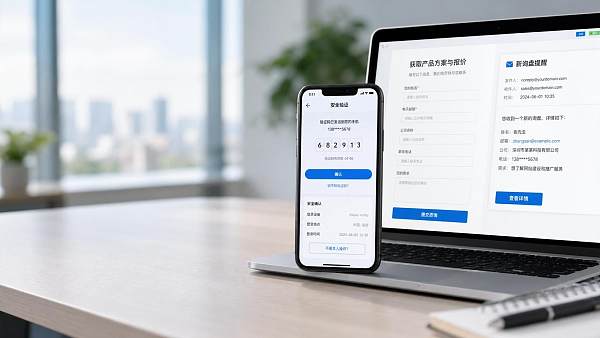
What should you do if your WhatsApp account is suddenly logged out? Don’t panic first—this is usually related to device issues, account security, or system detection. This article will help you quickly identify the cause, master recovery and protection methods, and reduce the risk of losing customers due to communication interruptions.
For foreign trade companies, cross-border sellers, and brands going global, WhatsApp is not just a chat tool, but also an important channel for following up with customers, sending quotations, and maintaining relationships. Once an account is suddenly logged out, the biggest concern is not logging back in, but missing inquiries, affecting deals, and even causing customers to question the company’s professionalism.
What does it usually mean when a WhatsApp account is suddenly logged out?
Let’s start with the conclusion: in most cases, a sudden account logout does not mean a permanent ban. It usually corresponds to three types of reasons: device or network anomalies, account security risks, or the platform system triggering risk control detection. The sooner the cause is identified, the higher the chance of restoring communication.
If you are only asked to re-verify your phone number, it is usually a normal security check; if you can’t receive the verification code or get a prompt that the account is abnormal, it may be related to the network environment, frequent device switching, or third-party plugins; if there is a clear ban notice, you need to appeal as soon as possible and review your usage behavior.
Check these 4 steps first to avoid misjudgment and secondary risk
Step 1: Confirm whether you or a team member logged into the account on another device. Many businesses have multiple sales and customer service staff collaborating, so if someone logs in on a new phone or in a new environment, the old device may be automatically logged out. This is common and not something to panic about.
Step 2: Check whether your phone can properly receive SMS and voice verification codes. If the verification code is delayed or doesn’t arrive, first check the mobile signal, international SMS permissions, carrier blocking, and whether requests were made repeatedly in a short period. Repeated operations over a short time can instead make the platform more likely to trigger restrictions.
Step 3: Check whether you have received WhatsApp security alerts, such as detection of abnormal login activity or a possible account risk. If there is such a notification, first consider whether the account may have leaked, especially in cases involving employee turnover, shared access, or issues that appeared after clicking a suspicious link.
Step 4: Review whether you have recently used unofficial plugins, bulk-messaging tools, or virtual environments. For companies relying on WhatsApp for overseas customer acquisition, this step is especially important. Many accounts are forcibly logged out not because of a system failure, but because abnormal marketing behavior was detected by the platform.
Different prompts require different handling methods
If the system only asks you to re-enter your phone number and verify it, you can usually follow the process. It is recommended to use your usual device, a stable network, and a real SIM card for verification, as this makes it easier to pass and reduces the chance of the system mistakenly identifying the login as abnormal.
If the prompt says “This account cannot use WhatsApp” or shows similar restriction information, you should immediately start the appeal process. Prepare your phone number, company background information, and recent real usage scenarios, and emphasize that you are conducting normal business communication and have not engaged in spam or violations.
If you can log in but your chat history or contacts are abnormal, don’t rush to uninstall the app. First check whether cloud backup has been enabled, then confirm whether the local data is intact. For businesses, the continuity of important customer information is often more valuable than the account itself and should be protected first.
What companies care about most is not just recovering the account, but reducing customer loss
Many managers are concerned about this: will an account logout affect inquiry conversions? The answer is yes, especially when WhatsApp has become the core conversion entry point besides the official website, landing pages, and social media DMs. If customer messages are replied to several hours late, they may already have gone to competitors.
Therefore, handling this type of issue should not stop at “how to log in again.” More importantly, you should establish a business continuity mechanism, such as backup communication channels, official website forms, automatic email replies, and multi-channel handoff, so that a single social media account does not become the only customer entry point.
This is also why many overseas businesses are beginning to value independent websites and digital marketing systems. Keeping customer acquisition tied to a single platform is very risky; by using multilingual websites, SEO, ad placement, and social media collaboration, even if one account is abnormal, lead generation will not be immediately interrupted.
How can you reduce the chance of WhatsApp account abnormalities happening again?
First, try to keep one device per account, maintain a stable network, and use a stable login environment. Avoid frequently switching devices and regions. Second, use only official apps and compliant methods for communication, and avoid relying on unknown bulk-messaging, scraping, or automation plugins, as these are the most common sources of risk.
Third, enable two-step verification and include the verification code, linked email, and administrator permissions in your internal company management. For companies with sales teams, it is recommended to establish an account handover process to prevent an employee’s personal habits from directly affecting the company’s customer assets—something often overlooked, but with very obvious consequences.
Fourth, incorporate WhatsApp into the overall overseas marketing chain instead of using it in isolation. For example, customers enter through Google search to the official website, then contact you via forms, email, and WhatsApp multiple entry points. In this way, even if one entry point is restricted, customers still have other ways to complete inquiries and conversions.
For overseas businesses, what really needs to be built is a more stable customer acquisition system
If your overseas business relies heavily on WhatsApp, then a sudden account logout is actually a reminder: customer assets cannot fully depend on a third-party platform. Platform rules change, and risk control will be upgraded. Only by consolidating traffic, content, and leads into your own website and system can your anti-risk capability become stronger.
AI-driven intelligent website building and overseas marketing service platforms like Yiyingbao can help companies integrate official website development, SEO optimization, ad placement, social media operations, and AI search visibility, making customer sources more diversified and lead handoff more stable, instead of putting all conversion opportunities on a single account.
In summary, if your WhatsApp account is suddenly logged out, first determine whether it is a verification issue, risk control issue, or a ban, and then handle it according to the prompt; for enterprises, the key is to improve customer touchpoints and backup mechanisms in sync. Only by building a multi-channel, sustainable overseas customer acquisition system can you truly reduce the business losses caused by account abnormalities.
Related Articles
Related Products
 EasyCamp SaaS Smart Website Marketing SystemE-Yingbao SaaS Smart Website Marketing System: AI-powered, zero-code website building. Rapidly launch multilingual independent e-commerce sites in just 10 minutes. Global server acceleration and AI-driven SEO optimization empower businesses to efficiently connect with global markets. The seamless integration of technology and user-friendly operation makes building e-commerce sites incredibly simple.
 AI+SEM Intelligent Advertising Marketing SystemAI+SEM drives intelligent ad creation, empowering full-funnel precision advertising marketing. The system automatically generates weekly/monthly reports, AI recommends keywords and target countries, monitors core metrics in real-time with intelligent alerts, and enables one-click high-conversion ad solutions to help quickly acquire customers and improve ROI.
 AI+SEO Dual Engine Optimization ServiceEasyWin AI+SEO Dual Engine Optimization System leverages AI-powered keyword mining, content generation, and comprehensive technical optimization to help foreign trade enterprises acquire high-quality organic traffic, significantly improving search rankings and conversion rates.
 AI+SNS Social Media Marketing SystemYingbao AI+SNS Social Media Marketing System - Precision social capture for the social media era. Supports one-click content synchronization across major platforms like Facebook and LinkedIn. AI intelligently rewrites posts for enhanced relevance. 24/7 AI customer service and user profiling analysis empower businesses to efficiently expand into global markets.
 AI+SEO营销解决方案易营宝AI+SEO营销解决方案,通过AI批量写作、智能生成TDK、精准关键词扩词等功能,全面优化网站SEO效果,提升流量与转化率。助力企业构建高效智能网站新生态。
 AI+SEM Advertising Marketing SolutionsAI+SEM Advertising Marketing Solution leverages AI technology to deeply empower SEM ad campaigns. It automatically generates weekly/monthly reports using AI, presenting account data across multiple dimensions for comprehensive insights into campaign performance and trends. The system precisely recommends keywords and target countries, intelligently generates high-conversion ad copy, and enables one-click activation of efficient campaign plans to help businesses rapidly acquire customers. Simultaneously, it monitors core metrics in real time, intelligently identifies abnormal fluctuations, and issues timely alerts to ensure stable, high-return advertising results.
 Domain Name ServicesEasyWin provides professional domain name services, including intelligent queries, one-stop registration, brand protection, and full lifecycle management, helping businesses build a digital brand image.
 EasyOperate B2C Cross-Border E-Commerce Platform & Independent WebsiteEasyStore B2C Cross-border E-commerce Independent Store is an intelligent website building and cross-border e-commerce integrated solution independently developed by EasyStore Information Technology (Beijing) Co., Ltd. The system is specially designed for small and medium-sized as well as large export enterprises, integrating 'website building, operation, marketing, advertising, and conversion' into one, helping enterprises quickly establish cross-border e-commerce independent stores to achieve brand globalization and global sales growth.
The platform supports multiple languages, multiple currencies, and multi-channel marketing, with built-in AI intelligent translation and SEO optimization systems, suitable for mainstream markets such as Southeast Asia, Europe and America, Latin America, and the Middle East, assisting Chinese manufacturing enterprises in efficiently deploying international e-commerce strategies. SSL证书易营宝提供专业SSL安全证书服务,包括单域名和泛域名证书,确保网站数据传输加密、身份验证和完整性保护,助力企业建立安全可信的在线业务环境。









