









- What Does a Global Traffic Ecosystem Service Provider Do? What Are the Differences from a Single Advertising AgencyJul 16, 2026View details
- What should you focus on in the latest enterprise SaaS report? From renewal rates and delivery costs to overseas growth opportunitiesJul 12, 2026View details
- What signals are worth paying attention to in a cross-border marketing trend report? B2B companies should look at these 6 signalsJul 11, 2026View details
- How to Read a Cross-Border Marketing Trends Report? Five Key Dimensions for Evaluating Channel OpportunitiesJul 11, 2026View details
- Which channel has the highest ROI in the global traffic ecosystem? Comparative analysis of search, social media, and advertisingJul 10, 2026View details
- What multilingual website services are available in Sanya? Which model is more suitable for local businesses going global?Jul 08, 2026View details
TikTok Shop will launch four country sites including Poland, and sellers must simultaneously complete a brand self-check
On June 15, 2026, TikTok Shop will officially launch sites in Poland, the Netherlands, Belgium, and Austria, and will open seller registration from June 1. Alongside the rollout of the new sites, there will also be a further tightening of rules against brand evasion: for cross-border sellers, especially Chinese sellers operating in the European market, this is not only an additional market entry point, but also directly affects multiple aspects including store naming, product labels, advertising copy, independent website presentation, and social media account operations, which deserves synchronized attention from e-commerce operations, brand teams, content teams, and compliance service functions.
The rollout of new sites and adjustments to brand rules are being implemented simultaneously
According to disclosed information, TikTok Shop will officially open sites in Poland, the Netherlands, Belgium, and Austria on June 15, 2026, with related seller registration opening from June 1.
At the same time, the platform is also tightening its brand evasion policy, explicitly prohibiting disguising brand names through methods such as misspelling brand names, adding symbols, or inserting spaces.
For violations, the platform has indicated enforcement measures including removing related products and freezing funds.
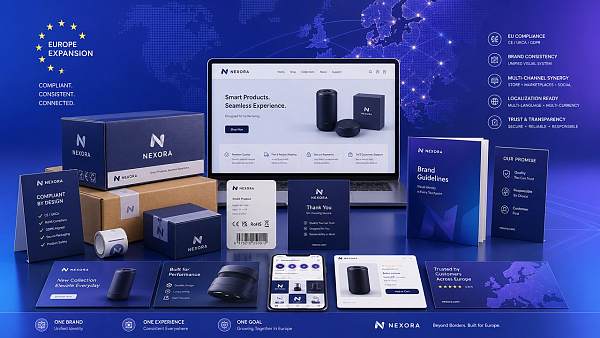
This rule adjustment also puts forward more direct enforcement requirements, namely that Chinese sellers must maintain strict consistency in brand presentation across independent websites, social media accounts, product labels, and advertising copy, which means that in multilingual scenarios, brand expression can no longer rely on vague handling.
The impact goes beyond store opening, and is more about restructuring the operational chain
Cross-border sellers expanding into Europe will be affected first
From an analysis perspective, those most directly affected are Chinese sellers planning to enter the above four new sites. On the one hand, the opening of the new sites brings new business opportunities; on the other hand, the simultaneous tightening of the brand evasion policy means sellers need to check in advance whether brand names, product information, and external communication messaging are consistent, with the main impact concentrated in store preparation, product listing, and marketing placement.
Content and advertising teams need to unify their messaging
From an industry perspective, the affected roles are not limited to store operations positions. Since the platform clearly requires strict consistency across independent websites, social media accounts, product labels, and advertising copy, content production, advertising placement, and localization translation teams all need to recheck existing materials to avoid issues such as altered brand names, evasive wording, or inconsistent expressions appearing across different language versions.
Supply chain and fulfillment service functions also need to adjust accordingly
From observation, the requirement for consistency in product labels and brand presentation will also be passed down to execution-level functions such as packaging, label production, document organization, and listing coordination. For sellers who rely on external service providers to handle product information, visual assets, or multilingual content, what needs attention next is not only traffic acquisition, but also whether front-end presentation and back-end delivery materials can remain consistent.
Current practical priorities worth closer attention
Conduct a brand evasion self-check first, rather than only focusing on the registration timeline
For sellers preparing to enter the new sites, June 1 for registration opening and June 15 for official launch are clear time points, but the more urgent task is to investigate in advance whether brand naming contains evasive writing methods such as misspellings, added symbols, or inserted spaces, so as to avoid triggering risks during the listing and review stages.
Check whether multilingual content is truly consistent
The practical difficulty of this adjustment lies in the fact that “consistency” is not limited to the Chinese-language scenario. Sellers need to verify how brands are presented across different language versions of independent website pages, social media account profiles, product titles, labels, and advertising copy, with particular focus on distinguishing compliant translation, normal localized expression, and writing that may be identified as brand evasion.
Turn rule signals into internal execution checklists
From an analysis perspective, the platform’s wording is a rule signal, while what truly affects business is whether an executable internal inspection mechanism is formed. Sellers can focus on several nodes including asset review, product creation, advertising placement, and label production, so as to avoid different departments each using different brand versions, resulting in inconsistency between front-end and back-end information.
Continue to pay attention to subsequent changes in official wording
Since the input information does not provide more detailed enforcement standards, companies still need to continue paying attention to whether more explicit review explanations, boundaries for violation determination, or supporting operational guidelines appear later, especially the specific standards involving multilingual brand presentation.
This is more like simultaneous pressure on platform governance and localization capabilities
From observation, this news should not be understood only as TikTok Shop adding four new European sites. More noteworthy is that the opening of new markets and the governance of brand evasion are being advanced within the same time window, reflecting that while the platform is expanding its sites, its requirements for consistency in brand expression and content compliance are also increasing.
From an industry perspective, this is better understood as a medium- to long-term signal: if cross-border sellers still treat brand presentation, product information, and social media content as separate work modules, subsequent adaptation costs may rise. However, based on the current information, whether this change will further extend to more detailed review rules still needs continued observation.
Behind the opportunities of added markets, the first competition is in foundational compliance capability
Overall, this development simultaneously contains two layers of meaning: “market expansion” and “rule tightening.” For Chinese sellers, the opening of sites in Poland, the Netherlands, Belgium, and Austria means a new window for market布局, while the tightening of the brand evasion policy reminds companies that before entering new markets, they must first complete consistency alignment in brand presentation, product labels, and marketing content.
At present, it is more appropriate to understand this news as a synchronized upgrade of rules during the platform’s expansion process, rather than simply short-term launch news. In the short term, what sellers need to handle is self-inspection and rectification; whether in the medium term it will evolve into more systematic multilingual compliance requirements still needs to be judged based on subsequent platform rules.
Basis of this article and directions for subsequent verification
This article is generated based on the news headline, event occurrence time, and event summary provided by the user. The information used includes the site opening time, seller registration opening time, prohibited situations under the brand evasion policy, enforcement directions for violations, and the consistency requirements for independent websites, social media accounts, product labels, and advertising copy.
For this type of industry news, it is usually still necessary to continuously verify it in combination with official platform announcements, corporate announcements, industry association information, authoritative media reports, and relevant policy documents. Since the input content does not provide specific official source links, this article cannot supplement corresponding links. Follow-up attention should still be maintained on further rule explanations, review boundaries, and enforcement details subsequently released by the platform.
Related Articles



Related Products
 EasyCamp SaaS Smart Website Marketing SystemE-Yingbao SaaS Smart Website Marketing System: AI-powered, zero-code website building. Rapidly launch multilingual independent e-commerce sites in just 10 minutes. Global server acceleration and AI-driven SEO optimization empower businesses to efficiently connect with global markets. The seamless integration of technology and user-friendly operation makes building e-commerce sites incredibly simple.
 AI+SEM Intelligent Advertising Marketing SystemAI+SEM drives intelligent ad creation, empowering full-funnel precision advertising marketing. The system automatically generates weekly/monthly reports, AI recommends keywords and target countries, monitors core metrics in real-time with intelligent alerts, and enables one-click high-conversion ad solutions to help quickly acquire customers and improve ROI.
 AI+SEO Dual Engine Optimization ServiceEasyWin AI+SEO Dual Engine Optimization System leverages AI-powered keyword mining, content generation, and comprehensive technical optimization to help foreign trade enterprises acquire high-quality organic traffic, significantly improving search rankings and conversion rates.
 AI+SNS Social Media Marketing SystemYingbao AI+SNS Social Media Marketing System - Precision social capture for the social media era. Supports one-click content synchronization across major platforms like Facebook and LinkedIn. AI intelligently rewrites posts for enhanced relevance. 24/7 AI customer service and user profiling analysis empower businesses to efficiently expand into global markets.
 AI+SEO营销解决方案易营宝AI+SEO营销解决方案,通过AI批量写作、智能生成TDK、精准关键词扩词等功能,全面优化网站SEO效果,提升流量与转化率。助力企业构建高效智能网站新生态。
 AI+SEM Advertising Marketing SolutionsAI+SEM Advertising Marketing Solution leverages AI technology to deeply empower SEM ad campaigns. It automatically generates weekly/monthly reports using AI, presenting account data across multiple dimensions for comprehensive insights into campaign performance and trends. The system precisely recommends keywords and target countries, intelligently generates high-conversion ad copy, and enables one-click activation of efficient campaign plans to help businesses rapidly acquire customers. Simultaneously, it monitors core metrics in real time, intelligently identifies abnormal fluctuations, and issues timely alerts to ensure stable, high-return advertising results.
 Domain Name ServicesEasyWin provides professional domain name services, including intelligent queries, one-stop registration, brand protection, and full lifecycle management, helping businesses build a digital brand image.
 EasyOperate B2C Cross-Border E-Commerce Platform & Independent WebsiteEasyStore B2C Cross-border E-commerce Independent Store is an intelligent website building and cross-border e-commerce integrated solution independently developed by EasyStore Information Technology (Beijing) Co., Ltd. The system is specially designed for small and medium-sized as well as large export enterprises, integrating 'website building, operation, marketing, advertising, and conversion' into one, helping enterprises quickly establish cross-border e-commerce independent stores to achieve brand globalization and global sales growth.
The platform supports multiple languages, multiple currencies, and multi-channel marketing, with built-in AI intelligent translation and SEO optimization systems, suitable for mainstream markets such as Southeast Asia, Europe and America, Latin America, and the Middle East, assisting Chinese manufacturing enterprises in efficiently deploying international e-commerce strategies. SSL证书易营宝提供专业SSL安全证书服务,包括单域名和泛域名证书,确保网站数据传输加密、身份验证和完整性保护,助力企业建立安全可信的在线业务环境。









