









- What Does a Global Traffic Ecosystem Service Provider Do? What Are the Differences from a Single Advertising AgencyJul 16, 2026View details
- What should you focus on in the latest enterprise SaaS report? From renewal rates and delivery costs to overseas growth opportunitiesJul 12, 2026View details
- What signals are worth paying attention to in a cross-border marketing trend report? B2B companies should look at these 6 signalsJul 11, 2026View details
- How to Read a Cross-Border Marketing Trends Report? Five Key Dimensions for Evaluating Channel OpportunitiesJul 11, 2026View details
- Which channel has the highest ROI in the global traffic ecosystem? Comparative analysis of search, social media, and advertisingJul 10, 2026View details
- What multilingual website services are available in Sanya? Which model is more suitable for local businesses going global?Jul 08, 2026View details
A Window of Opportunity Emerges for Small Appliance Exports Under the Temporary U.S.-EU Agreement
On 2026年6月6日,the U.S. and Europe announced that they had reached a temporary trade agreement, including the EU lowering tariffs on some U.S. agricultural and industrial products, and the U.S. suspending new tariffs and setting an overall tariff cap at 15%. For the small home appliance industry, this round of changes in trade rules, combined with the backdrop of rising manufacturing costs in Southeast Asia, is affecting price comparisons, replenishment rhythms, and order flows in the North American market, and is also prompting exporters, cross-border channel operators, and supply chain service providers to pay closer attention to subsequent implementation details, delivery arrangements, and traffic conversion efficiency.

Key confirmed information on this trade change
Confirmed information shows that on 2026年6月6日,the U.S. and Europe announced a temporary trade agreement. According to the provided summary, the EU lowered tariffs on some U.S. agricultural and industrial products; the U.S. simultaneously suspended the imposition of new tariffs and set the overall tariff cap at 15%.
In addition to this change, the provided information also shows that manufacturing costs in Southeast Asia have risen by about 10%–15%, significantly improving the price competitiveness of Chinese small home appliance exports to North America. At the same time, several factories in Shenzhen and Ningbo reported that in early 6月,restocking orders from Amazon and the Walmart platform increased by 37% month-on-month. The summary also points out that this change has placed higher demands on independent website inquiry conversion and localized SEO response speed.
After the price advantage rebounds, the impacted links in the chain are changing
The export order-taking end can more easily feel changes in order rhythms
From an industry perspective, export enterprises directly targeting the North American market are the first to be affected, because a narrowing tariff gap will directly affect quotation comparisons and customers' ordering decisions. The impact is mainly reflected in quotation updates, replenishment response, inventory coordination, and delivery arrangements. What deserves more attention at present is that when enterprises take on new inquiries or platform restocking orders, they should simultaneously verify trade terms, customs declaration documents, product descriptions, and delivery commitments, so as to avoid insufficient backend documentation and fulfillment preparation while front-end orders are growing.
Manufacturing and stocking links need to reassess production scheduling priorities
For processing and manufacturing enterprises, the rebound in price competitiveness not only means order opportunities, but also means that production scheduling and procurement rhythms may be driven again. From an analytical perspective, if platform restocking orders and independent website conversions increase simultaneously, factories need to connect production planning, material stocking, and lead time management more closely. What needs attention here is not simply capacity expansion, but focusing on verifying product consistency for the corresponding markets of the orders, quality traceability documents, and batch management in subsequent delivery, so as to avoid affecting follow-up cooperation due to delivery deviations during the window period.
Operating pressure on platform channels and independent websites is rising simultaneously
The reason channel circulation enterprises and cross-border operation teams are affected is that traffic, restocking, and conversion efficiency are beginning to directly determine whether price advantages can be turned into actual transactions. The summary has clearly mentioned that restocking on Amazon and the Walmart platform has increased, while requirements for independent website inquiry conversion and localized SEO response speed have also risen. From observation, this means that the channel side not only needs to follow up on selling price and inventory changes, but also needs to pay more attention to whether page information, response efficiency, after-sales explanations, and localized content are sufficient to support order fulfillment.
Supply chain service links need to place greater emphasis on document and delivery coordination
For supply chain service enterprises, such changes are usually first reflected in shipping rhythm, warehouse-distribution coordination, and requirements for data accuracy. Although the current input information does not provide more detailed implementation rules, from a practical perspective, logistics, customs declaration, warehousing, and after-sales coordination parties need to pay more attention to data flow, batch matching, and delivery timing management after orders increase, especially to avoid fulfillment delays or customer-side reconciliation disputes caused by unsynchronized information.
Several things companies should watch more closely during the window period
First verify whether product information and compliance documents can keep up with order changes
From an analytical perspective, under the situation of rebounding price competitiveness and increasing restocking orders, enterprises should first check whether existing product information, test reports, technical documents, and export certificates are complete, traceable, and quickly accessible. Even though this input information does not provide specific certification categories, enterprises should still regard compliance document preparation as a necessary action before order volume expands, rather than a remedial matter after shipment.
Continue tracking subsequent statements and implementation approaches
Since the current information points to a “temporary trade agreement”, it is more appropriate to understand it as having already released a clear implementation signal, but whether more refined applicable categories, implementation explanations, or market feedback will emerge later still needs continuous observation. For exporters and buyers, timely tracking of official statements, updates to customer procurement terms, and changes in platform rules will directly affect quotation strategies and order-taking judgments.
Evaluate restocking growth together with delivery capability
At present, enterprises should not only look at changes in restocking volume, but should also simultaneously assess supplier cooperation levels, material availability, delivery cycles, and after-sales support capacity. From observation, if front-end order-taking speed is faster than backend fulfillment preparation, the window period may turn into delivery pressure, so procurement plans, supplier qualification confirmation, and batch traceability mechanisms need to be checked simultaneously.
Independent website conversion and localized response are no longer just marketing issues
The summary has already highlighted the importance of independent website inquiry conversion and localized SEO response speed. For enterprises, this is closer to a transaction-chain issue rather than just a traffic issue. In other words, whether page information, response timeliness, product descriptions, and after-sales messaging are clear will directly affect whether customers can complete ordering decisions when a price advantage appears.
This is more like an implementation signal, rather than a final conclusion on the overall situation
From observation, this piece of news is currently more appropriately understood as a phased implementation signal brought by changes in trade rules: on the one hand, the narrowing tariff gap and the suspension of new tariffs do correspond in the provided information to a rebound in the price competitiveness of Chinese small home appliances in North America; on the other hand, the “temporary agreement” itself also means that the industry still needs to pay attention to subsequent detailed rules, implementation approaches, and market feedback, and should not directly regard short-term restocking changes as confirmation that the long-term landscape has already been determined.
From an industry perspective, what is truly worth continuously tracking is not only whether orders are increasing, but also whether this change can be stably transmitted to procurement planning, channel replenishment, independent website conversion efficiency, and delivery system coordination. If subsequent rule wording, customer requirements, or platform-side conditions are adjusted, the degree of matching between front-end order-taking and backend fulfillment will become a more realistic test point for enterprises.
A rational understanding of the current market rhythm
Based on the known information, the significance of this event for the small home appliance export industry lies in the fact that it has released a relatively clear phased window: changes in trade rules combined with changes in regional manufacturing costs are improving the price performance of Chinese enterprises in the North American market, and feedback has already appeared in restocking on some platforms.
However, rationally speaking, this does not mean that all enterprises will benefit simultaneously, nor does it mean that subsequent implementation is already completely clear. At present, it is more appropriate to understand this news as a dynamic signal that orders and market responses are appearing in advance, but the actual effects of rule implementation still need continued observation. For enterprises, the focus is not only on seizing inquiries and restocking orders, but also on simultaneously strengthening compliance documentation, delivery coordination, and localized response capabilities.
Basis of this article and directions for subsequent verification
This article is generated based on the news title, event occurrence time, and event summary provided by the user. The core basis includes “The U.S. and Europe reach a temporary trade agreement: the tariff gap on Chinese small home appliances in the U.S. narrows, opening an export window period”, the time “2026-06-06”, and the related summary content.
For such events, subsequent verification usually still needs to be carried out in combination with official announcements, releases by regulatory agencies, information from customs or trade authorities, industry association information, standard organization documents, and authoritative media reports. Since this input did not provide specific official source links, the relevant formal documents and public links still need to be confirmed later. Follow-up attention should still focus on policy details, implementation approaches, changes in certification and documentation requirements, adjustments to platform and procurement documents, industry feedback, and the actual fulfillment situation of enterprises.
Related Articles

Related Products
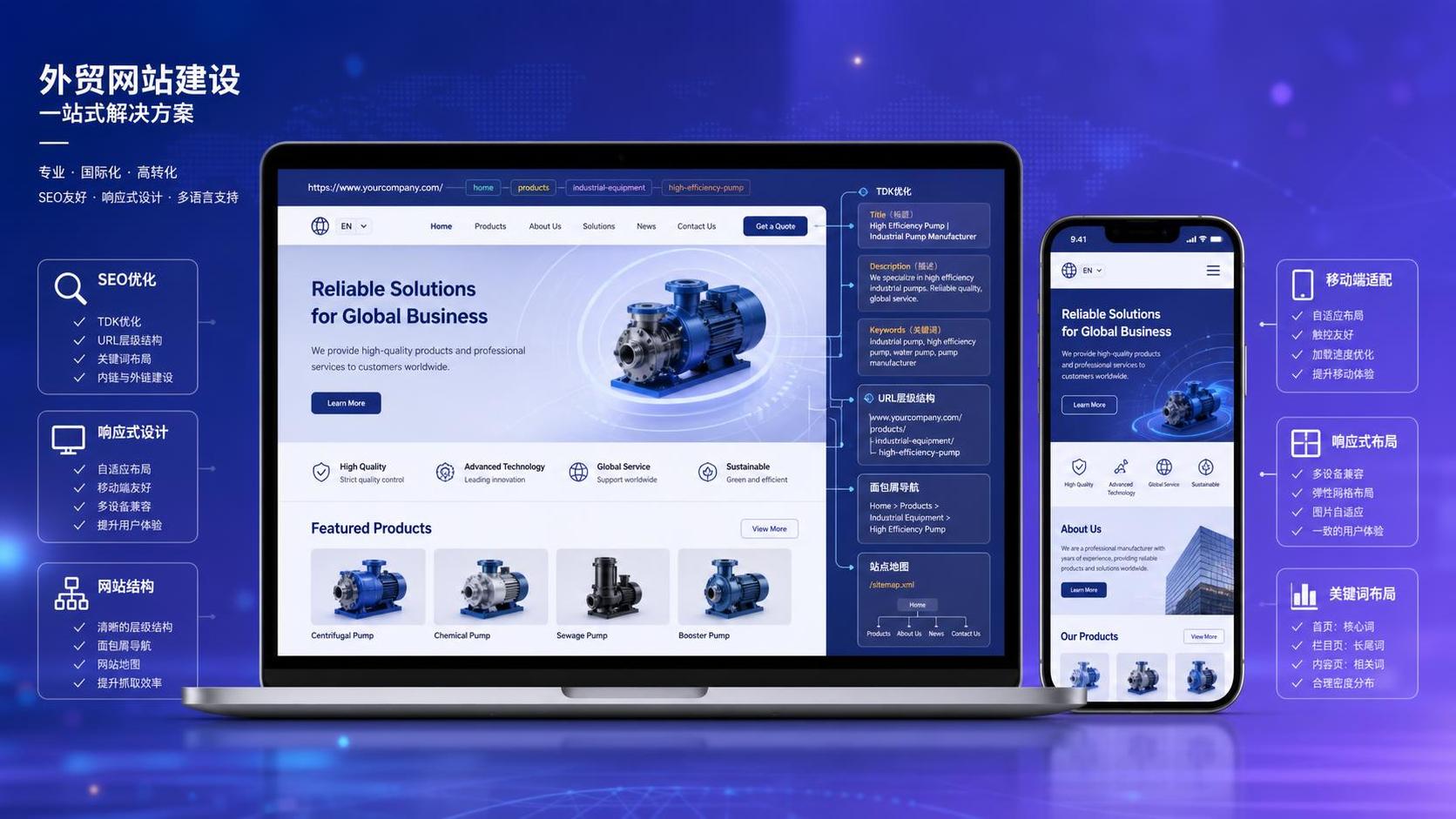
 EasyCamp SaaS Smart Website Marketing SystemE-Yingbao SaaS Smart Website Marketing System: AI-powered, zero-code website building. Rapidly launch multilingual independent e-commerce sites in just 10 minutes. Global server acceleration and AI-driven SEO optimization empower businesses to efficiently connect with global markets. The seamless integration of technology and user-friendly operation makes building e-commerce sites incredibly simple.
 AI+SEM Intelligent Advertising Marketing SystemAI+SEM drives intelligent ad creation, empowering full-funnel precision advertising marketing. The system automatically generates weekly/monthly reports, AI recommends keywords and target countries, monitors core metrics in real-time with intelligent alerts, and enables one-click high-conversion ad solutions to help quickly acquire customers and improve ROI.
 AI+SEO Dual Engine Optimization ServiceEasyWin AI+SEO Dual Engine Optimization System leverages AI-powered keyword mining, content generation, and comprehensive technical optimization to help foreign trade enterprises acquire high-quality organic traffic, significantly improving search rankings and conversion rates.
 AI+SNS Social Media Marketing SystemYingbao AI+SNS Social Media Marketing System - Precision social capture for the social media era. Supports one-click content synchronization across major platforms like Facebook and LinkedIn. AI intelligently rewrites posts for enhanced relevance. 24/7 AI customer service and user profiling analysis empower businesses to efficiently expand into global markets.
 AI+SEO营销解决方案易营宝AI+SEO营销解决方案,通过AI批量写作、智能生成TDK、精准关键词扩词等功能,全面优化网站SEO效果,提升流量与转化率。助力企业构建高效智能网站新生态。
 AI+SEM Advertising Marketing SolutionsAI+SEM Advertising Marketing Solution leverages AI technology to deeply empower SEM ad campaigns. It automatically generates weekly/monthly reports using AI, presenting account data across multiple dimensions for comprehensive insights into campaign performance and trends. The system precisely recommends keywords and target countries, intelligently generates high-conversion ad copy, and enables one-click activation of efficient campaign plans to help businesses rapidly acquire customers. Simultaneously, it monitors core metrics in real time, intelligently identifies abnormal fluctuations, and issues timely alerts to ensure stable, high-return advertising results.
 Domain Name ServicesEasyWin provides professional domain name services, including intelligent queries, one-stop registration, brand protection, and full lifecycle management, helping businesses build a digital brand image.
 EasyOperate B2C Cross-Border E-Commerce Platform & Independent WebsiteEasyStore B2C Cross-border E-commerce Independent Store is an intelligent website building and cross-border e-commerce integrated solution independently developed by EasyStore Information Technology (Beijing) Co., Ltd. The system is specially designed for small and medium-sized as well as large export enterprises, integrating 'website building, operation, marketing, advertising, and conversion' into one, helping enterprises quickly establish cross-border e-commerce independent stores to achieve brand globalization and global sales growth.
The platform supports multiple languages, multiple currencies, and multi-channel marketing, with built-in AI intelligent translation and SEO optimization systems, suitable for mainstream markets such as Southeast Asia, Europe and America, Latin America, and the Middle East, assisting Chinese manufacturing enterprises in efficiently deploying international e-commerce strategies. SSL证书易营宝提供专业SSL安全证书服务,包括单域名和泛域名证书,确保网站数据传输加密、身份验证和完整性保护,助力企业建立安全可信的在线业务环境。









