









- Is Brand Globalization Marketing Consulting Worth Buying? At What Stage Should Companies Bring It InJul 01, 2026View details
- Cross-Border Marketing Trend Research: Why More and More Companies Are Starting to Deploy AI Search and GEO OptimizationJun 30, 2026View details
- Cross-Border Marketing Trend Research: How Independent Sites, AI Content, and Short-Video Customer Acquisition Are ChangingJun 30, 2026View details
- How Can a Brand Updates Page Be Made More SEO-Friendly? Analysis of Update Frequency, Content Structure, and Internal Linking StrategyJun 28, 2026View details
- What stages does the cross-border services ecosystem include? How do website building, promotion, payment, and compliance work togetherJun 22, 2026View details
- How will email marketing costs change in 2026Jun 22, 2026View details
How to test global access latency for a multilingual website
How to test global access latency for a multilingual website is directly related to overseas user experience and conversion performance. Only by mastering scientific speed testing methods can you accurately identify access bottlenecks across regions and optimize website loading speed and marketing performance.
For foreign trade companies, cross-border e-commerce sellers, and brand globalization teams, a website is not merely a display page, but a core asset for receiving traffic, generating inquiries, and driving transactions. A website with a well-managed Chinese backend and complete page design may still affect advertising performance, organic search results, and form conversion rates if it takes 5 seconds to open in North America or more than 7 seconds to render the above-the-fold content in the Middle East, no matter how professional the content is.
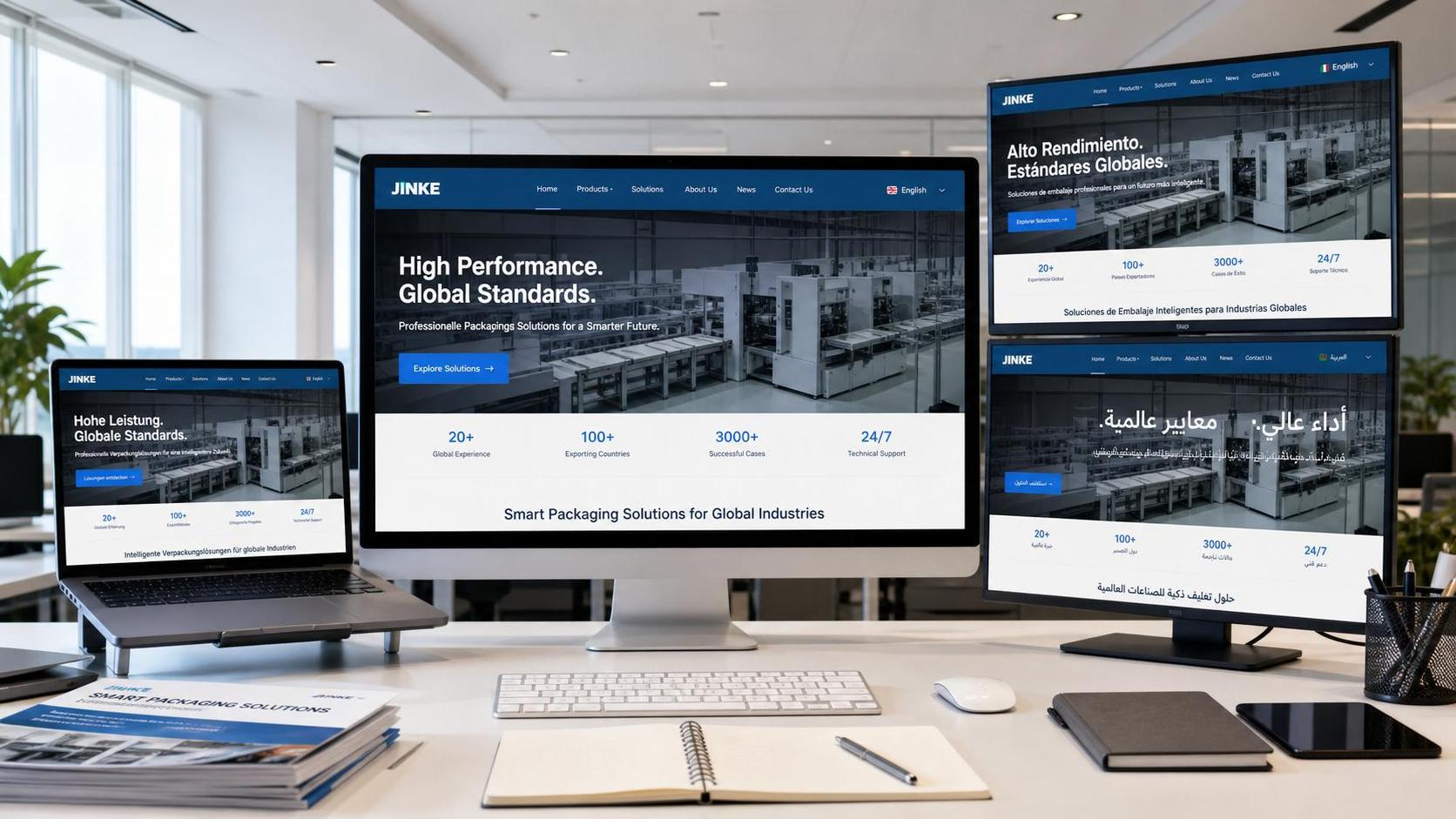
Therefore, when discussing how to test global access latency for a multilingual website, companies should not stop at simply “testing the speed”. Instead, they should evaluate multiple dimensions at the same time, including regional nodes, network routes, front-end resources, server response, multilingual version distribution, and the marketing conversion journey. For companies building overseas independent websites, this is also one of the capabilities that must be checked when selecting a website building and marketing service provider.
Why Global Access Latency Testing Is a Fundamental Step in Multilingual Website Operations

A multilingual website does not serve a single city, but multiple markets such as North America, Europe, Southeast Asia, Japan and South Korea, the Middle East, and Latin America. The physical distance from different regions to the origin site, carrier routes, DNS resolution speed, and static resource scheduling capabilities all vary. If a company only checks pages on its domestic office network, it can easily misjudge the real overseas access experience.
Latency Is Not Just About Being “Slow”; It Also Affects Customer Acquisition Costs
In marketing scenarios, every additional 1—2 seconds of page latency commonly causes more than just a higher bounce rate. It can also reduce ad landing page quality, lower SEO crawl efficiency, interrupt inquiry form submissions, and weaken users’ trust in the brand. This is especially true for B2B purchasing users, who often visit 3—5 pages within 3 minutes. If every page feels sluggish, the probability of lead loss will increase significantly.
4 Sources of Latency Most Easily Overlooked by Companies
- The origin server deployment location does not match the target market
- Multilingual pages share a large number of uncompressed images, videos, and script resources
- DNS resolution takes too long, with first connection time exceeding 300ms
- Too many third-party plugins, with ad analytics, online chat, and map components loading sequentially
If a company is running Google Ads, Google SEO, and social media traffic acquisition at the same time, these issues will be further amplified. This is because every loading step after traffic enters the site affects subsequent session duration, browsing depth, and conversion actions. For this reason, how to test global access latency for a multilingual website is actually the starting point for coordinated optimization between website development and overseas marketing.
Which Metrics Are More Valuable Than Simply Judging Whether a Site “Opens Quickly”
In actual testing, it is recommended to focus on at least 6 core data points: DNS time, TCP connection time, TTFB, above-the-fold visible time, full load time, and total number of page requests. For marketing-oriented websites, TTFB is recommended to be controlled within 200—800ms, above-the-fold visible time should ideally be reduced to within 2.5 seconds, and full load time should preferably not exceed 4—6 seconds.
The table below can help companies quickly determine the business impact corresponding to different metrics, making it easier to prioritize optimization after speed testing.
From a decision-making perspective, speed test results should not be judged by a single score alone. They should be analyzed together with access regions and page types. The resource structures of the homepage, product detail pages, ad landing pages, and blog pages are different, and their latency performance often differs as well. Companies should select at least 3 types of pages, 5 regional nodes, and 2 network environments for cross-testing to make the results truly meaningful.
How to Test Global Access Latency for a Multilingual Website: Practical Process and Evaluation Methods
If a company wants to truly understand how to test global access latency for a multilingual website, it is recommended to follow a 5-step process: “define regions—select pages—run multi-node tests—break down bottlenecks—retest and verify”. This not only helps locate problems, but also provides unified optimization evidence for the website development, SEO, and advertising teams.
Step 1: Build a Speed Testing Node List Based on Target Markets
Do not conduct averaged testing. Instead, set nodes around actual business markets. For example, if the key markets are the United States, Germany, Japan, the United Arab Emirates, and Brazil, these 5 regions should be covered first. If 70% of the advertising budget is invested in North America and Europe, the testing frequency for these two regions should be higher than for other markets. A common recommendation is to test core markets once a week, and add one extra test within 48 hours before and after a website redesign or ad launch.
Recommended Page Types for Testing
- Homepage: checks the basic speed of the entire site and the brand entry experience
- Core product pages: evaluates the load of images, specification modules, and inquiry components
- Multilingual landing pages: assesses the effectiveness of receiving ad traffic
- Blog or case study pages: checks the crawlability and reading performance of SEO content pages
Do not test only the desktop version. For cross-border B2C and traffic from some emerging markets, mobile traffic often accounts for more than 50%. If the above-the-fold time on mobile networks is more than 2 seconds longer than on desktop, image size, script execution order, and caching strategies should be optimized first.
Step 2: Distinguish Network Issues, Server Issues, and Front-End Issues
When many companies see slow loading, their first reaction is to “change the server”. However, the actual cause may be overly heavy scripts, uncompressed images, or third-party components slowing down the above-the-fold rendering. To avoid misjudgment, a three-layer breakdown should be performed after speed testing: the route layer, the service layer, and the resource layer. Only when the breakdown is sufficiently detailed can subsequent investment avoid being wasted.
The table below is suitable for identifying common sources of bottlenecks, especially for technical and marketing teams of foreign trade websites and multilingual independent websites to review together.
The value of this type of breakdown is that companies can turn “slowness” into actionable tasks. For example, whether to adjust DNS first, compress images first, or restructure multilingual resource paths first. For small and medium-sized foreign trade companies with limited budgets, prioritizing the top 20% of high-impact items can usually improve more than 60% of real user experience issues.
Step 3: Analyze Speed Test Results Together with the Marketing Journey
The ultimate goal of testing global access latency for a multilingual website is not to produce a technical report, but to support inquiry growth and improve advertising efficiency. It is recommended that companies connect speed test results with 3 types of data: page bounce rate, average session duration, and form submission rate. If pages in a certain region load slowly and the ad conversion cost in that region continues to rise within 7 days, it indicates that speed issues have already affected marketing returns.
Linked Analysis Methods Suitable for B2B Companies
- Review landing page loading performance after ad clicks by country
- Compare conversion differences among English, French, and Spanish pages by language version
- Identify mobile inquiry loss points by device
- Check speed gaps between product pages and case study pages by page template
If the website development, SEO, and advertising teams are separated, communication gaps often occur, such as “the technical team says there is no problem, while operations says there are no conversions”. The advantage of an integrated service is that it can optimize website structure, page performance, SEO crawling, and ad landing experience under the same framework, preventing each department from focusing only on partial metrics.
How to Continuously Optimize Multilingual Website Speed and Build Long-Term Growth Capability
Speed testing is only the beginning. What truly matters is establishing a continuous optimization mechanism. For websites operating in overseas markets over the long term, it is recommended to set up a monthly inspection mechanism and review performance in key regions once every 30 days. When a redesign, new multilingual version, major advertising promotion, or bulk content publishing occurs, dedicated testing should be conducted. This can prevent speed issues from accumulating into conversion bottlenecks after 2—3 months.
Optimization Strategies That Should Be Embedded During the Website Building Stage
A website truly suitable for companies expanding overseas should not wait until after launch for passive fixes. Instead, basic performance design should be completed during the website building stage, including resource compression, image standards, multilingual URL structure, caching strategies, script management, and search crawl friendliness. Such a website is easier to promote, index, and convert, and is also better suited for subsequent coordinated scaling through Google SEO and advertising.
For website and marketing integrated service platforms represented by 易营宝, the core value lies in connecting intelligent website building, multilingual website construction, SEO optimization, advertising marketing, and AI-driven data analysis. Companies do not need to purchase separate services for website building, speed testing, optimization, and advertising. Instead, they can complete site setup, performance optimization, and global customer acquisition planning around one unified overseas growth goal.
5 Capabilities Companies Should Focus on Checking When Choosing a Service Provider
- Whether the provider has experience in multilingual site architecture, rather than only building single-language template websites
- Whether it can provide speed testing and optimization recommendations by region, such as North America, Europe, and Southeast Asia
- Whether it understands SEO, ad landing pages, and conversion paths, rather than only technical performance
- Whether it supports continuous follow-up operations, including content publishing, speed retesting, and page iteration
- Whether it can combine AI analysis tools to improve site management efficiency and marketing decision-making efficiency
Common Misconceptions to Avoid
First, do not make decisions based only on a screenshot from a single speed test. Test at least 3 consecutive times and cover both weekdays and weekends. Second, do not try to make every country achieve the same speed. Priority should be given to ensuring performance in major markets. Third, do not understand speed optimization merely as a technical cost. In essence, it reduces wasted customer acquisition spending, improves advertising efficiency, and amplifies the value of SEO content.
For companies expanding overseas business, how to test global access latency for a multilingual website is not only a technical troubleshooting issue, but also part of building global marketing infrastructure. A website that is stable in core markets, loads quickly, and has a clear structure often supports long-term growth better than simply increasing the advertising budget.
If you are evaluating overseas independent website development, multilingual official website upgrades, or global promotion efficiency improvement plans, it is recommended to establish a systematic speed testing and optimization mechanism as early as possible. Relying on its AI-driven intelligent website building system, SEO/GEO optimization capabilities, and overseas marketing service experience, 易营宝 can provide foreign trade companies, manufacturing factories, cross-border sellers, and brand globalization teams with website and growth solutions that are better suited to real business implementation. Contact us now to get a customized plan and learn more about multilingual website construction and global marketing solutions.
Related Articles
 EU DSA rules require multilingual websites to label AI content
 Portuguese independent website development What should cross-border e-commerce pay attention to?Payment、logistics and local expression details
 What are the solutions for whole-site translation of foreign trade websites?Comparison of machine translation、human translation and hybrid models

Related Products
 EasyCamp SaaS Smart Website Marketing SystemE-Yingbao SaaS Smart Website Marketing System: AI-powered, zero-code website building. Rapidly launch multilingual independent e-commerce sites in just 10 minutes. Global server acceleration and AI-driven SEO optimization empower businesses to efficiently connect with global markets. The seamless integration of technology and user-friendly operation makes building e-commerce sites incredibly simple.
 AI+SEM Intelligent Advertising Marketing SystemAI+SEM drives intelligent ad creation, empowering full-funnel precision advertising marketing. The system automatically generates weekly/monthly reports, AI recommends keywords and target countries, monitors core metrics in real-time with intelligent alerts, and enables one-click high-conversion ad solutions to help quickly acquire customers and improve ROI.
 AI+SEO Dual Engine Optimization ServiceEasyWin AI+SEO Dual Engine Optimization System leverages AI-powered keyword mining, content generation, and comprehensive technical optimization to help foreign trade enterprises acquire high-quality organic traffic, significantly improving search rankings and conversion rates.
 AI+SNS Social Media Marketing SystemYingbao AI+SNS Social Media Marketing System - Precision social capture for the social media era. Supports one-click content synchronization across major platforms like Facebook and LinkedIn. AI intelligently rewrites posts for enhanced relevance. 24/7 AI customer service and user profiling analysis empower businesses to efficiently expand into global markets.
 AI+SEO营销解决方案易营宝AI+SEO营销解决方案,通过AI批量写作、智能生成TDK、精准关键词扩词等功能,全面优化网站SEO效果,提升流量与转化率。助力企业构建高效智能网站新生态。
 AI+SEM Advertising Marketing SolutionsAI+SEM Advertising Marketing Solution leverages AI technology to deeply empower SEM ad campaigns. It automatically generates weekly/monthly reports using AI, presenting account data across multiple dimensions for comprehensive insights into campaign performance and trends. The system precisely recommends keywords and target countries, intelligently generates high-conversion ad copy, and enables one-click activation of efficient campaign plans to help businesses rapidly acquire customers. Simultaneously, it monitors core metrics in real time, intelligently identifies abnormal fluctuations, and issues timely alerts to ensure stable, high-return advertising results.
 Domain Name ServicesEasyWin provides professional domain name services, including intelligent queries, one-stop registration, brand protection, and full lifecycle management, helping businesses build a digital brand image.
 EasyOperate B2C Cross-Border E-Commerce Platform & Independent WebsiteEasyStore B2C Cross-border E-commerce Independent Store is an intelligent website building and cross-border e-commerce integrated solution independently developed by EasyStore Information Technology (Beijing) Co., Ltd. The system is specially designed for small and medium-sized as well as large export enterprises, integrating 'website building, operation, marketing, advertising, and conversion' into one, helping enterprises quickly establish cross-border e-commerce independent stores to achieve brand globalization and global sales growth.
The platform supports multiple languages, multiple currencies, and multi-channel marketing, with built-in AI intelligent translation and SEO optimization systems, suitable for mainstream markets such as Southeast Asia, Europe and America, Latin America, and the Middle East, assisting Chinese manufacturing enterprises in efficiently deploying international e-commerce strategies. SSL证书易营宝提供专业SSL安全证书服务,包括单域名和泛域名证书,确保网站数据传输加密、身份验证和完整性保护,助力企业建立安全可信的在线业务环境。









