









- What should you focus on in the latest enterprise SaaS report? From renewal rates and delivery costs to overseas growth opportunitiesJul 12, 2026View details
- What signals are worth paying attention to in a cross-border marketing trend report? B2B companies should look at these 6 signalsJul 11, 2026View details
- How to Read a Cross-Border Marketing Trends Report? Five Key Dimensions for Evaluating Channel OpportunitiesJul 11, 2026View details
- Which channel has the highest ROI in the global traffic ecosystem? Comparative analysis of search, social media, and advertisingJul 10, 2026View details
- What multilingual website services are available in Sanya? Which model is more suitable for local businesses going global?Jul 08, 2026View details
- How to view the complete list of China SaaS companies in the top 100? Practical methods for screening website-building and marketing service providersJul 08, 2026View details
Where Are the High Costs of Multilingual Website Development? A Comparison of Language Count, Feature Requirements, and Maintenance Methods
Where does the high cost of building a multilingual website come from? First, identify the three main areas where the money really goes.

What accounts for the high cost of building a multilingual website? Many companies initially assume the high cost stems from page design. However, once the approval process begins, budget discrepancies often arise in more subtle areas.
First is the number of languages. Second is the functional requirements. Third is the maintenance method. Once these three factors are combined, the cost of building a multilingual website will increase rapidly.
Judging from recent project changes, what truly affects the budget is no longer "whether to implement multiple languages", but rather "how many languages to implement, to what depth, and who will continue to operate them afterward".
If you only look at the website building quote in the early stages and ignore translation, content adaptation, technical deployment and operational coordination, it is easy to incur additional costs later, leading to an overall loss of control over the investment.
Therefore, when assessing the cost of building a multilingual website, the key is not to get the lowest quote, but to first break down the cost structure and then determine which investments will truly drive business growth.
The more languages there are, the more the costs increase; why can't they simply be added together?
The number of languages is the most direct factor affecting the cost of building a multilingual website. While it may seem like simply creating more language versions, the cost is not actually a linear increase based on the number of pages.
The reason is simple. Different languages involve not only translation, but also layout, content length, keyword strategy, regional expression, and conversion path adjustment.
For example, English and German websites may have the same column structure, but the title length, product description style, and inquiry habits are different, so the pages cannot be directly copied.
The more languages a website supports, the greater the workload involved in content proofreading, link management, on-site SEO settings, and version synchronization. All of these factors continuously drive up the cost of building a multilingual website.
- With one to three languages, costs can usually be controlled using standardized processes.
- With 4 to 8 languages, content management and technical architecture will begin to be tested.
- With more than 8 languages, the maintenance cost often exceeds the initial setup cost.
This also means that language planning should not be based solely on "the more coverage the better," but rather on the priority of the target market. Focusing on the core market first and then gradually expanding is more cost-effective.
How much difference in cost will there be between building a multilingual website with different functional requirements?
For multilingual websites, the budget difference between different feature plans is often greater than the number of languages. This is because features determine the depth of development and the complexity of subsequent operation.
If it's just a showcase website, focusing on company introduction, product display, and inquiry forms, the cost of building a multilingual website is usually relatively controllable.
However, if it involves the online store, membership system, payment interface, regional switching, distributor management, marketing automation and data tracking, the cost will increase significantly.
An even clearer sign is that many companies only mention "building a multilingual website" when initiating projects, but in actual execution they keep adding features, causing the budget to expand round after round.
In the approval process, the most important step is to distinguish between "currently necessary functions" and "functions that may be needed in the future." Implementing everything at once may not be the most cost-effective solution.
Why are the later costs more easily underestimated due to different maintenance methods?
Many budgets only list the website building cost but fail to separately list maintenance costs. In reality, post-launch maintenance is the part of multilingual website building costs that is most easily misrepresented.
Custom development may seem flexible in the early stages, but each subsequent revision, language addition, or feature adjustment may incur new development and communication costs.
If a SaaS platform is used, standardization capabilities are stronger, version updates, language expansions, and content publishing are usually faster, and the cost of building a multilingual website is also easier to predict.
However, this doesn't mean all SaaS is suitable. The key is whether it supports multilingual content management, overseas access speed, SEO rule configuration, and integration with marketing tools.
- Internal maintenance keeps personnel costs under control, but relies on team stability.
- Outsourcing maintenance offers flexibility, but the cumulative costs are often higher.
- Platform-based maintenance and more standardized processes make it suitable for long-term operation.
Therefore, when evaluating the cost of building a multilingual website, one should not only look at the initial launch price, but also consider the ease of updates, language expansion, and promotion over the next two to three years.
How to determine during the approval process: which expenses should be spent and which can be postponed?
In procurement decisions, the biggest fear isn't high prices, but rather unclear pricing. If the costs of building a multilingual website are broken down and made transparent, it's actually easier to assess the value of the investment.
A more prudent approach is to first calculate based on three criteria: "market priority, functional necessity, and maintenance cycle," and then determine the budget range.
- First identify the core market, and do not invest in low-priority languages in advance.
- Implement the essential functions first, and then launch the complex features in stages.
- Account for maintenance, translation, SEO, and content updates separately.
- The service provider should be required to explain the source of each long-term cost.
The value of this judgment method lies in its ability to control the cost of building multilingual websites and prevent projects from becoming idle due to a lack of operational capabilities after launch.
For businesses that need to balance website building and overseas customer acquisition, an integrated solution that combines website building, SEO, advertising, and content collaboration is more suitable, reducing hidden costs associated with dealing with multiple vendors.
From a long-term investment perspective, what kind of solutions are more suitable for growth-oriented enterprises?
If a company is only testing the waters of overseas markets in the short term, the key to controlling the cost of building a multilingual website is to launch it quickly, validate it rapidly, and get inquiries and data feedback as soon as possible.
If a company has entered a long-term overseas expansion phase, then cost assessment should not only focus on the website itself, but also on whether the website has the ability to continuously acquire customers.
At this point, it's more worthwhile to invest in multilingual content management efficiency, SEO indexing capabilities, page conversion rates, and the ability to integrate advertising and social media.
YiYingBao provides integrated services for foreign trade enterprises, manufacturing plants, cross-border e-commerce sellers, and brands going global, including AI-powered intelligent website building, multilingual website construction, SEO optimization, advertising, and overseas marketing.
For companies concerned about the cost of building multilingual websites, the advantage of this type of platform solution is that front-end development, back-end management, and promotion and growth can be evaluated within the same system.
Ultimately, the cost of building a multilingual website does not depend on how cheap the quote looks, but on whether each investment can truly support overseas growth.
When the number of languages, functional requirements, and maintenance methods are all calculated in advance, the budget is no longer just a cost control tool, but becomes a more effective growth configuration tool.
Related Articles
 Where Are the High Costs of Multilingual Website Development? A Comparison of Language Count, Feature Requirements, and Maintenance Methods
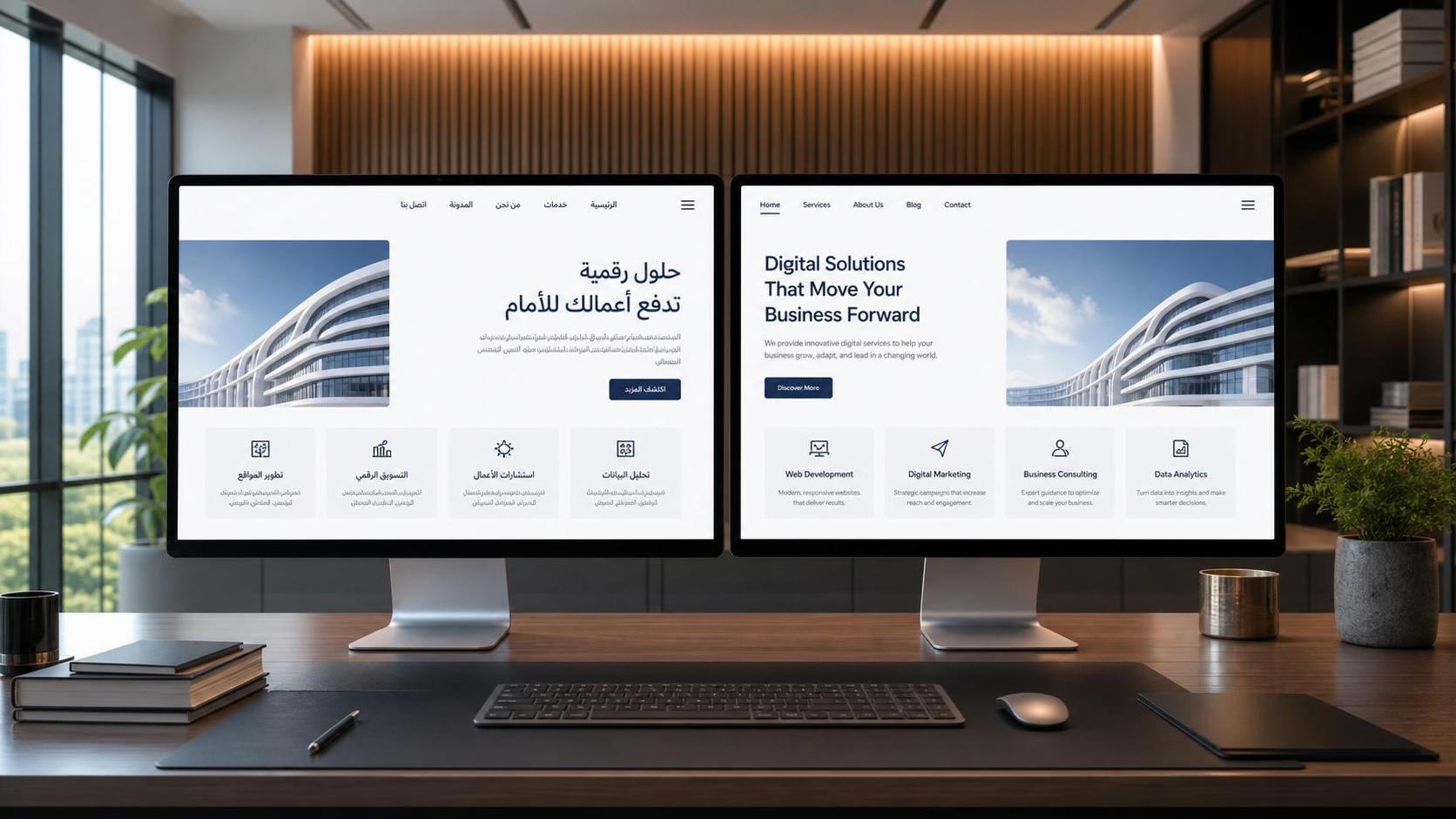
 What's the difference between Arabic website design and a regular website? From layout to cultural adaptation analysis
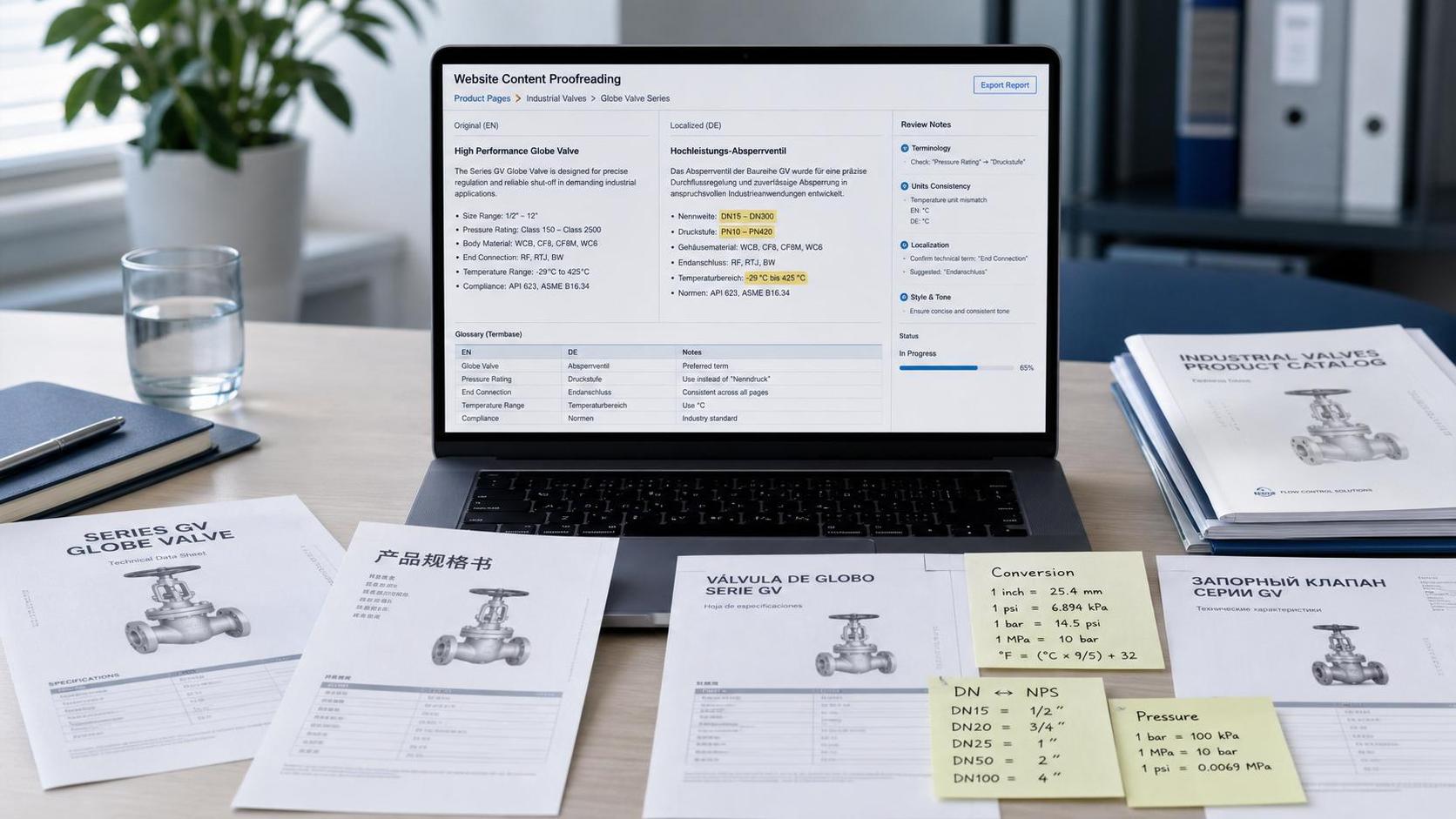
 What are the common pitfalls in foreign trade website translation? Terminology, units, and local expressions are the easiest to get wrong

Related Products
 EasyCamp SaaS Smart Website Marketing SystemE-Yingbao SaaS Smart Website Marketing System: AI-powered, zero-code website building. Rapidly launch multilingual independent e-commerce sites in just 10 minutes. Global server acceleration and AI-driven SEO optimization empower businesses to efficiently connect with global markets. The seamless integration of technology and user-friendly operation makes building e-commerce sites incredibly simple.
 AI+SEM Intelligent Advertising Marketing SystemAI+SEM drives intelligent ad creation, empowering full-funnel precision advertising marketing. The system automatically generates weekly/monthly reports, AI recommends keywords and target countries, monitors core metrics in real-time with intelligent alerts, and enables one-click high-conversion ad solutions to help quickly acquire customers and improve ROI.
 AI+SEO Dual Engine Optimization ServiceEasyWin AI+SEO Dual Engine Optimization System leverages AI-powered keyword mining, content generation, and comprehensive technical optimization to help foreign trade enterprises acquire high-quality organic traffic, significantly improving search rankings and conversion rates.
 AI+SNS Social Media Marketing SystemYingbao AI+SNS Social Media Marketing System - Precision social capture for the social media era. Supports one-click content synchronization across major platforms like Facebook and LinkedIn. AI intelligently rewrites posts for enhanced relevance. 24/7 AI customer service and user profiling analysis empower businesses to efficiently expand into global markets.
 AI+SEO营销解决方案易营宝AI+SEO营销解决方案,通过AI批量写作、智能生成TDK、精准关键词扩词等功能,全面优化网站SEO效果,提升流量与转化率。助力企业构建高效智能网站新生态。
 AI+SEM Advertising Marketing SolutionsAI+SEM Advertising Marketing Solution leverages AI technology to deeply empower SEM ad campaigns. It automatically generates weekly/monthly reports using AI, presenting account data across multiple dimensions for comprehensive insights into campaign performance and trends. The system precisely recommends keywords and target countries, intelligently generates high-conversion ad copy, and enables one-click activation of efficient campaign plans to help businesses rapidly acquire customers. Simultaneously, it monitors core metrics in real time, intelligently identifies abnormal fluctuations, and issues timely alerts to ensure stable, high-return advertising results.
 Domain Name ServicesEasyWin provides professional domain name services, including intelligent queries, one-stop registration, brand protection, and full lifecycle management, helping businesses build a digital brand image.
 EasyOperate B2C Cross-Border E-Commerce Platform & Independent WebsiteEasyStore B2C Cross-border E-commerce Independent Store is an intelligent website building and cross-border e-commerce integrated solution independently developed by EasyStore Information Technology (Beijing) Co., Ltd. The system is specially designed for small and medium-sized as well as large export enterprises, integrating 'website building, operation, marketing, advertising, and conversion' into one, helping enterprises quickly establish cross-border e-commerce independent stores to achieve brand globalization and global sales growth.
The platform supports multiple languages, multiple currencies, and multi-channel marketing, with built-in AI intelligent translation and SEO optimization systems, suitable for mainstream markets such as Southeast Asia, Europe and America, Latin America, and the Middle East, assisting Chinese manufacturing enterprises in efficiently deploying international e-commerce strategies. SSL证书易营宝提供专业SSL安全证书服务,包括单域名和泛域名证书,确保网站数据传输加密、身份验证和完整性保护,助力企业建立安全可信的在线业务环境。









