









- Cross-Border Marketing Trend Research: Why More and More Companies Are Starting to Deploy AI Search and GEO OptimizationJun 30, 2026View details
- Cross-Border Marketing Trend Research: How Independent Sites, AI Content, and Short-Video Customer Acquisition Are ChangingJun 30, 2026View details
- How Can a Brand Updates Page Be Made More SEO-Friendly? Analysis of Update Frequency, Content Structure, and Internal Linking StrategyJun 28, 2026View details
- What stages does the cross-border services ecosystem include? How do website building, promotion, payment, and compliance work togetherJun 22, 2026View details
- How will email marketing costs change in 2026Jun 22, 2026View details
- The China-US tariff arrangement has reached a preliminary consensus, and the trade association will be establishedJun 15, 2026View details
What Should You Pay Attention to When Building a German-Language Website for Germany? Language Localization, Privacy Compliance, and Conversion Details
A Website for the German Market Is Not Just About Changing Chinese into German
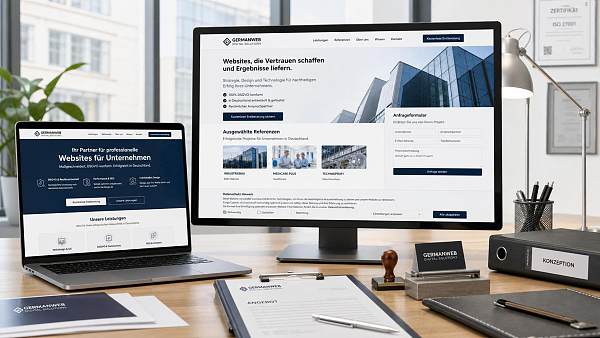
Building a German-language website for the German market may look like a translation project, but in practice it is closer to a complete localization rebuild. Page copy, privacy mechanisms, how contact information is presented, and form design all directly affect trust and inquiry efficiency.
In the German market, users generally place greater emphasis on accurate information, clear terms, and defined boundaries for data processing. If a website only completes literal translation while ignoring GDPR, legal notices, and conversion paths, incoming traffic may still fail to turn into qualified leads.
For integrated website and marketing projects, German-language website development for Germany also needs to consider subsequent promotion. Search indexing, ad landing page quality, and the accumulation of organic inquiries are often built on whether the front-end content structure is locally adapted.
Before Implementation, First Clarify Which Business Scenario You Are Facing
Different businesses have different priorities when building a German-language website for the German market. Some rely more on Google organic search, some first run ads to test conversions, and others need their official website to support brand credibility, channel communication, and after-sales explanations.
A more common way to judge the right approach is not to choose the page style first, but to examine the customer acquisition path. Where does the traffic come from, what does the user want to confirm on the first visit, and what are they most concerned about before submitting a lead? These questions determine the website structure and content depth.
For Inquiry-Oriented Official Websites, Information Completeness and Credibility Matter More
If the website mainly supports B2B inquiries, German-language website development for Germany should not only emphasize a clean visual presentation, but also clearly explain product specifications, delivery capabilities, certification information, and service scope. German-speaking users usually verify details first before deciding whether to continue communication.
In this type of scenario, too few contact entry points, shallow resource pages, and missing downloadable content can all reduce conversions. Compared with short slogans, parameter pages, application cases, FAQs, and clear company information are more effective.
For Advertising Landing Pages, Page Response and Form Friction Deserve More Attention
If German-language website development for Germany is intended to support advertising campaigns, the page task becomes more direct. After clicking, users need to understand the product value, confirm credibility, and smoothly complete actions such as requesting a quote, booking an appointment, or downloading materials within a short time.
At this point, the key checks should include above-the-fold messaging, loading speed, Cookie consent mechanisms, and form field length. Too many fields, overly deep redirects, and unclear prompts can all cause advertising costs to rise quickly.
For Brand Official Websites, Content Consistency Is More Important Than "Making It Look Like a European Site"
Some projects place more emphasis on brand image and hope the website can build long-term recognition in the German market. For this type of German-language website development for Germany, one misjudgment should be avoided: making the style restrained does not equal true localization.
The real key is content consistency. Brand positioning, product naming, after-sales commitments, privacy explanations, and downloadable materials must remain unified across pages; otherwise, users may feel that the information sources are unstable, which further affects trust building.
In Different Scenarios, the Key Evaluation Points for German-Language Website Development for Germany Are Not the Same
To avoid forcing all projects into the same template, several core dimensions can be compared first. This makes it easier to decide the order of content investment and also reduces rework.
In real-world applications, the problem with many sites is not insufficient functionality, but reversed priorities. The homepage may be filled with content, while the details that truly affect conversions in the German market are not handled well.
Language Localization Determines Readability and, More Importantly, Professionalism
Language localization in German-language website development for Germany is not just about translating sentences into German. It also includes unifying professional terminology, controlling sentence length, adapting units and time formats, and ensuring button copy fits local reading habits.
For example, on technical pages, if the Chinese logic is still translated directly, sentences often become too long and the key points unclear. German words themselves tend to be longer, so if page layout and title length are not handled in advance, the mobile experience will decline noticeably.
A more reliable approach is to handle German-language website development for Germany together with SEO content planning. Core keywords, section names, product terms, and Q&A terms need to follow a unified standard, so that later organic search, advertising campaigns, and AI search visibility do not conflict with one another.
Privacy and Compliance Are Not Add-Ons, but Basic Thresholds
The most easily underestimated part of German-language website development for Germany is privacy compliance. Cookie consent, privacy policies, data submission explanations, and legal notice pages all relate to whether the website can operate steadily and whether users are willing to leave their information.
A common misunderstanding is to treat GDPR as a well-translated privacy text. In reality, front-end pop-up logic, how analytics tools are loaded, form checkboxes, and email subscription authorization all need to align with the actual data processing workflow.
This is also why many companies encounter problems after separating website development from marketing systems. If front-end pages, tracking points, ad attribution, and CRM lead handoff each operate in isolation, the compliance risks of German-language website development for Germany will continue to increase.
From the perspective of implementation efficiency, an integrated solution makes consistency easier to control. Platforms such as 易营宝, which have long served overseas markets, place intelligent website development, SEO optimization, advertising systems, and multilingual content management within the same workflow, making it easier to balance indexing, conversion, and compliance when handling German sites.
The Details That Truly Affect Conversion Are Often These
Whether a page can convert does not depend only on whether the design draft looks refined. In German-language website development for Germany, some seemingly small details are often more effective than large-scale visual redesigns.
- Contact information should be complete, including the company address, email, phone number, or a clearly defined communication method.
- Form fields should be kept concise, prioritizing the information that truly affects follow-up communication.
- Actions such as downloading, requesting a quote, and booking should have clear buttons and should not be buried too deeply.
- The mobile above-the-fold area should first answer "what this is, what it can solve, and what to do next".
- Technical content pages should provide parameters, applicable scenarios, and frequently asked questions to reduce repeated inquiries.
If long-term customer acquisition also needs to be considered, German-language website development for Germany cannot focus only on a single form. Section structure, internal links, content aggregation, and page scalability also determine whether SEO can continue to amplify results later.
Before Launch, First Check Several Points That Are Easy to Misjudge
Many projects deliver average results after launch not because the German market is difficult, but because the preliminary judgment was too rough. Directly copying an English site into a German site is one of the most common problems. Similar languages do not mean the same conversion logic.
Another frequent issue is focusing only on website development cost while ignoring subsequent maintenance. German-language website development for Germany involves content iteration, compliance updates, keyword expansion, and advertising page testing. If the backend is inconvenient to manage, later optimization will become increasingly slow.
Another situation is treating SEO, advertising, and social media separately. In reality, for a German site to acquire customers steadily, it needs unified data standards and a unified content strategy. Page naming, conversion tracking, remarketing audiences, and content expansion are best planned within the same framework from the beginning.
How to Judge Whether Your German-Language Website Development Plan for Germany Is Suitable
A more practical approach is to first break the goals into several questions: whether the website mainly supports inquiries, transactions, or brand validation; whether organic search or advertising traffic is more important; and whether compliance requirements have been implemented at the functional level rather than only at the copywriting level.
Then check content depth, the level of German localization, form paths, legal pages, tracking configuration, and backend maintenance efficiency one by one. Evaluating German-language website development for Germany in this way will produce a more reliable conclusion than judging page aesthetics alone.
If the project is still in the planning stage, it is more worthwhile to first sort out scenario differences, keyword layout, and implementation boundaries before deciding the site structure and promotion rhythm. Only by incorporating language localization, privacy compliance, and conversion details into the design together can the website have a better chance of continuously generating effective results in the German market.
Related Articles
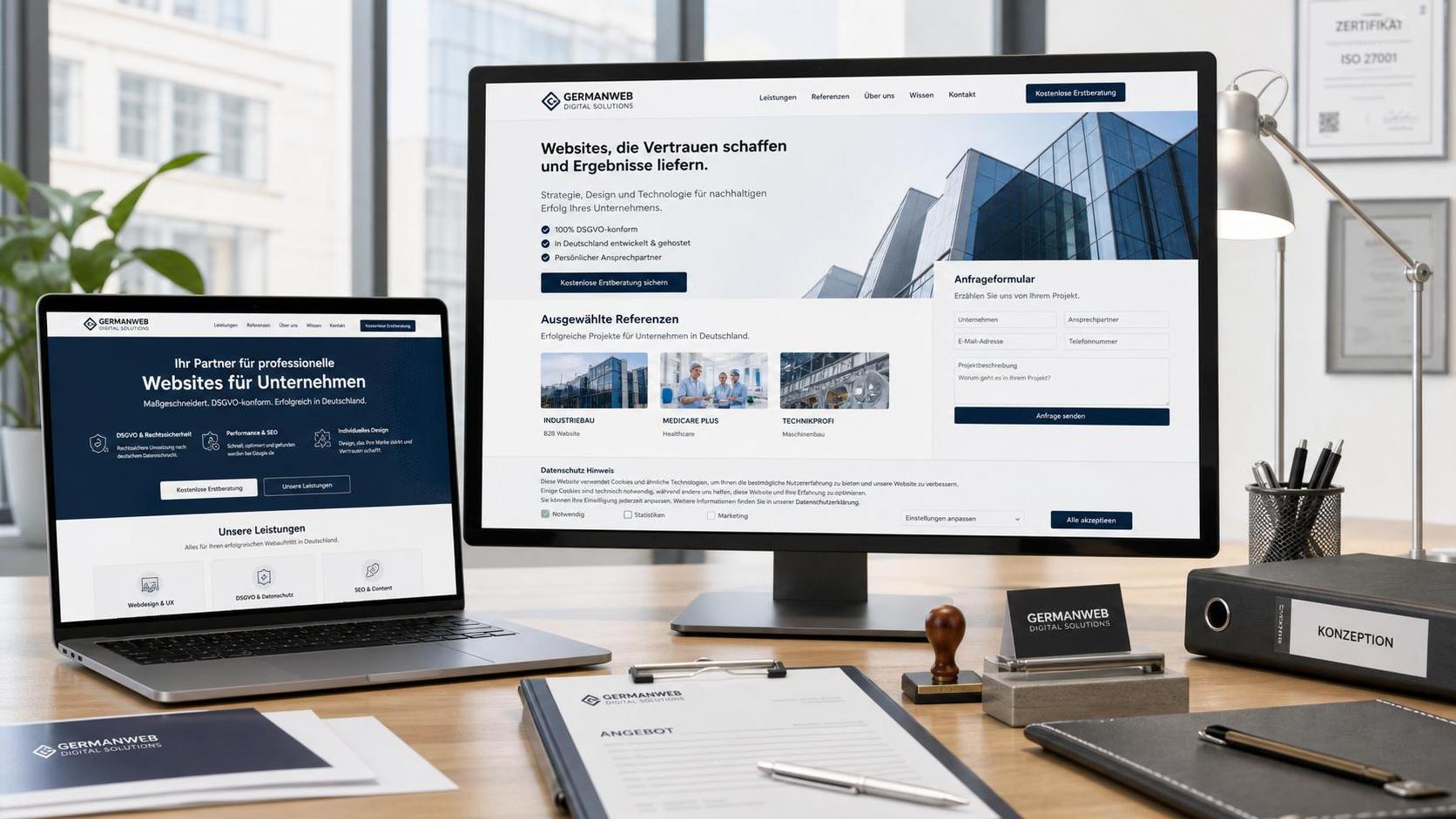
 What Should You Pay Attention to When Building a German-Language Website for Germany? Language Localization, Privacy Compliance, and Conversion Details
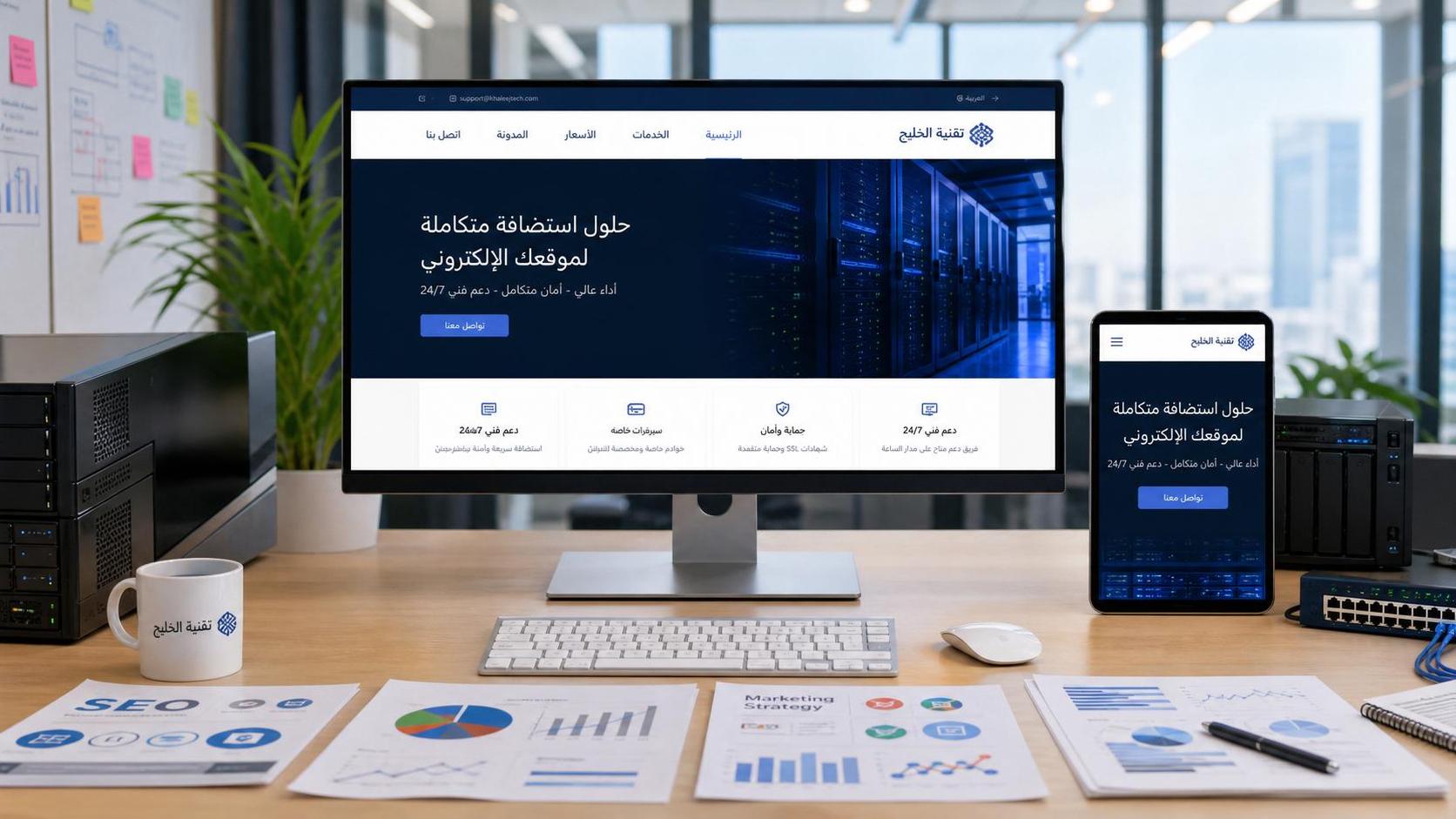
 How to choose Arabic website development: key evaluation criteria from RTL layout to local server deployment
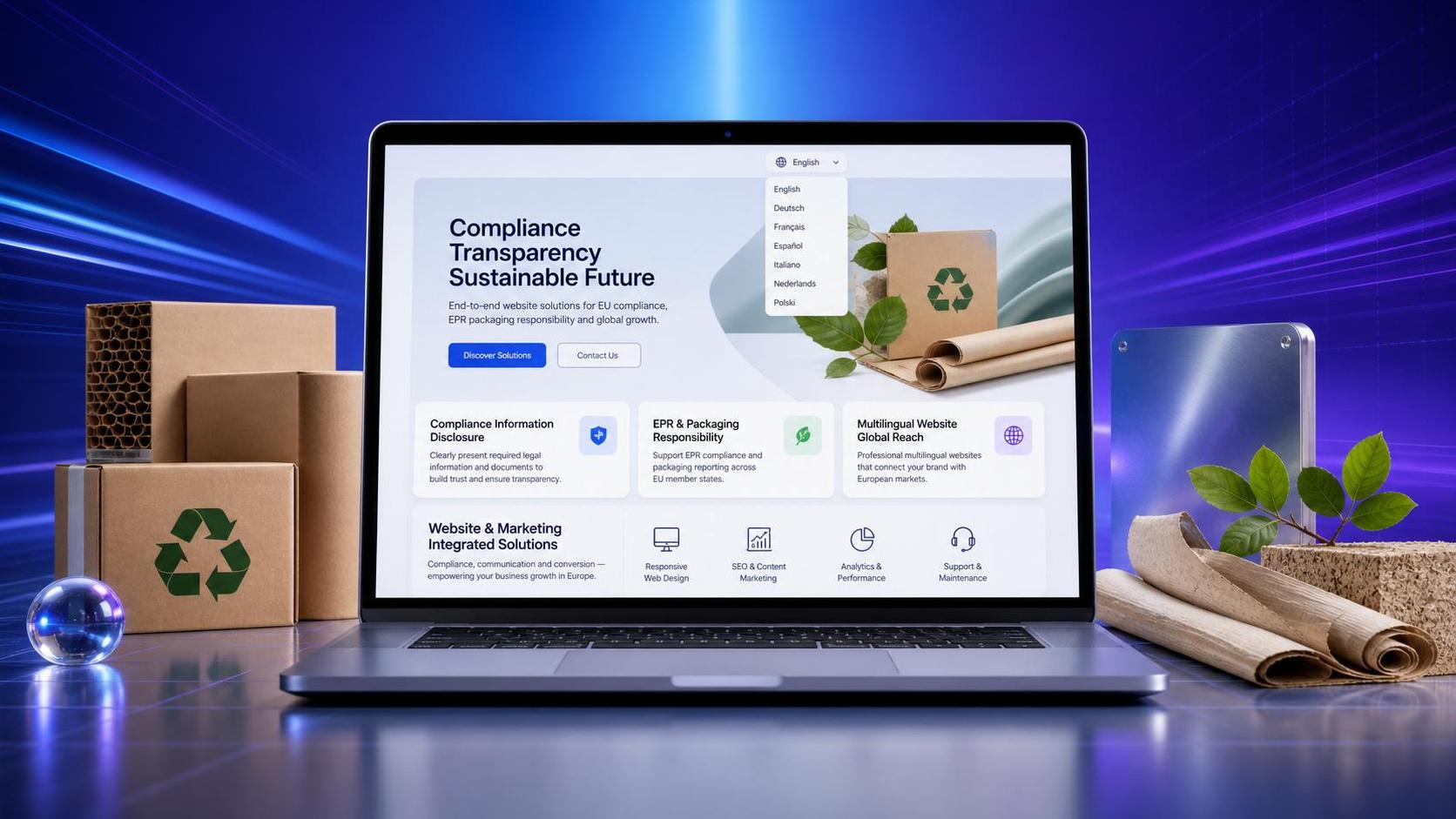
 EU EPR Requirements Extended to B2B Independent Websites
Related Products
 EasyCamp SaaS Smart Website Marketing SystemE-Yingbao SaaS Smart Website Marketing System: AI-powered, zero-code website building. Rapidly launch multilingual independent e-commerce sites in just 10 minutes. Global server acceleration and AI-driven SEO optimization empower businesses to efficiently connect with global markets. The seamless integration of technology and user-friendly operation makes building e-commerce sites incredibly simple.
 AI+SEM Intelligent Advertising Marketing SystemAI+SEM drives intelligent ad creation, empowering full-funnel precision advertising marketing. The system automatically generates weekly/monthly reports, AI recommends keywords and target countries, monitors core metrics in real-time with intelligent alerts, and enables one-click high-conversion ad solutions to help quickly acquire customers and improve ROI.
 AI+SEO Dual Engine Optimization ServiceEasyWin AI+SEO Dual Engine Optimization System leverages AI-powered keyword mining, content generation, and comprehensive technical optimization to help foreign trade enterprises acquire high-quality organic traffic, significantly improving search rankings and conversion rates.
 AI+SNS Social Media Marketing SystemYingbao AI+SNS Social Media Marketing System - Precision social capture for the social media era. Supports one-click content synchronization across major platforms like Facebook and LinkedIn. AI intelligently rewrites posts for enhanced relevance. 24/7 AI customer service and user profiling analysis empower businesses to efficiently expand into global markets.
 AI+SEO营销解决方案易营宝AI+SEO营销解决方案,通过AI批量写作、智能生成TDK、精准关键词扩词等功能,全面优化网站SEO效果,提升流量与转化率。助力企业构建高效智能网站新生态。
 AI+SEM Advertising Marketing SolutionsAI+SEM Advertising Marketing Solution leverages AI technology to deeply empower SEM ad campaigns. It automatically generates weekly/monthly reports using AI, presenting account data across multiple dimensions for comprehensive insights into campaign performance and trends. The system precisely recommends keywords and target countries, intelligently generates high-conversion ad copy, and enables one-click activation of efficient campaign plans to help businesses rapidly acquire customers. Simultaneously, it monitors core metrics in real time, intelligently identifies abnormal fluctuations, and issues timely alerts to ensure stable, high-return advertising results.
 Domain Name ServicesEasyWin provides professional domain name services, including intelligent queries, one-stop registration, brand protection, and full lifecycle management, helping businesses build a digital brand image.
 EasyOperate B2C Cross-Border E-Commerce Platform & Independent WebsiteEasyStore B2C Cross-border E-commerce Independent Store is an intelligent website building and cross-border e-commerce integrated solution independently developed by EasyStore Information Technology (Beijing) Co., Ltd. The system is specially designed for small and medium-sized as well as large export enterprises, integrating 'website building, operation, marketing, advertising, and conversion' into one, helping enterprises quickly establish cross-border e-commerce independent stores to achieve brand globalization and global sales growth.
The platform supports multiple languages, multiple currencies, and multi-channel marketing, with built-in AI intelligent translation and SEO optimization systems, suitable for mainstream markets such as Southeast Asia, Europe and America, Latin America, and the Middle East, assisting Chinese manufacturing enterprises in efficiently deploying international e-commerce strategies. SSL证书易营宝提供专业SSL安全证书服务,包括单域名和泛域名证书,确保网站数据传输加密、身份验证和完整性保护,助力企业建立安全可信的在线业务环境。









