









- The China-US tariff arrangement has reached a preliminary consensus, and the trade association will be establishedJun 15, 2026View details
- What determines B2C cross-border e-commerce website development costs? A breakdown of features, interfaces, and deployment methodsJun 17, 2026View details
- China-Morocco zero-tariff access, a breakthrough in the cost of Moroccan goods exports to ChinaJun 11, 2026View details
- What signal should be released for the suspension of exports to JapanJun 10, 2026View details
- China's May LNG imports rebounded, with increased volumes from Russia and Canada filling the Middle East supply gapJun 10, 2026View details
- Will GEO change its SEO strategy?Jun 04, 2026View details
Arabic website development notes: typography, RTL layout, and a localization checklist
Arabic website development precautions, don't rush to translate first
Arabic website development precautions are never just about changing Chinese into Arabic.
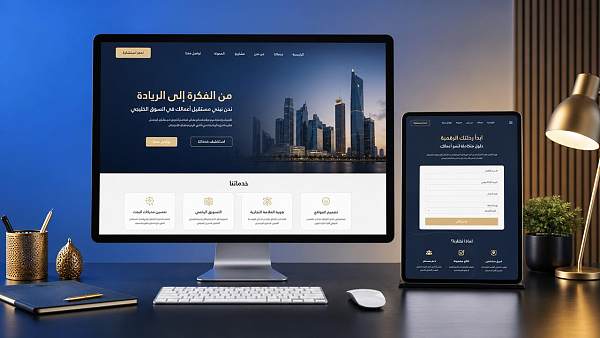
What really affects launch performance is often typography, layout, direction, and localization details.
If the early judgment is inaccurate, page misalignment, unusable forms, and low conversion rates will easily appear later.
This is also why many teams building Middle Eastern websites find that, even though the content has been translated, they still cannot launch stably for a long time.
From actual projects, Arabic website development precautions should be broken down into design, front end, content, and marketing processes at the project initiation stage.
Doing this not only reduces rework, but also makes the post-launch customer acquisition path smoother.
1. Typography and layout are the first key step in Arabic website development precautions
Arabic is a connected script, and the glyphs change significantly.
If you directly apply the layout rules of an English or Chinese website, the reading experience is usually very poor.
Common issues include uneven character weight, overly tight line height, button text crowding, and incomplete title display.
It is recommended to prioritize checking these four items
- Choose a font that supports Arabic glyph variations; do not judge only by whether it looks good in style.
- Increase body text line height appropriately to avoid the text becoming cramped after the letters connect.
- Do not make titles too bold; excessive weight affects recognition and the refined feel of the page.
- Buttons, navigation, and breadcrumbs should all reserve wider text space.
One thing many teams overlook is that Arabic characters display differently on different devices.
Therefore, in Arabic website development precautions, font compatibility testing must not be based only on the design mockup.
A more reliable approach is to check the actual display on desktop, Android, and iPhone at the same time.
2. RTL layout compatibility determines whether the website can be used normally
Arabic is written from right to left, so the page layout must also use RTL logic.
If only the text direction is changed and the component direction is not, users will obviously feel that it looks awkward.
Such problems often appear in navigation, carousels, forms, pop-ups, and arrow icons.
RTL layout key checklist
- The main navigation should be arranged starting from the right side, and the opening direction of first-level and second-level menus should be consistent.
- Carousel arrows, pagination order, and timeline direction should be reversed in sync.
- The icon positions in search boxes, filters, and drop-down menus should match right-to-left reading habits.
- Form labels, error prompts, and required markers should not follow the default left-oriented style.
- Mixed content such as numbers, currencies, phone numbers, and email addresses should be tested item by item.
In Arabic website development precautions, mixed-content handling is the easiest thing to underestimate.
For example, addresses contain numbers, product model numbers contain English, and quotes contain currency symbols.
If the rules are not set properly, the page will look messy, and users will find it difficult to quickly understand the information.
Therefore, RTL is not a simple page flip; it requires rebuilding the information presentation logic.
3. Localization details directly affect inquiries and conversions
Only when Arabic website development precautions are taken to this step does it truly enter the conversion stage.
Whether users are willing to continue browsing depends not only on whether the page opens, but also on whether the content feels like a "local website".
This localization includes wording, visual preferences, trust signals, and calls to action.
Pay attention to these details
- Give priority to locally common contact methods to shorten the inquiry path.
- Make currency, payment terms, and service scope clearly expressed to avoid vague descriptions.
- Display case studies, certifications, and partner brands prominently as trust content.
- The wording of action buttons should feel natural and direct, not a forced Chinese-style promotional phrase.
In actual business, the Middle Eastern market is highly sensitive to details.
If the website looks refined but the landing page information is thin, users may still leave quickly.
At this point, Arabic website development precautions should be advanced together with marketing page strategy.
For example, keep form fields as concise as possible, make the hero section more focused, and keep inquiry buttons persistently visible.
If a company is simultaneously expanding into multiple language markets, it can also refer toRussian industry website development and marketing solutionsas an integrated approach.
The core is not to copy templates, but to establish a unified standard from website building to promotion.
4. In the development and testing stages, which pitfalls most easily cause rework
Many rounds of rework are not because the technology is too difficult, but because the requirements were not fully broken down.
Therefore, for Arabic website development precautions, it is best to form an actionable checklist before development starts.
Items recommended for confirmation before scheduling
The value of this checklist lies in moving Arabic website development precautions into the project management process in advance.
Once design, development, content, and deployment use the same set of standards, overall progress will be much smoother.
5. After launch, don't only look at traffic
Arabic website development precautions do not end on the day of launch.
What really determines results is the continuous optimization capability after launch.
Compared with simply looking at traffic, more attention should be paid to dwell time, form completion rate, inquiry path, and page drop-off points.
If the homepage bounce rate is high, you usually need to go back and check visual trust and information matching.
If clicks are high but conversions are low, then the form experience and button copy should be reviewed first.
For enterprises expanding into multiple regional markets at the same time, unified platform management will be more efficient.
Solutions like Easyyingbao, which integrate website and marketing services, have the advantage of connecting website building, optimization, promotion, and data analysis into a closed loop.
In this way, when handling Middle Eastern market page issues, search indexing and subsequent promotion efficiency can also be taken into account simultaneously.
6. Only when Arabic website development precautions are implemented can the project truly be controllable
In summary, Arabic website development precautions should cover at least three layers.
The first layer is typography and layout readability, the second layer is RTL layout compatibility, and the third layer is localization conversion details.
Without any one of these layers, the website may appear complete, but the business results will not be stable.
A more practical approach is to write these requirements into the requirements document, test checklist, and launch acceptance criteria.
In this way, whether it is a new website or an existing website revision, it can more quickly enter a state that is promotable, convertible, and continuously optimizable.
If you are about to start a Middle East website project, it is recommended to begin with this Arabic website development precautions checklist, verify each item one by one, and then move into the design and development stages.
Related Articles
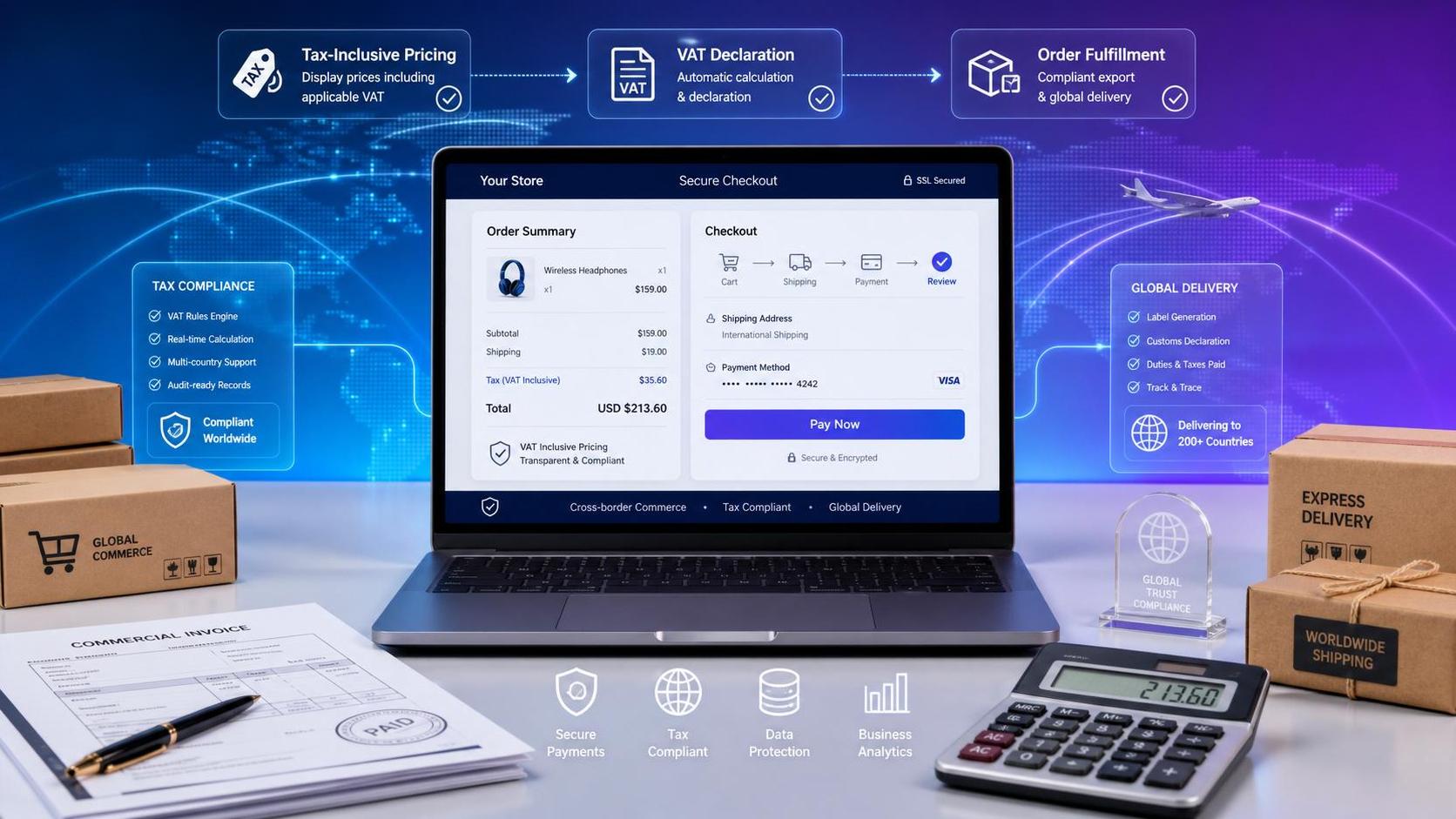
 EU VAT exemption for small parcels under 150 euros, independent site tax fee display restructuring
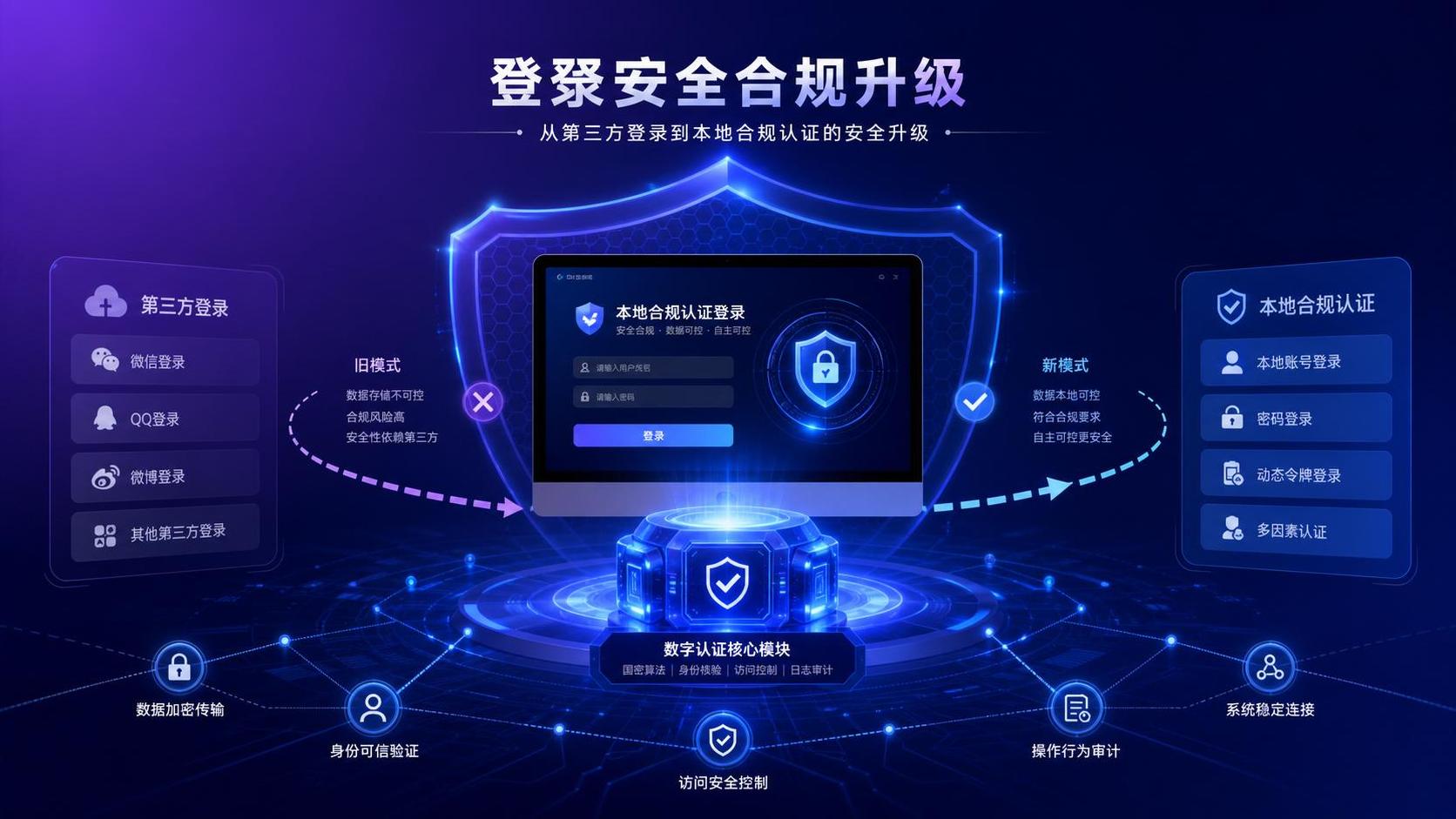
 Russia’s ban on third-party logins enters a new phase, and compliance pressure on Russian-language websites is increasing
 EU low-value package VAT exemption ends, standalone site pricing logic faces adjustments

Related Products
 EasyCamp SaaS Smart Website Marketing SystemE-Yingbao SaaS Smart Website Marketing System: AI-powered, zero-code website building. Rapidly launch multilingual independent e-commerce sites in just 10 minutes. Global server acceleration and AI-driven SEO optimization empower businesses to efficiently connect with global markets. The seamless integration of technology and user-friendly operation makes building e-commerce sites incredibly simple.
 AI+SEM Intelligent Advertising Marketing SystemAI+SEM drives intelligent ad creation, empowering full-funnel precision advertising marketing. The system automatically generates weekly/monthly reports, AI recommends keywords and target countries, monitors core metrics in real-time with intelligent alerts, and enables one-click high-conversion ad solutions to help quickly acquire customers and improve ROI.
 AI+SEO Dual Engine Optimization ServiceEasyWin AI+SEO Dual Engine Optimization System leverages AI-powered keyword mining, content generation, and comprehensive technical optimization to help foreign trade enterprises acquire high-quality organic traffic, significantly improving search rankings and conversion rates.
 AI+SNS Social Media Marketing SystemYingbao AI+SNS Social Media Marketing System - Precision social capture for the social media era. Supports one-click content synchronization across major platforms like Facebook and LinkedIn. AI intelligently rewrites posts for enhanced relevance. 24/7 AI customer service and user profiling analysis empower businesses to efficiently expand into global markets.
 AI+SEO营销解决方案易营宝AI+SEO营销解决方案,通过AI批量写作、智能生成TDK、精准关键词扩词等功能,全面优化网站SEO效果,提升流量与转化率。助力企业构建高效智能网站新生态。
 AI+SEM Advertising Marketing SolutionsAI+SEM Advertising Marketing Solution leverages AI technology to deeply empower SEM ad campaigns. It automatically generates weekly/monthly reports using AI, presenting account data across multiple dimensions for comprehensive insights into campaign performance and trends. The system precisely recommends keywords and target countries, intelligently generates high-conversion ad copy, and enables one-click activation of efficient campaign plans to help businesses rapidly acquire customers. Simultaneously, it monitors core metrics in real time, intelligently identifies abnormal fluctuations, and issues timely alerts to ensure stable, high-return advertising results.
 Domain Name ServicesEasyWin provides professional domain name services, including intelligent queries, one-stop registration, brand protection, and full lifecycle management, helping businesses build a digital brand image.
 EasyOperate B2C Cross-Border E-Commerce Platform & Independent WebsiteEasyStore B2C Cross-border E-commerce Independent Store is an intelligent website building and cross-border e-commerce integrated solution independently developed by EasyStore Information Technology (Beijing) Co., Ltd. The system is specially designed for small and medium-sized as well as large export enterprises, integrating 'website building, operation, marketing, advertising, and conversion' into one, helping enterprises quickly establish cross-border e-commerce independent stores to achieve brand globalization and global sales growth.
The platform supports multiple languages, multiple currencies, and multi-channel marketing, with built-in AI intelligent translation and SEO optimization systems, suitable for mainstream markets such as Southeast Asia, Europe and America, Latin America, and the Middle East, assisting Chinese manufacturing enterprises in efficiently deploying international e-commerce strategies. SSL证书易营宝提供专业SSL安全证书服务,包括单域名和泛域名证书,确保网站数据传输加密、身份验证和完整性保护,助力企业建立安全可信的在线业务环境。









