









- The China-US tariff arrangement has reached a preliminary consensus, and the trade association will be establishedJun 15, 2026View details
- What determines B2C cross-border e-commerce website development costs? A breakdown of features, interfaces, and deployment methodsJun 17, 2026View details
- China-Morocco zero-tariff access, a breakthrough in the cost of Moroccan goods exports to ChinaJun 11, 2026View details
- What signal should be released for the suspension of exports to JapanJun 10, 2026View details
- China's May LNG imports rebounded, with increased volumes from Russia and Canada filling the Middle East supply gapJun 10, 2026View details
- Will GEO change its SEO strategy?Jun 04, 2026View details
What should a manufacturing enterprise overseas website look like? Key page framework and content focus for equipment companies
Manufacturing companies going global need a website that first solves the question of “being seen” versus “being understood”
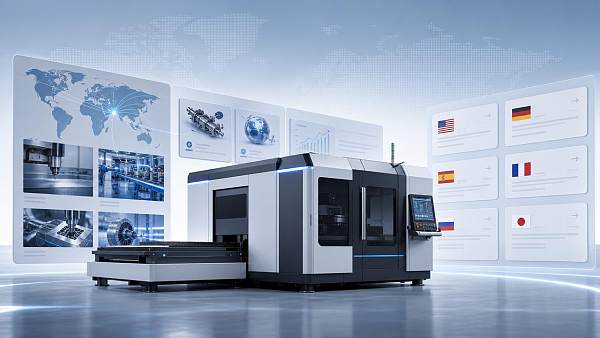
If a manufacturing website going global only stays at product listings, it is often difficult to truly support overseas inquiries. Equipment-related businesses have longer deal cycles and more detailed evaluations, so the website should not only let people see the products, but also help them quickly judge capacity boundaries, delivery experience, and partnership feasibility.
This is also the biggest difference between a manufacturing website going global and a standard showcase site. Many visitors are not asking for a quote right away; they are comparing technical routes, production capabilities, industry cases, service response, and local communication conditions. The page structure must be clear, so that ad traffic, SEO indexing, and multilingual promotion can later have a foundation to connect to.
From the perspective of website and marketing integration, a company website is both a brand front door and a sales pre-qualification tool. A digital marketing platform like YiYingBao, which has been deeply engaged in the field for more than ten years, emphasizes website building, SEO, advertising, and multilingual coordination precisely because manufacturing companies going global cannot treat the website as a standalone design project; it must be regarded as part of the customer acquisition system.
Under different project scenarios, the page priorities are not the same
Equipment companies may seem to all be going global, but the actual scenarios they face differ greatly. Standardized equipment, non-standard equipment, complete production line solutions, accessories, and consumables all correspond to completely different customer decision paths, so the website’s information architecture cannot use one template from start to finish.
A more common way to judge is to first look at what the business conversion depends on. If it depends on parameter comparisons, the product page must be deep enough; if it depends on case studies, the project page must be stronger; if it depends on long-term communication and repeat purchases, the service and support pages cannot be just sidebars.
Standardized equipment needs fast screening and clear specifications even more
The core of this type of manufacturing website going global is not to fill the homepage with pictures, but to help visitors quickly find the model, applicable industry, processing capacity, interface type, and optional configurations. The page structure should resemble a screening tool, not an electronic brochure.
When implemented, product categories, parameter tables, video demonstrations, FAQs, and download materials can be placed within the same decision path. The advantage of doing this is that it is convenient for natural search coverage of long-tail keywords, and it also helps ad traffic convert quickly.
Non-standard and custom projects place more emphasis on technical explanation capability
When a product is not a ready-made model, the website’s task changes. What the other party cares more about is whether you can understand the working conditions, whether you have modification experience, and whether the delivery cycle is controllable, rather than just the price. At this point, the page focus should shift from “selling products” to “explaining solutions.”
Such pages are suitable for adding process flowcharts, project steps, customization scope, delivery milestones, and explanations of common risk controls. When manufacturing companies going global handle non-standard business, the clearer the implementation logic is, the easier it is to filter for high-quality inquiries.
For complete production line solution scenarios, the focus is not a single machine, but system coordination
A common issue with complete production lines is that websites introduce many individual machines, but fail to explain how the production line works together. In actual decision-making, visitors need to see production capacity matching, space layout, automation level, upstream and downstream interfaces, and after-sales support.
Therefore, a complete production line manufacturing website going global is better suited to a combination of “industry solution pages + case pages + process pages.” The homepage is responsible for building trust, the solution pages are responsible for explaining logic, and the case pages are responsible for proving implementation capability; all three are indispensable.
The framework of an equipment company website usually cannot escape these layers
In practical application, a clear framework is more important than piling up content. If a manufacturing website going global has a confusing navigation or overlapping sections, even if there is a lot of content, people will still judge the cost as too high. A more stable structure usually includes the following layers.
- Home page: clearly explain the main business direction, core capabilities, service areas, and conversion entry points.
- Product center: break it down by model, industry, process, or application, rather than just listing items.
- Solutions: show adaptation methods and implementation logic under different application scenarios.
- Case center: highlight country, industry, equipment type, delivery results, and measurable outcomes.
- Technology and factory: provide concrete evidence of production capacity, R&D capability, and quality control systems.
- Service support: provide material downloads, after-sales explanations, FAQs, and contact channels.
If you still need to consider SEO and ad support, you can build separate landing pages for key markets. This can both cover search needs for “industry term + equipment term + region term” and allow different ad creatives to correspond to different pages, instead of sending all traffic to the homepage.
The focus of content is not how much you write, but how quickly it supports judgment
A common misconception in manufacturing websites going global is equating “rich content” with “effective content.” What equipment companies really need is to lower the understanding threshold so that visitors can complete initial screening within a few minutes. Whether content is useful can be judged by whether it answers a few key questions: what have you done, what can you do, what working conditions is it suitable for, how do you deliver, and how do you support.
If there is a lot of material, it is recommended to present it in layers. First provide concise judgment information, then provide deeper downloadable content. This way the page will not be overcrowded, and it can also accommodate the needs of visitors at different stages.
Multilingual support and access speed often affect conversion more than design style
Once a manufacturing website going global enters overseas market promotion, the basic infrastructure of the website will directly affect inquiry quality. Multilingual does not mean directly translating Chinese, but taking into account the usage habits, industry terminology, and search expression of the target market. The Russian-speaking region, the Middle East, Latin America, and Europe all have different page expression styles and keyword layouts.
Another often overlooked point is access speed. Equipment websites usually have a large amount of images, videos, and PDF catalogs. If overseas opening is slow, the SEO and ad placement done earlier will be delayed. Solutions like YiYingBao global server deployment are more suitable for business scenarios that require both multilingual independent sites and overseas promotion. By keeping global average TTFB within 300 milliseconds, and combining it with HTTP/3 transmission optimization, intelligent route switching, and global node deployment, cross-regional access experience in Latin America, the Middle East, and other regions can be significantly improved.
For manufacturing companies going global, speed is not a technical detail, but a conversion condition. Page loading, material downloads, form submissions, and ad landing page scores are all affected by server stability. Even if the website is perfectly built, if it is unstable during peak periods, real inquiries will still be lost.
What is easily overlooked is not only the page content
When many equipment companies build websites, the most easily overlooked issue is “content and marketing being out of sync.” For example, there may be many cases, but no keyword organization around them; the products may be comprehensive, but there may be no independent landing pages suitable for ad placement; the technical materials may be detailed, but there may be no lead capture path or remarketing entry.
- Only showing the appearance of the equipment without explaining the working condition adaptation criteria easily leads to ineffective inquiries.
- Only emphasizing company scale without showing delivery details makes it difficult to build project credibility.
- Only building an English site without combining target region languages results in a narrow search coverage.
- Only caring about launch time, while ignoring security and stability, will drive up promotion costs.
A more stable approach is to consider SEO structure, ad support, social media traffic, and later content updates already at the website building stage. The long-term service logic YiYingBao applies to foreign trade and manufacturing websites lies here: the website is not the end once it goes live, but should continue to participate in global customer acquisition after launch.
When implementing, you can first sort things out according to this logic
If you are planning a manufacturing website going global, do not rush to decide the visual style first. A more practical sequence is to first sort out the business scenarios, then match the page structure, and then determine the content and technical support. Once the sequence is reversed, the later stage will likely require repeated revisions.
You can first confirm four things: whether the main focus is standard equipment or custom solutions, where the main target markets are, whether inquiries come from search or ads, and what capability must be proven most before conversion. Once these questions are sorted out, the website framework, content depth, multilingual scope, and deployment method will all become clearer.
Doing a manufacturing website going global well is not because there are many pages, but because every page is pushing judgment forward. A website that allows visitors to quickly understand the business boundaries, see real capabilities, and smoothly complete the communication entry point is closer to a truly promotable, indexable, and convertible overseas website.
Related Articles
 What should a manufacturing enterprise overseas website look like? Key page framework and content focus for equipment companies
 What should be noted for machinery foreign trade websites? Product structure, technical parameters, and inquiry entry design
 Guangjiao Expo Phase III customs release and procurement rules signal
Related Products
 EasyCamp SaaS Smart Website Marketing SystemE-Yingbao SaaS Smart Website Marketing System: AI-powered, zero-code website building. Rapidly launch multilingual independent e-commerce sites in just 10 minutes. Global server acceleration and AI-driven SEO optimization empower businesses to efficiently connect with global markets. The seamless integration of technology and user-friendly operation makes building e-commerce sites incredibly simple.
 AI+SEM Intelligent Advertising Marketing SystemAI+SEM drives intelligent ad creation, empowering full-funnel precision advertising marketing. The system automatically generates weekly/monthly reports, AI recommends keywords and target countries, monitors core metrics in real-time with intelligent alerts, and enables one-click high-conversion ad solutions to help quickly acquire customers and improve ROI.
 AI+SEO Dual Engine Optimization ServiceEasyWin AI+SEO Dual Engine Optimization System leverages AI-powered keyword mining, content generation, and comprehensive technical optimization to help foreign trade enterprises acquire high-quality organic traffic, significantly improving search rankings and conversion rates.
 AI+SNS Social Media Marketing SystemYingbao AI+SNS Social Media Marketing System - Precision social capture for the social media era. Supports one-click content synchronization across major platforms like Facebook and LinkedIn. AI intelligently rewrites posts for enhanced relevance. 24/7 AI customer service and user profiling analysis empower businesses to efficiently expand into global markets.
 AI+SEO营销解决方案易营宝AI+SEO营销解决方案,通过AI批量写作、智能生成TDK、精准关键词扩词等功能,全面优化网站SEO效果,提升流量与转化率。助力企业构建高效智能网站新生态。
 AI+SEM Advertising Marketing SolutionsAI+SEM Advertising Marketing Solution leverages AI technology to deeply empower SEM ad campaigns. It automatically generates weekly/monthly reports using AI, presenting account data across multiple dimensions for comprehensive insights into campaign performance and trends. The system precisely recommends keywords and target countries, intelligently generates high-conversion ad copy, and enables one-click activation of efficient campaign plans to help businesses rapidly acquire customers. Simultaneously, it monitors core metrics in real time, intelligently identifies abnormal fluctuations, and issues timely alerts to ensure stable, high-return advertising results.
 Domain Name ServicesEasyWin provides professional domain name services, including intelligent queries, one-stop registration, brand protection, and full lifecycle management, helping businesses build a digital brand image.
 EasyOperate B2C Cross-Border E-Commerce Platform & Independent WebsiteEasyStore B2C Cross-border E-commerce Independent Store is an intelligent website building and cross-border e-commerce integrated solution independently developed by EasyStore Information Technology (Beijing) Co., Ltd. The system is specially designed for small and medium-sized as well as large export enterprises, integrating 'website building, operation, marketing, advertising, and conversion' into one, helping enterprises quickly establish cross-border e-commerce independent stores to achieve brand globalization and global sales growth.
The platform supports multiple languages, multiple currencies, and multi-channel marketing, with built-in AI intelligent translation and SEO optimization systems, suitable for mainstream markets such as Southeast Asia, Europe and America, Latin America, and the Middle East, assisting Chinese manufacturing enterprises in efficiently deploying international e-commerce strategies. SSL证书易营宝提供专业SSL安全证书服务,包括单域名和泛域名证书,确保网站数据传输加密、身份验证和完整性保护,助力企业建立安全可信的在线业务环境。









