









- The China-US tariff arrangement has reached a preliminary consensus, and the trade association will be establishedJun 15, 2026View details
- What determines B2C cross-border e-commerce website development costs? A breakdown of features, interfaces, and deployment methodsJun 17, 2026View details
- China-Morocco zero-tariff access, a breakthrough in the cost of Moroccan goods exports to ChinaJun 11, 2026View details
- What signal should be released for the suspension of exports to JapanJun 10, 2026View details
- China's May LNG imports rebounded, with increased volumes from Russia and Canada filling the Middle East supply gapJun 10, 2026View details
- Will GEO change its SEO strategy?Jun 04, 2026View details
Why should mechanical foreign trade websites emphasize application scenarios? Demonstrating scenarios is more persuasive to buyers than listing parameters.
Why Application Scenarios Are More Persuasive Than Parameters in Machinery Foreign Trade Website Building
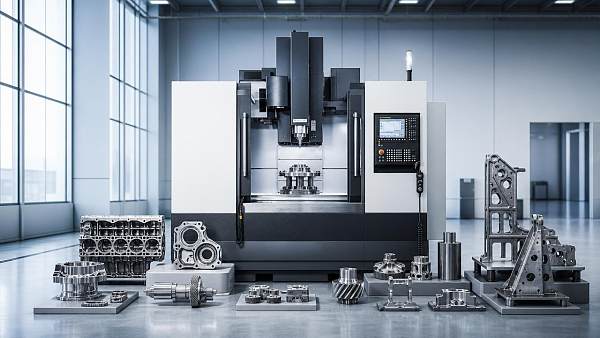
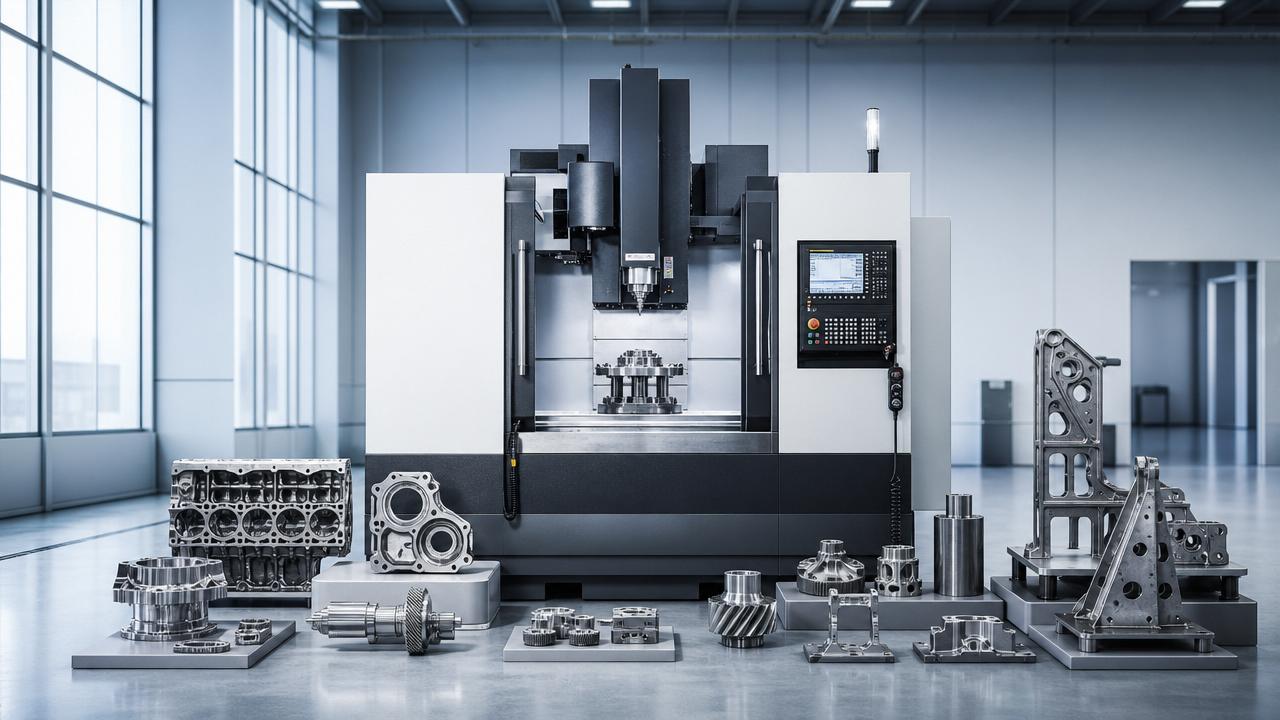
When it comes to machinery foreign trade website building, many companies get it wrong from the start.
Pages are filled with speed, power, precision, tolerance, materials, and standards, which looks very professional, but may not move buyers.
The reason is simple.
Parameter answers the question “What do you have?”, while application scenarios answer “Why should I choose you?”.
For machinery foreign trade websites, the latter is often closer to real decision-making.
Especially during the first visit to a website, buyers do not have time to compare complex parameters item by item.
They want to quickly judge whether this equipment can fit into their own sales system, whether it can solve end-customer problems, and whether it can reduce subsequent communication costs.
So, a truly effective machinery foreign trade website does not simply move a product manual online; it translates equipment value into business language that is understandable, relatable, and convertible.
What Buyers Really Care About When Viewing a Website Is Not the Parameters Themselves
From a business perspective, machinery procurement decisions are not made by a single point of judgment.
The website first bears the function of a “first-round screening”.
At this stage, the other side focuses on three things.
- Which industries and working conditions this type of equipment is suitable for.
- Whether the project delivery is stable, reproducible, and deliverable.
- Whether subsequent cooperation is worry-free and easy to promote.
If a machinery foreign trade website only displays technical parameters, the information is certainly complete, but the understanding barrier is very high.
Especially for procurement personnel in different markets, many of them are not technical engineers.
They are more accustomed to judging product fit by industry use cases, customer cases, process flow, and results.
This also means that if a machinery foreign trade website wants to improve inquiry quality, it must first put “easy to understand” before “complete”.
Why Application Scenarios More Easily Drive Inquiries
The value of application scenarios is not just that they make the page more vivid.
More importantly, they shorten the path to understanding.
For example, if the same piece of processing equipment only lists spindle speed and machining accuracy, the other side can only conclude that the machine “has decent performance”.
But if you clearly state that it is suitable for automotive parts, hydraulic system components, hardware structural parts, and mass customization factories, the other side can immediately think of their own customer base.
That kind of association is the starting point of an inquiry.
A good machinery foreign trade website usually breaks application scenarios into several perceptible modules.
- Show by industry, explaining in which fields the equipment is mature and in use.
- Show by working conditions, explaining performance under environments such as high temperature, continuous operation, and precision processing.
- Show by results, explaining outcomes such as efficiency, yield rate, and delivery consistency.
In this way, the website is no longer just a manual, but more like an online sales consultant.
How Machinery Foreign Trade Websites Should Present Scenario Content
Many companies know they need to talk about scenarios, but do not know how to do it without being vague.
A practical method is to write according to “industry - problem - solution - result”.
This is both business-oriented and helps buyers quickly grasp the key points.
In actual page design, information stacking should also be avoided.
For example, the precision parts display common in industrial manufacturing is well suited to a structured block layout.
By turning product center, process capability, quality control, industry solutions, and contact entry points into a vertical logical flow, reading efficiency will be much higher.
Pages like precision machining, hardware fasteners are often more memorable if they combine large-scale product photography, 9-grid cards, and clear model-selection entry points than if they only list parameters.
Parameters Are Not Unimportant, They Just Need to Be Placed in the Right Position
Saying that application scenarios are more important does not mean parameters can be omitted.
What a machinery foreign trade website really needs to do is adjust the order in which parameters appear.
First attract with scenarios, then confirm with parameters, and finally strengthen trust with cases and services.
This logic is more in line with overseas buyers' browsing habits.
A more recommended page sequence is as follows.
- First explain who the equipment is suitable for and what it is used for.
- Then explain what problems it solves and what results it delivers.
- Then provide key parameters and certification information.
- Finally arrange cases, FAQs, and contact forms.
After handling it this way, parameters are no longer cold data, but evidence supporting business judgment.
From a Marketing Results Perspective, Scenario-Based Content Is Better for Long-Term Customer Acquisition
From the perspective of search optimization, a machinery foreign trade website cannot rely only on a single product keyword layout.
If a page only has parameters, the search intent it can cover is very narrow.
But after adding industry applications, process comparisons, selection recommendations, and common questions, the page will naturally cover more long-tail needs.
This is very critical for the SEO performance of machinery foreign trade websites.
On this point, the value of a website + marketing service integrated platform becomes even more obvious.
Platforms like 易营宝, an AI-driven intelligent website building and overseas marketing platform, do not just build websites; more importantly, they coordinate website building, SEO optimization, ad placement, and multilingual content.
In this way, when machinery companies enter markets such as North America, Europe, Southeast Asia, or the Middle East, the website is not only a display window, but can also continuously take over search traffic and inquiry conversion.
In particular, scenario-based pages are more likely to form the content combination of “industry term + question term + solution term”, bringing more stable organic traffic.
The Three Most Common Mistakes When Building a Machinery Foreign Trade Website
First, only write about factory strength and not customer value.
Factory buildings, equipment, and certificates are of course important, but if there is no application landing information, the page still converts poorly.
Second, there are many products, but no clear selection path.
If buyers cannot find a product that suits them, they will ultimately leave quickly.
Third, the content uses only technical language and no business language.
No matter how strong the technology is, if it cannot be translated into cost, efficiency, delivery, and risk control, it is hard to drive cooperation.
If it is a precision machining-type page, you can also draw on ideas like precision machining, hardware fasteners and present flexible production capacity, quality control standards, industry solutions, and global contact channels together, forming a complete chain from technical presentation to business conversion.
The Conclusion Is Clear: First Let People Understand the Value, Then Let Them Confirm the Parameters
If a machinery foreign trade website really wants to move buyers, the core is not to put more information on the page, but to explain the value more clearly.
Application scenarios are effective because they are closer to procurement judgment and are also more conducive to search-based customer acquisition and subsequent conversion.
Parameters are still important, but they should serve as proof, not as the opening act.
If you are planning a machinery foreign trade website, you may as well first check these three questions.
- Does the website clearly state which industries and working conditions the product is suitable for?
- Does the page translate technical capabilities into business benefits?
- Does the content structure guide visitors naturally into inquiry actions?
If these three points are done well, the machinery foreign trade website will be more like a business tool that can close deals, rather than just an online product catalog.
Related Articles
 Southeast Asia's five countries launch DTSC certification, Chinese enterprise website service providers enter the first batch of evaluation partners
 Southeast Asia’s five nations launch DTSC certification; foreign trade independent sites welcome a new threshold
 Why should mechanical foreign trade websites emphasize application scenarios? Demonstrating scenarios is more persuasive to buyers than listing parameters.

Related Products
 EasyCamp SaaS Smart Website Marketing SystemE-Yingbao SaaS Smart Website Marketing System: AI-powered, zero-code website building. Rapidly launch multilingual independent e-commerce sites in just 10 minutes. Global server acceleration and AI-driven SEO optimization empower businesses to efficiently connect with global markets. The seamless integration of technology and user-friendly operation makes building e-commerce sites incredibly simple.
 AI+SEM Intelligent Advertising Marketing SystemAI+SEM drives intelligent ad creation, empowering full-funnel precision advertising marketing. The system automatically generates weekly/monthly reports, AI recommends keywords and target countries, monitors core metrics in real-time with intelligent alerts, and enables one-click high-conversion ad solutions to help quickly acquire customers and improve ROI.
 AI+SEO Dual Engine Optimization ServiceEasyWin AI+SEO Dual Engine Optimization System leverages AI-powered keyword mining, content generation, and comprehensive technical optimization to help foreign trade enterprises acquire high-quality organic traffic, significantly improving search rankings and conversion rates.
 AI+SNS Social Media Marketing SystemYingbao AI+SNS Social Media Marketing System - Precision social capture for the social media era. Supports one-click content synchronization across major platforms like Facebook and LinkedIn. AI intelligently rewrites posts for enhanced relevance. 24/7 AI customer service and user profiling analysis empower businesses to efficiently expand into global markets.
 AI+SEO营销解决方案易营宝AI+SEO营销解决方案,通过AI批量写作、智能生成TDK、精准关键词扩词等功能,全面优化网站SEO效果,提升流量与转化率。助力企业构建高效智能网站新生态。
 AI+SEM Advertising Marketing SolutionsAI+SEM Advertising Marketing Solution leverages AI technology to deeply empower SEM ad campaigns. It automatically generates weekly/monthly reports using AI, presenting account data across multiple dimensions for comprehensive insights into campaign performance and trends. The system precisely recommends keywords and target countries, intelligently generates high-conversion ad copy, and enables one-click activation of efficient campaign plans to help businesses rapidly acquire customers. Simultaneously, it monitors core metrics in real time, intelligently identifies abnormal fluctuations, and issues timely alerts to ensure stable, high-return advertising results.
 Domain Name ServicesEasyWin provides professional domain name services, including intelligent queries, one-stop registration, brand protection, and full lifecycle management, helping businesses build a digital brand image.
 EasyOperate B2C Cross-Border E-Commerce Platform & Independent WebsiteEasyStore B2C Cross-border E-commerce Independent Store is an intelligent website building and cross-border e-commerce integrated solution independently developed by EasyStore Information Technology (Beijing) Co., Ltd. The system is specially designed for small and medium-sized as well as large export enterprises, integrating 'website building, operation, marketing, advertising, and conversion' into one, helping enterprises quickly establish cross-border e-commerce independent stores to achieve brand globalization and global sales growth.
The platform supports multiple languages, multiple currencies, and multi-channel marketing, with built-in AI intelligent translation and SEO optimization systems, suitable for mainstream markets such as Southeast Asia, Europe and America, Latin America, and the Middle East, assisting Chinese manufacturing enterprises in efficiently deploying international e-commerce strategies. SSL证书易营宝提供专业SSL安全证书服务,包括单域名和泛域名证书,确保网站数据传输加密、身份验证和完整性保护,助力企业建立安全可信的在线业务环境。









