









- The China-US tariff arrangement has reached a preliminary consensus, and the trade association will be establishedJun 15, 2026View details
- What determines B2C cross-border e-commerce website development costs? A breakdown of features, interfaces, and deployment methodsJun 17, 2026View details
- China-Morocco zero-tariff access, a breakthrough in the cost of Moroccan goods exports to ChinaJun 11, 2026View details
- What signal should be released for the suspension of exports to JapanJun 10, 2026View details
- China's May LNG imports rebounded, with increased volumes from Russia and Canada filling the Middle East supply gapJun 10, 2026View details
- Will GEO change its SEO strategy?Jun 04, 2026View details
What should be noted for machinery foreign trade websites? Product structure, technical parameters, and inquiry entry design
Machinery foreign trade websites first solve the problem of "understandable, trustworthy, and reachable"
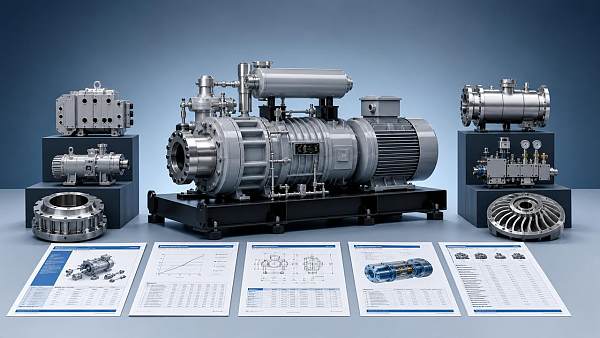
A machinery foreign trade website is not just about moving products online. A website that truly works should help overseas customers quickly determine whether you can do it, what you have done, and whether delivery is reliable.
Especially for engineering procurement, equipment integrators, and technical decision-makers, a website should primarily serve the functions of screening and communication. The clearer the page structure, the easier it is for customers to enter the inquiry stage.
This is also the core difference between a machinery foreign trade website and a regular showcase website. What customers care about is not only appearance, but also specifications, compatibility, case experience, service process, and response efficiency.
If the product structure is disorganized, the parameter display is vague, and the inquiry entry is too deep, even good traffic will be hard to convert. Visits to the website do not mean opportunities.
From a practical business perspective, the most common problems in machinery foreign trade websites are often these three areas: product structure, technical parameters, and inquiry path. As long as these three parts are well refined, conversion efficiency usually improves significantly.
1. How product structure is organized determines whether overseas customers get lost
Many machinery companies, when building machinery foreign trade websites, are accustomed to organizing content by internal departments. This may be clear to the company itself, but it is not user-friendly for overseas customers.
Customers are more used to finding products by application scenario, equipment type, capacity range, and solution. In other words, the website structure should revolve around the customer’s search path, not the company’s organizational structure.
It is recommended to adopt a three-tier structure first
- Level 1: categorize by core product families, such as cutting equipment, packaging equipment, and conveying equipment.
- Level 2: subdivide by industry or application, such as food processing, metal manufacturing, and warehousing logistics.
- Level 3: enter individual product pages to present models, parameters, configurations, and case studies.
This structure for machinery foreign trade websites has two advantages. First, it makes it easier for search engines to understand the page topic. Second, it makes it easier for customers to progressively narrow their choices and reduce bounce rates.
If there are especially many product models, it is recommended to add filtering conditions, such as processing capacity, material type, automation level, voltage standard, and installation method. In this way, customers do not need to repeatedly send emails to confirm basic information.
Under the website + marketing service integration trend, platforms like 易营宝 place even greater emphasis on "getting customers through the website." In other words, structural design should consider SEO indexing, ad landing, and subsequent conversion from the very beginning, rather than being added later.
2. Technical parameters are not about the more the better, but the clearer the better
In machinery foreign trade websites, technical parameter pages often have two extremes. Either there are only a few lines of text, and the information is clearly insufficient. Or the page is filled with parameter tables, but customers still cannot grasp the key points.
A more suitable approach is to divide parameters into "quick decision information" and "in-depth evaluation information." The former answers whether there is an initial match; the latter answers whether it is worth continuing the communication.
Product pages should include at least these types of content
- Equipment purpose and applicable scenarios.
- Core parameters, such as capacity, dimensions, power, speed, and precision.
- Optional configurations, such as motor brands, control systems, and accessory modules.
- Compatibility standards, such as voltage, certification, material, or safety specifications.
- Delivery information, such as lead time, installation support, and after-sales response.
There is a very important detail here. Parameters should not just list numbers; they should tell customers what those numbers mean. For example, for "3000 pieces/hour" output, it is best to supplement it with the corresponding working conditions and test conditions.
This is because overseas buyers are very concerned about "paper specifications" versus "actual working conditions" not matching. If a machinery foreign trade website can explain the testing basis in advance, trust will increase significantly.
In addition, it is recommended to place material downloads, drawings requests, or solution consultation entry points near the parameter section. When customers read the parameters, they are often already at a stage of strong decision intent, so do not force them to search for the contact button themselves.
Some companies insert professional material recommendations in content pages to enhance a knowledge-based brand image. For example, in industry methodology articles, it naturally extends toresearch on pathways for constructing internal control structures in public hospitals from the perspective of financial supervisionsuch material links. In essence, this is also a way of organizing content: using structured information to help users keep going deeper, rather than interrupting the visit.
3. Inquiry entry design determines whether traffic can become opportunities
The problem with many machinery foreign trade websites is not the lack of entry points, but that the entry points are too late, too weak, or too generic. After looking around for half a day, customers still do not know what to do next.
Machinery equipment procurement is usually not an impulse decision. Customers often need quotations, drawings, solutions, samples, certifications, or delivery instructions. Therefore, inquiry entry points must be designed according to different intentions.
High-conversion entry points generally include four types
- Get a quote: suitable for price-sensitive customers.
- Request a solution: suitable for project-based customers.
- Download the catalog: suitable for customers in the initial research stage.
- Technical consultation: suitable for customers comparing parameters.
These four types of buttons should not only appear on the contact page. They should also appear on the homepage, category pages, product pages, and case pages, and the copy should be specific, not all reduced to "contact us."
In actual operation, form fields should not be too many either. Name, email, country, requirement description, and target product are usually enough. Complex forms only lower submission rates.
If customers need to upload drawings or specification sheets, that can be set as a second-step supplement. Getting the initial lead first and then moving into in-depth communication is more practical than collecting all information at once.
When a machinery foreign trade website reaches this stage, it truly has marketing capabilities. Because inquiry entry design is essentially about lowering the communication barrier and shortening the distance from browsing to initiating cooperation.
4. Do not ignore trust details; they directly affect inquiry quality
If a machinery foreign trade website wants to obtain higher-quality inquiries, products and forms alone are not enough. Customers will also judge whether the company is reliable through many details.
It is recommended to focus on filling in these contents
- Factory photos and production process.
- Export countries and service regions.
- Project cases and customer application scenarios.
- Certification qualifications and testing standards.
- After-sales process, response time, and spare parts support.
Among these, the case page is especially important. Do not just write "successfully delivered to a certain customer," but explain what scenario the equipment was used in, what problem it solved, and what results were achieved.
A more obvious signal is that more and more overseas customers will continuously review case studies, parameters, and company pages before submitting inquiries. If the style of these three types of content is fragmented, trust is hard to establish.
Therefore, a machinery foreign trade website should not only pursue the number of pages, but also pursue consistency of information. Brand expression, technical expression, and sales expression must all be within the same logical framework.
Platforms like 易营宝, which are AI-driven website building and overseas marketing platforms, have the advantage of connecting intelligent website building, SEO optimization, ad placement, and content operations. A website is not an isolated page, but a core node in the global customer acquisition path.
5. When launching a machinery foreign trade website, prioritize these five things
If you are preparing to launch or redesign a machinery foreign trade website, it is recommended not to start by discussing the homepage style. First sort out the key items that affect conversion and set priorities.
- First sort out the product categories and reorganize the menu according to customer search logic.
- Then unify the parameter template to ensure each product page has complete information.
- Next, deploy inquiry entry points for multiple scenarios to improve submission convenience.
- Then supplement case studies, certifications, delivery, and after-sales content.
- Finally, combine SEO and advertising needs to continuously optimize page conversion.
This sequence is very important. Whether a machinery foreign trade website is well made or not is not first about visual design, but about whether customers can quickly understand it and smoothly move into communication.
If you can moderately integrate knowledge-based material links into the content structure, such asresearch on pathways for constructing internal control structures in public hospitals from the perspective of financial supervisionand similar extended content, it also shows that the website has a more mature information organization mindset, but the premise is always that it naturally connects with the reading path.
In the final analysis, a machinery foreign trade website is not simply about making pages, but about building a communication system that helps overseas customers understand faster, trust more easily, and be more willing to submit inquiries.
Organize the product structure well, explain the technical parameters clearly, put the inquiry entry in front, and then combine it with a continuously optimized promotion strategy, and the website can truly change from an "online brochure" into a growth asset that brings project opportunities.
Related Articles
 What should be noted for machinery foreign trade websites? Product structure, technical parameters, and inquiry entry design
 Guangjiao Expo Phase III customs release and procurement rules signal
 How to do factory foreign trade marketing? A landing-page solution from the website, advertising to inquiry follow-up
Related Products
 EasyCamp SaaS Smart Website Marketing SystemE-Yingbao SaaS Smart Website Marketing System: AI-powered, zero-code website building. Rapidly launch multilingual independent e-commerce sites in just 10 minutes. Global server acceleration and AI-driven SEO optimization empower businesses to efficiently connect with global markets. The seamless integration of technology and user-friendly operation makes building e-commerce sites incredibly simple.
 AI+SEM Intelligent Advertising Marketing SystemAI+SEM drives intelligent ad creation, empowering full-funnel precision advertising marketing. The system automatically generates weekly/monthly reports, AI recommends keywords and target countries, monitors core metrics in real-time with intelligent alerts, and enables one-click high-conversion ad solutions to help quickly acquire customers and improve ROI.
 AI+SEO Dual Engine Optimization ServiceEasyWin AI+SEO Dual Engine Optimization System leverages AI-powered keyword mining, content generation, and comprehensive technical optimization to help foreign trade enterprises acquire high-quality organic traffic, significantly improving search rankings and conversion rates.
 AI+SNS Social Media Marketing SystemYingbao AI+SNS Social Media Marketing System - Precision social capture for the social media era. Supports one-click content synchronization across major platforms like Facebook and LinkedIn. AI intelligently rewrites posts for enhanced relevance. 24/7 AI customer service and user profiling analysis empower businesses to efficiently expand into global markets.
 AI+SEO营销解决方案易营宝AI+SEO营销解决方案,通过AI批量写作、智能生成TDK、精准关键词扩词等功能,全面优化网站SEO效果,提升流量与转化率。助力企业构建高效智能网站新生态。
 AI+SEM Advertising Marketing SolutionsAI+SEM Advertising Marketing Solution leverages AI technology to deeply empower SEM ad campaigns. It automatically generates weekly/monthly reports using AI, presenting account data across multiple dimensions for comprehensive insights into campaign performance and trends. The system precisely recommends keywords and target countries, intelligently generates high-conversion ad copy, and enables one-click activation of efficient campaign plans to help businesses rapidly acquire customers. Simultaneously, it monitors core metrics in real time, intelligently identifies abnormal fluctuations, and issues timely alerts to ensure stable, high-return advertising results.
 Domain Name ServicesEasyWin provides professional domain name services, including intelligent queries, one-stop registration, brand protection, and full lifecycle management, helping businesses build a digital brand image.
 EasyOperate B2C Cross-Border E-Commerce Platform & Independent WebsiteEasyStore B2C Cross-border E-commerce Independent Store is an intelligent website building and cross-border e-commerce integrated solution independently developed by EasyStore Information Technology (Beijing) Co., Ltd. The system is specially designed for small and medium-sized as well as large export enterprises, integrating 'website building, operation, marketing, advertising, and conversion' into one, helping enterprises quickly establish cross-border e-commerce independent stores to achieve brand globalization and global sales growth.
The platform supports multiple languages, multiple currencies, and multi-channel marketing, with built-in AI intelligent translation and SEO optimization systems, suitable for mainstream markets such as Southeast Asia, Europe and America, Latin America, and the Middle East, assisting Chinese manufacturing enterprises in efficiently deploying international e-commerce strategies. SSL证书易营宝提供专业SSL安全证书服务,包括单域名和泛域名证书,确保网站数据传输加密、身份验证和完整性保护,助力企业建立安全可信的在线业务环境。









