









- The China-US tariff arrangement has reached a preliminary consensus, and the trade association will be establishedJun 15, 2026View details
- What determines B2C cross-border e-commerce website development costs? A breakdown of features, interfaces, and deployment methodsJun 17, 2026View details
- China-Morocco zero-tariff access, a breakthrough in the cost of Moroccan goods exports to ChinaJun 11, 2026View details
- What signal should be released for the suspension of exports to JapanJun 10, 2026View details
- China's May LNG imports rebounded, with increased volumes from Russia and Canada filling the Middle East supply gapJun 10, 2026View details
- Will GEO change its SEO strategy?Jun 04, 2026View details
Thailand Industry Exposes New Signal: AI Production Lines Are Gaining Attention
The Thailand International Industrial Manufacturing Exhibition, which opened on June 17, 2026, has concentrated a series of new changes in the procurement priorities of Southeast Asia's manufacturing sector. The exhibition attracted nearly 800 global companies to participate, among which Chinese exhibitors accounted for more than 25%, while buyers from Thailand, Vietnam, and Indonesia paid more attention on site to displays and communication capabilities directly related to intelligent manufacturing implementation. This trend is worth the attention of equipment manufacturers, foreign trade teams, digital service providers, and cross-border customer acquisition teams, because buyers' criteria for judging suppliers are no longer limited to traditional parameter displays, but are extending to whether they can see production line status remotely, intuitively understand delivery solutions, and communicate in local languages.
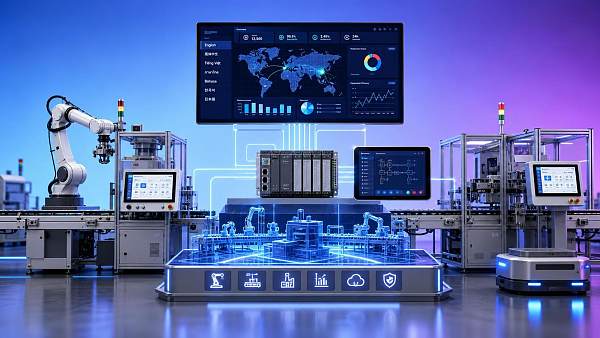
Clear information released at the exhibition site
Confirmed information shows that the 2026 Thailand International Industrial Manufacturing Exhibition, which opened on June 17, attracted nearly 800 global companies to exhibit, with more than 200 Chinese exhibitors, accounting for more than 25%.
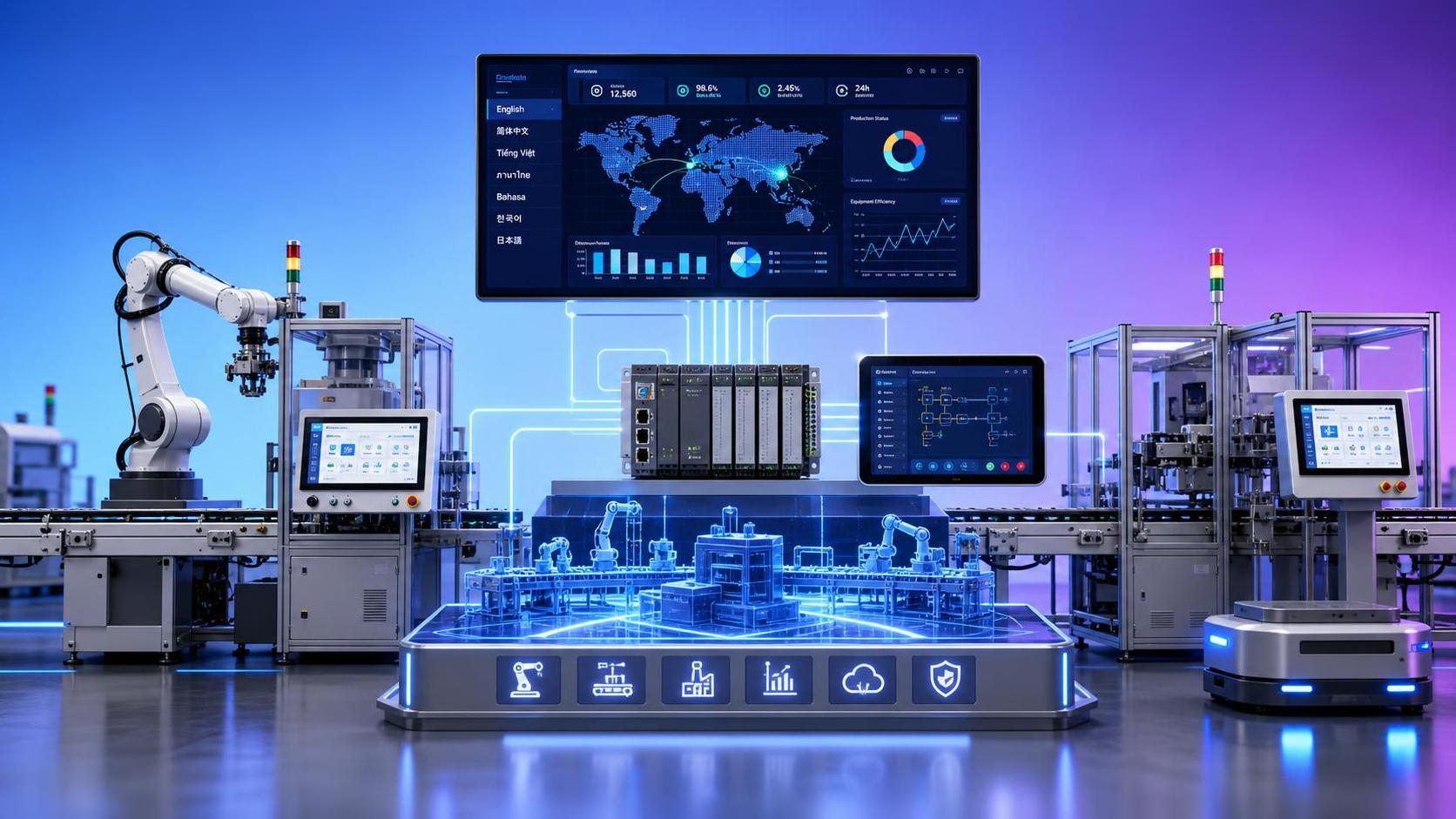
On-site research also shows that buyers from Thailand, Vietnam, and Indonesia are currently most concerned about three capabilities: first, "AI+PLC remote production line monitoring"; second, "digital twin delivery demonstration"; and third, "multilingual device operation interface".
At the same time, 73% of interviewed buyers said they would prioritize suppliers with independent websites in English, Thai, and Vietnamese, and with real-time production line video feeds embedded. This statement reflects that buyers are not only concerned about the equipment itself, but also about the supplier's online presentation, remote communication, and delivery transparency.
Which business links are being affected by changes in buyer preferences
Equipment manufacturers and export teams face an upgrade in the way they present themselves
From an industry perspective, the parties directly affected are equipment manufacturers and export teams serving the Southeast Asian market. The reason is that buyers' focus is no longer limited to introducing equipment performance; it has extended to whether they can remotely see the production line status, whether they can intuitively understand the delivery plan, and whether they can complete basic operational communication in local languages. The impact is mainly reflected in pre-sales presentations, sample displays, solution explanations, and online lead generation.
The importance of cross-border marketing and independent website operations is rising
For teams responsible for overseas lead generation, the fact that 73% of buyers prefer multilingual independent websites and real-time production line video feeds means that websites are no longer just information display pages, and may become an important entry point for buyers to initially screen suppliers. From an observational perspective, whether the English, Thai, and Vietnamese content is complete and whether the real-time video feed is stable and clear will all affect trust before inquiries.
Digital service providers are getting closer to actual procurement needs
For service providers offering remote monitoring, visualized demonstrations, and localized interface support, this piece of information shows that their service content is entering the procurement decision chain more directly. The main impact is that customers may pay more attention to whether these capabilities can be seen, demonstrated, and understood, rather than whether the system simply exists.
The evaluation dimensions of buyers are shifting forward
For overseas buyers, attention to "AI+PLC remote production line monitoring", "digital twin delivery demonstration", and "multilingual device operation interface" indicates that their evaluation behavior is shifting to the pre-purchase and communication stages. Compared with simply reading parameter tables, such capabilities are more helpful in judging whether subsequent use, delivery, and cross-language collaboration will be smooth.
What practical details should be watched more closely right now
Can remote production line presentation be converted into verifiable capability
What relevant companies need to pay attention to is not only whether they have remote monitoring functions, but whether they can turn them into a presentation method that buyers can understand and see. Analysis shows that after buyers raise the preference for "AI+PLC remote production line monitoring", pre-sales presentation materials, video feed stability, and display logic all become more critical.
Digital twin demonstrations need service delivery communication
The emphasis on "digital twin delivery demonstration" suggests that companies need to distinguish between concept display and delivery explanation. What is currently more worth attention is whether the demonstration can help customers understand equipment deployment, debugging processes, and usage scenarios, rather than staying at the level of abstract expression.
Multilingual interfaces are not just a translation issue
Buyers clearly care about multilingual device operation interfaces, which means that companies need to place language adaptation into operational understanding, after-sales communication, and training collaboration. In particular, the consistency of English, Thai, and Vietnamese content on independent websites and device interfaces may affect customers' judgment of a supplier's professionalism.
Independent websites and real-time video feeds may become pre-screening conditions
For teams deployed in the Southeast Asian market, attention needs to be paid to whether the independent website already has English, Thai, and Vietnamese versions, and whether real-time production line video feeds can be embedded and continuously maintained. From an observational perspective, this is no longer merely a publicity-level configuration, but may become a prerequisite for some buyers to establish initial trust.
This is more like an early signal of changes in procurement standards
The following content is for observation and analysis. What this exhibition information conveys is not only the highlights of a certain exhibition, but more like a sign that procurement preferences in Southeast Asia's manufacturing sector are becoming more refined. Buyers are putting forward clearer requirements for "visible remote monitoring", "understandable digital delivery demonstrations", and "multilingual interfaces that can be used directly", indicating that suppliers' competitive focus is shifting from "whether the function exists" to "whether it can be quickly verified".
However, based on the currently known information, this change is more appropriately understood as an emerging market preference rather than a unified and stable industry standard. Whether it will further expand to more product categories, more countries, and more specific procurement rules still requires continued observation of subsequent exhibition feedback, procurement requirements, and supplier response conditions.
From one exhibition to the changing communication threshold in the Southeast Asian market
Overall, the significance of this information lies in the fact that it reveals in advance several key decision points in Southeast Asian buyers' smart manufacturing procurement: remote visualization, digital demonstrations, localized interfaces, as well as online presentation capabilities that combine multilingual independent websites with real-time video feeds. For relevant enterprises, this is not a judgment on a single technological trend, but a reminder that pre-sales communication, delivery expression, and cross-border customer acquisition methods are changing in parallel.
Therefore, the current more appropriate understanding is to view it as an industry signal with practical operational value, rather than a conclusion that has already been finalized. It suggests that market participants should re-examine their presentation methods and communication paths for Southeast Asian customers, but the scope and continuity of subsequent impact still need to be determined by combining more public information for ongoing observation.
Basis of this article and direction for follow-up verification
This article was generated based on the news title, time of occurrence, and summary provided by the user. It has been confirmed that the facts only include the exhibition opening time, scale of participation, proportion of Chinese exhibitors, the procurement concerns involved in the on-site research, as well as the statement that 73% of buyers prefer multilingual independent websites and real-time production line video feeds.
For this type of industry information, follow-up verification usually can be combined with official announcements, company announcements, industry association information, authoritative media reports, and relevant standard organization documents for continuous verification. It should be noted that no specific official source link was provided in the input content, so whether the subsequent exhibition statements, procurement preferences, and whether related requirements continue to extend still need to be tracked and confirmed.
Related Articles
Related Products
 EasyCamp SaaS Smart Website Marketing SystemE-Yingbao SaaS Smart Website Marketing System: AI-powered, zero-code website building. Rapidly launch multilingual independent e-commerce sites in just 10 minutes. Global server acceleration and AI-driven SEO optimization empower businesses to efficiently connect with global markets. The seamless integration of technology and user-friendly operation makes building e-commerce sites incredibly simple.
 AI+SEM Intelligent Advertising Marketing SystemAI+SEM drives intelligent ad creation, empowering full-funnel precision advertising marketing. The system automatically generates weekly/monthly reports, AI recommends keywords and target countries, monitors core metrics in real-time with intelligent alerts, and enables one-click high-conversion ad solutions to help quickly acquire customers and improve ROI.
 AI+SEO Dual Engine Optimization ServiceEasyWin AI+SEO Dual Engine Optimization System leverages AI-powered keyword mining, content generation, and comprehensive technical optimization to help foreign trade enterprises acquire high-quality organic traffic, significantly improving search rankings and conversion rates.
 AI+SNS Social Media Marketing SystemYingbao AI+SNS Social Media Marketing System - Precision social capture for the social media era. Supports one-click content synchronization across major platforms like Facebook and LinkedIn. AI intelligently rewrites posts for enhanced relevance. 24/7 AI customer service and user profiling analysis empower businesses to efficiently expand into global markets.
 AI+SEO营销解决方案易营宝AI+SEO营销解决方案,通过AI批量写作、智能生成TDK、精准关键词扩词等功能,全面优化网站SEO效果,提升流量与转化率。助力企业构建高效智能网站新生态。
 AI+SEM Advertising Marketing SolutionsAI+SEM Advertising Marketing Solution leverages AI technology to deeply empower SEM ad campaigns. It automatically generates weekly/monthly reports using AI, presenting account data across multiple dimensions for comprehensive insights into campaign performance and trends. The system precisely recommends keywords and target countries, intelligently generates high-conversion ad copy, and enables one-click activation of efficient campaign plans to help businesses rapidly acquire customers. Simultaneously, it monitors core metrics in real time, intelligently identifies abnormal fluctuations, and issues timely alerts to ensure stable, high-return advertising results.
 Domain Name ServicesEasyWin provides professional domain name services, including intelligent queries, one-stop registration, brand protection, and full lifecycle management, helping businesses build a digital brand image.
 EasyOperate B2C Cross-Border E-Commerce Platform & Independent WebsiteEasyStore B2C Cross-border E-commerce Independent Store is an intelligent website building and cross-border e-commerce integrated solution independently developed by EasyStore Information Technology (Beijing) Co., Ltd. The system is specially designed for small and medium-sized as well as large export enterprises, integrating 'website building, operation, marketing, advertising, and conversion' into one, helping enterprises quickly establish cross-border e-commerce independent stores to achieve brand globalization and global sales growth.
The platform supports multiple languages, multiple currencies, and multi-channel marketing, with built-in AI intelligent translation and SEO optimization systems, suitable for mainstream markets such as Southeast Asia, Europe and America, Latin America, and the Middle East, assisting Chinese manufacturing enterprises in efficiently deploying international e-commerce strategies. SSL证书易营宝提供专业SSL安全证书服务,包括单域名和泛域名证书,确保网站数据传输加密、身份验证和完整性保护,助力企业建立安全可信的在线业务环境。









