









- Is Brand Globalization Marketing Consulting Worth Buying? At What Stage Should Companies Bring It InJul 01, 2026View details
- Cross-Border Marketing Trend Research: Why More and More Companies Are Starting to Deploy AI Search and GEO OptimizationJun 30, 2026View details
- Cross-Border Marketing Trend Research: How Independent Sites, AI Content, and Short-Video Customer Acquisition Are ChangingJun 30, 2026View details
- How Can a Brand Updates Page Be Made More SEO-Friendly? Analysis of Update Frequency, Content Structure, and Internal Linking StrategyJun 28, 2026View details
- What stages does the cross-border services ecosystem include? How do website building, promotion, payment, and compliance work togetherJun 22, 2026View details
- How will email marketing costs change in 2026Jun 22, 2026View details
Which Should Come First: Multilingual Article Pages or Product Pages
How should you prioritize building multilingual article pages and product pages? This is a common challenge when companies build websites for global expansion. To balance indexing, traffic, and inquiries, you need to consider the industry stage, SEO goals, and conversion path, and first clarify which type of page is more likely to drive growth.
For foreign trade companies, manufacturing factories, cross-border sellers, and brand globalization teams, a website is not just a display page, but part of a customer acquisition system. Whether multilingual article pages or product pages should be built first often determines the indexing efficiency in the first 90 days, the quality of organic traffic in the first 180 days, and whether inquiry conversion remains stable.
In an integrated website + marketing service scenario, page development should not be evaluated only by content volume. Search intent, the conversion journey, and subsequent advertising synergy are even more important. If priorities are set incorrectly, the common result is that articles generate traffic but no inquiries, or many product pages go live but remain unindexed for a long time.
Start with the Goal: Do You Need Faster Indexing or Inquiry Conversion?
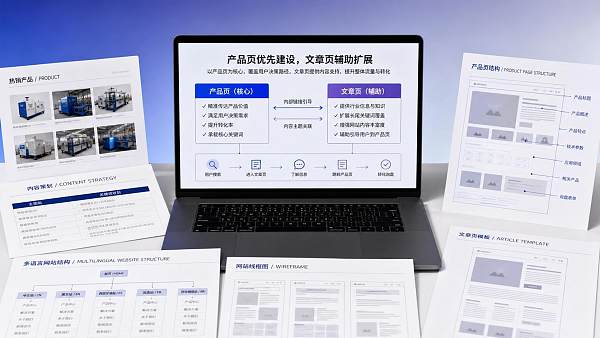
How to prioritize multilingual article pages and product pages is not mainly about 'which one is more important', but about 'which one is more suitable to build first at the current stage'. In general, you can judge based on 3 goals: faster indexing, stable traffic, and more inquiries. If a company is in the new website stage, within 0 to 3 months, its priorities are often different from those of a mature website.
New Website Stage: Build a Product Page Foundation That Can Convert First
For a newly launched multilingual independent website, product pages should usually be completed first in the initial batch. The reason is straightforward: product pages capture searches with high commercial intent. When users search for 'supplier, manufacturer, price, customization, wholesale', they are closer to submitting an inquiry. Even if early traffic is limited, these users are closer to making a purchase decision.
For a new website, it is recommended to build the first batch of 10 to 30 core product pages, covering key promoted categories, higher-margin products, and keywords with higher inquiry potential. Each page should include at least 6 basic modules: product description, application scenarios, technical specifications, delivery methods, FAQ, and inquiry entry points. Avoid pages that contain only images and a few lines of introduction.
Traffic Expansion Stage: Article Pages Serve as a Keyword Amplifier
After the basic layout of product pages is completed, article pages can begin to expand search coverage. Multilingual article pages are better suited for informational and comparison-based searches, such as 'how to choose', 'which is more suitable', 'material differences', and 'industry solutions'. These keywords usually have broader search volume and more granular competition levels.
If the website already has more than 20 mature product pages and has formed a basic internal linking structure, adding 2 to 4 articles per week for 8 to 12 consecutive weeks is usually more beneficial for improving sitewide crawl frequency and long-tail keyword exposure. The real value of article pages is to gradually guide potential customers from the awareness stage to product pages and inquiry pages.
A Common Misconception
Many companies start by producing a large number of articles, publishing more than 50 articles in 3 months, but without a complete product page matrix. As a result, traffic cannot be properly captured after it enters the website, the bounce rate remains high, and the inquiry form submission rate is below 1%. This does not mean articles are ineffective; it means the conversion pages were not properly prepared first.
The table below can help companies quickly determine whether multilingual article pages or product pages should be built first, as well as the priority actions at different stages.
The key conclusion is: for a new website, first build a foundation that can convert; for a mature website, use article pages to expand traffic. How to prioritize multilingual article pages and product pages essentially depends on whether the website already has commercial pages capable of receiving and converting traffic.
From the Perspective of Search Intent: Product Pages Capture High-Intent Demand, While Article Pages Capture Long-Tail Needs
If analyzed by keyword intent, multilingual product pages and article pages are not in competition; they have different roles. Product pages are more suitable for transactional, brand-related, and procurement-oriented searches; article pages are more suitable for educational, comparison-based, and solution-oriented searches. Priority ranking must first consider which stage of the decision-making journey the enterprise customer is in.
Which Companies Should Prioritize Product Pages?
- Companies that already have clear key products, with 10 to 200 SKUs, and need to generate inquiries as soon as possible
- B2B companies with relatively high average order values and procurement decision cycles ranging from 2 weeks to 3 months
- Teams with advertising plans that need landing pages to directly receive search and social media traffic
- Global expansion companies that want to first cover core markets, such as mainstream languages including English, Spanish, Russian, and Arabic
Which Companies Should Strengthen Article Pages First?
- Manufacturing and equipment industries where products are highly technical and customers need education before purchasing
- Websites in highly competitive keyword environments where product pages alone struggle to gain exposure quickly
- Brand websites that need to cover multiple niche scenarios, application industries, and procurement questions
- Companies that want to improve coordinated visibility across AI search, organic search, and social media content
4 Dimensions for Priority Assessment
First, assess the commercial intent of keywords; second, assess the completeness of existing pages; third, assess whether the conversion journey forms a closed loop; fourth, assess whether operational resources are sufficient. If a team can only consistently produce 8 to 12 pages per month, it is usually recommended to allocate 60% of resources to product pages and 40% to article pages, rather than splitting resources evenly.
The table below is suitable as a reference for procurement decisions and project scheduling, helping teams allocate development budgets based on search intent and conversion value.
If the budget is limited, the safer combination is to first complete the product pages corresponding to high-intent keywords, and then use article pages to address long-tail needs. Especially for B2B foreign trade websites, the inquiry value generated by 1 high-quality product page is often higher than that of several broad-traffic articles without conversion capacity.
Multilingual Development Is Not Just Translation; Priorities Are Also Affected by Markets and Languages
When many companies discuss whether multilingual article pages or product pages should be built first, they ignore an important variable: search maturity varies across languages. The English market has stronger content competition; markets such as German, French, and Japanese are more sensitive to localization quality; while the Middle East and Latin American markets place greater emphasis on language adaptation and mobile experience.
Recommended Approach to Language Prioritization
If a company has limited resources in the early stage, it is recommended to start with 1 to 2 main market languages instead of launching 5 to 8 languages at the same time. First validate the product page conversion model in the primary language, then expand article pages and secondary languages. This can reduce content duplication, translation deviations, and management costs.
Recommended Phased Implementation Sequence
- Phase 1: Complete the main site structure, core category pages, and 10 to 30 product pages
- Phase 2: Add FAQs, buying guides, and application scenario articles in the corresponding language
- Phase 3: Expand localized article pages and advertising landing pages by key country
- Phase 4: Iterate high-conversion product pages and high-exposure content pages based on search term performance
In actual execution, the number of pages is not the only standard. More importantly, each language version must have a complete structure, including title tags, URL hierarchy, internal links, inquiry forms, contact information, and page trust elements. Without these foundations, even publishing articles first will make it difficult to achieve effective growth.
How to Implement It: A Priority Planning Approach for Companies Going Global
For companies that want to coordinate website building, SEO, advertising, and social media, the recommended path is 'product pages first, article pages second, then refined iteration'. This is not a fixed formula, but a lower-risk approach that is more suitable for most B2B companies going global, especially teams that need to see valid inquiries within 6 months.
A Practical 90-Day Content Development Framework
In the first 30 days, complete the website architecture, main market language, core product pages, and category pages; from day 31 to day 60, add comparison articles, procurement-oriented articles, and FAQ pages; from day 61 to day 90, optimize conversion buttons, internal links, and form paths based on indexing and visit data. This ensures a foundation for indexing while preserving room for subsequent scaling.
3 Types of Problems to Avoid During Execution
- Only using machine translation without localized rewriting, resulting in unnatural wording that affects search performance and user trust
- Article pages and product pages being disconnected, with no related recommendations, category aggregation, or scenario-based navigation, making it impossible to retain traffic
- Having many pages but no continuous optimization mechanism, with content still not adjusted after 90 days based on click-through rate, bounce rate, and inquiry rate
For companies that need integrated execution, AI-driven intelligent website building and overseas marketing platforms such as 易营宝 provide value not only in website-building speed, but also in integrating multilingual website development, content planning, SEO optimization, advertising traffic capture, and AI search visibility into one execution framework, reducing the disconnect between content direction and customer acquisition goals.
If your question is how to prioritize multilingual article pages and product pages, the safest answer is usually this: first turn product pages into a business foundation that can be indexed, understood, and converted, and then let article pages take on the tasks of keyword expansion, customer education, and traffic guidance. This approach is suitable not only for the cold start of a new website, but also for later scaling through Google SEO, advertising, and social media traffic.
For foreign trade companies, manufacturing factories, cross-border marketplaces, and brand globalization teams, the truly effective approach is not choosing either article pages or product pages, but prioritizing them by stage and making the page structure serve inquiry growth. If you are planning a multilingual independent website or overseas marketing system, it is recommended to sort out your target markets, content structure, and page traffic-capturing path as soon as possible, obtain a customized solution, and understand a development rhythm and growth plan that better fits your business.
Related Articles
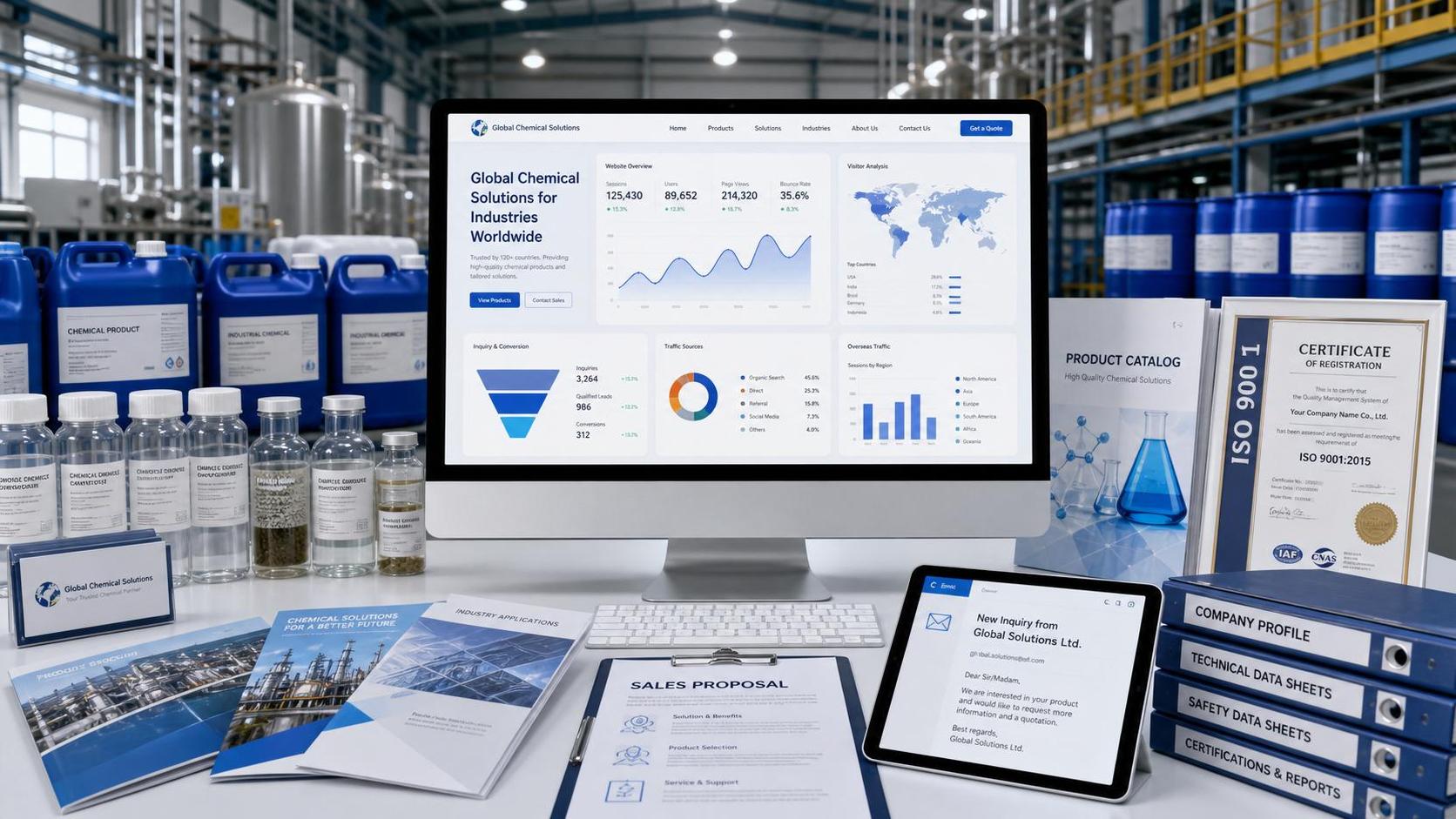
 How to Develop an Overseas Promotion Plan for the Chemical Industry? An Analysis of Compliant Communication and Inquiry Generation Paths
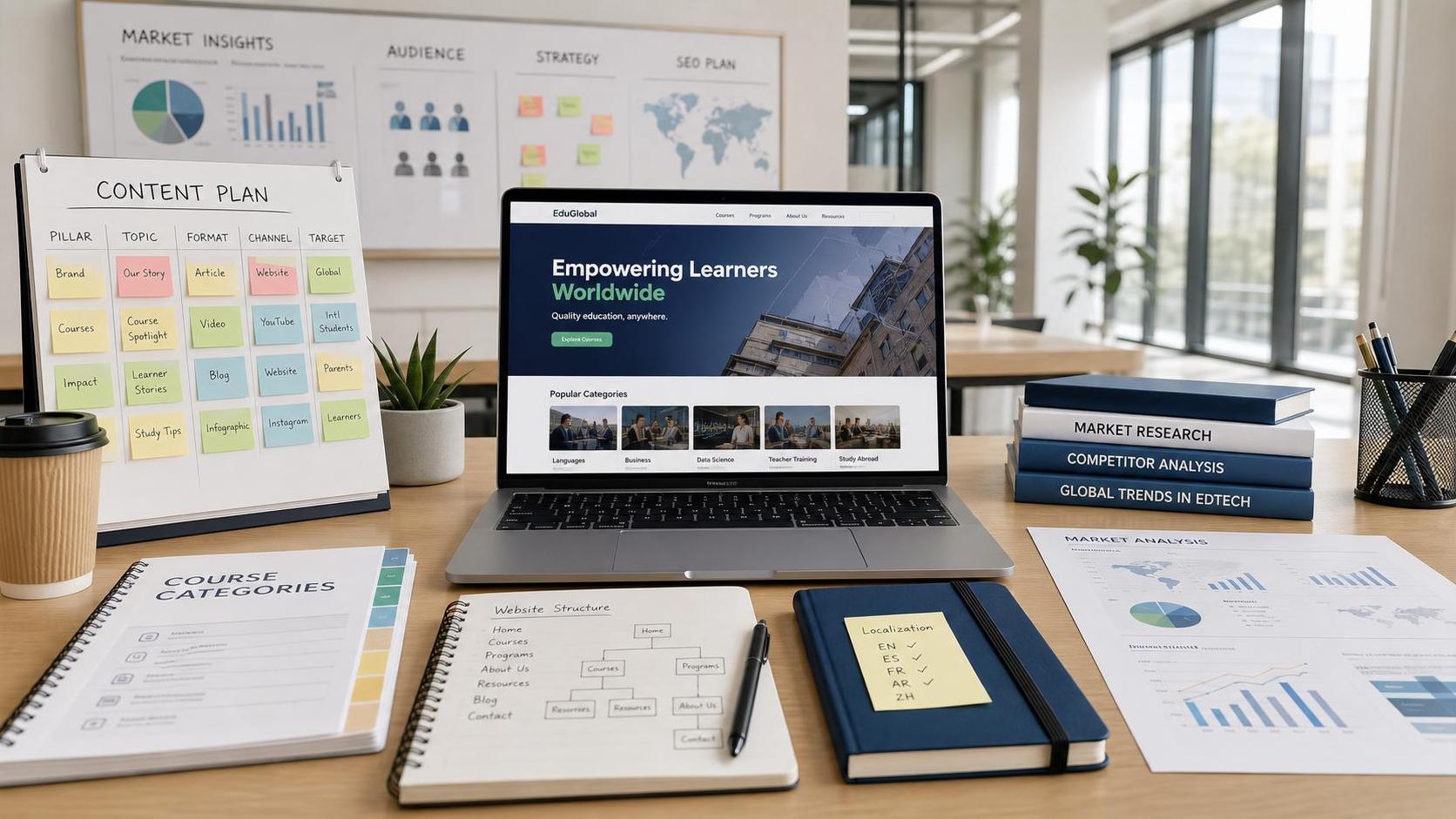
 How should the education industry plan website sections and content for multilingual website development when taking a brand global
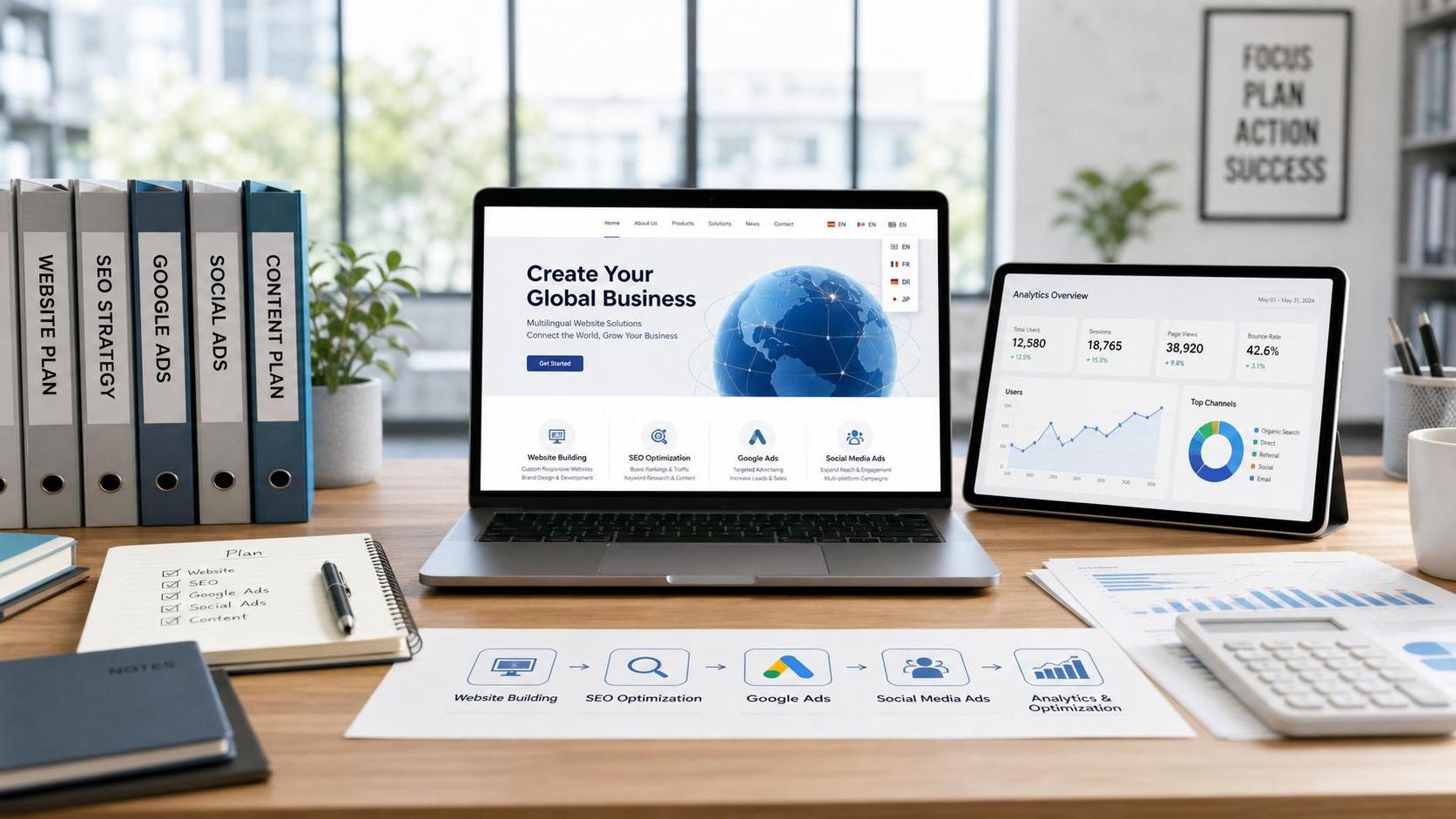
 How Can Digital Marketing Solutions Be Implemented? Implementation Steps for SMEs from Website Development to Ad Campaigns
Related Products
 EasyCamp SaaS Smart Website Marketing SystemE-Yingbao SaaS Smart Website Marketing System: AI-powered, zero-code website building. Rapidly launch multilingual independent e-commerce sites in just 10 minutes. Global server acceleration and AI-driven SEO optimization empower businesses to efficiently connect with global markets. The seamless integration of technology and user-friendly operation makes building e-commerce sites incredibly simple.
 AI+SEM Intelligent Advertising Marketing SystemAI+SEM drives intelligent ad creation, empowering full-funnel precision advertising marketing. The system automatically generates weekly/monthly reports, AI recommends keywords and target countries, monitors core metrics in real-time with intelligent alerts, and enables one-click high-conversion ad solutions to help quickly acquire customers and improve ROI.
 AI+SEO Dual Engine Optimization ServiceEasyWin AI+SEO Dual Engine Optimization System leverages AI-powered keyword mining, content generation, and comprehensive technical optimization to help foreign trade enterprises acquire high-quality organic traffic, significantly improving search rankings and conversion rates.
 AI+SNS Social Media Marketing SystemYingbao AI+SNS Social Media Marketing System - Precision social capture for the social media era. Supports one-click content synchronization across major platforms like Facebook and LinkedIn. AI intelligently rewrites posts for enhanced relevance. 24/7 AI customer service and user profiling analysis empower businesses to efficiently expand into global markets.
 AI+SEO营销解决方案易营宝AI+SEO营销解决方案,通过AI批量写作、智能生成TDK、精准关键词扩词等功能,全面优化网站SEO效果,提升流量与转化率。助力企业构建高效智能网站新生态。
 AI+SEM Advertising Marketing SolutionsAI+SEM Advertising Marketing Solution leverages AI technology to deeply empower SEM ad campaigns. It automatically generates weekly/monthly reports using AI, presenting account data across multiple dimensions for comprehensive insights into campaign performance and trends. The system precisely recommends keywords and target countries, intelligently generates high-conversion ad copy, and enables one-click activation of efficient campaign plans to help businesses rapidly acquire customers. Simultaneously, it monitors core metrics in real time, intelligently identifies abnormal fluctuations, and issues timely alerts to ensure stable, high-return advertising results.
 Domain Name ServicesEasyWin provides professional domain name services, including intelligent queries, one-stop registration, brand protection, and full lifecycle management, helping businesses build a digital brand image.
 EasyOperate B2C Cross-Border E-Commerce Platform & Independent WebsiteEasyStore B2C Cross-border E-commerce Independent Store is an intelligent website building and cross-border e-commerce integrated solution independently developed by EasyStore Information Technology (Beijing) Co., Ltd. The system is specially designed for small and medium-sized as well as large export enterprises, integrating 'website building, operation, marketing, advertising, and conversion' into one, helping enterprises quickly establish cross-border e-commerce independent stores to achieve brand globalization and global sales growth.
The platform supports multiple languages, multiple currencies, and multi-channel marketing, with built-in AI intelligent translation and SEO optimization systems, suitable for mainstream markets such as Southeast Asia, Europe and America, Latin America, and the Middle East, assisting Chinese manufacturing enterprises in efficiently deploying international e-commerce strategies. SSL证书易营宝提供专业SSL安全证书服务,包括单域名和泛域名证书,确保网站数据传输加密、身份验证和完整性保护,助力企业建立安全可信的在线业务环境。









