









- Is Brand Globalization Marketing Consulting Worth Buying? At What Stage Should Companies Bring It InJul 01, 2026View details
- Cross-Border Marketing Trend Research: Why More and More Companies Are Starting to Deploy AI Search and GEO OptimizationJun 30, 2026View details
- Cross-Border Marketing Trend Research: How Independent Sites, AI Content, and Short-Video Customer Acquisition Are ChangingJun 30, 2026View details
- How Can a Brand Updates Page Be Made More SEO-Friendly? Analysis of Update Frequency, Content Structure, and Internal Linking StrategyJun 28, 2026View details
- What stages does the cross-border services ecosystem include? How do website building, promotion, payment, and compliance work togetherJun 22, 2026View details
- How will email marketing costs change in 2026Jun 22, 2026View details
Which pages should you start with for conversion rate optimization on an independent website
Which pages should you start with for conversion rate optimization on an independent website? In most cases, you should first review the homepage, product pages, landing pages, and inquiry page. These core pages directly influence user decisions and are also the key starting points for improving lead and order conversions.
For foreign trade companies, manufacturing factories, cross-border sellers, and brands expanding overseas, an independent website is not simply a display window, but a business hub for receiving traffic, building trust, generating inquiries, and acquiring orders. After many companies invest in Google SEO, advertising, or social media traffic acquisition, their traffic may increase by 20% or even 50%, but lead growth remains limited. The problem is often not traffic itself, but the page’s ability to receive and convert that traffic.
In an integrated website + marketing service scenario, conversion optimization should not focus only on the color of a button, nor should it look only at bounce rate. A more effective approach is to first identify 4 types of high-impact pages, then optimize them in stages based on user source, visit intent, device performance, and content completeness. This methodology is especially important for companies that coordinate AI website building, SEO, advertising, and multilingual operations.
Why prioritize core pages instead of changing the entire website at once
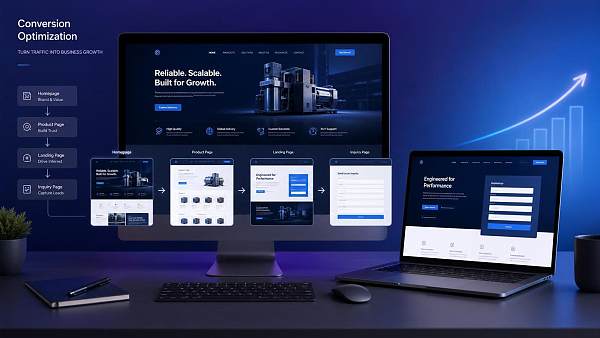
Which pages to start with for independent website conversion rate optimization is essentially a question of input-output ratio. For a website with 50 to 300 pages, a full-site redesign usually takes 3 to 8 weeks and can easily affect indexed content, advertising stability, and inquiry paths. In contrast, prioritizing core conversion pages often allows you to see changes in lead quality within 7 to 15 days.
From actual operations, about 80% of effective conversions are usually concentrated on a small number of key pages: the homepage builds trust above the fold, product pages explain solutions, landing pages receive advertising traffic, and the inquiry page handles the final submission action. As long as 1 of these 4 page types has an obvious weakness, the overall conversion rate may drop by more than 30%.
Look at traffic entry points first, then conversion exits
A common misconception among companies is to optimize blog pages or news pages first because these pages are numerous and updated frequently. However, what truly affects transactions is usually the user’s first judgment after entering the site and the second click they make. It is recommended to first organize the path into three stages: “entry page — decision page — submission page”, and check at least 3 indicators for each stage: time on page, click depth, and conversion action.
4 criteria for judging priority
- Whether traffic in the past 30 days ranks in the top 20%
- Whether it receives SEO organic traffic or paid advertising traffic
- Whether it directly affects inquiries, add-to-cart actions, registrations, or form submissions
- Whether there are issues such as mobile loading slower than 3 seconds or a relatively high bounce rate
If a company is using an intelligent website building system or a multilingual independent website, it is recommended to analyze performance by language and market. For example, visitors to an English site and a Spanish site may have different intentions. North American users pay more attention to qualifications and delivery details, while Middle Eastern users care more about contact efficiency and response methods. The same page structure should not be used to cover all markets.
The table below can help companies quickly determine which pages to start with for independent website conversion rate optimization, as well as the most common optimization goals for each page type.
As the table shows, page priority is not determined by how visually attractive the design is, but by business impact. For most companies expanding overseas, refining the 4 types of core pages is more likely to improve conversions than adding 10 new pieces of content.
Which pages to start with for independent website conversion rate optimization: specific methods for 4 page types
To answer more specifically which pages to start with for independent website conversion rate optimization, the answer is not a general statement such as “optimize user experience”, but solving different problems at different stages for each type of page. The homepage solves trust, product pages solve understanding, landing pages solve relevance, and the inquiry page solves action.
Homepage: explain who you are and what problem you solve within 5 seconds
The homepage is the first judgment point for most first-time visitors. Especially in B2B foreign trade scenarios, buyers usually decide within 3 to 5 seconds whether a company looks professional. The above-the-fold section should include 3 elements at the same time: clear industry positioning, core products or services, and an actionable next step, such as “Get a Solution”, “View Products”, or “Submit Requirements”.
For integrated service providers offering intelligent website building, SEO, advertising, and social media operations, the homepage should not only display brand slogans. It should also clearly state the types of customers it serves, such as manufacturing factories, cross-border e-commerce businesses, and companies expanding their brands overseas. If visitors cannot see information that matches their own scenario above the fold, the bounce rate will often rise noticeably within 10 seconds.
3 key points for homepage optimization
- Keep the above-the-fold headline to 1 sentence, and use the subtitle to supplement service scope and application regions.
- Keep the navigation menu to 5 to 7 items as much as possible to avoid information overload.
- Place trust-building content as soon as possible below the first screen, such as service processes, delivery capabilities, supported markets, or common scenarios.
Product pages: reduce the hesitation of “I read it, but still don’t dare to inquire”
Product pages or solution pages are one of the most easily underestimated parts of independent website conversion rate optimization. Many companies only display images and brief descriptions, but fail to answer the 6 types of questions buyers care about most: who it is suitable for, what it can solve, how it differs from similar options, which countries it supports, how long delivery takes, and how to start cooperation.
In the website + marketing service integration industry, product pages are recommended to include modular explanations, such as AI intelligent website building, multilingual deployment, SEO optimization, advertising, social media operations, and GEO content visibility improvement. Each module should ideally include 1 application scenario, 2 to 4 deliverables, and 1 clear CTA, instead of being written uniformly as a conceptual introduction.
Recommended content structure for product pages
- Core functions and target users
- Implementation process and typical timeline, such as website launch in 7 days and optimization deployment in 2 to 4 weeks
- Supported languages, channels, or market scope
- Results explained in case study format, focusing on process and scenario without exaggerating data
- Consultation entry point, form, or instant communication tool
The table below is suitable for organizing common problems and optimization directions for 4 types of key pages, making it easier for operations, design, and advertising teams to collaborate on execution.
The value of this type of table is that it turns the abstract idea of “conversion optimization” into an executable checklist. For companies that collaborate across teams, after the root causes of problems are clarified, page optimization efficiency is usually higher than simply revising copy.
Landing pages: keep ad clicks consistent with page promises
Whether traffic comes from Google Ads, Facebook ads, or social media campaigns, landing pages are the receiving point for high-cost traffic. If the ad promotes a “multilingual foreign trade website building solution” but the landing page first talks about company history or contains a large amount of unrelated navigation, visitors will leave very quickly. A high-converting landing page usually serves only 1 goal, 1 audience type, and 1 action.
It is recommended to keep landing page information modules within 6 screen sections, and place the form both above the fold and at the bottom. For B2B businesses, 5 to 8 form fields are generally appropriate; if there are more than 10 fields, the submission rate is usually affected. Landing pages should also include explanations for common concerns, such as delivery timeline, supported languages, basic SEO configuration, and follow-up operational services.
Inquiry page: do not let the final step become the loss point
Many companies treat the inquiry page as a technical accessory page, but in reality, the final-step experience often determines whether a lead can be generated. It is recommended to first check 4 items on the inquiry page: number of fields, mobile input experience, feedback page after submission, and backup contact methods. Especially in overseas scenarios, it is safer to retain at least 2 contact methods among email, WhatsApp, phone, and form.
If the website offers high-ticket services, such as an integrated website building + SEO + advertising solution, it can also add text near the submission section such as “service process explanation” or “response within 1 business day” to reduce users’ uncertainty after submission. These small adjustments may seem simple, but they have a very direct impact on inquiry completion rate.
How to establish a sustainable conversion optimization mechanism
Which pages to start with for independent website conversion rate optimization solves only the first step; what truly creates a gap is whether a continuous optimization mechanism is formed afterward. It is recommended that companies review core pages once a month, adjust structure once a quarter, and update page content in sync with changes in SEO, advertising, social media, and AI search entry points.
It is recommended to use the “3-stage optimization method”
- Stage 1: Diagnosis. Within 7 days, organize the data and problems of the homepage, product pages, landing pages, and inquiry page.
- Stage 2: Execution. Within 2 to 3 weeks, complete adjustments to content, structure, speed, and CTA.
- Stage 3: Verification. Continuously observe changes in inquiry rate, bounce rate, and time on page for 2 to 4 weeks.
Metrics suitable for focused tracking
- Conversion rate of core pages
- Form submission completion rate
- Mobile traffic share and loading time
- Click path from SEO entry pages to the inquiry page
- Bounce rate and lead cost of advertising landing pages
For companies expanding into multiple markets, it is recommended to choose a platform with unified capabilities in AI website building, multilingual management, SEO optimization, advertising, and content collaboration. This not only reduces the cost caused by repeated page revisions, but also makes it easier to maintain consistency in page structure, keyword layout, and conversion paths.
Taking an integrated website + marketing service platform such as 易营宝 as an example, companies can create synergy among website building, SEO, advertising, and GEO visibility optimization. The website is no longer treated as an isolated project, but as the central hub of the global customer acquisition chain. For teams that want to improve the quality of overseas inquiries, shorten the advertising payback cycle, and enhance the conversion capability of multilingual websites, this integrated approach has greater practical value.
If you are evaluating which pages to start with for independent website conversion rate optimization, the safest order is usually: homepage, product pages, landing pages, and inquiry page. Only by optimizing high-impact pages first and then expanding content and channel investment can SEO traffic, advertising traffic, and social media traffic truly convert into inquiries and orders. If you want to further organize a page optimization path suitable for your industry, feel free to contact us now to get a customized independent website growth plan, or consult us for more integrated website and overseas marketing solutions.
Related Articles
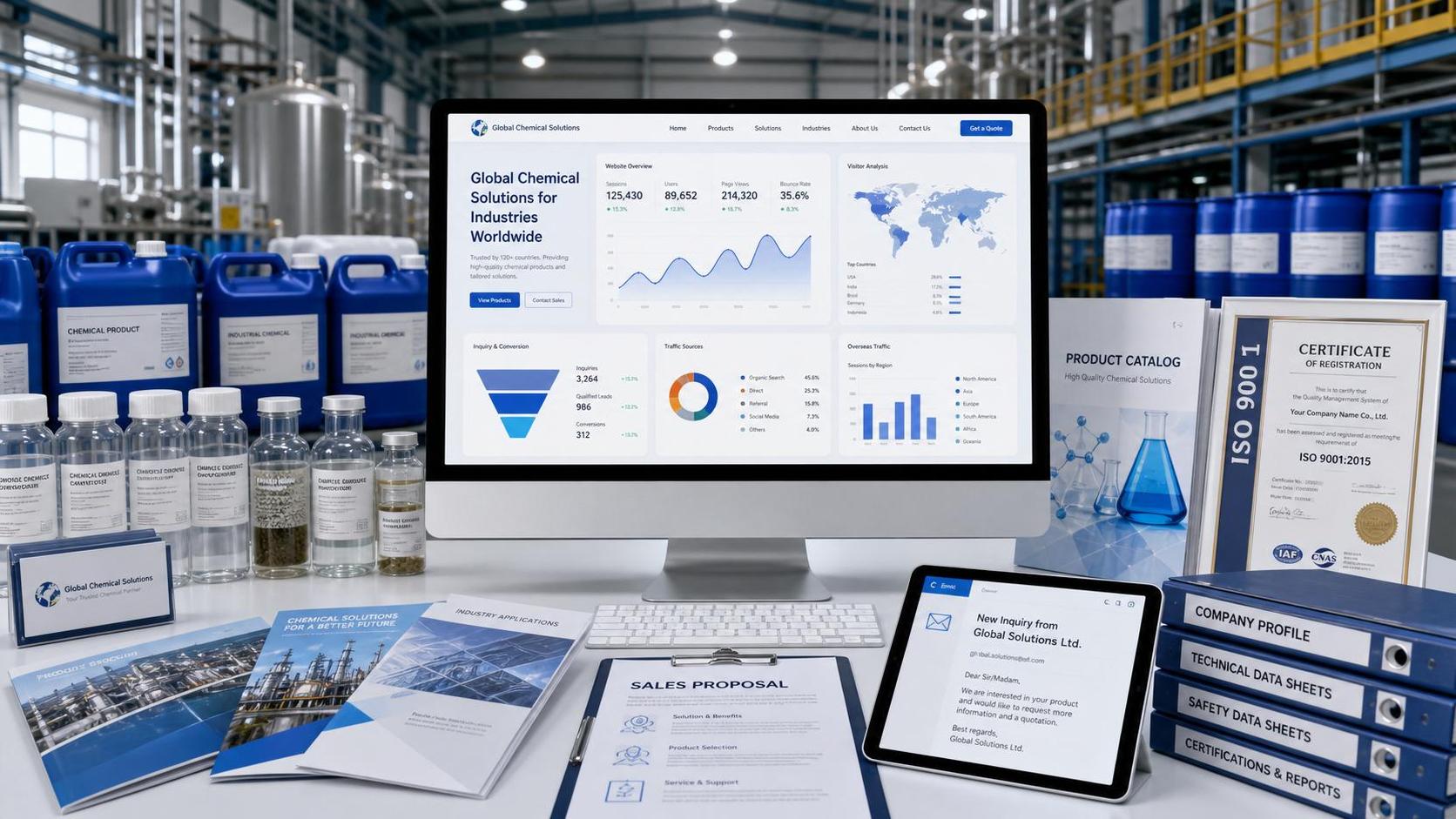
 How to Develop an Overseas Promotion Plan for the Chemical Industry? An Analysis of Compliant Communication and Inquiry Generation Paths
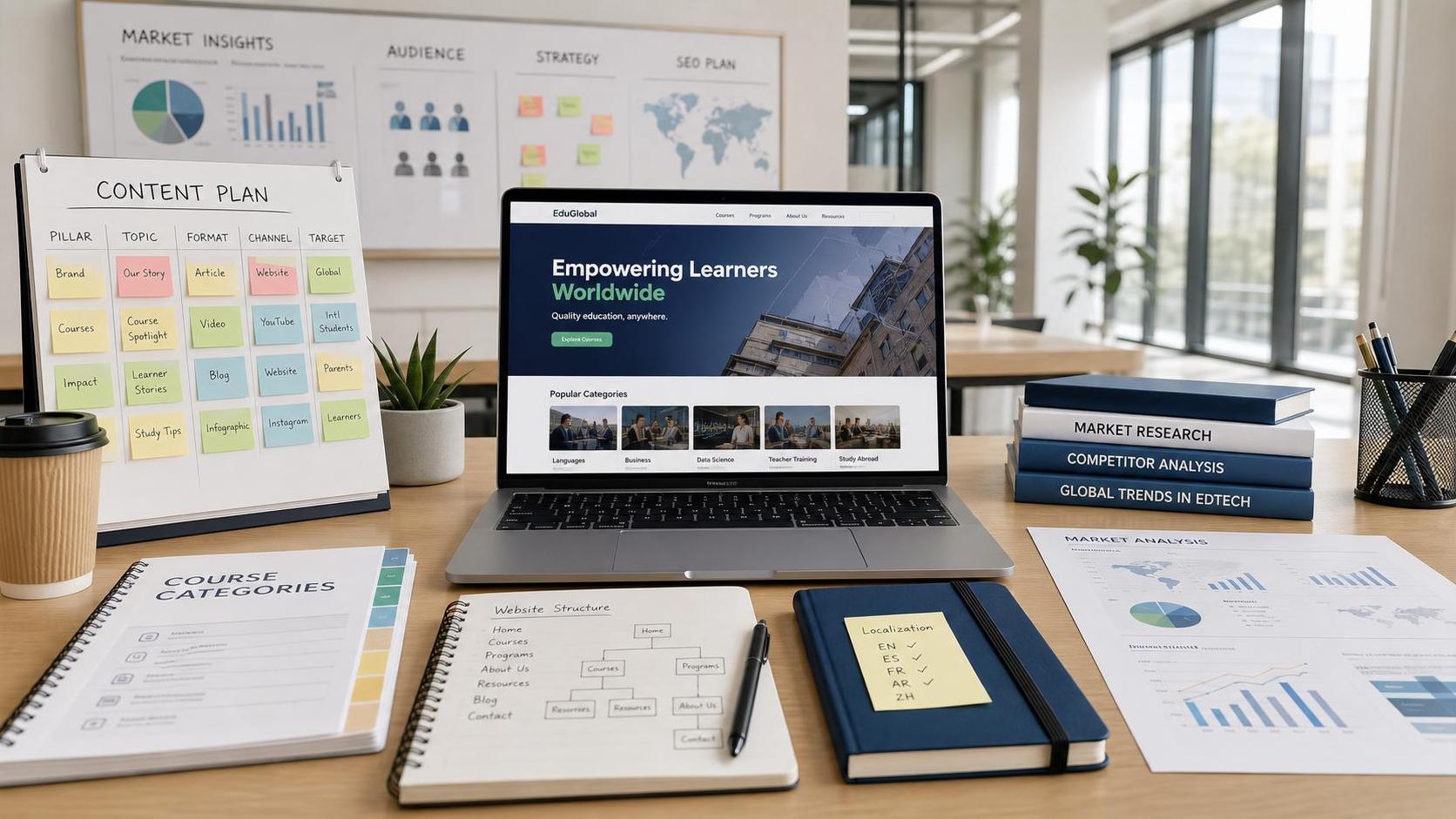
 How should the education industry plan website sections and content for multilingual website development when taking a brand global
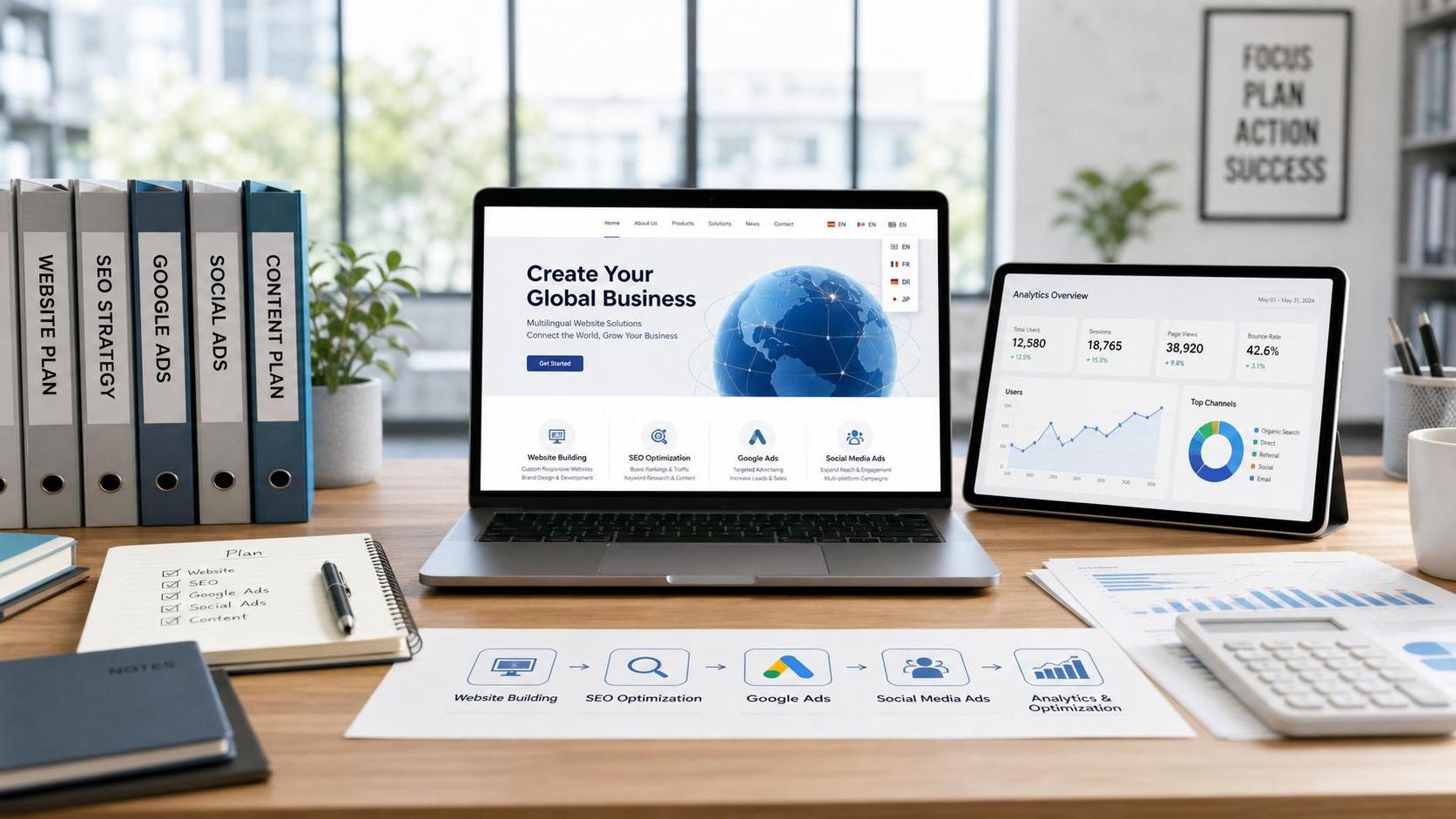
 How Can Digital Marketing Solutions Be Implemented? Implementation Steps for SMEs from Website Development to Ad Campaigns
Related Products
 EasyCamp SaaS Smart Website Marketing SystemE-Yingbao SaaS Smart Website Marketing System: AI-powered, zero-code website building. Rapidly launch multilingual independent e-commerce sites in just 10 minutes. Global server acceleration and AI-driven SEO optimization empower businesses to efficiently connect with global markets. The seamless integration of technology and user-friendly operation makes building e-commerce sites incredibly simple.
 AI+SEM Intelligent Advertising Marketing SystemAI+SEM drives intelligent ad creation, empowering full-funnel precision advertising marketing. The system automatically generates weekly/monthly reports, AI recommends keywords and target countries, monitors core metrics in real-time with intelligent alerts, and enables one-click high-conversion ad solutions to help quickly acquire customers and improve ROI.
 AI+SEO Dual Engine Optimization ServiceEasyWin AI+SEO Dual Engine Optimization System leverages AI-powered keyword mining, content generation, and comprehensive technical optimization to help foreign trade enterprises acquire high-quality organic traffic, significantly improving search rankings and conversion rates.
 AI+SNS Social Media Marketing SystemYingbao AI+SNS Social Media Marketing System - Precision social capture for the social media era. Supports one-click content synchronization across major platforms like Facebook and LinkedIn. AI intelligently rewrites posts for enhanced relevance. 24/7 AI customer service and user profiling analysis empower businesses to efficiently expand into global markets.
 AI+SEO营销解决方案易营宝AI+SEO营销解决方案,通过AI批量写作、智能生成TDK、精准关键词扩词等功能,全面优化网站SEO效果,提升流量与转化率。助力企业构建高效智能网站新生态。
 AI+SEM Advertising Marketing SolutionsAI+SEM Advertising Marketing Solution leverages AI technology to deeply empower SEM ad campaigns. It automatically generates weekly/monthly reports using AI, presenting account data across multiple dimensions for comprehensive insights into campaign performance and trends. The system precisely recommends keywords and target countries, intelligently generates high-conversion ad copy, and enables one-click activation of efficient campaign plans to help businesses rapidly acquire customers. Simultaneously, it monitors core metrics in real time, intelligently identifies abnormal fluctuations, and issues timely alerts to ensure stable, high-return advertising results.
 Domain Name ServicesEasyWin provides professional domain name services, including intelligent queries, one-stop registration, brand protection, and full lifecycle management, helping businesses build a digital brand image.
 EasyOperate B2C Cross-Border E-Commerce Platform & Independent WebsiteEasyStore B2C Cross-border E-commerce Independent Store is an intelligent website building and cross-border e-commerce integrated solution independently developed by EasyStore Information Technology (Beijing) Co., Ltd. The system is specially designed for small and medium-sized as well as large export enterprises, integrating 'website building, operation, marketing, advertising, and conversion' into one, helping enterprises quickly establish cross-border e-commerce independent stores to achieve brand globalization and global sales growth.
The platform supports multiple languages, multiple currencies, and multi-channel marketing, with built-in AI intelligent translation and SEO optimization systems, suitable for mainstream markets such as Southeast Asia, Europe and America, Latin America, and the Middle East, assisting Chinese manufacturing enterprises in efficiently deploying international e-commerce strategies. SSL证书易营宝提供专业SSL安全证书服务,包括单域名和泛域名证书,确保网站数据传输加密、身份验证和完整性保护,助力企业建立安全可信的在线业务环境。









