









- The China-US tariff arrangement has reached a preliminary consensus, and the trade association will be establishedJun 15, 2026View details
- What determines B2C cross-border e-commerce website development costs? A breakdown of features, interfaces, and deployment methodsJun 17, 2026View details
- China-Morocco zero-tariff access, a breakthrough in the cost of Moroccan goods exports to ChinaJun 11, 2026View details
- What signal should be released for the suspension of exports to JapanJun 10, 2026View details
- China's May LNG imports rebounded, with increased volumes from Russia and Canada filling the Middle East supply gapJun 10, 2026View details
- Will GEO change its SEO strategy?Jun 04, 2026View details
How to build an electronic components foreign trade website? Directory structure, parameter display, and inquiry logic analysis
How to build an electronics components foreign trade website? The key is not just visual appeal, but whether the catalog structure is clear, whether the parameter display is professional, and whether the inquiry path is efficient. This article will analyze the website-building logic suitable for engineering-oriented customers from the perspectives of project implementation and lead conversion.
For project managers and engineering project owners, the core goal of building an electronics components foreign trade website is not to “make a corporate website,” but to create a business tool that can be searched, understood, and used to drive inquiries. The evaluation criteria are simple: can customers quickly find the model they need, can they clearly see the key parameters, and can they initiate effective communication at low cost.
Therefore, a truly effective electronics components foreign trade website should focus on three things: whether the catalog structure matches the search habits of buyers and engineers, whether the product parameter display is sufficiently professional, and whether the inquiry logic can accommodate the needs of different purchasing stages. Only when these three points are designed correctly can the website continuously acquire high-quality overseas customers.
Why Electronics Components Foreign Trade Websites Cannot Be Built Like Ordinary Corporate Websites
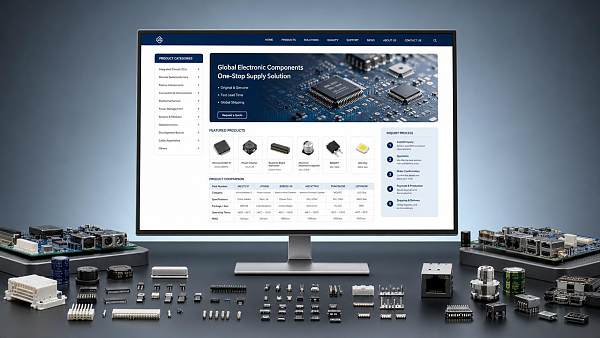
The customer decision-making process in the electronics components industry is completely different from that of ordinary consumer goods. Visitors are often not simply browsing a brand, but looking for a specific category, package, specification, certification, delivery time, and alternative solution. If a website only emphasizes company introduction, it is very difficult to support real purchasing decisions.
Especially for overseas B2B customers, the first thing they usually ask after entering the website is not “Who are you?” but “Do you have the part number I need?” “Do the parameters match the project requirements?” and “Do you support small-batch trial orders or long-term supply?” This determines that the website structure must be centered around model selection and inquiry expansion.
Many company websites have decent traffic, but poor inquiry quality. The root cause is not ineffective promotion, but the inability of the pages to support professional search intent. After customers click in, they cannot find the corresponding category, cannot see the core specifications, and do not know how to continue the conversation, so they naturally leave quickly.
From a project management perspective, an electronics components foreign trade website is more like a digital sales front end. It must serve SEO indexing, engineer screening, procurement comparison, and boss-level supply capability judgment. Whoever can integrate these three types of needs into one system will have a website that converts more easily.
How to Design the Catalog Structure to Match the Search Habits of Engineers and Buyers
In the catalog design of an electronics components foreign trade website, the first principle is not aesthetics, but searchability. Customers usually look for products by category, function, application, brand, package, and parameter range, so the website navigation should not only have a broad entry such as “Product Center,” but should also be broken down into searchable layers.
A practical structure is usually: the first level is divided by major categories, such as connectors, sensors, capacitors, resistors, ICs, and relays; the second level is further divided by function or application scenario; the third level then enters specific series, model, or parameter pages. This structure is more favorable for search engine understanding and helps customers quickly locate products.
If a company has strong supply chain integration capabilities, it can also add an “By Industry Application” entry, such as industrial control, automotive electronics, medical devices, consumer electronics, and new energy equipment. This not only covers more search terms, but also helps customers find suitable components based on project requirements in reverse.
Catalog naming should be as professional and clear as possible, while avoiding internal jargon. Overseas customers rely more on standardized terms when searching, such as capacitance, connector type, voltage range, package type, etc. If the category terms are disconnected from industry search language, even a complete website will find it difficult to obtain precise traffic.
For managers, the catalog structure also affects future expansion costs. A good website architecture should support the addition of new brands, series, substitute models, and multilingual versions in the future, rather than requiring a complete rebuild of the navigation every time a new product category is added after launch. This is the underlying logic that must be planned clearly at the beginning of the project.
How to Present Parameters So Customers Are Willing to Continue the Inquiry
The parameter page of an electronics components foreign trade website is a key page that determines inquiry quality. Whether a customer continues communicating often depends on whether they can confirm within 30 seconds that the product roughly matches their needs. If the parameter display is too superficial, the website will become an invalid catalog.
It is recommended that each product page display at least basic information, key specifications, package type, operating conditions, certification information, application directions, and supply status. If data sheet downloads, dimensional drawings, real photos, and substitute model suggestions can also be added, customers’ trust in the supply capability will increase significantly.
Here it is important to note that parameter display is not just a pile of fields, but a presentation of decision-making information. Engineers care most about electrical performance, interface standards, environmental requirements, and compatibility; buyers care most about MOQ, lead time, brand source, certifications, and batch stability. The page needs to take both perspectives into account.
In terms of presentation format, tables are the most suitable for electronics components because they are easy to scan and compare horizontally. For series products, filters and comparison functions can also be added so that customers can narrow the selection range by conditions such as voltage, capacitance, size, and temperature range, thereby improving page dwell time.
Some companies invest heavily in visuals but ignore the hierarchy of professional information, which affects conversion. A premium feel does not come from stacking large images, but from making complex information look organized. Just likeautomotive company portals improve comprehension efficiency through technical specification modules and tab-style content, electronics components websites also need a clear information layout.
How to Design Inquiry Logic to Reduce Invalid Communication and Improve Conversion
Many electronics components foreign trade websites only have a “Contact Us” button, which is far from enough for engineering-oriented customers. Because customers at different stages have different needs: some want to confirm parameters, some want to request a quote, some want to ask about inventory and lead time, so the entry points should be designed in layers.
A more effective approach is to break inquiries into multiple actions, such as “Get a Quote,” “Request a Sample,” “Download Specifications,” “Inquire About Substitute Models,” and “Bulk Purchasing Inquiry.” This not only lowers the psychological barrier for customers to initiate contact, but also helps sales determine customer intent and priority more quickly in the backend.
Inquiry form fields should not be too many, but they must help screen value. It is recommended to retain company name, required model, estimated quantity, application project, target market, email, and message description. Compared with collecting phone numbers broadly, it is more important to obtain real information that can judge the maturity of the project.
If the company has many product models, it can add an “Add to Inquiry Basket” function on product pages, allowing customers to submit multiple model requirements at one time. This design is especially suitable for BOM purchasing scenarios, and can significantly improve batch inquiry efficiency while reducing the time cost of sales follow-up to confirm models.
At the same time, do not ignore the mobile experience. Many overseas buyers will first complete preliminary screening on mobile devices. If buttons are too small, forms are too long, or attachments are difficult to download, conversion will easily be interrupted. In essence, inquiry logic is not about form design, but about shortening the customer journey from search to communication as much as possible.
How Should Project Managers Judge Whether a Website Solution Is Reliable
For project owners, when evaluating an electronics components foreign trade website, they should not only look at the homepage mockup, but at whether it can support business goals. The most important things to confirm are whether the website architecture can support SEO, whether product data can be managed in bulk, and whether the inquiry lead path is convenient for follow-up.
A reliable website solution usually has four characteristics: support for multi-level product catalogs, support for parameterized product pages, support for multilingual and search optimization, and support for unified lead management and tracking. If these capabilities are missing, even the most beautiful page will be hard to turn into a long-term customer acquisition asset.
In addition, it is necessary to see whether the service provider truly understands foreign trade business rather than just design. Websites in the electronics components industry need to balance search engine rules, engineering information expression, and sales conversion logic. Only a team that understands both website development and overseas marketing can avoid the problem of “having a display but no inquiries” after launch.
From an input-output perspective, a website is not a one-time deliverable, but an ongoing marketing infrastructure. Especially in terms of Google SEO, landing pages for advertising, multilingual expansion, and AI search visibility improvement, the more standardized the underlying structure, the higher the future promotion efficiency and the lower the overall customer acquisition cost.
Practical Recommendations for Electronics Components Foreign Trade Website Development: Get the Basics Right First, Then Scale Up
If a company is preparing to launch a project, it is recommended to first complete the basic catalog, key product pages, and high-intent inquiry process, rather than filling in all content from the start. Clarify the most core product lines and the most common purchasing scenarios first; this often produces results faster than a website that is “large and comprehensive but difficult to use.”
In content development, priority should be given to high-value pages, including core category pages, key model pages, industry application pages, FAQ pages, and certification capability pages. These pages can both capture keyword traffic and answer customers’ most practical questions, making them the most valuable content assets for an electronics components foreign trade website.
If the company also wants to balance brand image, appropriate visual expression can be added without affecting information efficiency. For example, in corporate portal scenarios, immersive visual storytelling, dynamic data dashboards, or authentic review modules can be used to strengthen professionalism and trust, but the premise is always service conversion.
For companies that want long-term overseas growth, an integrated solution combining website building, SEO, and advertising is even more recommended. Because launching an electronics components foreign trade website is only the beginning; whether it can continue to obtain precise traffic depends on whether the website structure, content strategy, technical optimization, and marketing system operate in sync.
Conclusion: The Standard of a Good Website Is Not Good-looking, but Helping Customers Make Decisions Quickly
Back to the original question, how should an electronics components foreign trade website be built? The answer is not complicated: the catalog structure must align with the search habits of engineers and buyers, the parameter display must support professional judgment, and the inquiry logic must reduce communication barriers while improving lead quality.
For project managers and engineering project owners, whether a website is worth investing in does not depend on whether the page looks flashy, but on whether it can help customers find products faster, understand capabilities, initiate contact, and ultimately convert into overseas business opportunities that can be followed up.
If a website is planned as a foreign trade growth system rather than merely a showcase window, an electronics components foreign trade website can do more than just “go online”; it can truly serve customer acquisition, accumulate traffic assets, and lay a solid foundation for a company’s future global expansion.
Related Articles
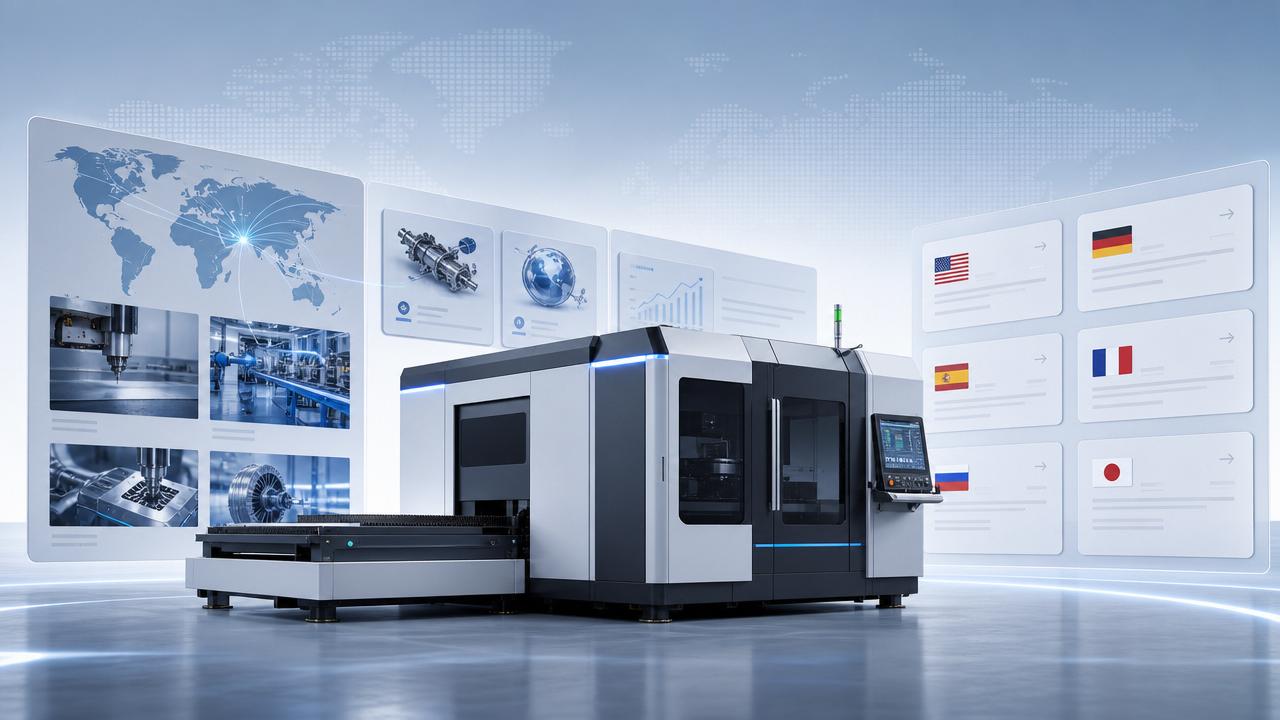
 What should a manufacturing enterprise overseas website look like? Key page framework and content focus for equipment companies
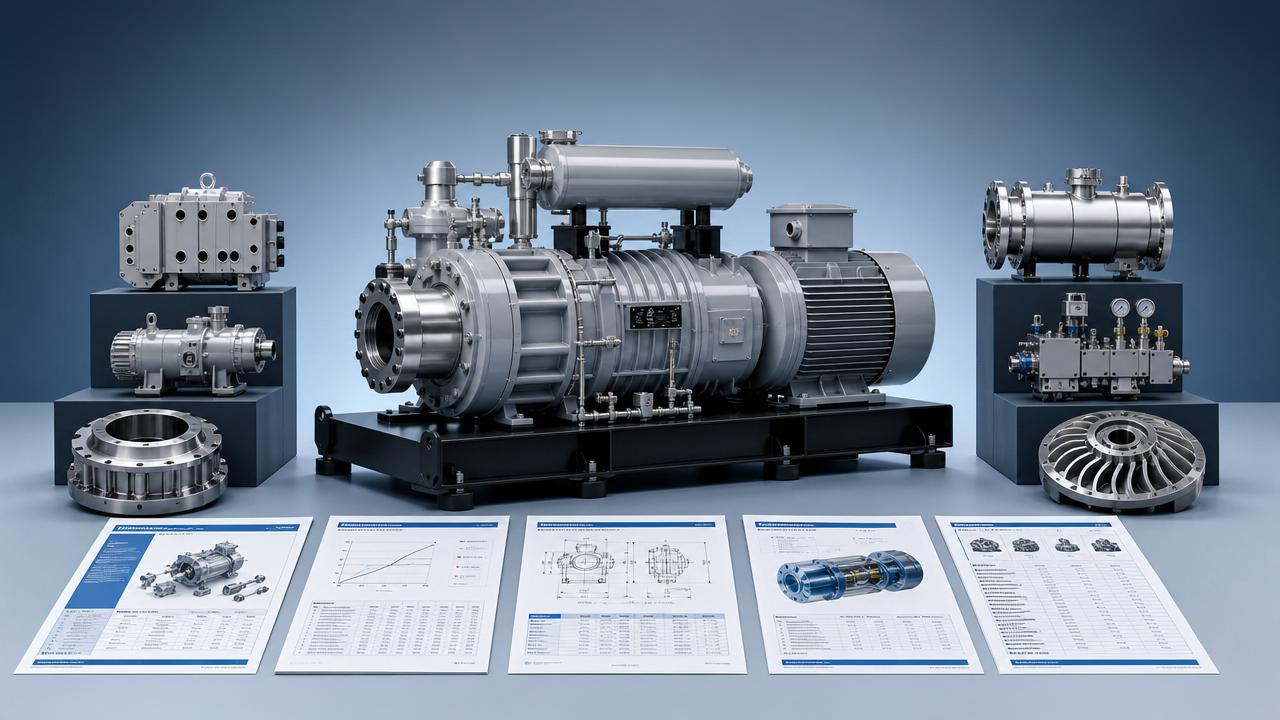
 What should be noted for machinery foreign trade websites? Product structure, technical parameters, and inquiry entry design
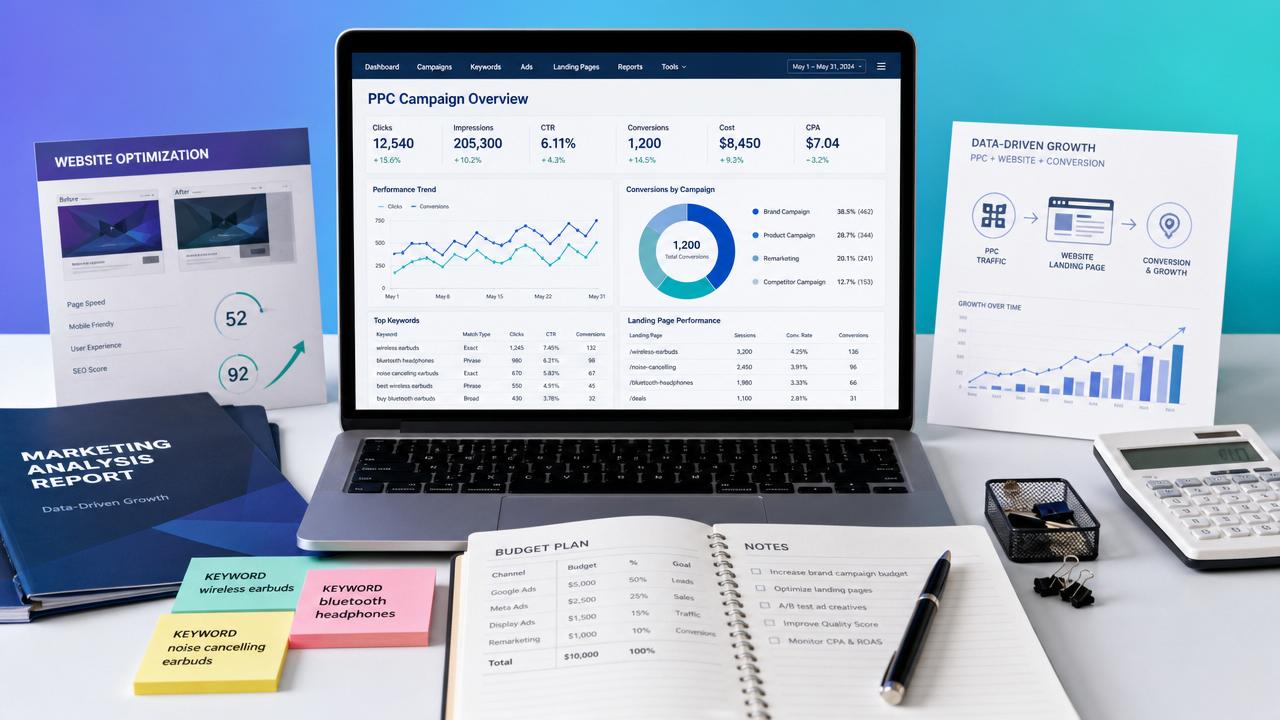
 Is PPC advertising suitable for new product promotion? Budget and goals at different stages
Related Products
 EasyCamp SaaS Smart Website Marketing SystemE-Yingbao SaaS Smart Website Marketing System: AI-powered, zero-code website building. Rapidly launch multilingual independent e-commerce sites in just 10 minutes. Global server acceleration and AI-driven SEO optimization empower businesses to efficiently connect with global markets. The seamless integration of technology and user-friendly operation makes building e-commerce sites incredibly simple.
 AI+SEM Intelligent Advertising Marketing SystemAI+SEM drives intelligent ad creation, empowering full-funnel precision advertising marketing. The system automatically generates weekly/monthly reports, AI recommends keywords and target countries, monitors core metrics in real-time with intelligent alerts, and enables one-click high-conversion ad solutions to help quickly acquire customers and improve ROI.
 AI+SEO Dual Engine Optimization ServiceEasyWin AI+SEO Dual Engine Optimization System leverages AI-powered keyword mining, content generation, and comprehensive technical optimization to help foreign trade enterprises acquire high-quality organic traffic, significantly improving search rankings and conversion rates.
 AI+SNS Social Media Marketing SystemYingbao AI+SNS Social Media Marketing System - Precision social capture for the social media era. Supports one-click content synchronization across major platforms like Facebook and LinkedIn. AI intelligently rewrites posts for enhanced relevance. 24/7 AI customer service and user profiling analysis empower businesses to efficiently expand into global markets.
 AI+SEO营销解决方案易营宝AI+SEO营销解决方案,通过AI批量写作、智能生成TDK、精准关键词扩词等功能,全面优化网站SEO效果,提升流量与转化率。助力企业构建高效智能网站新生态。
 AI+SEM Advertising Marketing SolutionsAI+SEM Advertising Marketing Solution leverages AI technology to deeply empower SEM ad campaigns. It automatically generates weekly/monthly reports using AI, presenting account data across multiple dimensions for comprehensive insights into campaign performance and trends. The system precisely recommends keywords and target countries, intelligently generates high-conversion ad copy, and enables one-click activation of efficient campaign plans to help businesses rapidly acquire customers. Simultaneously, it monitors core metrics in real time, intelligently identifies abnormal fluctuations, and issues timely alerts to ensure stable, high-return advertising results.
 Domain Name ServicesEasyWin provides professional domain name services, including intelligent queries, one-stop registration, brand protection, and full lifecycle management, helping businesses build a digital brand image.
 EasyOperate B2C Cross-Border E-Commerce Platform & Independent WebsiteEasyStore B2C Cross-border E-commerce Independent Store is an intelligent website building and cross-border e-commerce integrated solution independently developed by EasyStore Information Technology (Beijing) Co., Ltd. The system is specially designed for small and medium-sized as well as large export enterprises, integrating 'website building, operation, marketing, advertising, and conversion' into one, helping enterprises quickly establish cross-border e-commerce independent stores to achieve brand globalization and global sales growth.
The platform supports multiple languages, multiple currencies, and multi-channel marketing, with built-in AI intelligent translation and SEO optimization systems, suitable for mainstream markets such as Southeast Asia, Europe and America, Latin America, and the Middle East, assisting Chinese manufacturing enterprises in efficiently deploying international e-commerce strategies. SSL证书易营宝提供专业SSL安全证书服务,包括单域名和泛域名证书,确保网站数据传输加密、身份验证和完整性保护,助力企业建立安全可信的在线业务环境。









