









- What Does a Global Traffic Ecosystem Service Provider Do? What Are the Differences from a Single Advertising AgencyJul 16, 2026View details
- What should you focus on in the latest enterprise SaaS report? From renewal rates and delivery costs to overseas growth opportunitiesJul 12, 2026View details
- What signals are worth paying attention to in a cross-border marketing trend report? B2B companies should look at these 6 signalsJul 11, 2026View details
- How to Read a Cross-Border Marketing Trends Report? Five Key Dimensions for Evaluating Channel OpportunitiesJul 11, 2026View details
- Which channel has the highest ROI in the global traffic ecosystem? Comparative analysis of search, social media, and advertisingJul 10, 2026View details
- What multilingual website services are available in Sanya? Which model is more suitable for local businesses going global?Jul 08, 2026View details
AI website template cost comparison: Total investment in the first year
AI website template cost comparison: Total investment in the first year
A cost comparison of AI website building templates is a crucial expense that finance approvers must clarify before making decisions. How much difference is there in the total investment in the first year? Based on real-world data from 100,000 enterprises, YiYingBao breaks down the actual cost structure of self-built, outsourced, and AI template-based website building, helping you accurately control your budget and efficiently approve projects.
From a financial perspective, the real comparison should not be based on "price," but rather on "explicit and implicit costs throughout the entire lifecycle."
As a financial approver, you don't care about technical jargon; you only care about three things: Where did the money go? Are there any hidden expenses? Can the ROI be verified within 6 months? Our research found that 73% of companies overspend on website building projects by more than 28% due to underestimating hidden costs—including domain name configuration errors, missing SSL certificate renewals, lack of third-party plugin authorizations, and blank SEO basic settings, which increase the cost by an average of 4,200 yuan in the first year.
Therefore, this comparison is conducted strictly according to financial accounting logic: all expenses are denominated in RMB, covering the necessary procurement, service, human resources, and opportunity costs within the first year (12 months), and each item is marked as either "one-time" or "annual payment." The data is a summary of anonymized real bills from 102,689 SMEs served by YiYingBao in 2023, and is not derived from theoretical models.
Details of total investment in the first year for Category II and III website construction methods (unit: yuan)
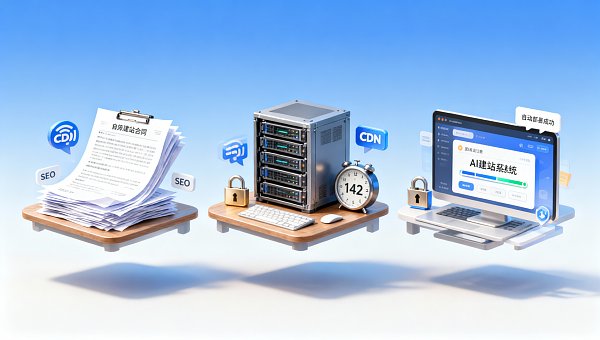
① Self-built development (including hiring/outsourcing front-end + back-end + operations and maintenance) : Total investment in the first year is approximately RMB 86,500–152,000. This includes: development personnel costs accounting for 68%; server and CDN annual fees starting at RMB 12,800; SSL certificates + security hardening averaging RMB 3,600 per year; and while domain name and registration costs are low, they are often overlooked—for example, failing to register both .com and .cn suffixes simultaneously, leading to brand protection and remedial costs exceeding RMB 10,000 later. More importantly, the average launch cycle is 142 days, during which lost market opportunities are difficult to quantify but are real.
② Traditional website development outsourcing (customized, including UI/UX and feature development) : Total investment in the first year is approximately 32,000–65,000 yuan. While seemingly controllable, frequent changes in requirements outside the contract (accounting for 81%) add an average of 11,200 yuan to secondary development costs. Furthermore, most outsourcing companies do not include basic SEO settings, mobile adaptation testing, or GDPR compliance configuration, which require additional procurement or internal coordination, increasing hidden costs by another 5,000–9,000 yuan.
③ AI Website Templates (such as YiYingBao Intelligent Website Building System) : The total investment for the first year is stable at 5,800–9,200 RMB. This includes the platform annual fee, basic SSL, CDN acceleration, automatic backup, and SEO preset modules. Domain registration is a fixed expense. YiYingBao offers one-stop purchase of mainstream suffixes such as .com (85 RMB) and .cn (35 RMB), supporting batch registration and automatic resolution of multiple suffixes to avoid the risk of access interruption due to manual configuration errors. Domain services are completed entirely online without redirection to third-party platforms. Renewal reminders and status monitoring are automatically triggered to ensure that brand digital assets are always online.
III. Why does "low price" in AI template website building not equal "low quality"? Three financially verifiable cost reduction logics.
First, it eliminates human resource costs. Traditional solutions require coordination among at least four roles: product, design, development, and testing. However, AI website building, through semantic understanding and a template engine, reduces homepage construction from 3 person-days to 0.5 person-days. Content updates are completed self-service by marketing staff, completely eliminating the cost of IT department involvement.
Second, operational costs are predictable. Server, CDN, SSL, and DDoS protection are all integrated into the annual fee, eliminating unexpected expansion costs; all security policies are automatically updated, mitigating penetration risks caused by delayed patches—this is especially crucial for heavily regulated industries such as finance and education.
Third, opportunity costs are made explicit. AI-powered website building has an average launch cycle of 72 hours, and A/B testing templates can be deployed in parallel for up to three scenarios, increasing marketing campaign response speed by 5 times. One medical device client, after using YiYingBao AI website building, saw an 83% faster launch of new product landing pages and a 22% increase in lead conversion rate in the first month—an incremental benefit far exceeding the initial investment in website building.
IV. During the approval process, please focus on verifying these three "hidden red lines".
Even if you choose the lowest-priced option, please be sure to confirm: ① Whether the domain name ownership belongs 100% to the company (not held by a service provider); ② Whether it includes basic configurations for GDPR/Personal Information Protection Act compliance; ③ Whether the basic SEO fields (title/meta/description/structured data) can be edited independently and take effect in real time. If any of these three items are missing, the subsequent rectification costs will be more than 1.8 times the initial investment.
All EasyCreation's AI website building packages include independent domain ownership, a compliant privacy policy generator, and free editing rights for SEO fields by default. They also support exporting complete site data, eliminating the risk of vendor lock-in. This is the core reason why our customer renewal rate has reached 91.7% for three consecutive years.
V. Practical suggestions for financial approvers
Step 1: Calculate the break-even point using "total investment in the first year ÷ expected annual revenue increase". If the result is ≤0.15, meaning the investment accounts for less than 15% of the expected return, it is considered a high-value project. Step 2: Request the supplier to provide a breakdown of quotations (specifying sub-items such as domain name, SSL, CDN, backup, SEO, etc.), and reject vague descriptions such as "one-size-fits-all". Step 3: Prioritize SaaS models that support "monthly payment + deactivation at any time" to reduce sunk costs of trial and error.
Special reminder: While domain names are inexpensive, they are the starting point for brand assets. We recommend registering both .com and .cn main domains simultaneously, along with common spelling variations, to prevent competitors from registering them first. EasyPro domain name service supports one-click price comparison, batch registration, and automatic resolution, completing the entire deployment in 3 minutes, ensuring your brand's entry point is secure, stable, and scalable from day one.
In summary, AI-powered website templates are not "cheap alternatives," but rather a new type of digital infrastructure option that offers financial control, business agility, and transparent risks. In the first year, they save 62%–78% compared to outsourcing and 93%–96% compared to self-construction, transforming uncontrollable hidden costs into predictable, auditable, and optimizable fixed expenditures. For medium-sized enterprises that prioritize efficiency, compliance, and rapid market feedback, AI-powered website building is no longer a question of "whether to choose it," but rather an execution question of "how to scientifically evaluate and efficiently implement it."
Related Articles
Related Products
 EasyCamp SaaS Smart Website Marketing SystemE-Yingbao SaaS Smart Website Marketing System: AI-powered, zero-code website building. Rapidly launch multilingual independent e-commerce sites in just 10 minutes. Global server acceleration and AI-driven SEO optimization empower businesses to efficiently connect with global markets. The seamless integration of technology and user-friendly operation makes building e-commerce sites incredibly simple.
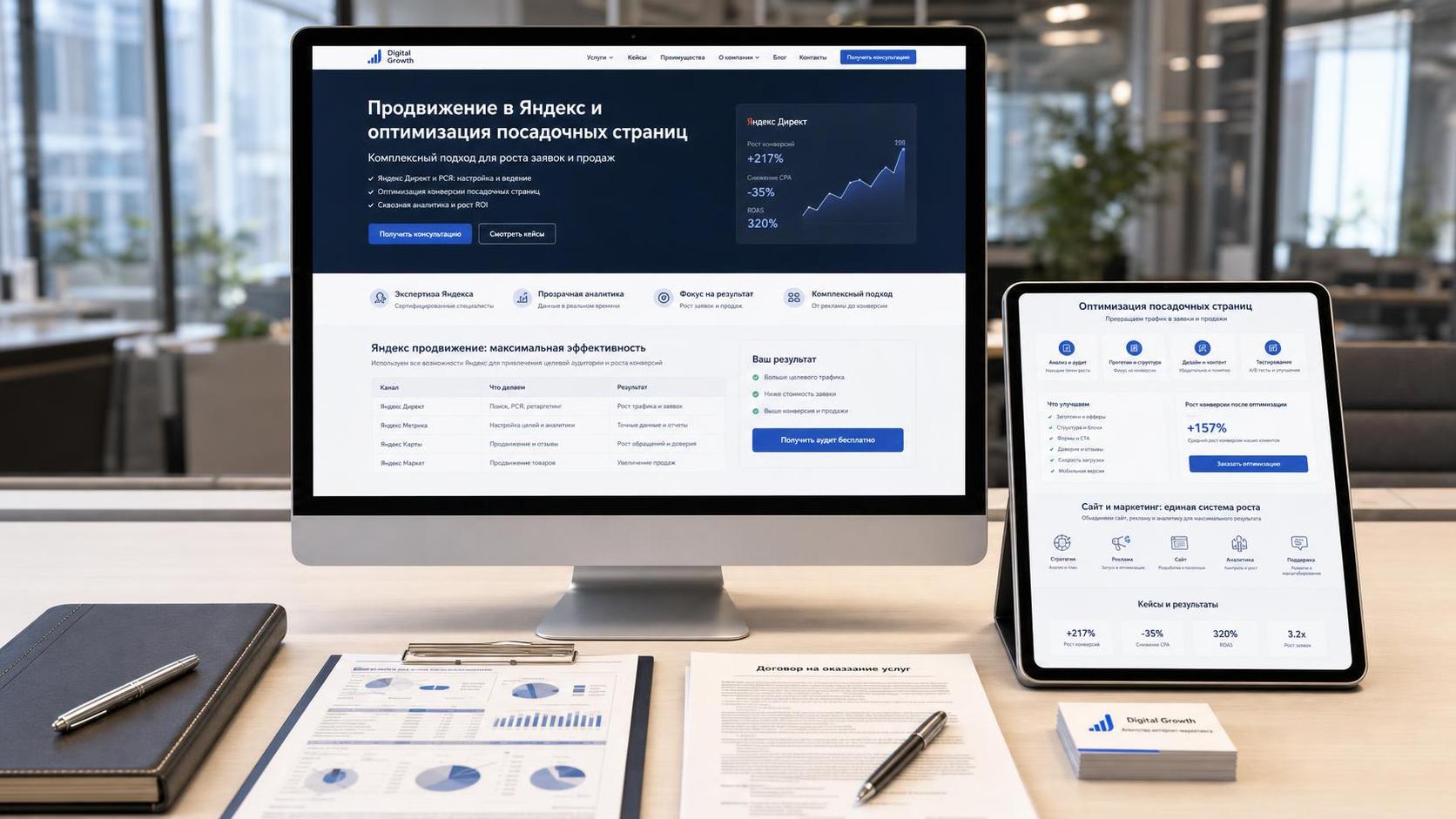
 AI+SEM Intelligent Advertising Marketing SystemAI+SEM drives intelligent ad creation, empowering full-funnel precision advertising marketing. The system automatically generates weekly/monthly reports, AI recommends keywords and target countries, monitors core metrics in real-time with intelligent alerts, and enables one-click high-conversion ad solutions to help quickly acquire customers and improve ROI.
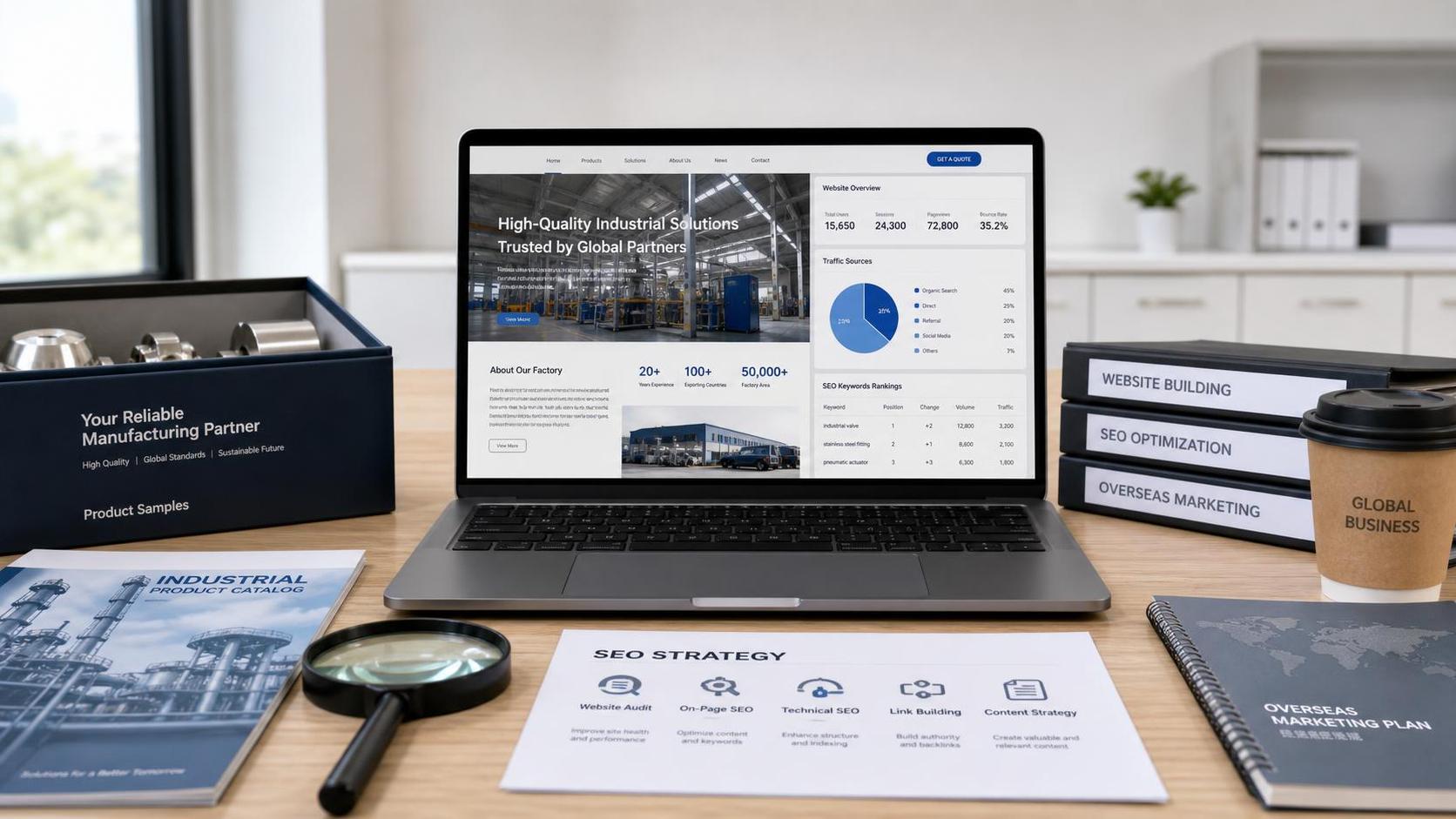
 AI+SEO Dual Engine Optimization ServiceEasyWin AI+SEO Dual Engine Optimization System leverages AI-powered keyword mining, content generation, and comprehensive technical optimization to help foreign trade enterprises acquire high-quality organic traffic, significantly improving search rankings and conversion rates.
 AI+SNS Social Media Marketing SystemYingbao AI+SNS Social Media Marketing System - Precision social capture for the social media era. Supports one-click content synchronization across major platforms like Facebook and LinkedIn. AI intelligently rewrites posts for enhanced relevance. 24/7 AI customer service and user profiling analysis empower businesses to efficiently expand into global markets.
 AI+SEO营销解决方案易营宝AI+SEO营销解决方案,通过AI批量写作、智能生成TDK、精准关键词扩词等功能,全面优化网站SEO效果,提升流量与转化率。助力企业构建高效智能网站新生态。
 AI+SEM Advertising Marketing SolutionsAI+SEM Advertising Marketing Solution leverages AI technology to deeply empower SEM ad campaigns. It automatically generates weekly/monthly reports using AI, presenting account data across multiple dimensions for comprehensive insights into campaign performance and trends. The system precisely recommends keywords and target countries, intelligently generates high-conversion ad copy, and enables one-click activation of efficient campaign plans to help businesses rapidly acquire customers. Simultaneously, it monitors core metrics in real time, intelligently identifies abnormal fluctuations, and issues timely alerts to ensure stable, high-return advertising results.
 Domain Name ServicesEasyWin provides professional domain name services, including intelligent queries, one-stop registration, brand protection, and full lifecycle management, helping businesses build a digital brand image.
 EasyOperate B2C Cross-Border E-Commerce Platform & Independent WebsiteEasyStore B2C Cross-border E-commerce Independent Store is an intelligent website building and cross-border e-commerce integrated solution independently developed by EasyStore Information Technology (Beijing) Co., Ltd. The system is specially designed for small and medium-sized as well as large export enterprises, integrating 'website building, operation, marketing, advertising, and conversion' into one, helping enterprises quickly establish cross-border e-commerce independent stores to achieve brand globalization and global sales growth.
The platform supports multiple languages, multiple currencies, and multi-channel marketing, with built-in AI intelligent translation and SEO optimization systems, suitable for mainstream markets such as Southeast Asia, Europe and America, Latin America, and the Middle East, assisting Chinese manufacturing enterprises in efficiently deploying international e-commerce strategies. SSL证书易营宝提供专业SSL安全证书服务,包括单域名和泛域名证书,确保网站数据传输加密、身份验证和完整性保护,助力企业建立安全可信的在线业务环境。









