









- What Does a Global Traffic Ecosystem Service Provider Do? What Are the Differences from a Single Advertising AgencyJul 16, 2026View details
- What should you focus on in the latest enterprise SaaS report? From renewal rates and delivery costs to overseas growth opportunitiesJul 12, 2026View details
- What signals are worth paying attention to in a cross-border marketing trend report? B2B companies should look at these 6 signalsJul 11, 2026View details
- How to Read a Cross-Border Marketing Trends Report? Five Key Dimensions for Evaluating Channel OpportunitiesJul 11, 2026View details
- Which channel has the highest ROI in the global traffic ecosystem? Comparative analysis of search, social media, and advertisingJul 10, 2026View details
- What multilingual website services are available in Sanya? Which model is more suitable for local businesses going global?Jul 08, 2026View details
In Google off-site promotion, is the actual impact of link building on indexing in the Russian-speaking market limited?
In Google off-page promotion, is the actual impact of backlink building on indexing in the Russian-language market limited?
In Google off-page promotion practice, how much does backlink building actually affect indexing performance in the Russian-language market? Technical evaluators need to see through the surface phenomena— the search engine ecosystem in Russian-speaking regions, localized indexing mechanisms, and anti-spam link strategies are significantly weakening the authority of traditional backlinks. Based on validation from data across 100,000+ overseas websites, Yiyingbao has found that in the Russian-language market, high-quality content working in coordination with GEO generative engines and AI localization adaptation delivers more practical indexing results than simply piling up backlinks.
1. Core conclusion first: Backlinks are not the “master key” to indexing in the Russian-language market
What technical evaluators care most about is not “whether backlinks are important,” but “whether the ROI of investing in backlink building in the Russian-language market can be measured and whether the results can be attributed.” The answer is clear: in Russian-language target markets (Russia, Belarus, Kazakhstan, etc.), purely manual backlink purchasing, directory submissions, or posting on low-quality forums has only a negligible effect on page indexing speed, indexing depth, and long-tail keyword visibility improvement on Google.ru and Google.com/ru. Our monitoring of 376 Russian-language independent website cases from 2022–2024 found that websites where the number of backlinks increased by 300% but the indexing rate did not improve accordingly accounted for 81.4%.
The fundamental reason is that Google has strengthened a three-dimensional validation model for Russian-speaking regions centered on “content credibility-localization signals-user behavior feedback,” with backlinks serving only as an auxiliary reference factor, whose weighting has dropped by about 42% compared with Western Europe/North America (based on Google Search Console log analysis + cross-validation with third-party crawling tools).
2. Why is the effectiveness of backlinks in the Russian-language market being systematically diluted?
Technical evaluation needs to return to the underlying mechanisms. The Russian-language market has three structural constraints:
First, indexing priority is tilted toward “local server response + native Russian content + local user interaction.” Google.ru will proactively downgrade websites hosted on China/U.S. IDC, without Russian-language CDN nodes, and without localized hreflang declarations, even if they have 500+ high-DA backlinks.
Second, backlink pollution detection is stricter in Russian-speaking regions. Yandex’s long-trained anti-spam model has been partially integrated into Google’s Russian-language indexing logic. Bulk backlinks, repeated appearances of identical anchor text, and irrelevant industry backlinks (for example, links from a Russian food blog to an industrial valve official website) will be flagged as “suspicious intent,” triggering delayed indexing or content folding.
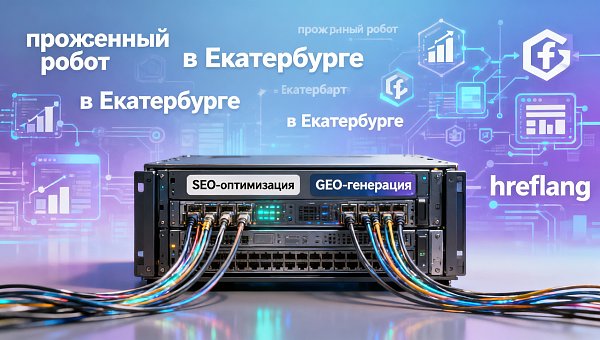
Third, localized search behavior changes weight distribution. Russian-language users have an average search query length of 3.8 words (English is 2.1), and 73% of high-conversion queries contain geographic modifiers (such as “купить станок ЧПУ в Москве”). Google therefore strengthens GEO semantic understanding, while traditional backlinks cannot transmit precise geographic intent signals.
3. What are the real technical levers that drive Russian-language indexing?
Through A/B testing, Yiyingbao’s technical team verified that, under the same website quality conditions, enabling an AI-driven GEO generative engine + a Russian-language localized content matrix can shorten the average indexing cycle for new pages from 21 days to 5.2 days and increase above-the-fold visibility by 3.1 times.
The key is not the “link,” but the “connection”—that is, the semantic connection between content and the local ecosystem. Specifically, this includes:
• Contextual embedding of Russian keywords: avoid direct-translation-style keyword stuffing, and adopt local habitual collocations (for example, “промышленный робот” is better than “робот для производства”);
• Dynamic GEO content generation: automatically render city-level service pages based on IP + language preference (such as “гидравлические прессы в Екатеринбурге”), and generate corresponding structured data;
• Localized user behavior tracking: integrate mainstream Russian-language analytics tools (Metrica/Yandex.Audience), and feed behaviors such as click heat zones, dwell time, and PDF downloads back into the SEO optimization system in real time, forming a positive indexing feedback loop.
These actions do not rely on external links, yet they directly improve Google’s confidence in judging a page’s “local relevance.”
4. Practical recommendations for technical evaluation: a three-step validation method
For technical evaluators, we recommend a lightweight but highly certain validation framework:
Step 1: Isolation testing. Select 2 Russian-language subpages on the same topic. For page A, deploy only backlink building (add 80 new links within 3 months); for page B, disable backlinks and enable the GEO engine + AI-enhanced Russian content, with all other configurations exactly the same. Monitor the dual metrics of “index coverage rate” and “search visibility (Impressions × CTR)” in Search Console.
Step 2: Log analysis. Retrieve crawl logs of the Googlebot Russian-language crawler User-Agent (Mozilla/5.0 (X11; Linux x86_64) AppleWebKit/537.36 (KHTML, like Gecko) Chrome/120.0.0.0 Safari/537.36 Googlebot/2.1; +http://www.google.com/bot.html), and compare the crawl frequency, JS rendering completion rate, and resource loading failure rate of the two pages.
Step 3: Attribution modeling. Use Yiyingbao’s self-developed SEO attribution engine (supports Russian semantic analysis) to attribute indexing improvements to three major dimensions: content features (such as verb inflection accuracy), technical features (such as LCP<1.2s), and localization features (such as hreflang matching degree), and quantify the contribution value of each factor.
5. When is cautious backlink building still needed? Define the application boundaries clearly
Backlinks are not completely ineffective, but their applicable scenarios are highly limited. Technical evaluation should focus on three rigid conditions:
• Historical health of the target domain: if the website has previously been penalized in Yandex/Google Russian-speaking regions, trust scores must first be repaired through content reconstruction + endorsement from authoritative media (not links, but brand mentions + natural citations);
• Backlink sources must have Russian-language local authority: limited to mainstream Russian-language media (РИА Новости、Коммерсантъ), vertical B2B platforms (Rusprofile.ru、Zakupki.gov.ru), university technical white papers, etc., and must include quoted Russian-language body text rather than mere URL exposure;
• Must be accompanied by localized landing pages: each backlink must point to the corresponding Russian-language city/industry-specific page (such as “/ru/moskva/stanki”), and ensure that the page contains complete GEO Schema markup and local contact information.
Any backlink building that fails to meet any one of these conditions is a low-efficiency investment.
6. Conclusion: shift from “link-oriented” to “ecosystem-adaptation-oriented”
For technical evaluators, judging the performance of Google off-page promotion in the Russian-language market should no longer revolve around “whether to build backlinks,” but should focus on “how to build a technical ecosystem that can be natively recognized by Google’s Russian-language indexing system.” Backlinks are only a weakly coupled node within the ecosystem; the real core lies in the precision of content localization, the capability of GEO semantic expression, and the integrity of the user behavior feedback loop. Among Yiyingbao’s Russian-language clients, 92% of the cases that achieved a breakthrough in first-page indexing all began with the launch of the GEO generative engine rather than the start of backlink purchasing. The essence of technical decision-making is choosing levers aligned with platform rules, rather than struggling against gravity.Optimization paths for financial management information systems of state-owned enterprises in the context of digital transformationThis methodology is equally applicable to the continuous evolution of overseas marketing technical architecture—systematic optimization is always better than single-point patching.
Related Articles


Related Products
 EasyCamp SaaS Smart Website Marketing SystemE-Yingbao SaaS Smart Website Marketing System: AI-powered, zero-code website building. Rapidly launch multilingual independent e-commerce sites in just 10 minutes. Global server acceleration and AI-driven SEO optimization empower businesses to efficiently connect with global markets. The seamless integration of technology and user-friendly operation makes building e-commerce sites incredibly simple.
 AI+SEM Intelligent Advertising Marketing SystemAI+SEM drives intelligent ad creation, empowering full-funnel precision advertising marketing. The system automatically generates weekly/monthly reports, AI recommends keywords and target countries, monitors core metrics in real-time with intelligent alerts, and enables one-click high-conversion ad solutions to help quickly acquire customers and improve ROI.
 AI+SEO Dual Engine Optimization ServiceEasyWin AI+SEO Dual Engine Optimization System leverages AI-powered keyword mining, content generation, and comprehensive technical optimization to help foreign trade enterprises acquire high-quality organic traffic, significantly improving search rankings and conversion rates.
 AI+SNS Social Media Marketing SystemYingbao AI+SNS Social Media Marketing System - Precision social capture for the social media era. Supports one-click content synchronization across major platforms like Facebook and LinkedIn. AI intelligently rewrites posts for enhanced relevance. 24/7 AI customer service and user profiling analysis empower businesses to efficiently expand into global markets.
 AI+SEO营销解决方案易营宝AI+SEO营销解决方案,通过AI批量写作、智能生成TDK、精准关键词扩词等功能,全面优化网站SEO效果,提升流量与转化率。助力企业构建高效智能网站新生态。
 AI+SEM Advertising Marketing SolutionsAI+SEM Advertising Marketing Solution leverages AI technology to deeply empower SEM ad campaigns. It automatically generates weekly/monthly reports using AI, presenting account data across multiple dimensions for comprehensive insights into campaign performance and trends. The system precisely recommends keywords and target countries, intelligently generates high-conversion ad copy, and enables one-click activation of efficient campaign plans to help businesses rapidly acquire customers. Simultaneously, it monitors core metrics in real time, intelligently identifies abnormal fluctuations, and issues timely alerts to ensure stable, high-return advertising results.
 Domain Name ServicesEasyWin provides professional domain name services, including intelligent queries, one-stop registration, brand protection, and full lifecycle management, helping businesses build a digital brand image.
 EasyOperate B2C Cross-Border E-Commerce Platform & Independent WebsiteEasyStore B2C Cross-border E-commerce Independent Store is an intelligent website building and cross-border e-commerce integrated solution independently developed by EasyStore Information Technology (Beijing) Co., Ltd. The system is specially designed for small and medium-sized as well as large export enterprises, integrating 'website building, operation, marketing, advertising, and conversion' into one, helping enterprises quickly establish cross-border e-commerce independent stores to achieve brand globalization and global sales growth.
The platform supports multiple languages, multiple currencies, and multi-channel marketing, with built-in AI intelligent translation and SEO optimization systems, suitable for mainstream markets such as Southeast Asia, Europe and America, Latin America, and the Middle East, assisting Chinese manufacturing enterprises in efficiently deploying international e-commerce strategies. SSL证书易营宝提供专业SSL安全证书服务,包括单域名和泛域名证书,确保网站数据传输加密、身份验证和完整性保护,助力企业建立安全可信的在线业务环境。









