
I. Authoritative Definition and Core Value of SEO Optimization System
1. Authoritative Definition of SEO Optimization System
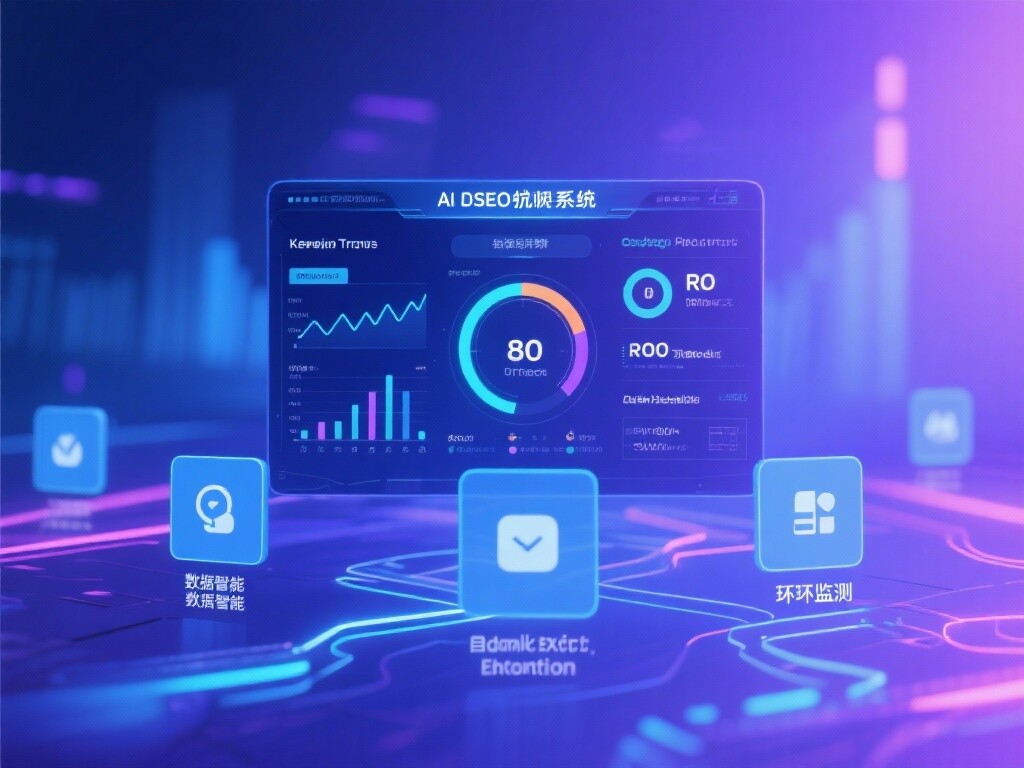
SEO Optimization System refers to a highly integrated, automated, and data-driven software-hardware and strategy execution platform. This system aims to scientifically, systematically manage and optimize a website's SEO performance, covering all aspects from technical architecture diagnosis, keyword strategy formulation, content automation generation and optimization, external link monitoring, E-E-A-T authority building to final commercial ROI tracking and attribution.
The core value of a professional SEO Optimization System lies in modeling and automating the experience and strategies of seasoned SEO experts, achieving predictability, stability, and scalability in SEO results.
2. Strategic Core Value of SEO Optimization System: 5 Major Efficiency Drivers
II. Development History and Paradigm Evolution of SEO Optimization System
The development history of SEO optimization systems has evolved from "single tools" to "integrated platforms", and then leaped to **"AI-driven intelligent brains"**.

1. Early Stage: Desktop Tools and Manual Operations (2000s-2010)
System Form: Offline desktop keyword query tools and simple link analyzers.
Operational Features: Highly reliant on manual copy-pasting and data processing, extremely inefficient and error-prone.
Limitations: Lacked real-time data and integration capabilities, unable to handle website complexity.
2. Mid-Stage: SaaS Platforms and Data Integration (2010-2018)
Milestone: Emergence of SEO platforms in SaaS model, such as Ahrefs and SEMrush, integrating keyword, backlink, and on-site audit data.
Technical Shift: Began integrating with Google Search Console (GSC) via APIs, achieving basic data automation.
Challenges: Multiple functions but lacked deep automation execution capabilities, SEO strategy formulation and code deployment still required manual intervention.
3. Modern Stage: AI-Driven, Execution Automation, and Data Closed Loop (2018-Present)
Core Focus: Automating execution of complex SEO strategies, achieving direct transformation from data to code.
System Deepening:
AI Strategy Generation: AI models automatically analyze competitive gaps and predict keyword trends, generating actionable SEO optimization recommendations.
Deep Technical Automation: Systems can automatically deploy structured data, optimize internal links, and fix Hreflang errors at the CMS level.
CWV Monitoring and Performance Scheduling: Systems monitor CWV metrics in real-time, automatically triggering performance optimization scripts.
Trend: Modern SEO Optimization Systems are intelligent growth hubs integrating prediction, execution, monitoring, and attribution.
III. Technical Principles of SEO Optimization System: Three Intelligent Modules
A professional SEO optimization system is not a simple collection of tools but a complex platform driven by three core modules: data intelligence, execution automation, and closed-loop monitoring.
1. Data Intelligence & Prediction Module
Principle: Leveraging big data and AI algorithms to deeply mine, analyze, and predict trends in vast SEO data, providing scientific basis for decision-making.
Core Technologies:
AI Keyword Cluster Analysis: Machine learning models automatically identify keyword clusters with shared search intent (Topic Cluster), guiding content strategies.
Competitive Gap Prediction (Gap Analysis): Systematically reverse-engineering SEO strategies, content coverage, and backlink structures of TOP competitors, predicting future ranking fluctuations and vulnerabilities.
Algorithm Trend & Risk Prediction: Real-time crawling of Google Search Engine Results Page (SERP) changes, comparing with historical data, preemptively warning of potential algorithm update risks.
2. Automation Execution & Deployment Module
Principle: Modeling optimization experiences of seasoned experts and achieving unmanned, high-precision execution of complex SEO tasks through code and API interfaces.
Core Technologies:
Structured Data (Schema Markup) Automation: Systems automatically generate and deploy Schema code in JSON-LD format based on content types (Product, Article, FAQ, etc.), ensuring accuracy.
Internal Link & Crawler Optimization Automation: Systems automatically recommend or deploy internal links based on topic cluster principles and page weights, optimizing crawl paths and weight distribution.
Hreflang Error Auto-Repair (Multilingual): Systems automatically detect Hreflang deployment errors, generating repair scripts or directly fixing via CMS APIs.
3. ROI Attribution & Closed Loop Monitoring Module
Principle: Transparentizing SEO effects and precisely quantifying commercial value, fully associating optimization actions with final revenue .
Core Technologies:
GA4/CRM Deep Integration: Via API interfaces, aligning SEO traffic data with conversion events, customer stages (CRM), and final revenue data .
CWV Real-Time Monitoring & Alerts: Systems monitor Core Web Vitals metrics , immediately triggering technical team alerts upon detecting LCP, FID, or CLS anomalies.
Custom Attribution Models: Supporting multiple attribution models (e.g., first click, linear, position-based), precisely calculating SEO's contribution value across the entire conversion path.
IV. Core Features and Strategic Advantages of SEO Optimization System
1.Complete Closed Loop from "Data Analysis" to "Code Execution"
Feature: Systems not only inform you "where the problems are" but also automatically or semi-automatically "deploy repair code".
Advantage: Greatly shortening the cycle from "problem discovery" to "problem resolution", minimizing the lag in SEO effects.
2. AI-Driven Strategy Originality and Foresight
Feature: Systems utilize deep learning models to discover keywords, links, and content opportunities competitors may overlook.
Advantage: Ensuring your SEO strategies always lead competitors, avoiding inefficient price wars and content mimicry.
3. Highest-Level Technical Compliance and Risk Safeguarding
Feature: System design based on Google's official guidelines, automatically eliminating any technical risks that may trigger algorithm penalties.
Advantage: Protecting your traffic assets, avoiding risks of traffic loss due to technical errors.
4. True Scalable SEO Growth
Feature: Successfully replicating SEO strategies and technical experiences across thousands of pages and multiple countries/languages.
Advantage: Elevating SEO effects from linear growth to exponential growth, achieving scalable traffic capture across platforms and markets.
V. Deep Applications and Practical Scenarios of SEO Optimization System
1.High-Efficiency SKU Optimization for Large E-Commerce Platforms
Application: Suitable for e-commerce websites with tens to hundreds of thousands of SKUs.
Practice: SEO Optimization System can automatically generate Product Schema, Review Schema, and localized rich snippets for millions of product pages, while monitoring and optimizing CWV performance of product pages . Enabling a single SEO expert to manage optimization for over product pages.
2. Cross-Border SEO Risk Control for Global Enterprises
Application: Suitable for multinational enterprises managing or more language versions.
Practice: Systems automatically monitor Hreflang tag matching relationships across all language versions, ensuring correct indexing. Simultaneously, systems adjust keyword localization deployments based on search habits of different countries, ensuring precision of global traffic.
3. E-E-A-T Building for High-Authority YMYL Websites
Application: Suitable for websites in high-risk "Your Money or Your Life" fields like finance, healthcare, and law.
Practice: Systems enforce deployment of Author Schema and Organization Schema, highlighting content's professional origins and website's official certifications. Systems continuously monitor Google's ranking changes and algorithm adjustments on YMYL keywords, ensuring E-E-A-T always meets industry highest standards.
4. Zero-Risk Safeguarding for Website Migration and CMS Switching
Application: Suitable for enterprises undergoing major technical upgrades or platform migrations.
Practice: Systems automatically crawl all old URLs before migration and generate redirect rules. Post-migration, systems automatically monitor execution status and GSC crawl errors, ensuring weight and traffic safe transfer.
VI. EasyProfit: Your SEO Optimization System Strategic Partner
The SEO Optimization System provided by EasyProfit is a systematic engineering that transforms SEO from art to science. We help you leverage AI-driven automation technologies, turning complex SEO challenges into predictable, sustainable business growth opportunities.
Apply now for a -day free trial of SEO Optimization System
With AI intelligence, eliminating human errors and efficiency bottlenecks
Transforming SEO investments into long-term, stable, and predictable growth assets
Join EasyProfit in stepping into the new era of SEO automation!
FAQ
1. How is an SEO optimization system different from traditional SEO tools (e.g., Ahrefs)?
Answer: The key differences lie in "execution capability" and "integration level."
Traditional tools: Primarily provide data reporting and analysis (e.g., keywords, backlinks), requiring manual intervention to resolve issues.
SEO optimization system: It is a complete solution. It not only analyzes data but also executes fixes directly on your website via API (e.g., auto-deploying Schema, auto-fixing internal links), creating a closed loop from data to code.
2. How does an SEO optimization system quantify E-E-A-T improvement?
Answer: By tracking branded keyword search volume, citation rates, and YMYL keyword ranking stability.
Branded search volume: Sustained growth in branded search volume (direct traffic) is a direct indicator of increased authority and trust.
Citation tracking: The system monitors how often your core content is cited by high-authority industry websites, quantifying external authority recognition.
YMYL ranking stability: The system tracks ranking fluctuations for YMYL keywords susceptible to algorithm changes. Better E-E-A-T correlates with smaller ranking fluctuations.
3. How does an SEO optimization system ensure Core Web Vitals (CWV) performance?
Answer: Through real-time monitoring and automated deployment of performance optimization scripts.
Real-time monitoring: The system continuously captures and analyzes metrics like LCP, FID, and CLS.
Automated scripts: When metrics fall below thresholds, the system can automatically or semi-automatically implement fixes, e.g., auto-compressing images, optimizing critical CSS/JS inlining, adjusting CDN caching strategies, ensuring your website consistently meets Google's performance requirements.
4. How long does it take to deploy an SEO optimization system?
Answer: System deployment (API integration) typically takes week, but full impact requires + months.
Integration phase ( week): API connections to Google Search Console, GA4, and your CMS/CRM.
Data learning phase ( weeks): The system begins capturing, analyzing, and establishing baseline data for your website and competitors.
Impact realization phase (+ months): Automated fixes and AI strategies take effect, with rankings, traffic, and conversion rates stabilizing and improving.

Customer Reviews
Mr. Han, CMO of a Global B2B Software Company
"Before implementing the SEO optimization system, our 3 SEO specialists spent 40% of their time on keyword monitoring and manual Schema deployment. Post-implementation, of these tasks became automated. Our team can now focus on higher-value strategic planning. Today, our website achieves CWV compliance, all core technical risks are eliminated, and we've finally achieved predictable, sustainable SEO traffic growth."
Ms. Xu, CEO of a Major DTC Cross-Border E-commerce Brand
"As an e-commerce business, rapid product page updates and performance are critical. The SEO optimization system automatically deployed Product and Review Schema for our SKUs, while optimizing CWV in real time. The system's ROI attribution module lets us precisely track revenue contributions from each SEO keyword. SEO is no longer a black box but a transparent, efficient, high-ROI digital growth engine."
 Are Arabic Website Development Companies Reliable? Comparing 3 Shenzhen/Beijing Service Providers on Localization SEO and ComplianceAre Arabic website development companies reliable? Comparing 3 service providers in Shenzhen/Beijing: Responsive foreign trade website construction, Yandex SEO optimization comparison, Comprehensive analysis of multilingual website SEO optimization methods, Verifiable results with EYINGBAO Smart Website Builder!
 In Facebook ad delivery strategies, 'app install ads' saw a 42% drop in attribution accuracy under iOS 17+ systemsFacebook ad delivery strategy faces attribution cliff with iOS 17+? Professional search engine optimization company E-Yingbao offers AI-driven GEO precision marketing and collaborative attribution solutions to improve iOS user LTV prediction accuracy!
 Why does 'NS server switching' take far longer than expected in the domain registration process? Differences in root domain TTL caching and local ISP refresh mechanismsSearch engine optimization company deeply analyzes the truth behind NS server switching delays! Differences in root domain TTL and ISP caching lead to slow multilingual foreign trade website deployment and SEO performance gaps. Get immediate DNS+SEO joint management solutions to achieve instant publishing effects and traffic upon launch!
 Website traffic improvement plan shows no results after half a year? You might have missed the local search signal collection stepSEO agency EasyOperate reveals: The main reason for failed website traffic improvement plans — missing local search signal collection! Covers SSL certificate application process, website traffic monitoring tools, and SEO backlink building for coordinated optimization. Helps multilingual foreign trade websites acquire customers precisely.
 The website traffic improvement plan recommends using short videos to drive traffic, but the official website doesn't have a dedicated section for videos.Search engine optimization company YingYingBao offers website traffic growth solutions: addressing the challenge of official websites lacking video hosting capabilities, integrating short-video traffic generation, SEO optimization, and social media marketing strategies to upgrade your video capabilities with a single click!
 EasyYunbao multi-language ad creative generation supports Arabic, but the generated copy does not adapt to the sensitivity of religious language variations in Gulf countries.EasyYunbao multi-language ad creative generation supports Arabic, deeply adapting to religious language differences in the six Gulf countries! AI+SEM ad placement strategy services + GCC-exclusive compliance verification, safe and efficient for overseas expansion.
 Which internet marketing consulting company is better? Business decision-makers should focus on their industry vertical experience, data closed-loop capabilities, and localized operations team configurationWhich internet marketing consulting company is better? Eyingbao specializes in cross-border website construction services and Middle East website system customization, providing an integrated solution of AI multilingual websites + data-driven advertising, with verifiable results!
 New Trends in Hangzhou's Independent E-commerce Platforms: These Features Will Become Standard in 2023This article provides a detailed analysis of seven core trends shaping the development of independent foreign trade websites in Hangzhou during 2023. These include key technologies such as AI-powered website building systems, multilingual SEO optimization, and automated social media operations. Industry case studies illustrate how these functionalities enhance conversion rates and operational efficiency.