









- What stages does the cross-border services ecosystem include? How do website building, promotion, payment, and compliance work togetherJun 22, 2026View details
- How will email marketing costs change in 2026Jun 22, 2026View details
- The China-US tariff arrangement has reached a preliminary consensus, and the trade association will be establishedJun 15, 2026View details
- Should overseas brand marketing start with ads or contentJun 21, 2026View details
- What determines B2C cross-border e-commerce website development costs? A breakdown of features, interfaces, and deployment methodsJun 17, 2026View details
- China-Morocco zero-tariff access, a breakthrough in the cost of Moroccan goods exports to ChinaJun 11, 2026View details
Why can’t Google SEO optimization rank? Common technical issue checklist
Google SEO optimization has been in place for a long time, so why is there still no improvement?
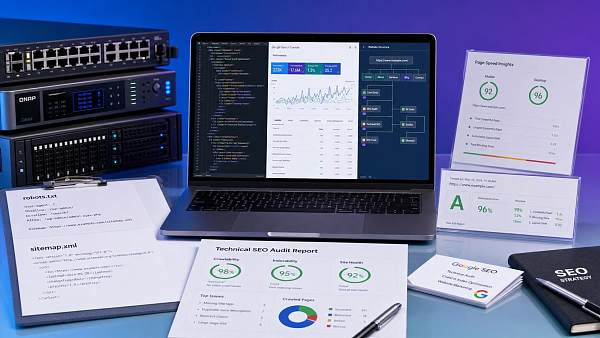
If Google SEO optimization has been done, yet you still can’t see ranking changes for a long time, it is usually not a single mistake, but that the technical foundation has not been properly put in place. Content updates, backlink building, and page expansion are all being done, but if crawling is not smooth, indexing is blocked, site speed is slow, or the structure is messy, it will be difficult for the early investment to deliver results.
In the website plus marketing service integration scenario, this kind of problem is even more common. Especially when multilingual official websites, foreign trade independent sites, ad landing pages, and cross-border stores are operated in parallel, technical details can directly affect the stability of Google SEO optimization.
From practical experience, many companies have not actually failed to do optimization; they just have not completed the technical health check first. Platforms like YiYingBao, which provide long-term services for the global market, are able to put website building, SEO, advertising, and AI search visibility into the same workflow precisely because the technical foundation must first be crawlable, indexable, and convertible.
First look at the crawling layer: has the page really been successfully visited by Google?
If rankings are not improving, the first step is not to guess the algorithm, but to confirm whether Googlebot can access the page smoothly. A more common situation is that the website can be opened on the surface, but search engine crawling runs into restrictions.
The key items to check are whether the robots file is mistakenly blocking directories, whether the server is frequently returning errors, whether there are redirect chains on the site, and whether the mobile page is inconsistent with the desktop version. If the logs show a large number of 5xx, 403, or crawl timeout events, Google SEO optimization usually has a hard time maintaining sustained performance.
- Whether robots.txt blocks product pages, category pages, or language directories
- Whether the XML sitemap contains valid URLs and whether the update time is normal
- Whether there are a large number of 301 redirects, 404 pages, and soft 404s
- Whether the server remains stable for overseas visits and whether the response time is too long
If the site has just gone live, the domain itself is also worth checking at the same time. Stable DNS resolution, renewal reminders, and status monitoring often affect crawl continuity more than expected. In actual projects, many teams include domain services in the SEO pre-launch checklist to avoid Google repeated visit failures caused by DNS anomalies or decentralized domain management.
The page has been crawled but not indexed. Which technical points usually cause the bottleneck?
Crawling does not equal indexing. Many pages show “Discovered” or “Crawled” in Search Console, but still do not enter the index. What needs to be investigated most here is whether the page quality signals and structural signals are clear.
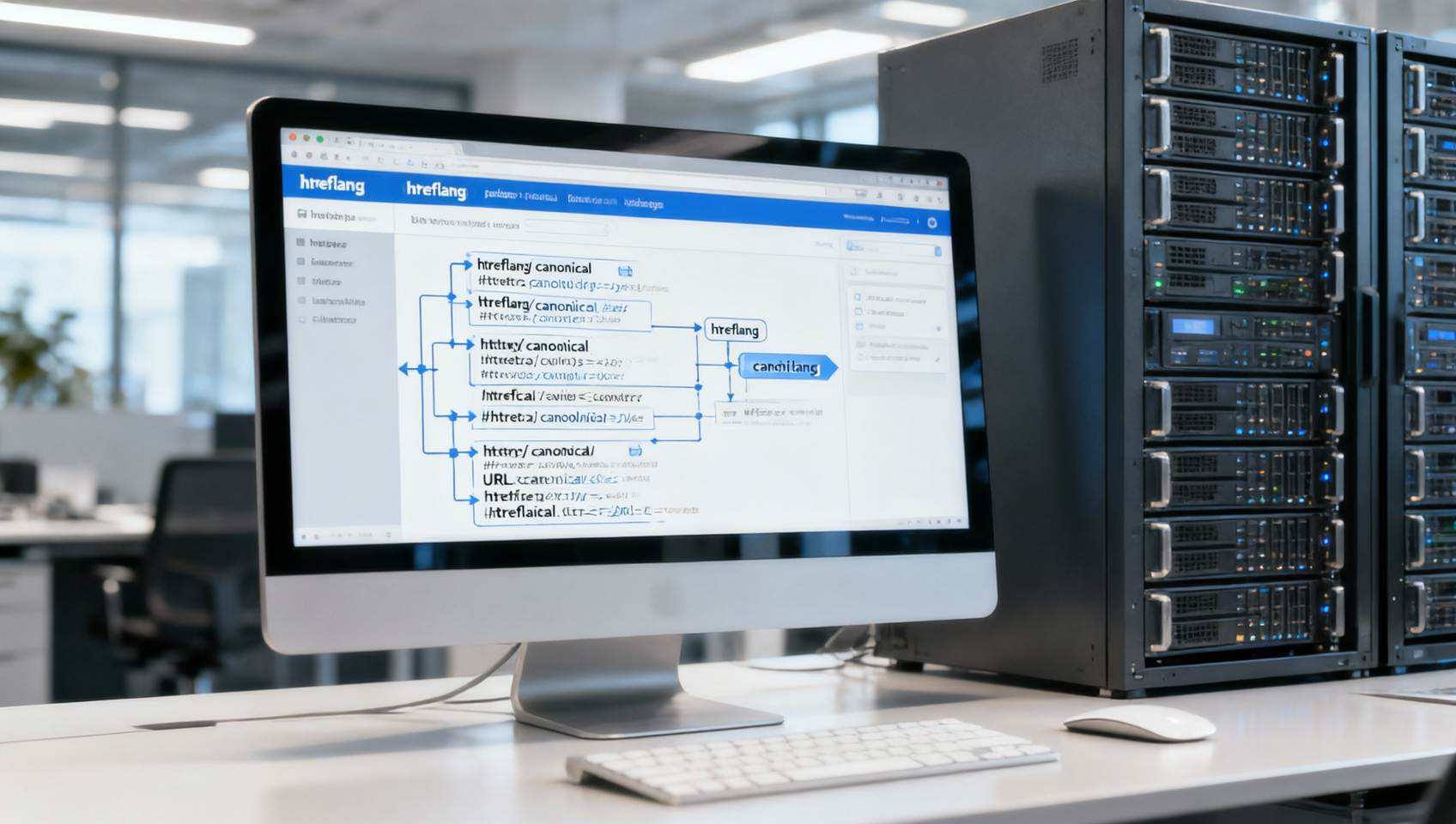
Common issues include too much duplicate content, incorrect canonical settings, confusion between paginated pages and filtered pages, incomplete hreflang references, and the same content being repeatedly output across multiple parameter URLs. For multilingual sites, these kinds of issues are especially common.
Simply put, Google SEO optimization is not only about whether a page exists, but also about whether the relationships between pages are clear. If page value is dispersed, indexing naturally becomes slower, and rankings will also be held back.
The website speed is average. Will it really drag down Google SEO optimization?
Yes, and the impact is often not isolated. Slow speed not only affects user experience, it also compresses crawling efficiency. When Google has a limited budget, it will prioritize websites with stable responses and clear structures.
In technical audits, do not just focus on the homepage score; also look at template pages, detail pages, and multilingual pages. Many sites have decent homepage optimization, but product pages are too heavy, images are not compressed, and the homepage relies on third-party resources, which ultimately causes the pages that really need to rank to perform poorly.
- Prioritize compressing large images and avoid going live with original images directly
- Reduce unnecessary scripts and repeated plugin calls
- Enable caching, CDN, and static resource optimization
- Check whether the mobile Core Web Vitals continue to fluctuate
In the foreign trade independent site scenario, visit regions are dispersed, so speed issues become even more obvious. North America may be fine, but that does not mean the Middle East or Southeast Asia is equally stable. This is also one link that is often overlooked when doing Google SEO optimization for global websites.
The structure and code do not report errors, so why is the ranking still stuck?
No obvious error does not mean the structure is reasonable. Many websites can run technically, but the internal link hierarchy is too deep, the anchor text is vague, and the click path to important pages is too long, making it difficult for search engines to determine the core theme.
A more common way to judge is to see whether important pages can be reached within three clicks, whether they continue to receive support from navigation, breadcrumbs, related recommendations, and topic pages. If core pages remain isolated for a long time, Google SEO optimization has a hard time forming stable authority transfer.
At the code level, also pay attention to structured data, duplicate title tags, empty descriptions, and content rendered by JavaScript that is not visible. Especially for pages built with front-end frameworks, if the homepage content depends on script rendering but the server-side output is insufficient, it is easy to create a situation where “users can see it, but search engines cannot fully understand it.”
Now that the technical issues are fixed, how long until rankings recover? How can you tell whether the direction is right?
This is the question most often asked in real work. Technical fixes do not raise rankings immediately; they first restore search engine trust in and understanding of the site. Usually, the first changes you will see are in crawl frequency, valid indexing, and exposure of target pages, followed by ranking and inquiry performance.
If it is only basic issues such as robots, canonical, and sitemap that are fixed, improvements in indexing can often be seen within 2 to 6 weeks. If the whole site structure, template overhaul, and multilingual adjustments are involved, the observation period is usually longer.
At this point, do not just look at the ranking of a single keyword; pay more attention to three signals: whether the target pages have entered the index, whether long-tail keyword exposure has increased, and whether technical errors continue to decrease. Rankings are the result; technical metrics are the process.
What needs to be confirmed in advance is that domain stability and brand consistency will also affect long-term growth. If there are mixed suffixes, inconsistent redirects, or frequent changes in DNS resolution, you can combine domain services for unified management, such as automatic DNS resolution, status monitoring, and renewal reminders, to reduce the interference of non-content factors on Google SEO optimization.
How should the troubleshooting checklist be implemented so it does not just stay in the report?
If you want Google SEO optimization to produce results, technical troubleshooting is best divided into three layers: first fix crawling and indexing, then handle speed and structure, and finally expand content and aggregate topics. If the order is reversed, the investment is often large but the results are not concentrated.
- First list the pages that cannot be crawled, cannot be indexed, or have invalid structured data
- Then sort out speed, titles, and structured data issues by template
- Finally combine business pages to determine the priority repair order
For website and marketing service integration projects, technical assessment should not only look at website code; it should also be judged together with ad landing pages, social media lead generation pages, multilingual sub-sites, and conversion paths. The core of truly effective Google SEO optimization is not “how many actions were taken,” but whether every step supports indexing, understanding, and conversion.
If rankings are currently rising very slowly, the more practical next step is to first conduct a round of page-level and template-level health checks to confirm whether crawling, indexing, speed, structure, and domain management have any bottlenecks, and then decide whether to continue adding content or first go back and fix the foundation. This kind of judgment is usually more effective than blindly expanding keywords.
Related Articles


Related Products
 EasyCamp SaaS Smart Website Marketing SystemE-Yingbao SaaS Smart Website Marketing System: AI-powered, zero-code website building. Rapidly launch multilingual independent e-commerce sites in just 10 minutes. Global server acceleration and AI-driven SEO optimization empower businesses to efficiently connect with global markets. The seamless integration of technology and user-friendly operation makes building e-commerce sites incredibly simple.
 AI+SEM Intelligent Advertising Marketing SystemAI+SEM drives intelligent ad creation, empowering full-funnel precision advertising marketing. The system automatically generates weekly/monthly reports, AI recommends keywords and target countries, monitors core metrics in real-time with intelligent alerts, and enables one-click high-conversion ad solutions to help quickly acquire customers and improve ROI.
 AI+SEO Dual Engine Optimization ServiceEasyWin AI+SEO Dual Engine Optimization System leverages AI-powered keyword mining, content generation, and comprehensive technical optimization to help foreign trade enterprises acquire high-quality organic traffic, significantly improving search rankings and conversion rates.
 AI+SNS Social Media Marketing SystemYingbao AI+SNS Social Media Marketing System - Precision social capture for the social media era. Supports one-click content synchronization across major platforms like Facebook and LinkedIn. AI intelligently rewrites posts for enhanced relevance. 24/7 AI customer service and user profiling analysis empower businesses to efficiently expand into global markets.
 AI+SEO营销解决方案易营宝AI+SEO营销解决方案,通过AI批量写作、智能生成TDK、精准关键词扩词等功能,全面优化网站SEO效果,提升流量与转化率。助力企业构建高效智能网站新生态。
 AI+SEM Advertising Marketing SolutionsAI+SEM Advertising Marketing Solution leverages AI technology to deeply empower SEM ad campaigns. It automatically generates weekly/monthly reports using AI, presenting account data across multiple dimensions for comprehensive insights into campaign performance and trends. The system precisely recommends keywords and target countries, intelligently generates high-conversion ad copy, and enables one-click activation of efficient campaign plans to help businesses rapidly acquire customers. Simultaneously, it monitors core metrics in real time, intelligently identifies abnormal fluctuations, and issues timely alerts to ensure stable, high-return advertising results.
 Domain Name ServicesEasyWin provides professional domain name services, including intelligent queries, one-stop registration, brand protection, and full lifecycle management, helping businesses build a digital brand image.
 EasyOperate B2C Cross-Border E-Commerce Platform & Independent WebsiteEasyStore B2C Cross-border E-commerce Independent Store is an intelligent website building and cross-border e-commerce integrated solution independently developed by EasyStore Information Technology (Beijing) Co., Ltd. The system is specially designed for small and medium-sized as well as large export enterprises, integrating 'website building, operation, marketing, advertising, and conversion' into one, helping enterprises quickly establish cross-border e-commerce independent stores to achieve brand globalization and global sales growth.
The platform supports multiple languages, multiple currencies, and multi-channel marketing, with built-in AI intelligent translation and SEO optimization systems, suitable for mainstream markets such as Southeast Asia, Europe and America, Latin America, and the Middle East, assisting Chinese manufacturing enterprises in efficiently deploying international e-commerce strategies. SSL证书易营宝提供专业SSL安全证书服务,包括单域名和泛域名证书,确保网站数据传输加密、身份验证和完整性保护,助力企业建立安全可信的在线业务环境。









