









- The China-US tariff arrangement has reached a preliminary consensus, and the trade association will be establishedJun 15, 2026View details
- What determines B2C cross-border e-commerce website development costs? A breakdown of features, interfaces, and deployment methodsJun 17, 2026View details
- China-Morocco zero-tariff access, a breakthrough in the cost of Moroccan goods exports to ChinaJun 11, 2026View details
- What signal should be released for the suspension of exports to JapanJun 10, 2026View details
- China's May LNG imports rebounded, with increased volumes from Russia and Canada filling the Middle East supply gapJun 10, 2026View details
- Will GEO change its SEO strategy?Jun 04, 2026View details
How to optimize Google indexing for a multilingual website: hreflang, canonical, and URL structure?
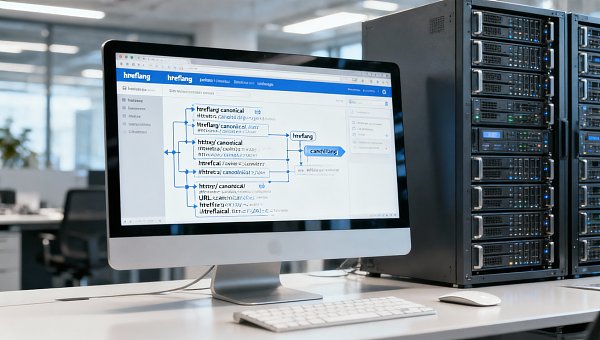
Multilingual website Google indexing optimization is not just about translating different language pages and putting them online. What truly affects indexing quality and natural rankings are often these three foundational settings: hreflang, canonical, and URL structure. Once configured incorrectly, Google may only index part of the versions, or even show English pages to German users, and may even treat multiple language pages as duplicate content.
For foreign trade companies, brand global expansion teams, and cross-border operations managers, this is not a simple technical detail, but a fundamental issue that directly affects traffic acquisition efficiency. This article will systematically explain how to optimize Google indexing for multilingual websites from three aspects: search intent, common misconceptions, and implementation methods.
Why do multilingual websites publish content, but Google still does not index them well?
Most multilingual websites do not get indexed well not because the content has no value, but because search engines cannot accurately understand the language relationship between pages. This is especially true when different country versions share similar content, similar templates, and similar product pages; Google can easily become confused during crawling and indexing.
The three most common issues for enterprises are: first, hreflang is not set correctly, causing different language pages to “compete for rankings” with each other; second, canonical points incorrectly, merging pages that should have been indexed independently; third, the URL structure is unclear, making it difficult for search engines to determine which country or language a page is intended for.
If your website already has English, French, Spanish, German, and even Arabic versions, but traffic has always been concentrated on only a few pages, or search results in different regions often show the wrong language page, then the first things to check should be these three items, rather than blindly adding more content.
The core function of hreflang is not a “translation tag,” but telling Google the page matching relationship
Many people understand hreflang as a language tag, but its real value is to help Google determine “these pages have similar content, but are intended for users in different languages or regions.” It solves not indexing itself, but the issues of correct indexing and correct display.
For example, the same product page may have three versions: English for the United States, English for the United Kingdom, and Spanish for Spain. Without hreflang, Google may only prioritize indexing one version, or show the English page first when Spanish users search, affecting click-through and conversion rates.
When hreflang is set correctly, you need to ensure that pages reference each other reciprocally, and that language and region codes follow the specification, such as en-US, en-GB, es-ES. If the tags are one-way only, or the codes are written incorrectly, Google may directly ignore these settings. For websites with global traffic needs, you can also add an x-default page as the default version.
For enterprises, the business value of hreflang lies in reducing misdirected traffic. After users enter the page matching their language, bounce rates, dwell time, and inquiry conversion rates are usually more stable, which is more meaningful than simply pursuing more page counts.
Who should canonical point to? Multilingual sites most easily make mistakes here
The role of canonical is to tell search engines which page is the “canonical version” in the current content set. But on multilingual websites, many teams mistakenly canonical all language pages to the English main site, effectively telling Google: other language pages are just duplicates and do not need to be indexed separately.
The correct approach is usually for each language version page to canonical to itself. Although the English, French, and German pages share the same topic, the audiences they target are different; in essence, they are pages that should be indexed separately rather than simple duplicate content.
Only when the content is completely identical, differing only in URL parameters, or when duplicate pages such as print pages or tracking pages exist, is it more appropriate to merge authority through canonical. If all language versions are merged into one main page, it will not only weaken indexing of local language pages, but also make it difficult for overseas market keywords to rank.
Therefore, when optimizing Google indexing for multilingual websites, one very important criterion is whether the language version is expected to participate in search rankings independently. If the answer is yes, then in most cases canonical should be self-referential rather than cross-language.
How should URL structure be chosen to benefit indexing and later operations?
URL structure determines how search engines identify the site hierarchy, and it also affects later content expansion and data management. Common options include subdirectories, subdomains, and separate country domains. Among them, most enterprises are better suited to a subdirectory structure, such as /en/, /de/, /fr/.
The advantage of subdirectories is that website authority is more concentrated, technical maintenance costs are relatively low, and it is suitable for enterprises with limited budgets but a desire to steadily expand into multiple markets. For foreign trade companies and manufacturing factories that mainly rely on official websites for leads and SEO growth, this is usually the preferred solution that balances efficiency and results.
Subdomains such as en.example.com can also be used, but note that different subdomains are more dispersed in crawling, authority accumulation, and monitoring management. As for separate country domains such as example.de and example.fr, they are more suitable for enterprises with very deep localization investment and long-term brand operations in local markets, and are not necessarily suitable for most early-stage export teams.
Regardless of the structure used, the most important things are unified rules, clear language paths, no mixing of Chinese and English, and never allowing multiple accessible URLs for the same language version at the same time. The more chaotic the structure, the higher the cost for Google to determine page relationships, and the more obvious the fluctuations in indexing and rankings.
Which issues should enterprises prioritize when localizing?
If you are planning or redesigning a multilingual official website, you can first look at four key points. First, whether each language version has an independent URL; second, whether correct hreflang has been set reciprocally; third, whether canonical is self-referential; fourth, whether the site navigation, sitemap, and language switch remain consistent.
Many websites appear to be multilingual on the surface, but in fact only the front-end text is switched, the URL does not change, or multiple language pages share the same indexing entry. Such a structure may seem convenient to users, but for Google it has very low recognizability, making indexing and ranking naturally difficult to scale.
In addition, avoid directly launching machine-translated pages in bulk without localization after translation. Google does not only look at language tags; it also comprehensively evaluates page quality, content readability, and user experience to determine whether a page is worth indexing. Correct technical settings are the prerequisite for entering the index; trustworthy and useful content is the basis for sustained ranking.
For enterprises that want long-term overseas growth, it is more recommended to incorporate the SEO framework into the website-building stage rather than fixing it after launch. This not only reduces redesign costs, but also avoids large numbers of invalid pages, crawl waste, and authority dispersion later on.
The focus of multilingual indexing optimization is not on “making more pages,” but on “helping Google understand the website”
From actual results, Google indexing optimization for multilingual websites is essentially about solving search engine recognition issues. hreflang is responsible for indicating the language and region corresponding to pages, canonical is responsible for defining the canonical version, and URL structure is responsible for establishing clear site logic; all three are indispensable.
For export enterprises, what truly matters is not whether they “have multilingual versions,” but whether each language version can be correctly crawled, independently indexed, and shown to users in the corresponding market. Only when technical structure, content localization, and sustained operations form a closed loop can multilingual websites truly evolve from display-oriented sites into growth assets capable of continuously acquiring customers.
If an enterprise wants to advance this more efficiently, choosing an integrated service that combines intelligent website building, SEO architecture, and overseas marketing operations will be more valuable than simply translating pages. Because in the competition of multilingual websites, what ultimately matters is not the number of pages, but indexing efficiency, display accuracy, and conversion capability.
Related Articles


Related Products
 EasyCamp SaaS Smart Website Marketing SystemE-Yingbao SaaS Smart Website Marketing System: AI-powered, zero-code website building. Rapidly launch multilingual independent e-commerce sites in just 10 minutes. Global server acceleration and AI-driven SEO optimization empower businesses to efficiently connect with global markets. The seamless integration of technology and user-friendly operation makes building e-commerce sites incredibly simple.
 AI+SEM Intelligent Advertising Marketing SystemAI+SEM drives intelligent ad creation, empowering full-funnel precision advertising marketing. The system automatically generates weekly/monthly reports, AI recommends keywords and target countries, monitors core metrics in real-time with intelligent alerts, and enables one-click high-conversion ad solutions to help quickly acquire customers and improve ROI.
 AI+SEO Dual Engine Optimization ServiceEasyWin AI+SEO Dual Engine Optimization System leverages AI-powered keyword mining, content generation, and comprehensive technical optimization to help foreign trade enterprises acquire high-quality organic traffic, significantly improving search rankings and conversion rates.
 AI+SNS Social Media Marketing SystemYingbao AI+SNS Social Media Marketing System - Precision social capture for the social media era. Supports one-click content synchronization across major platforms like Facebook and LinkedIn. AI intelligently rewrites posts for enhanced relevance. 24/7 AI customer service and user profiling analysis empower businesses to efficiently expand into global markets.
 AI+SEO营销解决方案易营宝AI+SEO营销解决方案,通过AI批量写作、智能生成TDK、精准关键词扩词等功能,全面优化网站SEO效果,提升流量与转化率。助力企业构建高效智能网站新生态。
 AI+SEM Advertising Marketing SolutionsAI+SEM Advertising Marketing Solution leverages AI technology to deeply empower SEM ad campaigns. It automatically generates weekly/monthly reports using AI, presenting account data across multiple dimensions for comprehensive insights into campaign performance and trends. The system precisely recommends keywords and target countries, intelligently generates high-conversion ad copy, and enables one-click activation of efficient campaign plans to help businesses rapidly acquire customers. Simultaneously, it monitors core metrics in real time, intelligently identifies abnormal fluctuations, and issues timely alerts to ensure stable, high-return advertising results.
 Domain Name ServicesEasyWin provides professional domain name services, including intelligent queries, one-stop registration, brand protection, and full lifecycle management, helping businesses build a digital brand image.
 EasyOperate B2C Cross-Border E-Commerce Platform & Independent WebsiteEasyStore B2C Cross-border E-commerce Independent Store is an intelligent website building and cross-border e-commerce integrated solution independently developed by EasyStore Information Technology (Beijing) Co., Ltd. The system is specially designed for small and medium-sized as well as large export enterprises, integrating 'website building, operation, marketing, advertising, and conversion' into one, helping enterprises quickly establish cross-border e-commerce independent stores to achieve brand globalization and global sales growth.
The platform supports multiple languages, multiple currencies, and multi-channel marketing, with built-in AI intelligent translation and SEO optimization systems, suitable for mainstream markets such as Southeast Asia, Europe and America, Latin America, and the Middle East, assisting Chinese manufacturing enterprises in efficiently deploying international e-commerce strategies. SSL证书易营宝提供专业SSL安全证书服务,包括单域名和泛域名证书,确保网站数据传输加密、身份验证和完整性保护,助力企业建立安全可信的在线业务环境。









