









- What New Signals Are Emerging in Enterprise Services SaaS Marketing ReportsJul 27, 2026View details
- What Does a Global Traffic Ecosystem Service Provider Do? What Are the Differences from a Single Advertising AgencyJul 16, 2026View details
- What should you focus on in the latest enterprise SaaS report? From renewal rates and delivery costs to overseas growth opportunitiesJul 12, 2026View details
- What signals are worth paying attention to in a cross-border marketing trend report? B2B companies should look at these 6 signalsJul 11, 2026View details
- How to Read a Cross-Border Marketing Trends Report? Five Key Dimensions for Evaluating Channel OpportunitiesJul 11, 2026View details
- Which channel has the highest ROI in the global traffic ecosystem? Comparative analysis of search, social media, and advertisingJul 10, 2026View details
What should I do if Google SEO optimization is slow to show results? From indexing, content to backlinks, investigate step by step
If your Google SEO optimization efforts aren't showing results, don't rush to conclude that your strategy is ineffective.
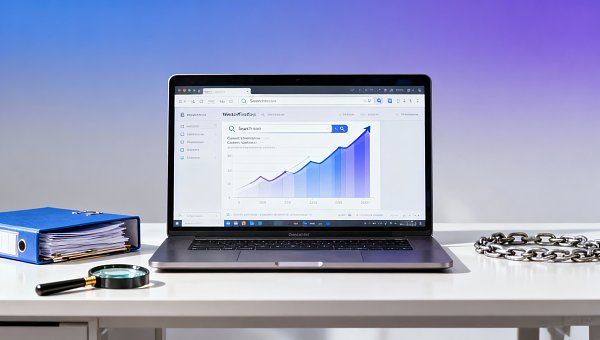
Many websites, after going live, continuously update their content and perform basic page optimizations, yet their Google SEO results remain slow. This is not uncommon, and the problem often lies not in "whether or not these actions were taken," but in "which key aspects have not been properly addressed."
More commonly, a website may appear accessible, but it lacks stable indexing; it may have a significant amount of content, but lack a clear theme; and while backlinks are increasing, their distribution is chaotic and their sources are scattered. Consequently, rankings are difficult to accumulate.
For businesses aiming to acquire customers through independent websites, Google SEO optimization is a systematic project. Especially when dealing with multilingual websites, international trade marketing sites, and cross-border e-commerce platforms, the technical foundation, content structure, and promotional strategies must be developed simultaneously to truly see growth.
If you've already invested time but haven't received any feedback, a safer approach isn't to blindly add content, but rather to systematically investigate based on indexing, content, backlinks, and data performance. This makes it easier to pinpoint the real bottleneck.
Why is there still no significant change in Google SEO optimization even after working on it for a long time?
First, it's important to understand that Google SEO optimization has a time frame, and the speed at which it takes effect varies greatly from site to site. New sites, low-authority sites, and multilingual sites typically take longer to see results than established sites, which is normal.
However, if there is still no growth in the display of core keywords after more than three months, it cannot be explained simply by "long cycle". At this time, we need to look for four signals: whether the page is crawled, whether the page is indexed, whether the keywords are displayed, and whether the click-through rate is normal after the display.
In practice, many websites get stuck at the "crawlable but not indexed" stage. Just because a page can be opened doesn't mean Google is willing to index it. If the template is duplicated, the content is weak, or the page's value is unclear, search engines will reduce their willingness to index it.
If a website simultaneously handles multiple tasks such as website building, advertising landing pages, and SEO customer acquisition, even a slightly disorganized structure can affect decision-making. The advantage of integrated solutions like YiYingBao, which cover intelligent website building, Google SEO optimization, advertising, and social media marketing, lies in the unified planning of front-end pages, content strategies, and data tracking, reducing conflicts between these elements.
If indexing is slow, which places should I check first?
When considering indexing issues, prioritize fundamental technical aspects before focusing on page quality. Many people habitually change the title first, but this is the wrong order. If a page isn't in the index pool, even a well-written title won't improve its ranking.
We recommend prioritizing the following items for inspection:
- Does the robots.txt file mistakenly block core directories or parameter pages?
- Has the site map been submitted, and has it returned a normal status?
- Are there a large number of duplicate URLs, pagination variations, or case confusion?
- Ensure the canonical tag is pointing to the correct information and avoid self-conflict.
- Is the server response speed stable, and does it frequently time out?
For multilingual websites, additional checks are needed to ensure that the language versions are truly independent, that the hreflang is compatible, and that the translated content is not overly mechanical. Google is not friendly to mass-produced pages with insufficient differentiation.
The table below can serve as a basic reference for troubleshooting slow results from Google SEO optimization.
I've been consistently publishing content, so why isn't my Google SEO optimization progressing?
The problem for many websites isn't the quantity of content, but its organization. More pages don't equate to a stronger theme. If each article only scratches the surface and keywords overlap, it will actually dilute the site's authority.
A more common mistake is writing articles about the product but not about search queries. Users search for "why isn't it indexed?", "why did my ranking drop?", and "how do I judge backlinks?", not the names of internal company sections. Google SEO optimization must match genuine search intent.
To determine the effectiveness of content, consider three aspects: does it address a specific question? Does it provide an actionable answer? Does it guide users to a relevant page? A vague introduction is unlikely to generate stable long-tail traffic.
When maintaining content, pages can be divided into three layers: core service pages, scenario-solving pages, and Q&A support pages. This covers both Google SEO optimization keywords and long-tail keywords. If the company also involves site architecture, conversion pages, and multi-channel promotion, referring to "system construction" approaches such as those discussing the path of enterprise financial management informatization in the context of the digital economy can also help in understanding that content and processes need to be coordinated, rather than operating independently.
Are more backlinks always better, or are they more likely to cause problems?
Backlinks do indeed affect Google SEO, but the key is never quantity, but rather source, relevance, and timing. Adding a large number of low-quality links in a short period often doesn't yield positive results; instead, it makes page performance more unstable.
A more reliable approach is to obtain mentions on relevant websites related to your business theme, such as industry directories, media content partnerships, professional blog citations, case study reprints, or resource page recommendations. Backlinks created in this way are more natural and easier to maintain long-term.
If you've already done one round of backlink building but the results aren't obvious, you can try reverse engineering:
- Is the anchor text overly concentrated on a single subject?
- Whether the linked page is actually indexed and has traffic.
- Does the target page of the external link prioritize pointing to high-value pages?
- Are new links added in sync with content updates?
For websites targeting global markets, backlink strategies must also consider regional differences. Resource acquisition methods differ between North America, Europe, and Southeast Asia. If website building, SEO, advertising, and social media are handled by different teams, backlinks can easily lose direction; therefore, a unified data perspective is crucial.
How do we determine whether we should continue optimizing or adjust the entire strategy?
To determine whether a strategy needs adjustment, don't just look at the ranking of a single keyword. More valuable indicators are trends: has the number of indexed pages increased? Have effective impressions expanded? Have click-through rates on core pages improved? Has dwell time on inquiry pages increased?
If there are no changes in indexing, impressions, and clicks, it indicates that the basic Google SEO optimization process is not yet complete, and you need to go back to the technical and content layers to re-examine it. If impressions increase but clicks are low, the focus should be on the title and summary. If clicks increase but the bounce rate is high, it's not a problem with SEO itself, but rather insufficient page load capacity.
This is why more and more companies are choosing to integrate website and marketing services. Platforms like EasyCare combine AI website building, multilingual deployment, Google SEO optimization, advertising, and GEO optimization into a single system, essentially reducing breakpoints in the process and making optimization results more traceable.
To conduct a more comprehensive review, it is recommended to proceed in the following order:
- First, check the technical status to confirm that crawling and indexing are normal.
- Next, examine the content structure, merge duplicate themes, and strengthen the core pages.
- Next, check the quality of external links and eliminate practices that are out of control.
- Finally, compare the conversion data to determine whether the traffic is truly valuable.
After the investigation, what should be the next step to ensure a safe outcome?
Slow-growing Google SEO results don't necessarily mean you're going in the wrong direction. In most cases, it's due to a lack of coordination between indexing, content, and backlinks, or superficial data analysis. As long as the troubleshooting process is done correctly, the problem can usually be gradually identified.
A more reliable approach is to first create a monthly checklist, putting index status, core keyword impressions, click-through rates of key pages, backlink sources, and conversion page performance in the same table. This makes it easier to see changes than handling them piecemeal.
If the website also handles multilingual promotion, advertising, and content distribution, it's crucial to maintain a consistent pace between technology, content, and marketing activities. When necessary, page development, SEO maintenance, and growth strategies can be evaluated within the same plan to avoid redundant investment.
When Google SEO optimization reaches a plateau, the most valuable approach isn't to keep adding more actions, but rather to pinpoint which环节 (link/step) is truly slowing down the results. Laying a solid foundation first, then expanding content and backlinks, is usually more efficient than blindly increasing the amount of effort.
Related Articles



Related Products
 EasyCamp SaaS Smart Website Marketing SystemE-Yingbao SaaS Smart Website Marketing System: AI-powered, zero-code website building. Rapidly launch multilingual independent e-commerce sites in just 10 minutes. Global server acceleration and AI-driven SEO optimization empower businesses to efficiently connect with global markets. The seamless integration of technology and user-friendly operation makes building e-commerce sites incredibly simple.
 AI+SEM Intelligent Advertising Marketing SystemAI+SEM drives intelligent ad creation, empowering full-funnel precision advertising marketing. The system automatically generates weekly/monthly reports, AI recommends keywords and target countries, monitors core metrics in real-time with intelligent alerts, and enables one-click high-conversion ad solutions to help quickly acquire customers and improve ROI.
 AI+SEO Dual Engine Optimization ServiceEasyWin AI+SEO Dual Engine Optimization System leverages AI-powered keyword mining, content generation, and comprehensive technical optimization to help foreign trade enterprises acquire high-quality organic traffic, significantly improving search rankings and conversion rates.
 AI+SNS Social Media Marketing SystemYingbao AI+SNS Social Media Marketing System - Precision social capture for the social media era. Supports one-click content synchronization across major platforms like Facebook and LinkedIn. AI intelligently rewrites posts for enhanced relevance. 24/7 AI customer service and user profiling analysis empower businesses to efficiently expand into global markets.
 AI+SEO营销解决方案易营宝AI+SEO营销解决方案,通过AI批量写作、智能生成TDK、精准关键词扩词等功能,全面优化网站SEO效果,提升流量与转化率。助力企业构建高效智能网站新生态。
 AI+SEM Advertising Marketing SolutionsAI+SEM Advertising Marketing Solution leverages AI technology to deeply empower SEM ad campaigns. It automatically generates weekly/monthly reports using AI, presenting account data across multiple dimensions for comprehensive insights into campaign performance and trends. The system precisely recommends keywords and target countries, intelligently generates high-conversion ad copy, and enables one-click activation of efficient campaign plans to help businesses rapidly acquire customers. Simultaneously, it monitors core metrics in real time, intelligently identifies abnormal fluctuations, and issues timely alerts to ensure stable, high-return advertising results.
 Domain Name ServicesEasyWin provides professional domain name services, including intelligent queries, one-stop registration, brand protection, and full lifecycle management, helping businesses build a digital brand image.
 EasyOperate B2C Cross-Border E-Commerce Platform & Independent WebsiteEasyStore B2C Cross-border E-commerce Independent Store is an intelligent website building and cross-border e-commerce integrated solution independently developed by EasyStore Information Technology (Beijing) Co., Ltd. The system is specially designed for small and medium-sized as well as large export enterprises, integrating 'website building, operation, marketing, advertising, and conversion' into one, helping enterprises quickly establish cross-border e-commerce independent stores to achieve brand globalization and global sales growth.
The platform supports multiple languages, multiple currencies, and multi-channel marketing, with built-in AI intelligent translation and SEO optimization systems, suitable for mainstream markets such as Southeast Asia, Europe and America, Latin America, and the Middle East, assisting Chinese manufacturing enterprises in efficiently deploying international e-commerce strategies. SSL证书易营宝提供专业SSL安全证书服务,包括单域名和泛域名证书,确保网站数据传输加密、身份验证和完整性保护,助力企业建立安全可信的在线业务环境。









