









- The China-US tariff arrangement has reached a preliminary consensus, and the trade association will be establishedJun 15, 2026View details
- China-Morocco zero-tariff access, a breakthrough in the cost of Moroccan goods exports to ChinaJun 11, 2026View details
- What signal should be released for the suspension of exports to JapanJun 10, 2026View details
- China's May LNG imports rebounded, with increased volumes from Russia and Canada filling the Middle East supply gapJun 10, 2026View details
- Will GEO change its SEO strategy?Jun 04, 2026View details
- What types of businesses are end-to-end solutions suitable for?Jun 03, 2026View details
Does Google AMP still need to be implemented on mobile websites? Applicable scenarios and limitations analysis
Why Google AMP Mobile Websites Are Being Discussed Again
Google AMP mobile websites were once regarded as a shortcut to speeding up mobile pages.
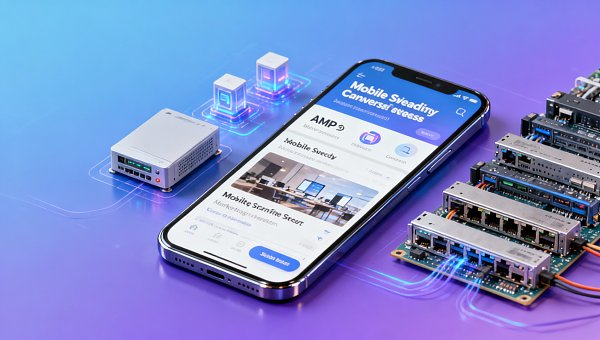
In the fields of news, blogs, and content sites, it was once very popular.
But from recent changes, whether to continue building AMP is no longer just a matter of "faster or not".
The more important question is whether it really fits the current business structure, technical stack, and conversion goals.
The core value of Google AMP mobile websites lies in using a restricted front-end specification to exchange for a more stable mobile experience.
This approach did indeed solve practical problems during the stage of poor mobile network conditions and heavy page scripts.
But today, there are more mobile optimization methods.
Responsive design, image lazy loading, script splitting, edge caching, and Core Web Vitals optimization are often more flexible.
So, whether Google AMP mobile websites are still necessary depends on the context, and the answer is "it depends".
If the current website goal is to improve information distribution efficiency, it still has reference value.
If the goal is complex conversion, brand presentation, or multi-function interaction, then it needs to be evaluated carefully.
Main Advantages of Google AMP Mobile Websites
To start with the conclusion, Google AMP mobile websites are not outdated technology.
They still suit mobile page systems that are "light on content, fast to access, and uniform in template".
1. The First Screen Speed Is Easier to Stabilize
AMP has clear restrictions on scripts, styles, and resource calls.
This reduces development freedom, but also lowers the risk of performance issues getting out of control.
For content sites, the more unified the page structure is, the easier it is for Google AMP mobile websites to deliver results.
2. The Technical Specification Is Relatively Clear
What evaluators fear most is "a lot of optimization talk, but scattered implementation standards".
One of the advantages of AMP is that the rules and boundaries are clear.
When the team develops, tests, and releases, it is easier to establish a unified baseline.
3. It Is Friendlier to Content Distribution
If a website is mainly articles, information, or knowledge pages, Google AMP mobile websites can still improve the mobile reading experience.
Especially when deploying across multiple regions and user network conditions vary greatly, stability is more important than extreme functionality.
This logic is similar to the "standard first" thinking that is common in enterprise digital transformation.
For example, what is reflected in the path of enterprise financial management informatization construction under the digital economy background is to first build the framework, and then talk about efficiency refinement.
Practical Limitations of Google AMP Mobile Websites
The problems are also obvious, and many limitations happen exactly in the places business websites care about most.
1. Maintenance Costs Are Not Necessarily Low
Many companies are not unable to build AMP, but after building it, they find they need to maintain two sets of page logic.
One set is the regular mobile site, and the other is the Google AMP mobile website.
Once the page count is large and content updates are frequent, version synchronization becomes an ongoing cost.
2. Interactive Capabilities Are Limited
AMP is suitable for light interaction, but not for complex business processes.
For example, multi-step forms, personalized recommendations, complex filtering, and deep embedding points will all be affected.
If an enterprise website carries inquiry, quotation, registration, or e-commerce conversion tasks, this issue becomes more prominent.
3. SEO Dividends Have Clearly Weakened
In the early days, many teams built Google AMP mobile websites mainly to compete for search visibility.
But now Google pays more attention to the overall page experience rather than the AMP identity alone.
In other words, not building AMP does not mean mobile SEO will necessarily suffer.
As long as the regular page meets standards in speed, stability, and usability, it still has competitiveness.
4. Attribution Data May Be More Complicated
For marketing websites, speed is not the only metric.
Lead quality, form completion rate, bounce paths, and attribution integrity are often more critical.
If the Google AMP mobile website makes the attribution solution more complex, optimization decisions may instead become slower.
Which Scenarios Are Suitable for Continuing AMP
There are usually several common characteristics when Google AMP mobile websites are truly necessary.
- Mainly news, blogs, knowledge bases, or help centers, with highly unified page structures.
- Mobile organic traffic accounts for a high share, and the user's top need is fast reading.
- The target market has large network environment differences and requires a stable loading experience.
- The technical team is limited and hopes to use specifications to constrain performance limits.
- The main goal is content exposure rather than complex interactive conversion.
If a company is a content-first acquisition type, Google AMP mobile websites can still serve as a supplementary strategy.
Especially in overseas content marketing, deploying AMP independently on topic pages and article pages is often more practical than rolling it out across the whole site.
Which Scenarios Are More Suitable for Abandoning AMP
If the website needs to take on sales conversion tasks, the evaluation criteria should be changed.
- Multilingual corporate websites that need unified templates, unified tracking, and unified component management.
- B2B inquiry sites that rely on forms, chat, download-lead capture, and remarketing tracking.
- B2C e-commerce or brand sites with more complex product filtering, shopping carts, and membership systems.
- Advertising landing pages that require frequent iteration and flexible testing.
- Teams that already have a mature front-end performance optimization system, where AMP's marginal return is very low.
At this point, rather than building Google AMP mobile websites separately, it is better to invest resources in core experience optimization.
For example, first screen resource compression, image format upgrades, script deferred execution, and server caching optimization.
For website + marketing services integrated projects, this usually provides a better long-term input-output ratio.
When Evaluating the Technology, Focus on These Four Points
Whether to build Google AMP mobile websites should not be decided by experience alone.
A more stable approach is to evaluate according to the following four points.
- Performance gain: after AMP goes live, do first screen, LCP, and CLS improve significantly.
- Maintenance cost: does it increase the burden of dual-version development, testing, and release.
- SEO value: does the increase in organic traffic come from experience improvement rather than short-term fluctuation.
- Conversion impact: after the page becomes faster, do inquiry, registration, or transaction results improve accordingly.
If the first three items are positive but the fourth declines, then the direction may be wrong.
The end goal of website optimization is not to "look more like a standard page", but to "better achieve business goals".
This also applies to evaluating other digital solutions.
For topics like the path of enterprise financial management informatization construction under the digital economy background, the core is not the tool itself, but whether it matches organizational goals.
Conclusion: Google AMP Mobile Websites Are Not an Option, but a Conditional One
Back to the original question, is it still necessary to build Google AMP mobile websites?
Yes, but the premise is that your page goals are clear enough.
If it is a content distribution page, Google AMP mobile websites can still bring a stable experience.
If it is a marketing conversion page, the regular mobile site with deep optimization is usually more worth the investment.
In actual business, the most stable strategy is often not to bet the whole site on AMP.
Instead, start with article pages and topic pages for small-scale validation, then decide whether to expand based on data.
When loading speed, SEO performance, attribution integrity, and conversion results are all established at the same time, pushing forward further is more reasonable.
In the end, Google AMP mobile websites are not a question of "whether to do it".
It is a question of "after doing it, whether it is really more effective than now".
Related Articles
 Central and Eastern Europe’s trade and investment mechanism, a digital service that is highly aligned with user expectations
 What is Entity SEO? Core Analysis of How Stores and Official Websites Work Together to Acquire Customers
 Does Google AMP still need to be implemented on mobile websites? Applicable scenarios and limitations analysis


Related Products
 EasyCamp SaaS Smart Website Marketing SystemE-Yingbao SaaS Smart Website Marketing System: AI-powered, zero-code website building. Rapidly launch multilingual independent e-commerce sites in just 10 minutes. Global server acceleration and AI-driven SEO optimization empower businesses to efficiently connect with global markets. The seamless integration of technology and user-friendly operation makes building e-commerce sites incredibly simple.
 AI+SEM Intelligent Advertising Marketing SystemAI+SEM drives intelligent ad creation, empowering full-funnel precision advertising marketing. The system automatically generates weekly/monthly reports, AI recommends keywords and target countries, monitors core metrics in real-time with intelligent alerts, and enables one-click high-conversion ad solutions to help quickly acquire customers and improve ROI.
 AI+SEO Dual Engine Optimization ServiceEasyWin AI+SEO Dual Engine Optimization System leverages AI-powered keyword mining, content generation, and comprehensive technical optimization to help foreign trade enterprises acquire high-quality organic traffic, significantly improving search rankings and conversion rates.
 AI+SNS Social Media Marketing SystemYingbao AI+SNS Social Media Marketing System - Precision social capture for the social media era. Supports one-click content synchronization across major platforms like Facebook and LinkedIn. AI intelligently rewrites posts for enhanced relevance. 24/7 AI customer service and user profiling analysis empower businesses to efficiently expand into global markets.
 AI+SEO营销解决方案易营宝AI+SEO营销解决方案,通过AI批量写作、智能生成TDK、精准关键词扩词等功能,全面优化网站SEO效果,提升流量与转化率。助力企业构建高效智能网站新生态。
 AI+SEM Advertising Marketing SolutionsAI+SEM Advertising Marketing Solution leverages AI technology to deeply empower SEM ad campaigns. It automatically generates weekly/monthly reports using AI, presenting account data across multiple dimensions for comprehensive insights into campaign performance and trends. The system precisely recommends keywords and target countries, intelligently generates high-conversion ad copy, and enables one-click activation of efficient campaign plans to help businesses rapidly acquire customers. Simultaneously, it monitors core metrics in real time, intelligently identifies abnormal fluctuations, and issues timely alerts to ensure stable, high-return advertising results.
 Domain Name ServicesEasyWin provides professional domain name services, including intelligent queries, one-stop registration, brand protection, and full lifecycle management, helping businesses build a digital brand image.
 EasyOperate B2C Cross-Border E-Commerce Platform & Independent WebsiteEasyStore B2C Cross-border E-commerce Independent Store is an intelligent website building and cross-border e-commerce integrated solution independently developed by EasyStore Information Technology (Beijing) Co., Ltd. The system is specially designed for small and medium-sized as well as large export enterprises, integrating 'website building, operation, marketing, advertising, and conversion' into one, helping enterprises quickly establish cross-border e-commerce independent stores to achieve brand globalization and global sales growth.
The platform supports multiple languages, multiple currencies, and multi-channel marketing, with built-in AI intelligent translation and SEO optimization systems, suitable for mainstream markets such as Southeast Asia, Europe and America, Latin America, and the Middle East, assisting Chinese manufacturing enterprises in efficiently deploying international e-commerce strategies. SSL证书易营宝提供专业SSL安全证书服务,包括单域名和泛域名证书,确保网站数据传输加密、身份验证和完整性保护,助力企业建立安全可信的在线业务环境。









