









- How Can a Brand Updates Page Be Made More SEO-Friendly? Analysis of Update Frequency, Content Structure, and Internal Linking StrategyJun 28, 2026View details
- What stages does the cross-border services ecosystem include? How do website building, promotion, payment, and compliance work togetherJun 22, 2026View details
- How will email marketing costs change in 2026Jun 22, 2026View details
- The China-US tariff arrangement has reached a preliminary consensus, and the trade association will be establishedJun 15, 2026View details
- Should overseas brand marketing start with ads or contentJun 21, 2026View details
- What determines B2C cross-border e-commerce website development costs? A breakdown of features, interfaces, and deployment methodsJun 17, 2026View details
- China-Morocco zero-tariff access, a breakthrough in the cost of Moroccan goods exports to ChinaJun 11, 2026View details
- What signal should be released for the suspension of exports to JapanJun 10, 2026View details
Key Evaluation Criteria for Responsive Enterprise Website Building System Providers
Choosing the right responsive enterprise website building system provider is not only about website experience, but also affects subsequent SEO, marketing collaboration, and operational efficiency. For technical evaluators, it is necessary to make a systematic judgment from dimensions such as architectural capability, scalability, security compliance, and service responsiveness.
In the integrated website + marketing service scenario, enterprise websites are no longer just display windows, but the core infrastructure for capturing search traffic, advertising placement, lead collection, and data accumulation. Especially when facing multi-device access, overseas promotion, localized content operations, and continuous iteration needs, the technical foundation of a responsive enterprise website building system provider often directly determines digital efficiency over the next 3 to 5 years.
For technical evaluators, the truly valuable criterion is not just whether the front end is “responsive,” but whether the provider can support a full closed-loop chain of content management, SEO configuration, marketing tool integration, permission governance, performance optimization, and operations support. Service providers represented by Easy Marketing Tech Information Technology (Beijing) Co., Ltd., relying on AI and big data capabilities, are connecting website building, optimization, advertising placement, and social media collaboration, and are becoming an important reference direction for enterprises when selecting providers.
I. Why technical evaluation cannot focus only on page responsiveness

Many enterprises, in the initial selection stage, easily understand “responsive” as automatic adaptation across PC, tablet, and mobile. But from the perspective of technical governance, this is only the minimum threshold. A qualified responsive enterprise website building system provider must also meet sustainable standards in architectural flexibility, page loading performance, search crawl friendliness, and marketing expansion capability.
If within 1 year after the website goes live, issues such as template limitations, inability to extend fields, difficulty reusing landing pages, and frequent conflicts in ad tracking tags arise, then the procurement cost saved in the early stage will often be magnified later in secondary development, migration restructuring, and traffic loss. Technical evaluators should shift their focus from “whether it can be done” to “whether it can stably support business growth in the next 12 to 36 months.”
1. Core evaluation dimensions should cover 4 levels
- Basic architecture: whether it supports modularization, componentization, hierarchical permissions, and multi-site management.
- Marketing collaboration: whether it is convenient to integrate SEO configuration, form collection, social media redirects, and advertising analytics code.
- Performance and security: whether it has caching mechanisms, CDN collaboration, backup recovery, and log auditing capabilities.
- Service response: whether 7×12 or 5×8 support scope is clearly defined, and whether response to major faults is within 1 hour.
2. Common misunderstanding: only looking at the demo site, not the backend capability
One of the most common misunderstandings during the technical evaluation stage is being attracted by front-end visual effects while ignoring backend management complexity. For B2B enterprises, a website must at least support 6 high-frequency operations such as section management, custom URLs, Meta configuration, 301 redirects, form field adjustments, image compression, and traffic statistics. If these capabilities depend on manual processing by the provider, operating costs will continue to rise.
In addition, it should also be checked whether the system supports structured content output. For example, whether product pages, case pages, and solution pages can be modeled independently, avoiding all pages using a single template. If the business needs to expand to multilingual sites, regional sites, or campaign landing pages in the future, the flexibility of the backend structure will directly affect delivery speed, with common differences reaching more than 2 times.
Recommended first-round technical review checklist
The first round of screening can be completed within 30 to 60 minutes, focusing on reviewing the demo backend, API documentation, permission settings, page editing methods, and export capabilities. Do not rely only on verbal promises from sales; it is recommended to ask the provider to demonstrate at least 5 actual operational steps on-site and record whether there are additional chargeable items.
To facilitate evaluation of different responsive enterprise website building system providers, a technical screening comparison table is provided below, suitable for quickly establishing unified standards in the initial selection stage.
As can be seen from the table, front-end display is only a basic item; what truly creates differentiation is backend SEO control, marketing interface expansion, and permission governance capability. If technical evaluators can eliminate closed systems at the initial selection stage, subsequent implementation and operational risks will be significantly reduced.
II. From architecture, performance to security: deeper judgment of provider capability
When evaluating responsive enterprise website building system providers, it is recommended to adopt the sequence of “architecture first, performance verification, security backup.” Because visual interfaces can be adjusted quickly, but once the underlying design is limited, whether adding sections, integrating systems, or optimizing search performance later, you will repeatedly hit the ceiling.
1. Architectural capability: whether it can support business expansion
The requirements after an enterprise website goes live are usually not static. Phase 1 may only be brand display, Phase 2 may add a product matrix, case center, and download center, while Phase 3 will require linkage with advertising placement, overseas social media, and CRM lead flow. If the provider cannot support module expansion and flexible field configuration, the system will soon become a bottleneck for marketing growth.
Therefore, it is recommended to focus on whether it supports component reuse, section model expansion, multilingual management, and form customization. Mature systems can usually control the production cycle of new campaign pages within 1 to 3 days, while systems highly dependent on development revisions may extend the cycle to more than 7 days, and each change increases testing costs.
2. Performance indicators: do not ignore loading speed and stability
Technical evaluators should require providers to clearly explain their basic performance strategies, including caching mechanisms, static resource compression, image Web conversion processing, CDN distribution, and exception alert methods. For marketing websites, the first-screen opening experience of the homepage and core landing pages is critical, and it is generally recommended that major pages be controlled within an acceptable range of 2 to 4 seconds under normal network conditions.
If the provider cannot explain the logic of performance optimization, only shows visual drafts, and does not provide a testing environment, it likely means that after delivery the enterprise will still need to undertake a large amount of optimization work itself. Especially when the website carries both SEO organic traffic and ad traffic at the same time, page latency will directly affect bounce rate, form completion rate, and advertising costs.
3. Security compliance: not only attack prevention, but also operational continuity
Security evaluation should cover at least 4 aspects: access control, data backup, vulnerability remediation, and log auditing. For enterprise official websites and marketing sites, form data, customer inquiries, and backend accounts are all highly sensitive assets. It is recommended to confirm whether the provider has a regular backup mechanism, with backup frequency referring to once per day or multiple times per week, and whether the recovery process can be completed within 2 to 8 hours.
In addition, if the website is aimed at overseas markets, the convenience of multi-region access stability, certificate deployment, cross-border content management, and privacy notice configuration should also be evaluated. Website + marketing service integration does not mean the more functions the better, but that every link must be manageable, controllable, and traceable.
Additional judgment: whether the provider understands marketing scenarios
A responsive enterprise website building system provider truly suitable for B2B enterprises is not only one that understands development, but also one that understands lead conversion paths. For example, whether it supports button tracking, phone click statistics, channel parameter identification, and landing page A/B version management. A disconnect between technology and marketing will result in the system still relying on multiple tools patched together after launch, with maintenance complexity continuing to rise.
When making internal budget justification within the enterprise, you may also refer to the risk identification approach in other management processes, such as A Brief Discussion on Problems Existing in Enterprise Tax Planning and Countermeasures, which reflects the awareness of upfront evaluation. Although the application scenarios are different, the method of “first identifying structural problems, then formulating control measures” is equally applicable to website building provider selection.
III. Evaluation methods and scoring recommendations in the procurement implementation stage
When candidate providers are narrowed down to 2 to 4, it is recommended to enter the quantitative scoring stage. At this time, do not stay at perceptual judgment, but establish a unified scoring sheet to compare horizontally across 5 dimensions: functional completeness, implementation efficiency, collaboration capability, after-sales commitment, and total cost of ownership.
1. Recommended 5-step evaluation process
- Requirement classification: distinguish must-haves, optional items, and later expansion items, controlling them within 20 to 30 items.
- System demonstration: require demonstration according to real business paths, and do not accept only playing finished cases.
- Sandbox verification: test at least 3 types of pages, 2 kinds of forms, and 1 permission allocation process.
- Business confirmation: clarify delivery cycle, number of iterations, go-live support, and boundaries of additional costs.
- Trial operation acceptance: verify stability and collaboration efficiency with a 7 to 14-day observation period.
2. Technical procurement scoring sheets are more suitable for cross-department collaboration
If the enterprise has marketing, IT, operations, and management participating in decision-making at the same time, it is recommended to use the weighting method. In general, technical capability can be set at 35%, marketing collaboration at 25%, service response at 20%, and cost and implementation at 20%. This can avoid bias caused by looking only at price or only at design effects.
The table below is suitable for use in the final selection stage, helping technical evaluators, procurement, and marketing jointly form consistent evaluation criteria.
From procurement practice, the greatest value of the scoring sheet is not deriving a single score, but making hidden risks explicit in advance. In particular, the differences among responsive enterprise website building system providers in details such as “how later maintenance is charged,” “whether secondary development is restricted,” and “whether the operations team can manage independently” are often more worthy of attention than the initial quotation.
3. 6 questions suitable for technical evaluators to follow up on
- If a new set of campaign pages is added 3 months later, can existing components be reused to complete it?
- Can SEO-related fields be directly maintained by operations personnel without development release?
- When the website experiences abnormal traffic peaks, are there automatic alerts and rate-limiting strategies?
- Can form data be connected to CRM or exported in a standard format?
- Are optimization review recommendations provided for 7 days, 30 days, and 90 days after launch?
- Which items within the service scope are standard delivery, and which are additional charges?
IV. The practical value of integrated service providers: what else can be done after website building
The ultimate goal of technical evaluation is not to procure “a website that can go live,” but to find a partner that can continuously support customer acquisition and growth. In this regard, the advantages of integrated website + marketing service providers are more obvious. Because the common problem for enterprises is not that the website cannot be built, but that after it is built, it lacks content updates, organic traffic improvement, social media collaboration, and advertising conversion efficiency.
Taking Easy Marketing Tech Information Technology (Beijing) Co., Ltd. as an example, since its establishment in 2013, the company has formed collaborative capabilities around intelligent website building, SEO optimization, social media marketing, and advertising placement, making it suitable for enterprises hoping to reduce the cost of coordinating with multiple providers. For technical evaluators, the value of this type of provider lies in the ability to link technical implementation and marketing execution within the same business logic, reducing interface friction and communication loss.
1. Which enterprises are more suitable for integrated delivery
If an enterprise is in a brand upgrade period, overseas expansion launch period, or lead growth period, an integrated responsive enterprise website building system provider usually has more advantages. Especially when the internal team is fewer than 5 to 10 people and lacks dedicated front-end or SEO engineering support, having the same provider coordinate website building and marketing makes it easier to ensure strategy consistency and execution speed.
2. Final decision recommendation: prioritize solutions that are “sustainably operable”
Technical selection should not only compare the current function list, but also judge whether the system will still have scalability, stability, and collaboration efficiency in the next 2 years. A responsive enterprise website building system provider truly worth cooperating with should not only meet launch requirements, but also support subsequent section growth, content operations, data tracking, and channel collaboration.
If you are selecting a website building and marketing integrated partner suitable for B2B business, it is recommended to prioritize establishing an evaluation framework from 5 dimensions: architectural capability, SEO friendliness, marketing interfaces, security operations, and service timeliness. Only by clarifying requirements, conducting sufficient verification, and scoring with data can you reduce trial-and-error costs and improve the long-term value after project launch. If you would like to further obtain a customized evaluation checklist or solution, feel free to contact us immediately to learn more implementation solutions suitable for enterprise growth scenarios.
Related Articles
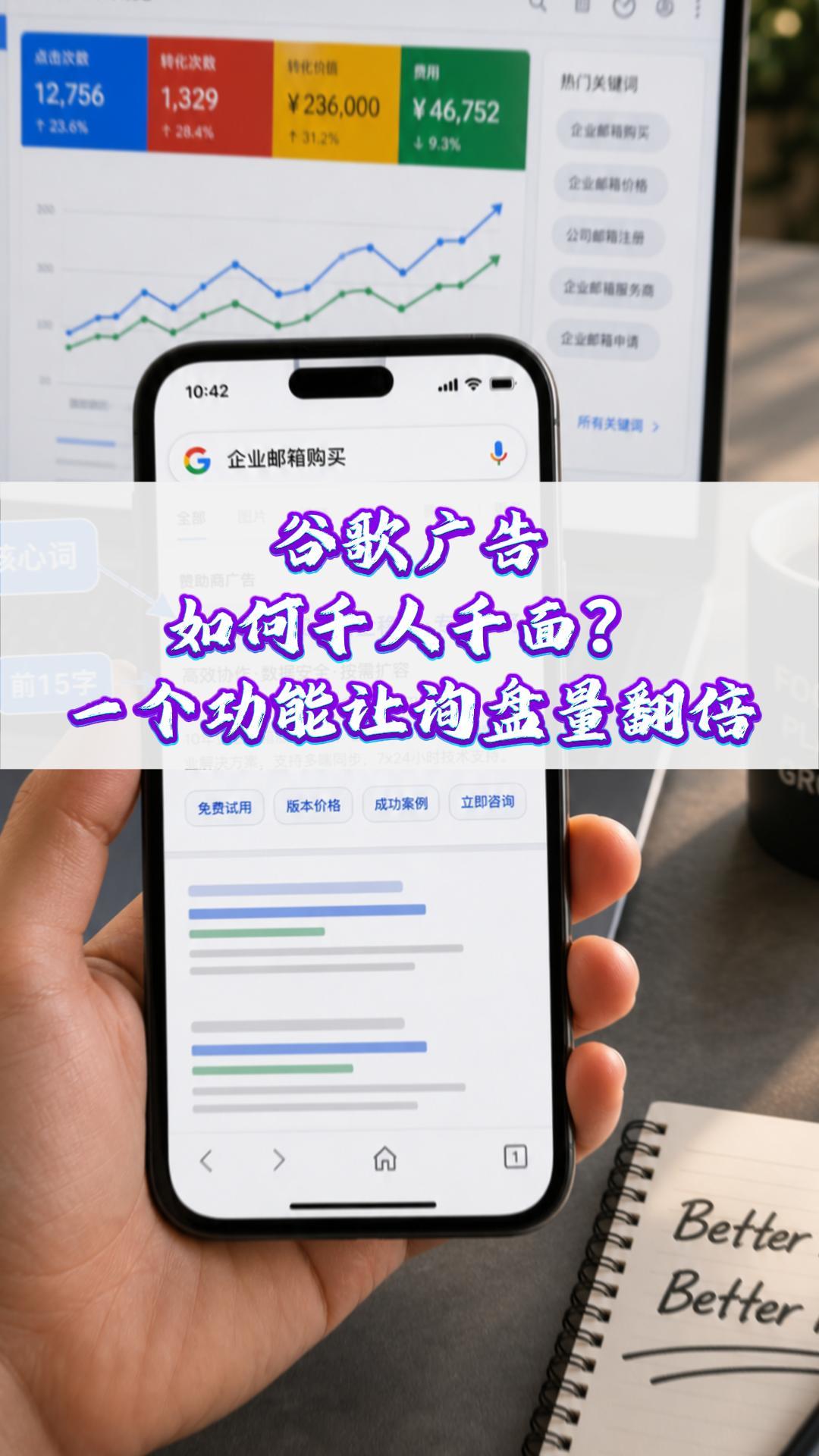
 How can Google Ads deliver one-to-one personalization? One feature can double your inquiry volume#ExportMarketing#OverseasPromotion#GoogleAds#SocialMediaMarketing#ForeignTradeIndependentWebsite
 Why a Google-optimized independent website is essential for trailer exports
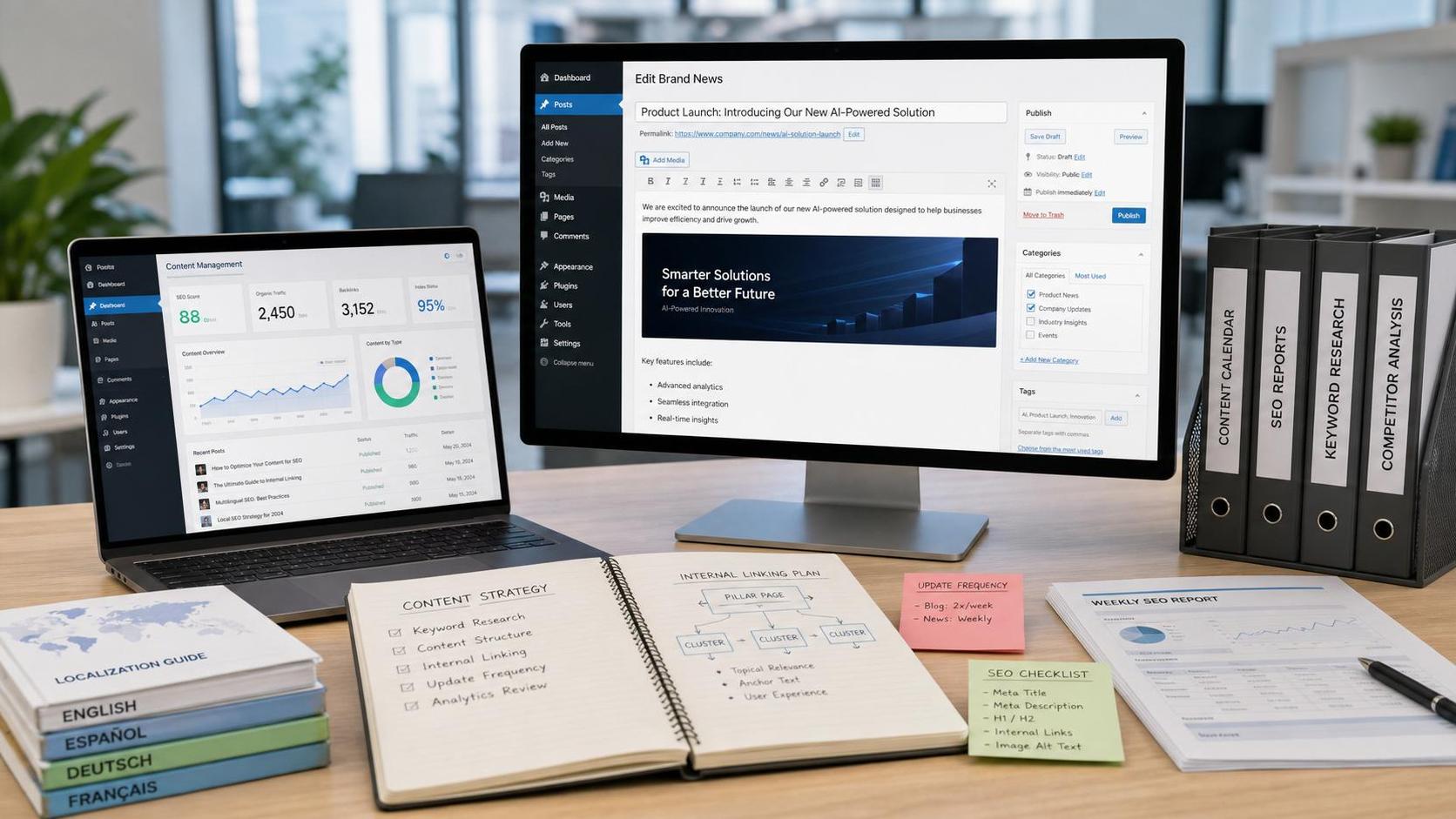
 How Can a Brand Updates Page Be Made More SEO-Friendly? Analysis of Update Frequency, Content Structure, and Internal Linking Strategy

Related Products
 EasyCamp SaaS Smart Website Marketing SystemE-Yingbao SaaS Smart Website Marketing System: AI-powered, zero-code website building. Rapidly launch multilingual independent e-commerce sites in just 10 minutes. Global server acceleration and AI-driven SEO optimization empower businesses to efficiently connect with global markets. The seamless integration of technology and user-friendly operation makes building e-commerce sites incredibly simple.
 AI+SEM Intelligent Advertising Marketing SystemAI+SEM drives intelligent ad creation, empowering full-funnel precision advertising marketing. The system automatically generates weekly/monthly reports, AI recommends keywords and target countries, monitors core metrics in real-time with intelligent alerts, and enables one-click high-conversion ad solutions to help quickly acquire customers and improve ROI.
 AI+SEO Dual Engine Optimization ServiceEasyWin AI+SEO Dual Engine Optimization System leverages AI-powered keyword mining, content generation, and comprehensive technical optimization to help foreign trade enterprises acquire high-quality organic traffic, significantly improving search rankings and conversion rates.
 AI+SNS Social Media Marketing SystemYingbao AI+SNS Social Media Marketing System - Precision social capture for the social media era. Supports one-click content synchronization across major platforms like Facebook and LinkedIn. AI intelligently rewrites posts for enhanced relevance. 24/7 AI customer service and user profiling analysis empower businesses to efficiently expand into global markets.
 AI+SEO营销解决方案易营宝AI+SEO营销解决方案,通过AI批量写作、智能生成TDK、精准关键词扩词等功能,全面优化网站SEO效果,提升流量与转化率。助力企业构建高效智能网站新生态。
 AI+SEM Advertising Marketing SolutionsAI+SEM Advertising Marketing Solution leverages AI technology to deeply empower SEM ad campaigns. It automatically generates weekly/monthly reports using AI, presenting account data across multiple dimensions for comprehensive insights into campaign performance and trends. The system precisely recommends keywords and target countries, intelligently generates high-conversion ad copy, and enables one-click activation of efficient campaign plans to help businesses rapidly acquire customers. Simultaneously, it monitors core metrics in real time, intelligently identifies abnormal fluctuations, and issues timely alerts to ensure stable, high-return advertising results.
 Domain Name ServicesEasyWin provides professional domain name services, including intelligent queries, one-stop registration, brand protection, and full lifecycle management, helping businesses build a digital brand image.
 EasyOperate B2C Cross-Border E-Commerce Platform & Independent WebsiteEasyStore B2C Cross-border E-commerce Independent Store is an intelligent website building and cross-border e-commerce integrated solution independently developed by EasyStore Information Technology (Beijing) Co., Ltd. The system is specially designed for small and medium-sized as well as large export enterprises, integrating 'website building, operation, marketing, advertising, and conversion' into one, helping enterprises quickly establish cross-border e-commerce independent stores to achieve brand globalization and global sales growth.
The platform supports multiple languages, multiple currencies, and multi-channel marketing, with built-in AI intelligent translation and SEO optimization systems, suitable for mainstream markets such as Southeast Asia, Europe and America, Latin America, and the Middle East, assisting Chinese manufacturing enterprises in efficiently deploying international e-commerce strategies. SSL证书易营宝提供专业SSL安全证书服务,包括单域名和泛域名证书,确保网站数据传输加密、身份验证和完整性保护,助力企业建立安全可信的在线业务环境。









