









- What Does a Global Traffic Ecosystem Service Provider Do? What Are the Differences from a Single Advertising AgencyJul 16, 2026View details
- What should you focus on in the latest enterprise SaaS report? From renewal rates and delivery costs to overseas growth opportunitiesJul 12, 2026View details
- What signals are worth paying attention to in a cross-border marketing trend report? B2B companies should look at these 6 signalsJul 11, 2026View details
- How to Read a Cross-Border Marketing Trends Report? Five Key Dimensions for Evaluating Channel OpportunitiesJul 11, 2026View details
- Which channel has the highest ROI in the global traffic ecosystem? Comparative analysis of search, social media, and advertisingJul 10, 2026View details
- What multilingual website services are available in Sanya? Which model is more suitable for local businesses going global?Jul 08, 2026View details
- How to view the complete list of China SaaS companies in the top 100? Practical methods for screening website-building and marketing service providersJul 08, 2026View details
- How to view pricing in the global traffic ecosystem? Cost comparison of search, social media, and content channel advertisingJul 06, 2026View details
How to ask for a website design quote without getting ripped off
How can you ask for a website design quote without getting ripped off? Many companies start by asking only, “How much does it cost to build an official website,” and end up receiving quotes ranging from a few thousand to tens of thousands or even over a hundred thousand, which makes the gap look enormous. In reality, this is because the service content, functional scope, design depth, SEO foundation, and later maintenance are completely different things. If you want to get a truly valuable website design quote, the key is not to push down the price, but to clarify your requirements, understand the delivery scope thoroughly, and factor in the follow-up marketing and maintenance costs together. Especially for companies preparing to build a marketing-oriented website, a low quote does not necessarily save money, and a high quote does not necessarily mean good value. Whether it can bring inquiries, conversions, and long-term operational efficiency is the real point of judgment.
Don’t rush to compare prices first: what really causes such large differences in website design quotes
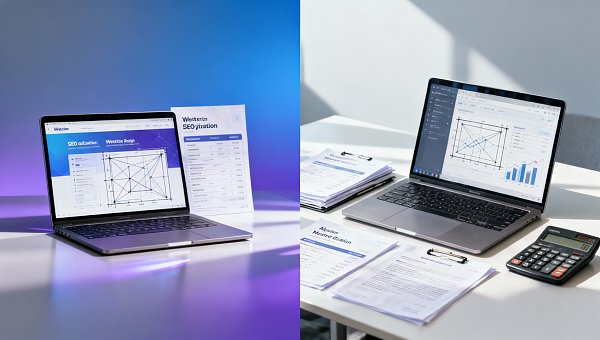
Even for the same “website project,” the prices quoted by different service providers can vary greatly. The core reasons usually come from the following aspects:
- Different website types: template websites, semi-custom websites, and fully customized marketing websites are essentially not the same product.
- Different numbers of pages: the more homepages, product pages, case pages, news pages, landing pages, and language versions there are, the higher the quote.
- Different levels of functional complexity: inquiry forms, membership systems, online payment, data integration, permission management, and CRM integration all affect the cost.
- Different design requirements: whether it is simple layout work or UI/UX design based on brand positioning makes a clear difference in price.
- Whether SEO optimization services are included: some only deliver pages, while others provide TDK, site structure, speed optimization, content standards, and search-engine-friendly architecture.
- Whether later operation and maintenance are included: domain names, servers, SSL, backups, security, bug fixes, and content updates may all be charged separately.
Therefore, the truly professional way to ask is not “How much do you charge for a website,” but “Within what scope, what results will be delivered, and how much more will need to be spent later.” Only by breaking down the quotation can companies make decisions without taking a loss.
When asking for a quote, which requirements should a company explain first
If the requirements are unclear, the service provider can only estimate based on experience. In the end, either the quote is inflated to leave room, or a low price is used to sign the deal and then additional items keep being added. To improve quotation accuracy, it is recommended to prepare at least the following information before consulting on website design pricing:
- Website goals
Is it for brand display, generating inquiries, dealer recruitment, cross-border customer acquisition, or product sales? Different goals lead to completely different website-building approaches. - Target users
Is it aimed at end consumers, distributors, overseas customers, or tender and procurement personnel? Different audiences determine the content structure and conversion path. - Core sections
For example, Home, About Us, Product Center, Solutions, Cases, News, Contact Us, FAQ, etc. - Functional requirements
Whether multilingual support, online consultation, form routing, maps, a download center, member backend, data statistics, marketing plugins, etc. are needed. - Status of material preparation
Does the company already have copywriting, images, videos, and brand materials? If not, planning and content organization will also be included in the cost. - Launch timeline
Are there timing requirements such as exhibitions,招商会, campaign schedules, or holiday promotions? Rush work usually affects the quote. - Later promotion plans
If SEO, advertising, and social media marketing will be carried out later, the website’s early-stage architecture needs to be compatible in advance, otherwise rework costs will be even higher.
For technical evaluators, it is best to add one more point: whether source code delivery, deployment method, tech stack, CMS backend, permission control, and third-party API compatibility are required. If these items are not asked in advance, delivery disputes are very likely to arise later.
How to ask about website design pricing so hidden costs are also uncovered

The real way to avoid getting ripped off is not to ask “What is the lowest price to do it,” but to confirm each item around the “total cost” and the “deliverable results.” The following checklist of questions is suitable for companies to use directly when making inquiries:
- What pages are included in this quote? Does it include the PC version, mobile version, and responsive design?
- Is it a modified template or a custom design? Are the homepage and inner pages designed separately? How many rounds of revisions are allowed?
- Can the backend be maintained independently? Can news, products, cases, and SEO title descriptions be updated by yourself?
- Are basic SEO optimization services included? Are URL standards, TDK, custom tags, image ALT, sitemap, 301, and loading speed optimization set up?
- Are the server and domain name included? Is it included only for the first year or for the long term? What is the renewal standard?
- Does it include filing, SSL certificates, and security maintenance? These are often overlooked, but they are all essential needs.
- How are later modifications charged? How many minor edits are free? How is anything beyond the scope charged?
- Are data statistics and conversion tracking provided? If the company values marketing performance, this must be asked.
- Does it support later expansion? For example, adding language sites, campaign pages, forms, landing pages, advertising tracking codes, etc.
- What are the final deliverables? Including source files, account permissions, training documents, operation manuals, backup files, etc.
If the other party can only provide a total price but cannot clearly explain what is included and what is not included, then this website design quote has very low reference value. For companies, the most worrying thing is not a high price, but discovering after signing the contract that many items require additional payment.
In the steps of building a marketing-oriented website, which parts most affect the quote and the results
Many companies think “building a website is just design + development,” but in fact, if the steps of building a marketing-oriented website are done completely, they usually include the following key stages:
- Requirement research and competitor analysis
Clarifying the business model, customer profile, and industry differentiation points determines that the website is not just “good-looking” but “able to convert.” - Information architecture and page planning
How the sections are arranged, how traffic is received, and where inquiry entry points are placed directly affect user experience and conversion rates. - Copywriting and content planning
It is not about simply putting the company profile online, but organizing content around customer problems, product advantages, solutions, and trust signals. - Visual design and interaction design
Brand perception, professionalism, browsing efficiency, and form-filling experience all affect user retention and willingness to inquire. - Front-end and back-end development and testing
Including compatibility, loading speed, security, backend usability, etc. - SEO foundation deployment
If basic search optimization is not done well before launch, making up for it later will increase both time costs and modification costs. - Launch and continuous operation
A website project does not end when it goes live. It also needs content updates, keyword layout, social media traffic generation, and ad landing page optimization.
For company decision-makers, the priority should be to see which steps are included in the quotation, rather than only looking at how many pages are finally produced. Because what truly determines long-term value is often early-stage planning and later operational support, not simply development man-hours.
This is similar to the logic many companies use when choosing professional materials or service solutions: on the surface, they all seem to be “one piece of content,” but their depth, applicability, and follow-up application value are completely different. For example, when making business decisions, some managers also refer to materials such as A Brief Discussion on Problems and Countermeasures in Corporate Tax Planning. The key point is not “whether it exists,” but “whether it can truly help judge problems and reduce decision-making risks.” Website construction works the same way.
Which low-price website design quotes are most likely to cause companies to fall into traps
A low price does not necessarily mean there is a problem, but the following situations require special vigilance:
- Using an ultra-low price to attract inquiries, then continuously raising the price later
Only the basic fee is quoted at the beginning, while pages, forms, mobile version, filing, certificates, and revisions are all charged separately afterward. - Using templates but quoting as if it were custom work
It may look like there are many pages, but in reality it is just replacing text and images, lacking brand differentiation and SEO foundation. - Not delivering core permissions
After the website goes live, the company cannot obtain the backend, server, or source code, making later migration difficult. - Not valuing search engine optimization services
The website structure is chaotic, titles are duplicated, and pages cannot be indexed, which will magnify later promotion budgets. - No operation and maintenance mechanism
If a failure occurs and no one handles it, data loss, malware injection, or site downtime will all affect the business and brand. - Overpromising results
For example, “guaranteed first page on Baidu” or “inquiries as soon as it goes live”; such statements usually lack rigor.
Especially for distributors, agents, and end-business teams, a website is often not just a display window, but also an entry point for招商, customer acquisition, and brand trust. If the goal at the beginning is only to save money, then later redesign, migration, SEO补做, and content rebuilding usually result in a higher overall cost.
How should a company judge whether a quotation is truly worth it
To judge whether a website design quote is reasonable, it is recommended to shift from the perspective of “price” to the perspective of “input-output”:
- See whether it matches business goals: brand official websites, marketing lead-generation sites, and cross-border standalone sites have different evaluation standards.
- See whether it reduces internal communication costs: clear requirement sorting, process management, and training support are valuable in themselves.
- See whether it supports future growth: whether it can connect with SEO, advertising, social media content, and data analysis is the core of long-term value.
- See whether later maintenance is worry-free: for after-sales maintenance personnel, an easy-to-use backend, strong security, stability, and convenient updates are all very important.
- See whether the service provider has industry experience: understanding websites, marketing, and conversion logic often creates more value than simply making pages.
If a service provider can not only build the website, but also combine SEO optimization, content strategy, social media marketing, and advertising support to create an overall plan, then the quote it gives is often closer to real business value rather than just the production cost of a single webpage.
Finally, a practical conclusion for companies preparing to request quotes
How can you ask for a website design quote without getting ripped off? The answer is very clear: do not just ask for the total price. Ask clearly about requirements, scope, functions, SEO foundation, maintenance costs, and future expansion capability. What is truly worth comparing is not “who is cheaper,” but “whose proposal is clearer, whose delivery is more complete, and whose solution can better support business growth later.”
If a company is currently in the stage of information research or supplier screening, it is recommended to compare at least 3 quotations at the same time, and use the same requirement list to ask each one. Only in this way can you see the real differences among different service providers in the steps of building marketing-oriented websites, search engine optimization services, delivery standards, and after-sales support.
In one sentence: a website is not a one-time cost, but the infrastructure for a company’s digital customer acquisition and brand building. The more professionally you ask about the quotation, the less likely you are to suffer losses later, and the easier it will be to realize the project’s final value.
Related Articles
 Attention! Builders' must-see: Yibingbao AI components updated, design efficiency directly doubled!
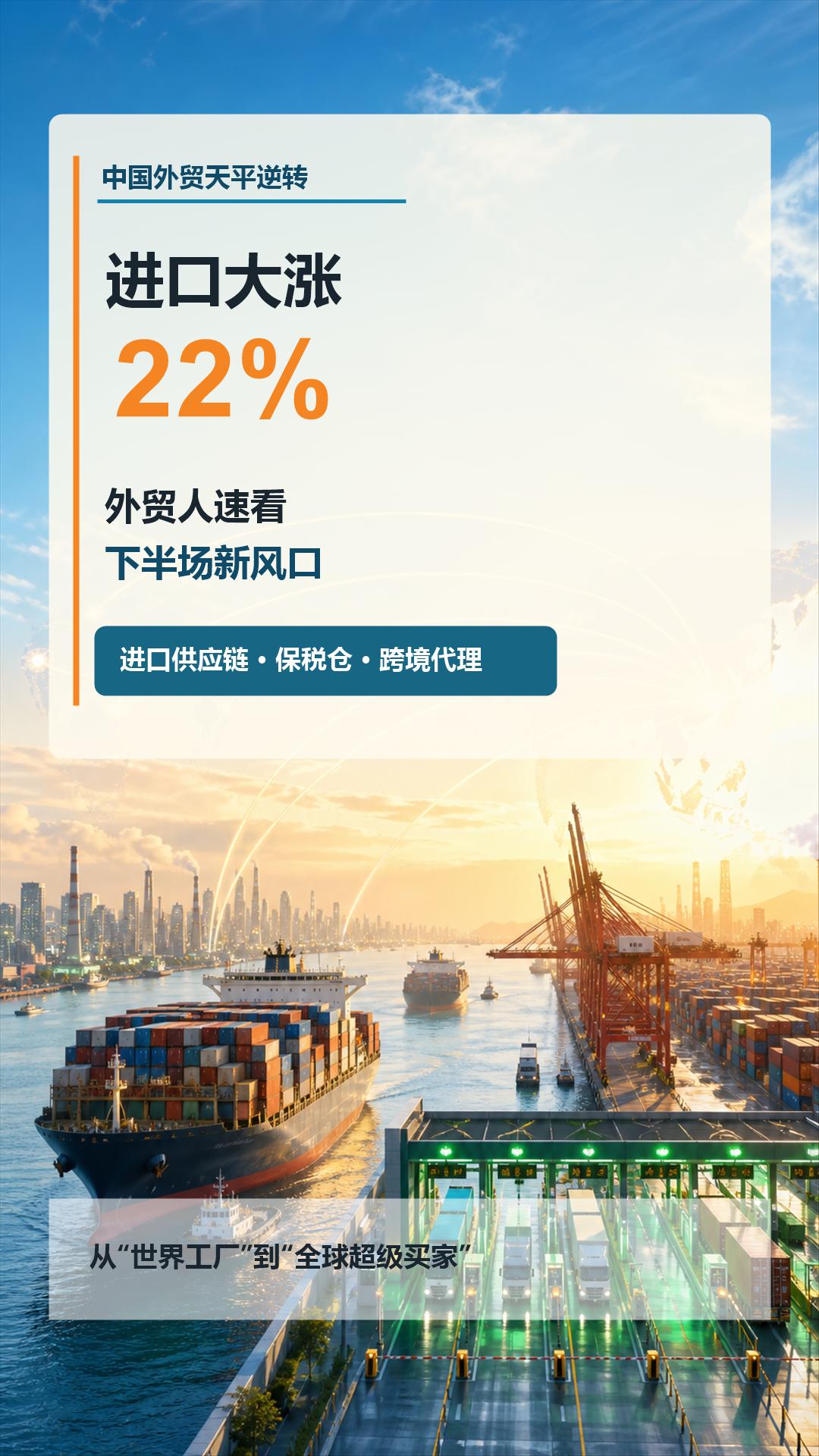
 China's foreign trade sees a turnaround: imports surge by 22%! Foreign trade professionals should quickly take note of the new trends in the second half of the year
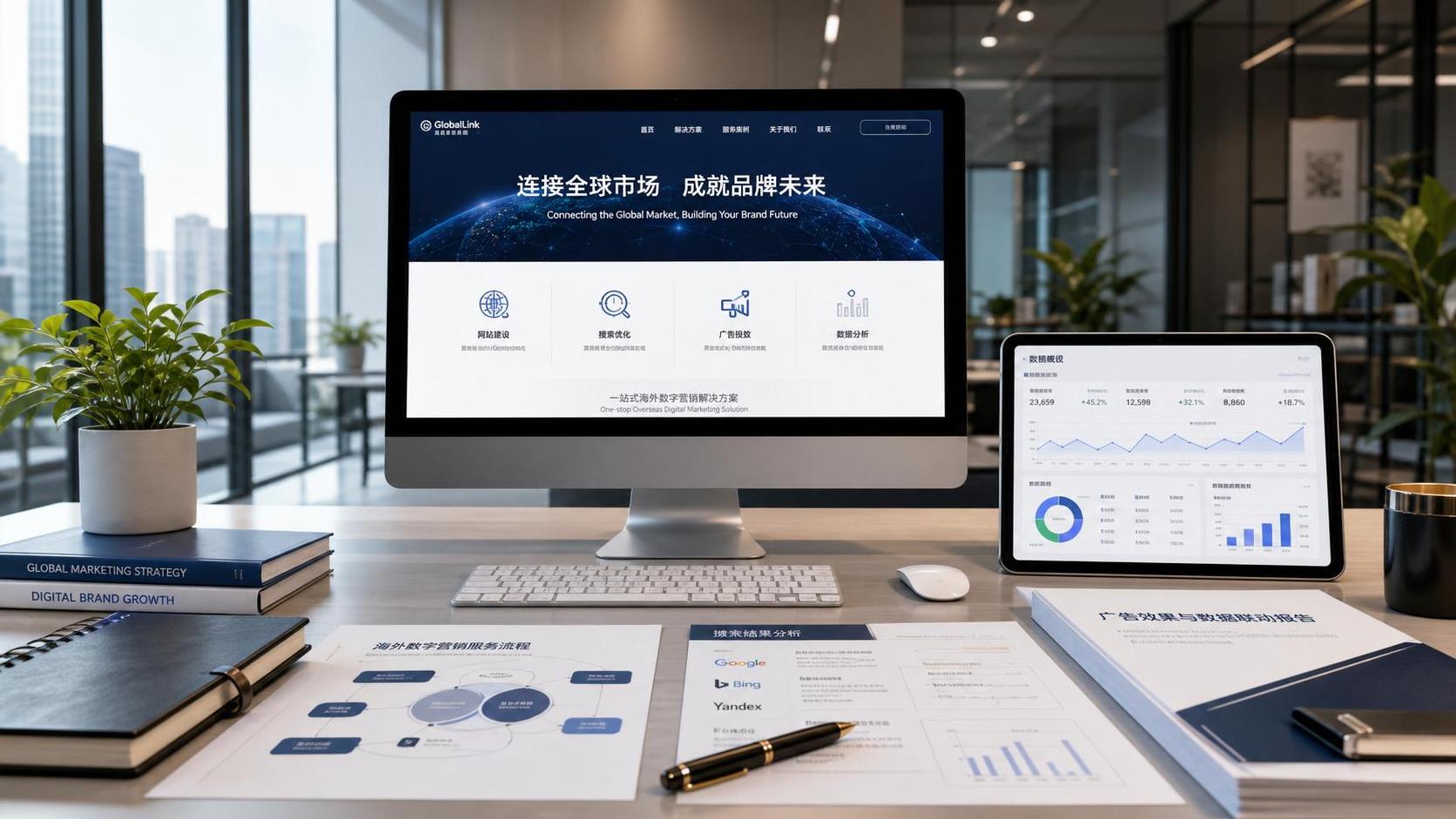
 What Does a Global Traffic Ecosystem Service Provider Do? What Are the Differences from a Single Advertising Agency

Related Products
 EasyCamp SaaS Smart Website Marketing SystemE-Yingbao SaaS Smart Website Marketing System: AI-powered, zero-code website building. Rapidly launch multilingual independent e-commerce sites in just 10 minutes. Global server acceleration and AI-driven SEO optimization empower businesses to efficiently connect with global markets. The seamless integration of technology and user-friendly operation makes building e-commerce sites incredibly simple.
 AI+SEM Intelligent Advertising Marketing SystemAI+SEM drives intelligent ad creation, empowering full-funnel precision advertising marketing. The system automatically generates weekly/monthly reports, AI recommends keywords and target countries, monitors core metrics in real-time with intelligent alerts, and enables one-click high-conversion ad solutions to help quickly acquire customers and improve ROI.
 AI+SEO Dual Engine Optimization ServiceEasyWin AI+SEO Dual Engine Optimization System leverages AI-powered keyword mining, content generation, and comprehensive technical optimization to help foreign trade enterprises acquire high-quality organic traffic, significantly improving search rankings and conversion rates.
 AI+SNS Social Media Marketing SystemYingbao AI+SNS Social Media Marketing System - Precision social capture for the social media era. Supports one-click content synchronization across major platforms like Facebook and LinkedIn. AI intelligently rewrites posts for enhanced relevance. 24/7 AI customer service and user profiling analysis empower businesses to efficiently expand into global markets.
 AI+SEO营销解决方案易营宝AI+SEO营销解决方案,通过AI批量写作、智能生成TDK、精准关键词扩词等功能,全面优化网站SEO效果,提升流量与转化率。助力企业构建高效智能网站新生态。
 AI+SEM Advertising Marketing SolutionsAI+SEM Advertising Marketing Solution leverages AI technology to deeply empower SEM ad campaigns. It automatically generates weekly/monthly reports using AI, presenting account data across multiple dimensions for comprehensive insights into campaign performance and trends. The system precisely recommends keywords and target countries, intelligently generates high-conversion ad copy, and enables one-click activation of efficient campaign plans to help businesses rapidly acquire customers. Simultaneously, it monitors core metrics in real time, intelligently identifies abnormal fluctuations, and issues timely alerts to ensure stable, high-return advertising results.
 Domain Name ServicesEasyWin provides professional domain name services, including intelligent queries, one-stop registration, brand protection, and full lifecycle management, helping businesses build a digital brand image.
 EasyOperate B2C Cross-Border E-Commerce Platform & Independent WebsiteEasyStore B2C Cross-border E-commerce Independent Store is an intelligent website building and cross-border e-commerce integrated solution independently developed by EasyStore Information Technology (Beijing) Co., Ltd. The system is specially designed for small and medium-sized as well as large export enterprises, integrating 'website building, operation, marketing, advertising, and conversion' into one, helping enterprises quickly establish cross-border e-commerce independent stores to achieve brand globalization and global sales growth.
The platform supports multiple languages, multiple currencies, and multi-channel marketing, with built-in AI intelligent translation and SEO optimization systems, suitable for mainstream markets such as Southeast Asia, Europe and America, Latin America, and the Middle East, assisting Chinese manufacturing enterprises in efficiently deploying international e-commerce strategies. SSL证书易营宝提供专业SSL安全证书服务,包括单域名和泛域名证书,确保网站数据传输加密、身份验证和完整性保护,助力企业建立安全可信的在线业务环境。









