









- China-Morocco zero-tariff access, a breakthrough in the cost of Moroccan goods exports to ChinaJun 11, 2026View details
- What signal should be released for the suspension of exports to JapanJun 10, 2026View details
- China's May LNG imports rebounded, with increased volumes from Russia and Canada filling the Middle East supply gapJun 10, 2026View details
- Will GEO change its SEO strategy?Jun 04, 2026View details
- What types of businesses are end-to-end solutions suitable for?Jun 03, 2026View details
- 2026 Global Growth Channel TrendsJun 02, 2026View details
- Changes in Search Engine Ranking Factors in 2026Jun 06, 2026View details
- Which stages is the brand visibility enhancement service suitable forMay 29, 2026View details
Where do website design quote differences come from, and how should the budget be set?
Website design quotes often seem to vary widely, but in essence, it is not a matter of “why does the same website cost a few thousand from one provider and tens of thousands from another,” but rather that the deliverables, functional complexity, design depth, technical solution, later-stage maintenance, and growth objectives are completely different. For businesses, the budget should not focus only on the website building price itself. Instead, they should first clarify: is this website for brand presentation, lead generation, conversions, or as a service channel and distribution system? Only by understanding what makes up the quotation can you know which costs are necessary, which can be reduced, and avoid ending up with a low-cost website that is unusable and requires costly rework later.
To start with the conclusion: the large differences in website design pricing usually come down to these 5 categories of cost
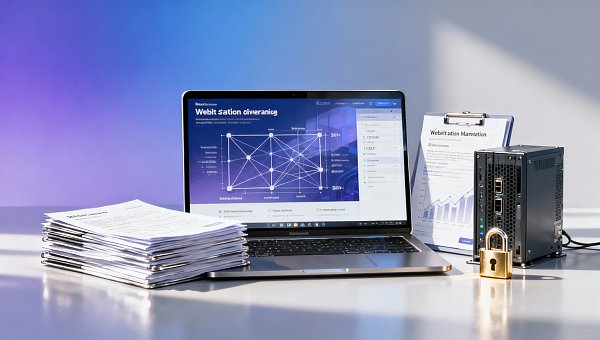
When businesses inquire about website development, the most common question is: why do some companies quote 3000 yuan, while others quote 30,000 yuan, or even more than 100,000 yuan? The core differences usually lie in the following areas:
- Different website building approaches: template-based websites, SaaS website builders, semi-custom development, and fully custom development all have completely different cost structures.
- Different page and functionality requirements: a simple showcase website and a website with inquiry forms, membership systems, multi-language support, multi-device responsiveness, and a data analytics backend will not be priced at the same level.
- Different levels of design depth: modifying text and images on a template is very different in price from UI design, interaction optimization, and conversion path design based on brand positioning.
- Different technical and security configurations: domain names, servers, CDN, SSL certificates, backup mechanisms, security protection, and access speed optimization all affect the total cost.
- Whether post-launch operations services are included: if the quote includes content updates, SEO optimization, data tracking, ad landing page support, and maintenance services, the price will naturally be higher.
So, when looking at where website design prices differ, you cannot just ask “how much does an official website cost,” but need to see exactly what the provider delivers and whether it can support future business growth.
What businesses should care about most is not whether it is cheap, but what this budget is actually buying
For business decision-makers and operations teams, the issue truly worth focusing on is usually not the lowest price, but the following:
- After launch, can the website support brand image and sales conversion?
- Will it be difficult to add new pages, redesign, or expand functionality later?
- Does it support an SEO-friendly basic structure, and can it continue to generate organic traffic in the future?
- Is it mobile-friendly, and is the loading speed stable?
- Are domain name and server ownership clearly defined to avoid being “held hostage” by the service provider?
- Are the security configurations in place, especially the SSL certificate and form data protection?
The problem with many low-cost websites is not that they “cannot be built,” but that issues become concentrated after launch: rough pages, a difficult backend, poor search engine indexing, and extra charges for every later modification, ultimately making the total cost even higher.
How should you set a website budget? Start by dividing it according to goals, and do not ask for a standard price right away

A reasonable website budget should be determined by working backward from business goals, rather than directly asking for a standard market price. In general, it can be judged based on the following three types of needs:
1. Showcase website: the budget is usually relatively basic
Suitable for startups, businesses supplementing offline operations with an online presence, and basic brand exposure. It usually includes a basic structure such as a homepage, about us, products/services, case studies, news, and contact pages.
Budget focus: number of pages, template or light customization, mobile responsiveness, basic SEO settings, and domain name and server configuration.
Suitable for: businesses with limited budgets that need to launch a relatively professional website quickly.
2. Lead generation website: the budget should focus on conversion and traffic foundations
If the website is responsible for customer acquisition, such as generating inquiries, collecting leads, or receiving advertising traffic, then the budget focus is not just “whether the design looks good,” but rather:
- Whether the page structure is conducive to conversion
- Whether the landing page is designed around the user decision-making journey
- Whether it supports form tracking, event tracking analysis, and inquiry entry optimization
- Whether the SEO foundation and content planning are properly established
This type of website may appear more expensive, but if it can increase inquiry rates and reduce customer acquisition costs, the actual ROI is often better. For businesses that need to combine website performance with paid promotion, the website can also be integrated with advertising systems, for example through the AI+SEM advertising marketing solution for keyword recommendations, campaign optimization, and data monitoring, so that the website is not just something you “have,” but something that truly captures traffic and leads.
3. Functional platform: the widest budget gap
If the website involves membership systems, online ordering, dealer management, multilingual websites, API integration, hierarchical data permissions, and similar requirements, then the website is essentially close to a business system, and the quotation will usually increase significantly.
Budget focus: amount of functional development, system stability, concurrency requirements, later maintenance, permission management, and security auditing.
Which detailed pricing items are most easily overlooked?
When many companies receive a quotation, they only look at the total price, but overlook some items that are most likely to become “additional charges” later:
Domain registration process and ownership
The domain itself is usually not expensive, but the key issue is whether the registration information, renewal authority, and management backend are in the company’s own hands. It is recommended to confirm:
- Whether the domain registrant is the company itself
- Whether DNS management can be handled independently
- Whether renewal reminders and transfer permissions are clearly defined
SSL certificate application process and security configuration
Nowadays, whether a website has an SSL certificate deployed is no longer an “optional item,” but a basic requirement. Without HTTPS, it not only affects browser trust, but also impacts search performance and form security. The quotation should clearly specify:
- Whether SSL certificate application and deployment are included
- Whether it is a free certificate or an enterprise-grade certificate
- Who is responsible for renewal after the certificate expires
Server and access speed
Even for the same website, different server choices can create major differences in access experience. Websites aimed at domestic traffic, overseas traffic, multilingual websites, or sites with many images and videos all place higher demands on server quality. Low-cost solutions often cut costs in this area, resulting in slow loading speeds and poor stability.
SEO basic settings
Many people think SEO is something for later, but in fact the foundation should be laid during the website development stage, including:
- Whether the URL structure is standardized
- Whether titles, descriptions, and H tags are configurable
- Whether sitemap and robots files are supported
- Whether page loading speed is optimized
- Whether mobile adaptation meets standards
If this is not done well in the early stage, making up for SEO later will cost more and deliver limited results.
How can you tell whether a quotation is reliable? Focus on checking these issues
A reliable website design quotation is not simply a line saying “website development fee XX yuan,” but one that clearly defines the scope of delivery. It is recommended to focus on checking:
- Number and types of pages: how many homepages, list pages, detail pages, and campaign pages are included respectively?
- Design method: is it template adjustment, semi-custom, or fully original design?
- Feature list: are forms, search, multilingual support, membership, payment, and backend permissions included?
- Device adaptation: does it include responsive adaptation for PC, mobile, and tablet?
- Technical configuration: are the domain name, server, database, SSL certificate, and backup solution clearly listed?
- SEO and data analytics: does it support basic optimization, analytics code deployment, and conversion tracking?
- After-sales scope: how long is free maintenance included? How many rounds of revisions are included? Is backend usage training provided?
- Copyright ownership: do the source code, design files, and image/font licenses belong to the client?
The more vague the quotation is, the greater the risk of disputes and additional charges later.
For different types of businesses, where should the budget focus be placed?
A website budget is not better simply because it is higher, but because it is spent where it has the greatest impact on business results.
Small and medium-sized businesses
Prioritize spending on basic brand image, mobile experience, SEO structure, and inquiry conversion, rather than building complex functions from the very beginning.
Businesses with advertising needs
If the website needs to receive traffic from Baidu, Google, or social media ads, it is recommended to focus the budget on landing page design, data tracking, conversion paths, and page speed. This is because these directly affect advertising conversion costs. At this time, website building and ad placement should not be separated. When necessary, you can combine it with the AI+SEM advertising marketing solution to more quickly find ways to improve efficiency through the synergy of “website + ad placement” via intelligent keyword recommendations, ad copy generation, and anomaly alerts.
Businesses undergoing brand upgrade
If a company is going through a brand upgrade, expanding investment promotion, or developing channels, the website is not just a display tool, but also an entry point for commercial trust. The budget can be appropriately tilted toward visual design, content planning, case presentation, and industry solution pages.
Dealer and agent system businesses
If the website also undertakes roles such as investment promotion, lead distribution, and regional management, then more attention should be paid to form mechanisms, lead allocation, permission management, and later scalability.
How can you avoid the trap of “low-cost website building, but higher costs later”?
Finally, here are several practical judgment criteria:
- Do not compare only the total price; compare the delivery checklist.
- Do not look only at homepage mockups; also review the backend, features, and later maintenance methods.
- Do not overlook basic configurations such as domain name, server, and SSL certificate.
- Do not leave SEO entirely until after launch.
- Do not choose closed solutions that cannot be migrated or expanded just because they are cheaper.
- Do not assume that “website launch = project completion”; pay more attention to the long-term operational value.
A truly valuable website is not just one that looks decent on the day it goes live, but one that can continue to support customer acquisition, brand building, and business growth in the future.
In summary, the core differences in website design quotations lie in the depth of requirements, design approach, functional complexity, technical configuration, and ongoing operational support. How the budget should be set depends not on simply following the market average price, but on working backward from business goals, traffic sources, and conversion requirements. If the website is only for presentation, controlling the basic investment is enough; if it needs to undertake customer acquisition and growth tasks, then the budget should be placed on the parts that truly affect results. Only by first understanding “what problem the website is meant to solve” and then considering “how much is appropriate” can every part of the budget be spent more effectively.
Related Articles



Related Products
 EasyCamp SaaS Smart Website Marketing SystemE-Yingbao SaaS Smart Website Marketing System: AI-powered, zero-code website building. Rapidly launch multilingual independent e-commerce sites in just 10 minutes. Global server acceleration and AI-driven SEO optimization empower businesses to efficiently connect with global markets. The seamless integration of technology and user-friendly operation makes building e-commerce sites incredibly simple.
 AI+SEM Intelligent Advertising Marketing SystemAI+SEM drives intelligent ad creation, empowering full-funnel precision advertising marketing. The system automatically generates weekly/monthly reports, AI recommends keywords and target countries, monitors core metrics in real-time with intelligent alerts, and enables one-click high-conversion ad solutions to help quickly acquire customers and improve ROI.
 AI+SEO Dual Engine Optimization ServiceEasyWin AI+SEO Dual Engine Optimization System leverages AI-powered keyword mining, content generation, and comprehensive technical optimization to help foreign trade enterprises acquire high-quality organic traffic, significantly improving search rankings and conversion rates.
 AI+SNS Social Media Marketing SystemYingbao AI+SNS Social Media Marketing System - Precision social capture for the social media era. Supports one-click content synchronization across major platforms like Facebook and LinkedIn. AI intelligently rewrites posts for enhanced relevance. 24/7 AI customer service and user profiling analysis empower businesses to efficiently expand into global markets.
 AI+SEO营销解决方案易营宝AI+SEO营销解决方案,通过AI批量写作、智能生成TDK、精准关键词扩词等功能,全面优化网站SEO效果,提升流量与转化率。助力企业构建高效智能网站新生态。
 AI+SEM Advertising Marketing SolutionsAI+SEM Advertising Marketing Solution leverages AI technology to deeply empower SEM ad campaigns. It automatically generates weekly/monthly reports using AI, presenting account data across multiple dimensions for comprehensive insights into campaign performance and trends. The system precisely recommends keywords and target countries, intelligently generates high-conversion ad copy, and enables one-click activation of efficient campaign plans to help businesses rapidly acquire customers. Simultaneously, it monitors core metrics in real time, intelligently identifies abnormal fluctuations, and issues timely alerts to ensure stable, high-return advertising results.
 Domain Name ServicesEasyWin provides professional domain name services, including intelligent queries, one-stop registration, brand protection, and full lifecycle management, helping businesses build a digital brand image.
 EasyOperate B2C Cross-Border E-Commerce Platform & Independent WebsiteEasyStore B2C Cross-border E-commerce Independent Store is an intelligent website building and cross-border e-commerce integrated solution independently developed by EasyStore Information Technology (Beijing) Co., Ltd. The system is specially designed for small and medium-sized as well as large export enterprises, integrating 'website building, operation, marketing, advertising, and conversion' into one, helping enterprises quickly establish cross-border e-commerce independent stores to achieve brand globalization and global sales growth.
The platform supports multiple languages, multiple currencies, and multi-channel marketing, with built-in AI intelligent translation and SEO optimization systems, suitable for mainstream markets such as Southeast Asia, Europe and America, Latin America, and the Middle East, assisting Chinese manufacturing enterprises in efficiently deploying international e-commerce strategies. SSL证书易营宝提供专业SSL安全证书服务,包括单域名和泛域名证书,确保网站数据传输加密、身份验证和完整性保护,助力企业建立安全可信的在线业务环境。









