









- Which channel has the highest ROI in the global traffic ecosystem? Comparative analysis of search, social media, and advertisingJul 10, 2026View details
- What multilingual website services are available in Sanya? Which model is more suitable for local businesses going global?Jul 08, 2026View details
- How to view the complete list of China SaaS companies in the top 100? Practical methods for screening website-building and marketing service providersJul 08, 2026View details
- How to view pricing in the global traffic ecosystem? Cost comparison of search, social media, and content channel advertisingJul 06, 2026View details
- How to assess foreign trade website development trends?Looking at 2026 changes from multilingual,AI content to conversion pathsJul 04, 2026View details
- What are the new trends in multilingual marketing data analytics tools in 2026? Focus on attribution、automation and complianceJul 04, 2026View details
- Is Brand Globalization Marketing Consulting Worth Buying? At What Stage Should Companies Bring It InJul 01, 2026View details
- Cross-Border Marketing Trend Research: Why More and More Companies Are Starting to Deploy AI Search and GEO OptimizationJun 30, 2026View details
5 Reasons Why Website SEO Optimization Takes Time to Show Results
Many companies have invested in website SEO optimization, yet still fail to see growth in rankings and inquiries for a long time. For business evaluators, the issue often is not whether “SEO works,” but whether the project has hit the key variables that affect the timeline and results. Only by understanding these reasons clearly can they judge more accurately whether the budget is worth continuing to invest in.
From an evaluation perspective, slow results in website SEO optimization are usually not caused by a single execution issue, but by the combined effect of foundational quality, keyword strategy, content supply, technical structure, and timeline expectations. If these five types of causes can be broken down and understood clearly, it becomes possible to assess project progress, input-output performance, and subsequent optimization directions more rationally.
1. First determine: Is slow SEO within the normal cycle, or is there a problem with the project itself
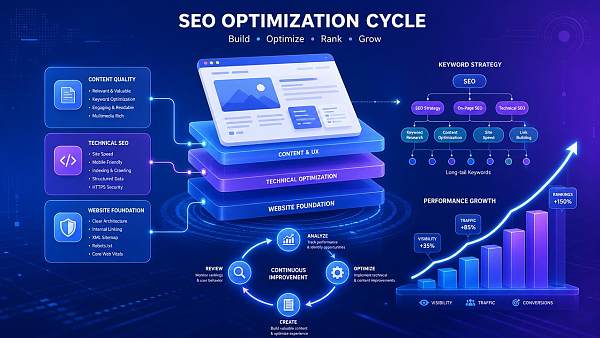
The most common misunderstanding among business evaluators is to directly equate “no rankings in the short term” with “ineffective investment.” In fact, website SEO optimization is not an instant-delivery project by nature. Search engines need time to crawl, understand, evaluate, and re-rank pages, and this process is usually measured in months rather than weeks.
But “slow” can also be divided into two types. One is normal slowness that follows the natural pattern, such as a new site with low authority, newly published content, or highly competitive keywords. The other is abnormal slowness, such as little indexing within three to six months, no movement in core keywords, an imbalanced traffic structure, and no improvement in inquiries, which often indicates obvious problems in the project path.
Therefore, when evaluating an SEO project, you should not look only at a single ranking screenshot, but at whether several key indicators are improving: whether the number of indexed pages is increasing, whether keyword coverage is expanding, whether target pages are entering the top 20, whether organic traffic is rising steadily, and whether effective conversions are gradually improving. These are more meaningful references than “whether it immediately reached the first page.”
2. Cause one: The website foundation is too weak, making it difficult for search engines to quickly build trust
Many companies think that after arranging a few keywords and publishing several articles, optimization has already begun. But if the website itself has a weak structure, low-quality pages, slow loading speed, and poor mobile experience, then search engines will be very slow to build overall trust in the site, and rankings will naturally be difficult to improve.
For business evaluators, the first step should be to check whether the website has an “optimizable foundation.” For example, whether the category structure is clear, whether pages can be crawled normally, whether there are a large number of duplicate pages, whether there are broken links and abnormal redirects, and whether core pages have clear topics. All of these directly affect how search engines judge the quality of the site.
If SEO was not considered during the website-building stage and only addressed later as a remedy, results will definitely come slowly. This is because the problem cannot be solved simply by changing a few titles; it involves multiple layers such as information architecture, content delivery methods, URL rules, code simplification, and the internal linking system, and the repair cycle is often longer than expected.
Therefore, when evaluating a service provider, the business side should not ask only “how long will it take to rank keywords,” but should further ask “whether the current website is suitable for continuous optimization.” Without a solid foundation, even if more execution resources are投入, the result may still be only limited growth.
3. Cause two: The keyword strategy is off, so traffic grows but does not bring inquiries
Another reason website SEO optimization shows slow results is a situation where “it seems actions are being taken, but the direction is actually wrong.” The most typical problem is that the keyword strategy is not aligned with business goals. In order to pursue ranking volume, some projects prioritize keywords with high search volume but weak intent. As a result, traffic increases, but inquiries do not improve significantly.
Business evaluators are usually more concerned about return on investment than pure traffic. Therefore, keyword strategy should not focus only on popularity, but also on commercial intent. For example, branded keywords, product keywords, solution keywords, regional keywords, and industry problem keywords often bring much higher visit quality and conversion probability than broad traffic keywords.
If keywords were not layered in the early stage, a common result is this: core high-value keywords remain undeployed for a long time, resources are consumed on low-relevance content, and pages also end up competing with each other, making it impossible for search engines to determine which page should be prioritized for display, further slowing the overall results.
This is also why more and more companies are beginning to use data and intelligent tools to improve early-stage judgment efficiency. For example, through an AI+SEO marketing solution for precise keyword expansion and intelligent TDK generation, companies can sort out a keyword database structure that fits their business stage more quickly, reducing the cycle waste caused by blind trial and error.
4. Cause three: Content is updated frequently, but its quality is not enough to support rankings
Many SEO projects move slowly not because no content is being published, but because the published content lacks search value. Common problems include: highly homogeneous articles, mechanical keyword stuffing, lack of real cases and business information, and insufficient page depth, leading search engines to believe the content is “too easily replaceable.”
For business evaluators, one point must be made clear: the quantity of content does not equal content assets. What truly drives website SEO optimization is content that can capture search intent, answer user questions, and match the company’s service capabilities. Only such content is more likely to bring sustained rankings and effective inquiries.
Especially in the integrated website + marketing service industry, users’ searches often come with clear decision-making demands, such as “Does SEO work,” “How long after building a website can customer acquisition begin,” and “How should an optimization budget be evaluated?” If the content only talks vaguely about concepts without giving judgment criteria, applicable scenarios, and common risks, it is difficult to form differentiated competitiveness.
From a management perspective, content development should focus on assessing three dimensions: whether it covers real search questions, whether it can support business conversion, and whether it has continuously accumulative value. If articles are created only to fill update frequency, then even in large quantities, they will still be unlikely to drive significant ranking improvement.
5. Cause four: Technical optimization is not in place, so search engines can crawl the site but cannot understand it sufficiently
Slow SEO results are also often related to details in technical execution. Many corporate websites appear accessible on the surface, but from the search engine’s perspective, they have crawling obstacles, chaotic structure, or insufficient semantic signals. As a result, pages go live but remain unindexed for a long time, or after being indexed, still show no ranking performance for a long period.
Typical problems include: incorrect robots settings, missing sitemaps, duplicate title descriptions, confusing use of H tags, images missing ALT text, excessively heavy JS-rendered content, poor mobile adaptation, and obvious breaks in internal linking. These problems may not seem serious individually, but when combined, they significantly slow down the efficiency with which search engines evaluate page quality.
When reviewing a project, business evaluators can require the service provider to regularly provide a technical optimization checklist rather than only content publishing records. This is because fixes at the technical level often determine whether subsequent content can be crawled, understood, and passed authority normally. If the underlying channels are not smooth, then no matter how much content is published at the front end, it will still be difficult to scale quickly.
In addition, the value of technical optimization lies not only in rankings, but also in improving the overall conversion experience. Faster pages, clearer structure, and smoother redirects can themselves improve user dwell time and willingness to inquire. This is also why mature projects view SEO as “a website quality engineering project” rather than simply a content publishing task.
6. Cause five: Incorrect expectations for the results cycle lead to frequent direction changes midway
Many companies do not lose in execution, but in expectation management. After a project starts, if ideal rankings are not seen within one month, they frequently change keywords, pages, service providers, or even pause updates. This often interrupts the optimization path that was originally accumulating, causing website SEO optimization to remain stuck in a state of “starting over” again and again.
From a business evaluation perspective, SEO is not suitable to be measured with the short-cycle advertising mindset. It is more like a continuously accumulating asset-building process: the early stage focuses on foundation, the middle stage on coverage, and the later stage on stable conversion. Different sites are at different stages, so the window for results will also vary, with especially obvious differences among new sites, old sites, and redesigned sites.
Generally speaking, if the foundation is normal, the first two months focus on fixes and groundwork, while three to six months is when changes in keyword coverage and organic traffic are more likely to appear. After six months, it becomes more appropriate to evaluate the performance of high-value keywords and inquiry growth. If a project is interrupted before reaching key milestones, the early investment often fails to accumulate value.
Therefore, in business evaluation, more attention should be paid to whether stage goals are reasonable, rather than staring only at the final result. A reliable project should clearly distinguish: which tasks are foundational work deliverable in the short term, which are ranking changes observable in the medium term, and which are business returns that can only be verified in the long term.
7. How business evaluators should judge: Is this SEO project still worth continued investment
The truly practical way to judge is not to ask “Has it exploded yet,” but to see whether the project is on the right track. If the website’s foundational problems are being continuously fixed, the keyword strategy is becoming more aligned with the business, content quality is improving, and the number of indexed pages and covered keywords is growing, then even if the results have not yet been fully released, the project usually still has value for continued investment.
On the contrary, if there is only workload over the long term but no indicator improvement; only the number of published articles but no improvement in target pages; only broad traffic but no improvement in inquiry quality, then the project strategy needs to be re-examined for reasonableness, and it may even be necessary to consider adjusting the execution team and methodology.
For companies that hope to balance efficiency and replicability, intelligent tools are also becoming a more reliable choice. Through coordinated advancement in bulk content production, keyword mining, and page element optimization, repeated manual trial and error can be reduced. Products such as AI+SEO marketing solutions are more suitable for enterprise teams that need to scale content and website optimization.
However, no matter what tools or services are used, the final judgment criteria should return to the business itself: whether target customers are reached more accurately, whether customer acquisition costs are reduced, and whether sustainable organic traffic assets are formed. Only when these three questions can be answered does SEO investment truly have evaluation value.
8. Summary: Slow SEO results are not scary; what is scary is being slow without direction
Returning to the question of the “5 reasons why website SEO optimization shows slow results,” the essence is not to find excuses, but to identify exactly where the project is slow. Weak website foundations, misaligned keyword direction, insufficient content quality, inadequate technical optimization, and incorrect cycle expectations are all the most common and most critical influencing factors.
For business evaluators, the most important thing is not to push for short-term rankings, but to establish a clearer judgment framework: first look at the foundation, then the direction, then the process indicators, and finally the conversion results. Only in this way can you distinguish which projects simply need more time and which truly need adjustment.
If a company hopes to make SEO investment approach effective results more quickly, the key is not increasing effort at a single point, but making website building, content, technology, keywords, and conversion paths form a closed loop. When the direction is correct and execution is in place, SEO may not explode immediately, but it often becomes one of the most stable growth channels with the strongest compounding value.
Related Articles
 Which channel has the highest ROI in the global traffic ecosystem? Comparative analysis of search, social media, and advertising
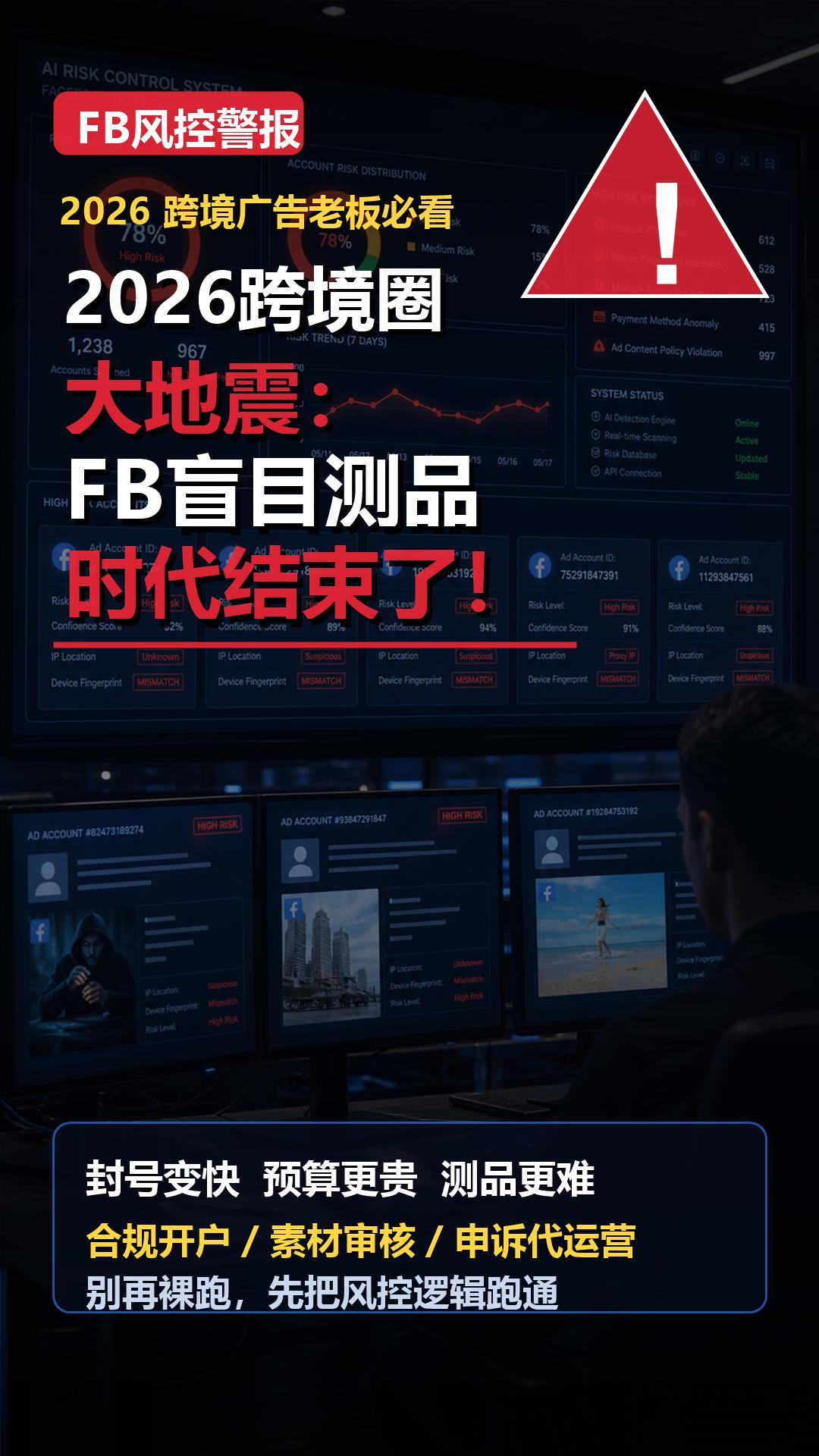
 The Era of Cross-Border Earthquakes in 2026: The Era of Blindly Testing FB Products Has Ended!
 Three key points of domestic-to-foreign trade most important, see if you really did your homework! Don’t take shortcuts.


Related Products
 EasyCamp SaaS Smart Website Marketing SystemE-Yingbao SaaS Smart Website Marketing System: AI-powered, zero-code website building. Rapidly launch multilingual independent e-commerce sites in just 10 minutes. Global server acceleration and AI-driven SEO optimization empower businesses to efficiently connect with global markets. The seamless integration of technology and user-friendly operation makes building e-commerce sites incredibly simple.
 AI+SEM Intelligent Advertising Marketing SystemAI+SEM drives intelligent ad creation, empowering full-funnel precision advertising marketing. The system automatically generates weekly/monthly reports, AI recommends keywords and target countries, monitors core metrics in real-time with intelligent alerts, and enables one-click high-conversion ad solutions to help quickly acquire customers and improve ROI.
 AI+SEO Dual Engine Optimization ServiceEasyWin AI+SEO Dual Engine Optimization System leverages AI-powered keyword mining, content generation, and comprehensive technical optimization to help foreign trade enterprises acquire high-quality organic traffic, significantly improving search rankings and conversion rates.
 AI+SNS Social Media Marketing SystemYingbao AI+SNS Social Media Marketing System - Precision social capture for the social media era. Supports one-click content synchronization across major platforms like Facebook and LinkedIn. AI intelligently rewrites posts for enhanced relevance. 24/7 AI customer service and user profiling analysis empower businesses to efficiently expand into global markets.
 AI+SEO营销解决方案易营宝AI+SEO营销解决方案,通过AI批量写作、智能生成TDK、精准关键词扩词等功能,全面优化网站SEO效果,提升流量与转化率。助力企业构建高效智能网站新生态。
 AI+SEM Advertising Marketing SolutionsAI+SEM Advertising Marketing Solution leverages AI technology to deeply empower SEM ad campaigns. It automatically generates weekly/monthly reports using AI, presenting account data across multiple dimensions for comprehensive insights into campaign performance and trends. The system precisely recommends keywords and target countries, intelligently generates high-conversion ad copy, and enables one-click activation of efficient campaign plans to help businesses rapidly acquire customers. Simultaneously, it monitors core metrics in real time, intelligently identifies abnormal fluctuations, and issues timely alerts to ensure stable, high-return advertising results.
 Domain Name ServicesEasyWin provides professional domain name services, including intelligent queries, one-stop registration, brand protection, and full lifecycle management, helping businesses build a digital brand image.
 EasyOperate B2C Cross-Border E-Commerce Platform & Independent WebsiteEasyStore B2C Cross-border E-commerce Independent Store is an intelligent website building and cross-border e-commerce integrated solution independently developed by EasyStore Information Technology (Beijing) Co., Ltd. The system is specially designed for small and medium-sized as well as large export enterprises, integrating 'website building, operation, marketing, advertising, and conversion' into one, helping enterprises quickly establish cross-border e-commerce independent stores to achieve brand globalization and global sales growth.
The platform supports multiple languages, multiple currencies, and multi-channel marketing, with built-in AI intelligent translation and SEO optimization systems, suitable for mainstream markets such as Southeast Asia, Europe and America, Latin America, and the Middle East, assisting Chinese manufacturing enterprises in efficiently deploying international e-commerce strategies. SSL证书易营宝提供专业SSL安全证书服务,包括单域名和泛域名证书,确保网站数据传输加密、身份验证和完整性保护,助力企业建立安全可信的在线业务环境。









