









- Which channel has the highest ROI in the global traffic ecosystem? Comparative analysis of search, social media, and advertisingJul 10, 2026View details
- What multilingual website services are available in Sanya? Which model is more suitable for local businesses going global?Jul 08, 2026View details
- How to view the complete list of China SaaS companies in the top 100? Practical methods for screening website-building and marketing service providersJul 08, 2026View details
- How to view pricing in the global traffic ecosystem? Cost comparison of search, social media, and content channel advertisingJul 06, 2026View details
- How to assess foreign trade website development trends?Looking at 2026 changes from multilingual,AI content to conversion pathsJul 04, 2026View details
- What are the new trends in multilingual marketing data analytics tools in 2026? Focus on attribution、automation and complianceJul 04, 2026View details
- Is Brand Globalization Marketing Consulting Worth Buying? At What Stage Should Companies Bring It InJul 01, 2026View details
- Cross-Border Marketing Trend Research: Why More and More Companies Are Starting to Deploy AI Search and GEO OptimizationJun 30, 2026View details
Which 3 data points to check first when Google rankings fluctuate
Once Google rankings fluctuate, don’t rush to change the website first. First look at the 3 core data points of traffic, indexation, and keyword positions, and you can often quickly determine the direction of the problem, avoid incorrect actions, and make optimization more efficient. For integrated website and marketing service operations, the order of diagnosis is more important than blind fixes. Only by first identifying whether the issue is caused by algorithm impact, page problems, or changes in advertising and content rhythm, can subsequent optimization stay on the right track.
1. When Google rankings fluctuate, why look at these 3 data points first?
When many websites see a drop in Google rankings, their first reaction is to change titles, delete pages, or replace content. In fact, doing so is very risky. That’s because Google fluctuations do not necessarily mean there is a problem with the website. They may simply be short-term volatility caused by changes in search demand, competitor actions, or Google index updates.
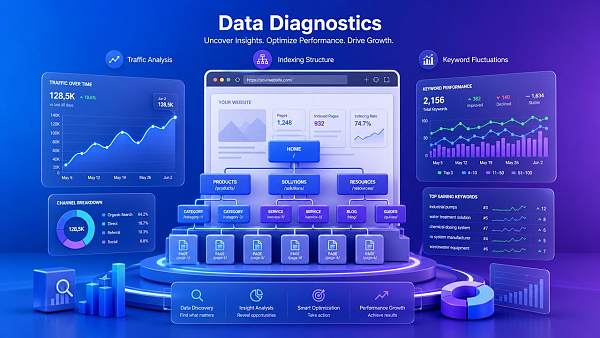
Looking at traffic first helps determine whether the impact has actually occurred. Looking at indexation first helps determine whether Google is still understanding the website normally. Then by looking at keyword positions, you can identify which keywords, pages, countries, or devices the fluctuation is concentrated on. This order helps quickly narrow down the scope of troubleshooting.
For companies simultaneously doing website building, SEO, social media, and advertising, Google data should also be viewed together with the overall marketing funnel. A drop in organic rankings does not necessarily mean overall customer acquisition is declining; but if organic traffic, keywords, and conversion pages fluctuate together, faster action is needed.
2. The first data point: how can traffic fluctuations be assessed accurately?
When looking at Google traffic, you cannot judge based on just a single day. A more reasonable approach is to compare the past 7 days, the past 28 days, and the same period last year. This helps rule out factors such as holidays, weekends, and paused campaigns, and avoids misjudging normal fluctuations as ranking anomalies.
It is recommended to focus on 3 levels.
- Whether organic search traffic is continuously declining, rather than dropping on just a single day.
- Whether the decline is concentrated in certain countries, devices, or directories.
- Whether the traffic decline has already affected inquiry, registration, or transaction pages.
If Google organic traffic declines, but direct visits, social media visits, and ad visits remain stable, this usually indicates the issue is more SEO-related. Conversely, if all channels are declining, the problem may not only be Google, but also weakening market demand, page experience, or brand exposure at the same time.
In practice, it is recommended to review traffic anomalies together with conversion events. Especially for form pages, quote pages, and landing pages, if visits remain but conversion rates decline, then page speed, content relevance, and alignment with user intent should be checked, rather than focusing only on Google positions.
3. The second data point: what problems can changes in indexation indicate?
Indexation is the foundation of Google’s understanding of a website. If pages are not indexed properly, even the best content will struggle to achieve stable rankings. Therefore, when Google fluctuates, you must check total indexation volume, the number of valid pages, and the status of recently added or invalid pages.
If indexation suddenly drops, common causes include pages being mistakenly set as non-indexable, sitemap issues, unstable servers, too much duplicate content, or insufficient page quality. If new pages remain unindexed for a long time, then originality, internal links, and crawl entry points should be reviewed.
There is also a very common situation: the number of indexed pages has not dropped, but the number of pages with effective traffic has. This indicates it is not a sitewide issue, but rather a decline in the value of core pages, or stronger competing pages. At this point, further analysis should continue from the depth of content updates, backlink quality, and user dwell behavior.
For integrated website + marketing service operations, indexation also affects subsequent campaign coordination. For example, if the indexation of certain key pages is unstable, the handoff between organic search and remarketing will be affected. In this case, you may consider leveraging the AI+SEM Advertising Marketing Solution to present account data across multiple dimensions and monitor core metrics in real time, enabling faster identification of whether organic traffic and paid campaign handoff are showing anomalies at the same time.
4. The third data point: how to tell whether keyword position changes are real drops or false drops?
Changes in Google keyword positions cannot be judged by looking at just one major keyword. A truly valuable assessment is based on changes across keyword groups. For example, whether branded keywords are stable, whether core conversion keywords are declining, and whether long-tail keywords are still growing. These are more meaningful references than the ranking of a single keyword.
If only a few highly competitive keywords drop from position 3 to position 7, but long-tail keywords are rising overall, the website’s actual performance may not necessarily be worse. On the other hand, if a large number of mid- and long-tail keywords fall from the first page to the second page, even if traffic has not yet changed significantly, it should still be handled as soon as possible, because it usually continues to decline afterward.
When evaluating Google keywords, it is recommended to group them as follows:
- Branded keywords: reflect brand awareness and defensive strength.
- Core business keywords: directly related to primary customer acquisition.
- Content long-tail keywords: reflect content coverage and growth potential.
- Regional and device keywords: used to assess localized fluctuations.
If Google ranking fluctuations are concentrated in a certain country, it may be related to local competition, page language adaptation, or server access speed. If the decline only occurs on mobile, then the problem is more likely page experience, loading speed, or above-the-fold interaction issues.
5. After Google fluctuations, which misconceptions are most likely to make the problem worse?
The first misconception is making major website changes before looking at the data. Adjusting titles, structure, internal links, and URLs at the same time often causes Google to reevaluate the pages, making them even more unstable in the short term.
The second misconception is focusing only on Google and ignoring overall marketing coordination. When organic traffic declines, if advertising, social media content, and landing page optimization can fill the gap in time, customer acquisition losses can usually be controlled. Marketing cannot rely on only a single channel.
The third misconception is interpreting all fluctuations as penalties. In reality, many Google ranking changes are simply the result of algorithm updates, shifts in search intent, or improvements in competing pages. Categorize first, then decide whether fixes are needed, and efficiency will be much higher.
The fourth misconception is having no alert mechanism. If action is only taken after traffic has dropped significantly, the best response window has often already been missed. Mature teams establish daily reports, weekly reports, and anomaly alert mechanisms so that Google changes can be detected as early as possible.
6. After Google ranking fluctuations occur, what is the correct handling sequence?
It is recommended to proceed in the rhythm of “confirm first, diagnose second, optimize last”. First confirm whether the fluctuation is real, then determine whether it is a traffic, indexation, or keyword issue, and only then move into content, technical, or campaign optimization.
If a company is deploying both SEO and advertising at the same time, it is recommended to monitor Google organic data and paid campaign data in parallel. For example, through intelligent weekly reports, anomaly alerts, and keyword recommendations, you can promptly identify which business keywords should continue fighting for rankings through SEO, and which keywords are better suited for short-term support through paid campaigns. In this way, traffic can be stabilized while also reducing customer acquisition gaps caused by fluctuations.
Yiyingbao Information Technology (Beijing) Co., Ltd. has been deeply engaged in digital marketing for more than 10 years, serving global growth scenarios over the long term. To address traffic uncertainty caused by Google fluctuations, it can combine an integrated approach of website building, SEO, content, and paid campaigns, together with the anomaly detection, intelligent bidding recommendations, and high-conversion ad copy capabilities of the AI+SEM Advertising Marketing Solution, to improve overall marketing resilience.
7. Summary: when Google rankings fluctuate, look at the data first, then take action
Google ranking fluctuations are not scary; what is scary is making chaotic changes without a clear order. First look at traffic to confirm the scope of the impact; then look at indexation to determine whether the website foundation is functioning normally; finally look at keyword positions to pinpoint the specific problem pages and keyword groups. This diagnostic framework is suitable for most website operation scenarios.
If you want to make Google optimization more stable, it is recommended to establish a fixed monitoring mechanism and view SEO together with advertising, content, and page experience on the same data dashboard. This not only helps identify problems faster, but also helps uncover growth opportunities more quickly. With data first, actions will be effective, and Google optimization can truly deliver sustainable results.
Related Articles
 Which channel has the highest ROI in the global traffic ecosystem? Comparative analysis of search, social media, and advertising
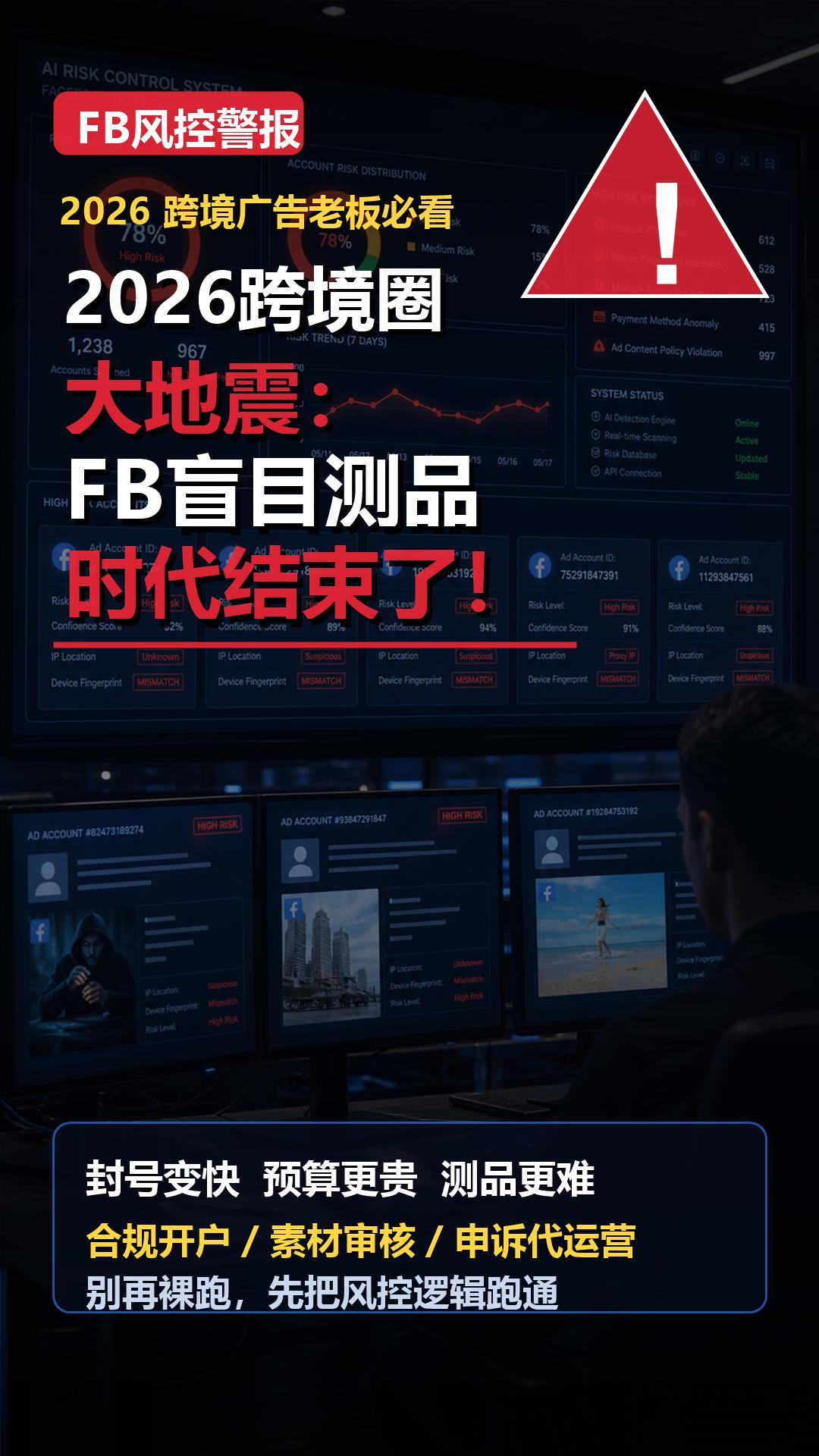
 The Era of Cross-Border Earthquakes in 2026: The Era of Blindly Testing FB Products Has Ended!
 Three key points of domestic-to-foreign trade most important, see if you really did your homework! Don’t take shortcuts.

Related Products
 EasyCamp SaaS Smart Website Marketing SystemE-Yingbao SaaS Smart Website Marketing System: AI-powered, zero-code website building. Rapidly launch multilingual independent e-commerce sites in just 10 minutes. Global server acceleration and AI-driven SEO optimization empower businesses to efficiently connect with global markets. The seamless integration of technology and user-friendly operation makes building e-commerce sites incredibly simple.
 AI+SEM Intelligent Advertising Marketing SystemAI+SEM drives intelligent ad creation, empowering full-funnel precision advertising marketing. The system automatically generates weekly/monthly reports, AI recommends keywords and target countries, monitors core metrics in real-time with intelligent alerts, and enables one-click high-conversion ad solutions to help quickly acquire customers and improve ROI.
 AI+SEO Dual Engine Optimization ServiceEasyWin AI+SEO Dual Engine Optimization System leverages AI-powered keyword mining, content generation, and comprehensive technical optimization to help foreign trade enterprises acquire high-quality organic traffic, significantly improving search rankings and conversion rates.
 AI+SNS Social Media Marketing SystemYingbao AI+SNS Social Media Marketing System - Precision social capture for the social media era. Supports one-click content synchronization across major platforms like Facebook and LinkedIn. AI intelligently rewrites posts for enhanced relevance. 24/7 AI customer service and user profiling analysis empower businesses to efficiently expand into global markets.
 AI+SEO营销解决方案易营宝AI+SEO营销解决方案,通过AI批量写作、智能生成TDK、精准关键词扩词等功能,全面优化网站SEO效果,提升流量与转化率。助力企业构建高效智能网站新生态。
 AI+SEM Advertising Marketing SolutionsAI+SEM Advertising Marketing Solution leverages AI technology to deeply empower SEM ad campaigns. It automatically generates weekly/monthly reports using AI, presenting account data across multiple dimensions for comprehensive insights into campaign performance and trends. The system precisely recommends keywords and target countries, intelligently generates high-conversion ad copy, and enables one-click activation of efficient campaign plans to help businesses rapidly acquire customers. Simultaneously, it monitors core metrics in real time, intelligently identifies abnormal fluctuations, and issues timely alerts to ensure stable, high-return advertising results.
 Domain Name ServicesEasyWin provides professional domain name services, including intelligent queries, one-stop registration, brand protection, and full lifecycle management, helping businesses build a digital brand image.
 EasyOperate B2C Cross-Border E-Commerce Platform & Independent WebsiteEasyStore B2C Cross-border E-commerce Independent Store is an intelligent website building and cross-border e-commerce integrated solution independently developed by EasyStore Information Technology (Beijing) Co., Ltd. The system is specially designed for small and medium-sized as well as large export enterprises, integrating 'website building, operation, marketing, advertising, and conversion' into one, helping enterprises quickly establish cross-border e-commerce independent stores to achieve brand globalization and global sales growth.
The platform supports multiple languages, multiple currencies, and multi-channel marketing, with built-in AI intelligent translation and SEO optimization systems, suitable for mainstream markets such as Southeast Asia, Europe and America, Latin America, and the Middle East, assisting Chinese manufacturing enterprises in efficiently deploying international e-commerce strategies. SSL证书易营宝提供专业SSL安全证书服务,包括单域名和泛域名证书,确保网站数据传输加密、身份验证和完整性保护,助力企业建立安全可信的在线业务环境。









