









- What signals are worth paying attention to in a cross-border marketing trend report? B2B companies should look at these 6 signalsJul 11, 2026View details
- How to Read a Cross-Border Marketing Trends Report? Five Key Dimensions for Evaluating Channel OpportunitiesJul 11, 2026View details
- Which channel has the highest ROI in the global traffic ecosystem? Comparative analysis of search, social media, and advertisingJul 10, 2026View details
- What multilingual website services are available in Sanya? Which model is more suitable for local businesses going global?Jul 08, 2026View details
- How to view the complete list of China SaaS companies in the top 100? Practical methods for screening website-building and marketing service providersJul 08, 2026View details
- How to view pricing in the global traffic ecosystem? Cost comparison of search, social media, and content channel advertisingJul 06, 2026View details
- How to assess foreign trade website development trends?Looking at 2026 changes from multilingual,AI content to conversion pathsJul 04, 2026View details
- What are the new trends in multilingual marketing data analytics tools in 2026? Focus on attribution、automation and complianceJul 04, 2026View details
What data can website traffic monitoring tools show
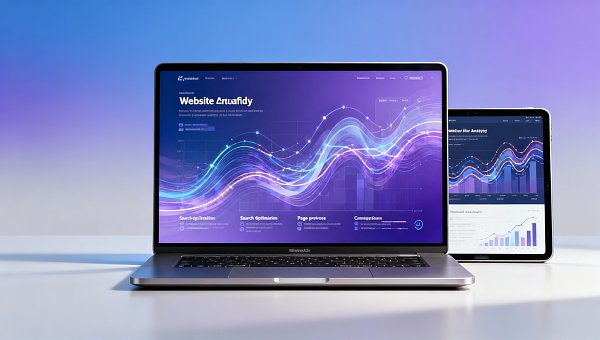
Want to know what data a website traffic monitoring tool can show? The answer is not simply "how much traffic there is." For businesses, a truly valuable website traffic analytics tool can help you clearly see where visitors come from, what they viewed, how long they stayed, at which step they left, which pages generated inquiries or transactions, and whether the current website traffic growth plan and search engine optimization services are actually effective. Whether you are an information researcher, a technical evaluator, or a business decision-maker, the key to judging whether a tool is worth using is not how long its feature list is, but whether it can turn "data" into "actionable optimization direction."
What core data can a website traffic monitoring tool actually show?

From an actual operations perspective, website traffic monitoring tools usually cover the following categories of core data:
- Traffic data: including PV, UV, number of visits, proportion of new and returning visitors, etc., used to assess the website’s overall exposure and user scale.
- Traffic source channel data: you can see whether visitors come from search engines, direct visits, social media, advertising campaigns, backlink referrals, or email marketing. This is the basis for evaluating the effectiveness of promotional channels.
- User behavior data: such as page browsing paths, average time on page, bounce rate, exit rate, scroll depth, click heatmaps, etc., helping analyze whether users truly understand the content and are willing to continue browsing.
- Page performance data: including entry pages, landing pages, popular pages, conversion pages, exit pages, loading speed, etc., which can quickly identify high-value pages and problem pages.
- Conversion data: such as form submissions, phone clicks, online inquiries, downloads, registrations, orders, etc., used to measure whether the website is truly generating business results.
- Visitor attribute data: including region, device, browser, operating system, language, network environment, etc., which helps optimize device compatibility and regional marketing strategies.
For website analysis scenarios on webmaster tools websites, these data points do not exist independently, but need to be evaluated together. For example, if "organic search traffic rises but conversions decline," it may indicate that SEO has brought more visits but failed to attract truly matched customers; if "ad traffic has short dwell time and a high bounce rate," it may mean that the landing page content is inconsistent with the ad promise.
What businesses should focus on most is not having more data, but which data can guide decisions
When many companies are selecting tools in the early stage, they are easily attracted by "dozens of monitoring metrics," but what truly affects business judgment is usually the following groups of data:
- Whether traffic quality is high
It is not that the more traffic, the better, but whether the proportion of high-intent visitors is increasing. For example, whether visits brought by industry keywords are more likely to convert than broad traffic. - Whether customer acquisition channels are worth continued investment
If visitors brought by search engine optimization services have a higher inquiry rate, while certain advertising channels bring only pageviews but no deals, then the budget should be reallocated. - Whether the website content truly answers user needs
If certain pages have very short dwell time, insufficient scroll depth, and a relatively high bounce rate, it usually means there are problems with the page content structure, copy expression, or loading experience. - Whether the conversion path is smooth
From entering the homepage to viewing products and then submitting an inquiry, at which step are users dropping off the most? This is directly related to whether the website traffic growth plan is effective. - Whether technical issues are affecting marketing results
For example, poor mobile adaptation, slow page loading, form errors, and incomplete tracking setup can all distort data and even directly cause customer loss.
For business decision-makers, the value of these data lies in helping determine whether to "continue investing," "pause investment," or "fix the website first and then invest in traffic." For technical and maintenance personnel, these data can be used to identify specific issues at the page, code, tracking configuration, and user experience levels.
Different roles look at website traffic analytics tools with different focuses
Even with the same traffic data, the focus seen by different positions is completely different:
- Information researchers: care more about whether the tool can provide complete, easy-to-understand, and comparable data views to facilitate early-stage research and solution screening.
- Technical evaluators: focus on data collection methods, flexibility of tracking setup, API capability, cross-domain tracking, event monitoring, permission management, and system stability.
- Business decision-makers: focus on return on investment, customer acquisition cost, conversion performance, whether management reports are intuitive, and whether the tool can guide annual or quarterly growth strategies.
- After-sales maintenance personnel: care more about operation and maintenance metrics such as abnormal alerts, page fault troubleshooting, traffic fluctuations, form failures, and 404 pages.
- Distributors/agents: care more about regional traffic sources, differences in interest across different product pages, and whether channel investments bring real business opportunities.
- End consumers: although they do not directly use backend tools, their browsing experience, page response speed, and consultation convenience will all be reflected through data.
Therefore, a truly valuable article on website traffic analysis should not only explain "what the tool can see," but also clarify "how to use it after seeing it." For example, when some companies are doing content operations, they also pay attention to whether content pages have ongoing reading value, which is similar to the data judgment for professional resource pages. For example, in knowledge-based page operations, if a piece of content is professional but still has a high bounce rate and low interaction, it indicates that the information structure needs adjustment. Similar to Problems and Countermeasures in Consolidated Financial Statements of Enterprise Groups professional topic pages like this, if they are to achieve better search and conversion performance, they also need data to determine whether users actually finished reading and whether they continued browsing related content.
A useful website traffic monitoring tool should at least help you answer these questions
If you are evaluating whether a tool is worth deploying, you can directly use the following questions to judge:
- Through which keywords or channels do users enter the website?
- Which pages truly generate inquiries, registrations, or transactions?
- From entry to conversion, what key steps do users go through in between?
- Where are the performance differences between mobile and PC?
- Which pages have the most serious drop-off, and is the problem content, design, or speed?
- What are the actual returns of different channels such as SEO, advertising, social media, and backlinks?
- Is the data accurate enough to support departmental collaboration and management reporting?
If a tool can only tell you "how many visits there were today," but cannot explain "why the visits came, why they left, and why they did not convert," then its practical significance to a business is very limited.
How to truly turn monitoring data into website optimization and marketing growth actions
Data monitoring is not the endpoint; optimization actions are the result. Usually, progress can be made according to the following approach:
- Look at the source first, then look at quality
Identify which channel brings high-quality users, and avoid pursuing traffic scale alone. - Look at the landing page first, then look at drop-off points
Focus on optimizing high-traffic, low-conversion pages, such as adjusting titles, above-the-fold information, CTA buttons, and trust elements. - Look at device differences first, then optimize the experience
If the mobile bounce rate is significantly higher than the PC rate, prioritize checking loading speed, form length, and layout readability. - Set conversion goals first, then carry out continuous monitoring
Without conversion goals, traffic analysis can hardly form effective conclusions. It is recommended to include inquiries, registrations, dialing, downloads, etc. in tracking. - Review regularly to avoid "looking at data without taking action"
It is recommended to check fluctuations weekly, trends monthly, and make strategic adjustments quarterly.
For companies that provide integrated website + marketing services, this is also where the value of integrated services lies: instead of separating website building, SEO, content, and advertising so that each is done independently, a unified data perspective is used to determine which link drives growth and which link is holding it back.
What common misunderstandings do businesses have when choosing website traffic analytics tools
Finally, here are several common reminders for companies that are selecting tools:
- Misunderstanding 1: Only looking at traffic, not conversions. More traffic does not mean better business.
- Misunderstanding 2: Only looking at beautiful reports, not whether they can be implemented. No matter how rich the reports are, if they cannot guide optimization, they are meaningless.
- Misunderstanding 3: Ignoring data accuracy. Incomplete tracking setup, cross-domain loss, and incorrect goal settings will lead to distorted judgment.
- Misunderstanding 4: Only focusing on a single channel. Real growth often comes from the combined effect of SEO, advertising, content, and onsite experience.
- Misunderstanding 5: Treating the tool as the answer. Tools can only provide facts; what truly determines results is still analytical capability and execution actions.
When some companies build content assets, they also use professional knowledge pages as customer acquisition entry points. Therefore, they should not only look at whether the article has been indexed, but also whether it generates subsequent browsing and conversions. Professional content such as Problems and Countermeasures in Consolidated Financial Statements of Enterprise Groups, if analyzed together with metrics such as traffic sources, page dwell time, and inquiry actions, makes it easier to judge the content’s real contribution to the business.
In summary, the data that a website traffic monitoring tool can show is far more than just "how many people have visited the website," but rather builds a complete analysis chain around "where visitors come from, what they viewed, why they left, whether they converted, and which channels are most effective." For businesses, what is truly worth focusing on is not the number of data items, but whether these data can help you optimize the website, improve conversions, verify the effectiveness of search engine optimization services, and provide a basis for the next website traffic growth plan. Choose the right tool, look at the right metrics, and take the right actions, and only then can traffic data truly become a growth asset.
Related Articles
 What signals are worth paying attention to in a cross-border marketing trend report? B2B companies should look at these 6 signals
 How to Read a Cross-Border Marketing Trends Report? Five Key Dimensions for Evaluating Channel Opportunities
 Which channel has the highest ROI in the global traffic ecosystem? Comparative analysis of search, social media, and advertising



Related Products
 EasyCamp SaaS Smart Website Marketing SystemE-Yingbao SaaS Smart Website Marketing System: AI-powered, zero-code website building. Rapidly launch multilingual independent e-commerce sites in just 10 minutes. Global server acceleration and AI-driven SEO optimization empower businesses to efficiently connect with global markets. The seamless integration of technology and user-friendly operation makes building e-commerce sites incredibly simple.
 AI+SEM Intelligent Advertising Marketing SystemAI+SEM drives intelligent ad creation, empowering full-funnel precision advertising marketing. The system automatically generates weekly/monthly reports, AI recommends keywords and target countries, monitors core metrics in real-time with intelligent alerts, and enables one-click high-conversion ad solutions to help quickly acquire customers and improve ROI.
 AI+SEO Dual Engine Optimization ServiceEasyWin AI+SEO Dual Engine Optimization System leverages AI-powered keyword mining, content generation, and comprehensive technical optimization to help foreign trade enterprises acquire high-quality organic traffic, significantly improving search rankings and conversion rates.
 AI+SNS Social Media Marketing SystemYingbao AI+SNS Social Media Marketing System - Precision social capture for the social media era. Supports one-click content synchronization across major platforms like Facebook and LinkedIn. AI intelligently rewrites posts for enhanced relevance. 24/7 AI customer service and user profiling analysis empower businesses to efficiently expand into global markets.
 AI+SEO营销解决方案易营宝AI+SEO营销解决方案,通过AI批量写作、智能生成TDK、精准关键词扩词等功能,全面优化网站SEO效果,提升流量与转化率。助力企业构建高效智能网站新生态。
 AI+SEM Advertising Marketing SolutionsAI+SEM Advertising Marketing Solution leverages AI technology to deeply empower SEM ad campaigns. It automatically generates weekly/monthly reports using AI, presenting account data across multiple dimensions for comprehensive insights into campaign performance and trends. The system precisely recommends keywords and target countries, intelligently generates high-conversion ad copy, and enables one-click activation of efficient campaign plans to help businesses rapidly acquire customers. Simultaneously, it monitors core metrics in real time, intelligently identifies abnormal fluctuations, and issues timely alerts to ensure stable, high-return advertising results.
 Domain Name ServicesEasyWin provides professional domain name services, including intelligent queries, one-stop registration, brand protection, and full lifecycle management, helping businesses build a digital brand image.
 EasyOperate B2C Cross-Border E-Commerce Platform & Independent WebsiteEasyStore B2C Cross-border E-commerce Independent Store is an intelligent website building and cross-border e-commerce integrated solution independently developed by EasyStore Information Technology (Beijing) Co., Ltd. The system is specially designed for small and medium-sized as well as large export enterprises, integrating 'website building, operation, marketing, advertising, and conversion' into one, helping enterprises quickly establish cross-border e-commerce independent stores to achieve brand globalization and global sales growth.
The platform supports multiple languages, multiple currencies, and multi-channel marketing, with built-in AI intelligent translation and SEO optimization systems, suitable for mainstream markets such as Southeast Asia, Europe and America, Latin America, and the Middle East, assisting Chinese manufacturing enterprises in efficiently deploying international e-commerce strategies. SSL证书易营宝提供专业SSL安全证书服务,包括单域名和泛域名证书,确保网站数据传输加密、身份验证和完整性保护,助力企业建立安全可信的在线业务环境。









