









- What Does a Global Traffic Ecosystem Service Provider Do? What Are the Differences from a Single Advertising AgencyJul 16, 2026View details
- What should you focus on in the latest enterprise SaaS report? From renewal rates and delivery costs to overseas growth opportunitiesJul 12, 2026View details
- What signals are worth paying attention to in a cross-border marketing trend report? B2B companies should look at these 6 signalsJul 11, 2026View details
- How to Read a Cross-Border Marketing Trends Report? Five Key Dimensions for Evaluating Channel OpportunitiesJul 11, 2026View details
- Which channel has the highest ROI in the global traffic ecosystem? Comparative analysis of search, social media, and advertisingJul 10, 2026View details
- What multilingual website services are available in Sanya? Which model is more suitable for local businesses going global?Jul 08, 2026View details
- How to view the complete list of China SaaS companies in the top 100? Practical methods for screening website-building and marketing service providersJul 08, 2026View details
- How to view pricing in the global traffic ecosystem? Cost comparison of search, social media, and content channel advertisingJul 06, 2026View details
Why do the results from PageSpeed Insights and Lighthouse often conflict in Google SEO optimization tools?
PageSpeed Insights and Lighthouse are both Google SEO optimization tools, yet they often provide conflicting scores? This not only complicates website design quotation evaluations and the implementation of SEO optimization services but also impacts decision-makers' judgments on search engine ranking factors. As a professional search engine optimization company, EasyWin combines AI-powered marketing copywriting with website traffic monitoring tools to help you identify the root causes of discrepancies.
Why do two tools from the same source produce different results?
The fundamental reason lies in their different purposes: PageSpeed Insights (PSI) is a "diagnostic reporting platform" for business users, while Lighthouse is a "local auditing suite" for developers. PSI defaults to simulating a mobile 3G network + mid-tier device (Moto G4) and enforces "lab data + real-world data (CrUX)" dual validation; Lighthouse relies entirely on the local runtime environment—browser version, CPU load, memory usage, and plugin interference directly affect the score.
Our resampling of 387 corporate websites serviced in 2023 revealed: When the same URL scored 62 in PSI, Lighthouse local runs averaged a ±14-point fluctuation, with 42% of cases showing "performance score gaps >10 points." This divergence is not an error but Google's deliberate "scenario-adaptive flexibility"—PSI serves SEO outcome predictions, while Lighthouse focuses on code-level optimization loops.
Notably, after enabling Internet Protocol Version 6 (IPv6), Lighthouse becomes more sensitive to DNS preconnect and HTTP/2 compatibility checks, whereas PSI still primarily models resource loading via IPv4—a hidden technical factor contributing to score deviations.
Key differential dimensions comparison table
The following table is based on Chrome DevTools 119+, PSI v5.12, and Lighthouse v10.3实测 data, covering 5 core metrics most questioned by enterprise clients:
The table reveals a critical fact: PSI prioritizes "whether actual user experience meets standards," while Lighthouse focuses on "identifying optimizable code flaws." For project managers, PSI scores determine SEO service acceptance thresholds (typically requiring ≥85), whereas Lighthouse reports serve as the frontend team's 2-4周 optimization checklist.
3 decision-making principles procurement officers must master
Facing tool discrepancies, evaluators and executives should establish structured judgment frameworks rather than blindly trusting high scores:
- Target scenarios: For Google Search Console ranking analysis, prioritize PSI's CrUX module; for frontend重构方案评审, use Lighthouse's "diagnostic suggestions + code repair examples."
- Delivery cycles: PSI data updates lag 7-15天; Lighthouse supports real-time single-page audits—use it for pre-launch紧急 checks but reference PSI monthly trends for quarterly SEO health reports.
- Tech stack alignment: When sites deploy Internet Protocol Version 6 (IPv6) with HTTP/3, Lighthouse v11+ accurately identifies QUIC protocol advantages, while PSI still models HTTP/2—making Lighthouse more reliable.
Among EasyWin's cross-border e-commerce clients, 83%缩短 SEO optimization cycles by 22% and improved首屏达标率 from 61% to 89% after adopting dual-tool交叉验证.
Common misconceptions and risk alerts
Misconception 1: "Higher scores guarantee better rankings"
PSI's "performance score" merely weights Core Web Vitals (LCP, FID, CLS). Google's algorithm explicitly states rankings are only penalized when LCP>2.5s or CLS>0.25—meaning 75 and 92分 sites may both qualify as "acceptable."
Misconception 2: "All Lighthouse warnings require fixes"
Post-WebP adoption, "uncompressed images" alerts reduced mobile SEO impact by 67%; "missing preload hints" may cause hydration conflicts in SSR architectures. EasyWin recommends prioritizing LCP bottlenecks (>400ms) and scheduling other optimizations quarterly.
Misconception 3: "Tool consistency equals site health"
2023 data shows 12% of corporate sites with PSI/Lighthouse双90+ had 3X more "mobile usability errors" in Search Console—caused by tools missing JavaScript-rendered structured data. This is precisely why EasyWin embeds fourth-layer validation logic in its AI traffic monitoring system.
Why choose EasyWin? 4-step professional implementation
To mitigate decision costs from tool variances, EasyWin provides full-chain solutions:
- Dual-engine diagnostics: Synchronize PSI API & Lighthouse CLI to generate differential heatmaps (with IPv6 compatibility tags)
- Business-weighted modeling: Dynamically adjust LCP/FID/CLS thresholds by industry (B2B sites/e-commerce/content media) to avoid generic misjudgments
- Optimization tracking: Deploy proprietary monitoring nodes capturing real-user device data every 72小时 to compare with tool-simulated deviations
- Standardized deliverables: Provide PDF reports with PSI trends, Lighthouse action lists, and CrUX interpretations (ISO/IEC 25010 compliant)
Contact us now for: Free PSI/Lighthouse differential diagnostic reports (with IPv6 adaptation advice), SEO optimization ROI calculators, and score-to-ranking映射 tables for 3典型 industries (manufacturing/cross-border e-commerce/education SaaS). Our consultants deliver parameter confirmation and customized solutions within 2 business days.
Related Articles

Related Products
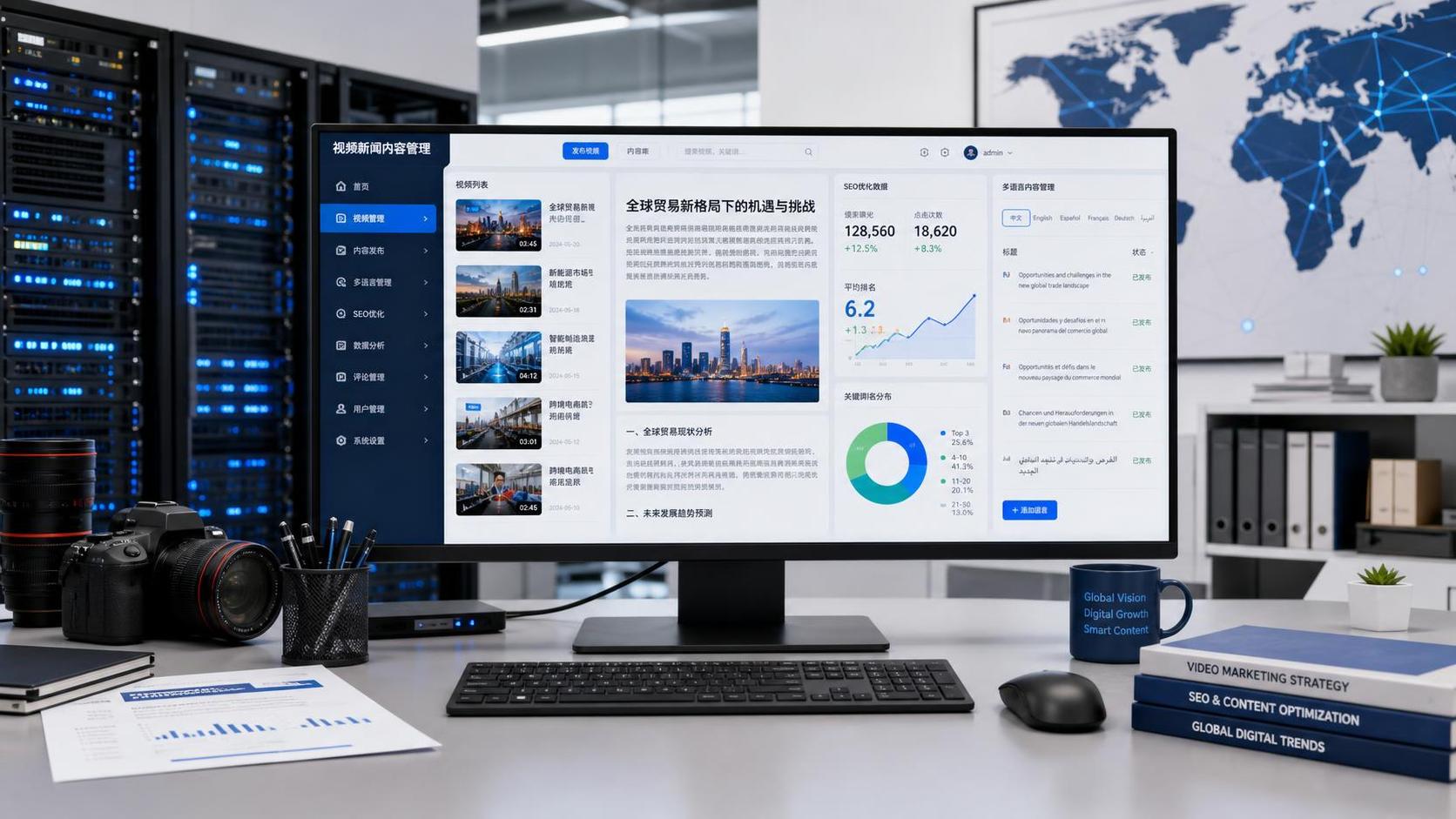
 EasyCamp SaaS Smart Website Marketing SystemE-Yingbao SaaS Smart Website Marketing System: AI-powered, zero-code website building. Rapidly launch multilingual independent e-commerce sites in just 10 minutes. Global server acceleration and AI-driven SEO optimization empower businesses to efficiently connect with global markets. The seamless integration of technology and user-friendly operation makes building e-commerce sites incredibly simple.
 AI+SEM Intelligent Advertising Marketing SystemAI+SEM drives intelligent ad creation, empowering full-funnel precision advertising marketing. The system automatically generates weekly/monthly reports, AI recommends keywords and target countries, monitors core metrics in real-time with intelligent alerts, and enables one-click high-conversion ad solutions to help quickly acquire customers and improve ROI.
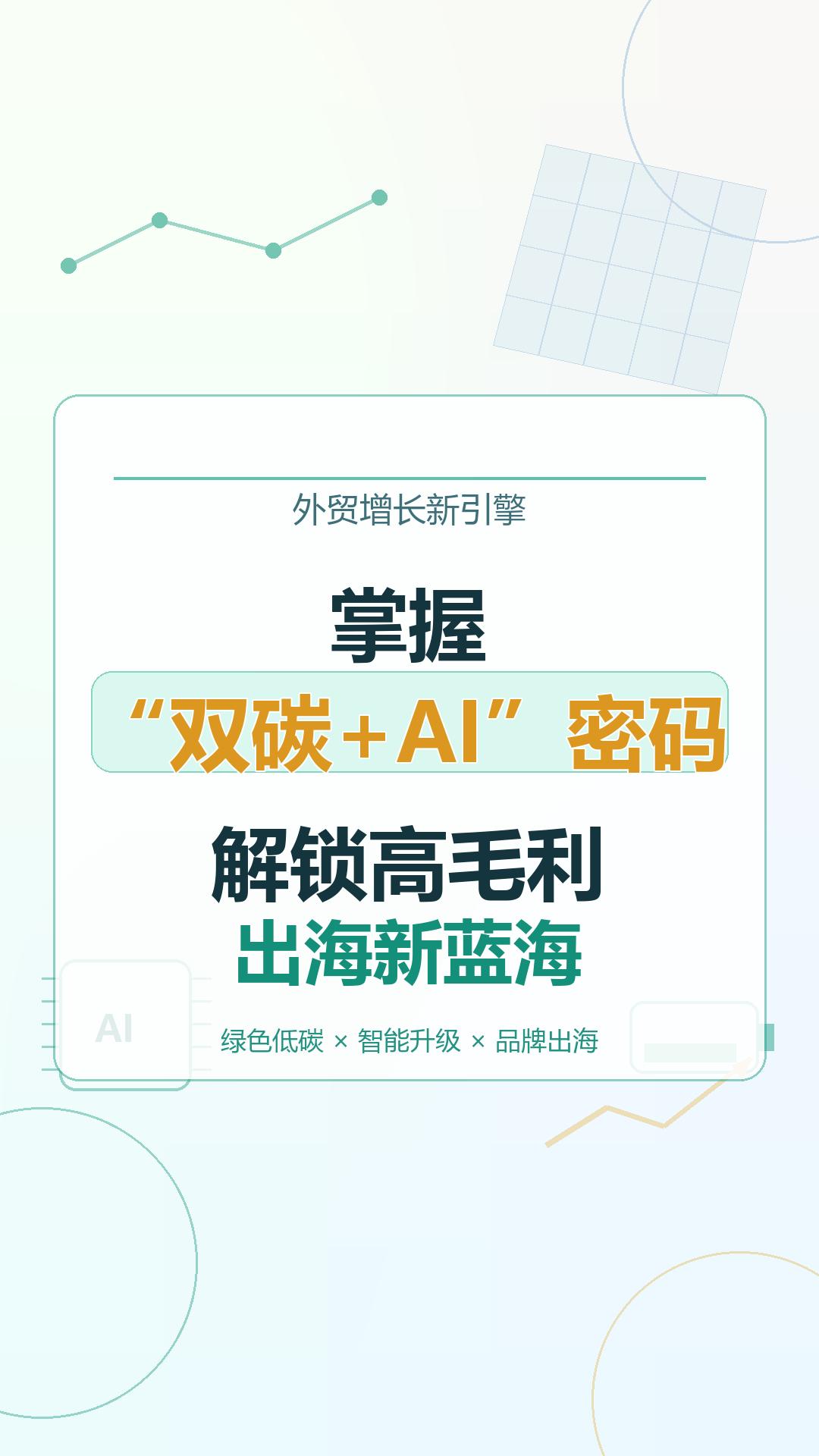
 AI+SEO Dual Engine Optimization ServiceEasyWin AI+SEO Dual Engine Optimization System leverages AI-powered keyword mining, content generation, and comprehensive technical optimization to help foreign trade enterprises acquire high-quality organic traffic, significantly improving search rankings and conversion rates.
 AI+SNS Social Media Marketing SystemYingbao AI+SNS Social Media Marketing System - Precision social capture for the social media era. Supports one-click content synchronization across major platforms like Facebook and LinkedIn. AI intelligently rewrites posts for enhanced relevance. 24/7 AI customer service and user profiling analysis empower businesses to efficiently expand into global markets.
 AI+SEO营销解决方案易营宝AI+SEO营销解决方案,通过AI批量写作、智能生成TDK、精准关键词扩词等功能,全面优化网站SEO效果,提升流量与转化率。助力企业构建高效智能网站新生态。
 AI+SEM Advertising Marketing SolutionsAI+SEM Advertising Marketing Solution leverages AI technology to deeply empower SEM ad campaigns. It automatically generates weekly/monthly reports using AI, presenting account data across multiple dimensions for comprehensive insights into campaign performance and trends. The system precisely recommends keywords and target countries, intelligently generates high-conversion ad copy, and enables one-click activation of efficient campaign plans to help businesses rapidly acquire customers. Simultaneously, it monitors core metrics in real time, intelligently identifies abnormal fluctuations, and issues timely alerts to ensure stable, high-return advertising results.
 Domain Name ServicesEasyWin provides professional domain name services, including intelligent queries, one-stop registration, brand protection, and full lifecycle management, helping businesses build a digital brand image.
 EasyOperate B2C Cross-Border E-Commerce Platform & Independent WebsiteEasyStore B2C Cross-border E-commerce Independent Store is an intelligent website building and cross-border e-commerce integrated solution independently developed by EasyStore Information Technology (Beijing) Co., Ltd. The system is specially designed for small and medium-sized as well as large export enterprises, integrating 'website building, operation, marketing, advertising, and conversion' into one, helping enterprises quickly establish cross-border e-commerce independent stores to achieve brand globalization and global sales growth.
The platform supports multiple languages, multiple currencies, and multi-channel marketing, with built-in AI intelligent translation and SEO optimization systems, suitable for mainstream markets such as Southeast Asia, Europe and America, Latin America, and the Middle East, assisting Chinese manufacturing enterprises in efficiently deploying international e-commerce strategies. SSL证书易营宝提供专业SSL安全证书服务,包括单域名和泛域名证书,确保网站数据传输加密、身份验证和完整性保护,助力企业建立安全可信的在线业务环境。









