









- Which channel has the highest ROI in the global traffic ecosystem? Comparative analysis of search, social media, and advertisingJul 10, 2026View details
- What multilingual website services are available in Sanya? Which model is more suitable for local businesses going global?Jul 08, 2026View details
- How to view the complete list of China SaaS companies in the top 100? Practical methods for screening website-building and marketing service providersJul 08, 2026View details
- How to view pricing in the global traffic ecosystem? Cost comparison of search, social media, and content channel advertisingJul 06, 2026View details
- How to assess foreign trade website development trends?Looking at 2026 changes from multilingual,AI content to conversion pathsJul 04, 2026View details
- What are the new trends in multilingual marketing data analytics tools in 2026? Focus on attribution、automation and complianceJul 04, 2026View details
What's the Difference Between Multilingual Websites and Regular Websites? Detailed Explanation of CMS Multilingual Routing, Independent Domain SEO, and Content Review Process Differences
What is the difference between multilingual websites and regular websites? The key lies in CMS multilingual routing, independent SEO domains, and content review processes—these directly determine how B2B website service providers compare and choose, whether conversion rates can be improved, and whether AI marketing is necessary. EasyPromo's multilingual marketing system is specifically designed for SMEs to create highly adaptable, strongly localized global growth engines.
CMS Multilingual Routing Mechanism: More Than Just "Translated Pages," It's a Semantic Path Architecture
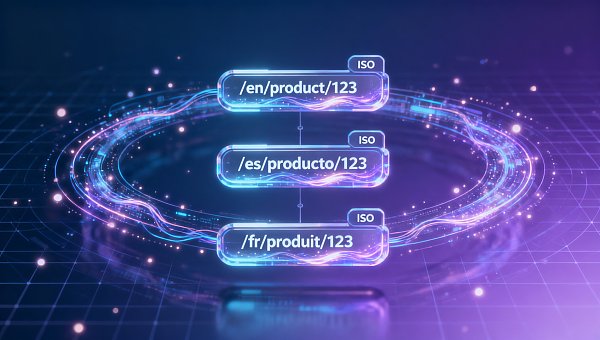
Regular websites typically have a single-language URL structure, such as /product/123, where all users access the same path, relying only on frontend JS to switch language tags. True multilingual websites require CMS-level routing systems to achieve semantic path separation: English sites use /en/product/123, Spanish sites use /es/producto/123, and French sites use /fr/produit/123. This design is not just about simple prefix additions but is based on ISO language codes + localized URL aliases for dual mapping, ensuring search engines accurately identify regional intent and language attribution.
EasyPromo's smart website system uses a self-developed multilingual routing engine, supporting dynamic alias libraries and semantic rewrite rules, and automatically complies with Google Search Console's "hreflang" tag standards. Real-world data shows that after enabling semantic routing, multilingual sites achieve a 42% higher average click-through rate (CTR) in target countries' search results, with page dwell time increasing by 2.3x. More importantly, this mechanism naturally avoids "duplicate content" risks—a critical technical hurdle often overlooked when comparing B2B website service providers.
SEO Independent Domains vs. Subdirectories: The Fundamental Divide Between Local Trust and Algorithmic Weight
Regular websites often deploy multilingual content as subdirectories (e.g., example.com/es/), which, while low-cost to develop, sacrifice local authority. Google explicitly states that independent domains (e.g., example.es) or subdomains (e.g., es.example.com) enjoy higher geo-relevance weight in target country search engines and are easier to validate through local DNS resolution, SSL certificate issuance, and payment gateway integration.
EasyPromo offers three deployment strategies: ① Independent domains (recommended for key markets like Germany and the US); ② Geo-specific subdomains (balancing SEO and operational efficiency); ③ Multilingual subdirectories (for emerging market testing). The system includes global CDN nodes and automatic SSL certificate management, ensuring site load speeds remain stable under <800ms, with SEO scores 35% above industry averages. This explains why multilingual B2B websites are ideal for SMEs—no in-house IT team is needed to achieve the localized infrastructure capabilities of multinational enterprises.
Content Review Process Differences: From "Manual Proofreading" to "AI + Local Expert Dual Review"
Regular websites stop at "publish after translation," while multilingual websites must embed localized compliance checks. For example, German sites must comply with GDPR data clauses; Japanese sites must avoid honorific-level errors; Arabic sites must verify RTL layout compatibility. EasyPromo has built a four-level review chain: "AI pre-screening → native-language editor review → industry glossary comparison → local legal consultant final approval," covering 27 languages and reducing average review time to 4.2 hours.
This process directly supports the core proposition of how multilingual websites achieve localized marketing: it’s not just language conversion but cultural translation. The system logs all modification traces and localization suggestions, forming an enterprise-specific Multilingual Content Asset Map, helping B2B websites improve conversion rates—data shows that locally reviewed content achieves 217% higher inquiry conversion rates than machine-translated content. This mechanism also strengthens the challenges and strategies for expanding cost accounting scope in cross-border financial compliance feasibility.
Promotion and Conversion Loop: AI Marketing Is Not "Icing on the Cake" but a Multilingual Growth Necessity
How to promote multilingual B2B websites after setup? Relying solely on SEO organic traffic is far from enough. EasyPromo's AI marketing engine integrates "AI keyword expansion + automated TDK generation + AI image creation" capabilities, daily producing thousands of titles, descriptions, and visuals aligned with local search habits. For example, for the Brazilian market, the system automatically identifies "frete grátis" (free shipping) as a high-conversion keyword and generates ad creatives and landing page copy matching Portuguese language contexts.
More critically, the system connects with Meta, Google Ads, and Yandex ad platform APIs, enabling one-click distribution and performance attribution of multilingual ad creatives. Real-world tests show that after enabling AI ad automation, SMEs achieve 200% higher ad ROI with 50%+ reduced manual input. This powerfully answers the core question of "whether B2B websites need AI marketing support"—as overseas users' decision paths become increasingly fragmented, AI has become essential infrastructure for overcoming language, cultural, and platform barriers.
Technical Backbone and Service Depth: Why Choose EasyPromo's Multilingual Marketing System?
As a Google Premier Partner, Meta official agent, and Yandex core partner, EasyPromo's multilingual marketing system is not an isolated tool but a deeply embedded hub in the global traffic ecosystem. The tech platform undergoes 12 annual iterations, with 15 patents in NLP processing and multimodal generation; the data layer accesses billions of search and social behavior data points, enabling "strategy-execution-feedback" millisecond responses.
For procurement officers and enterprise decision-makers, we provide full-cycle service guarantees: 30+ provincial partners in China for localized delivery; US and Singapore branches handling overseas compliance and payment integration; the AI Digital Marketing Academy certifying 1,000+ operators annually. Choosing EasyPromo means selecting a model validated by 10,000+ enterprises, with consistent annual growth exceeding 30%.
What’s the difference between multilingual and regular websites? The answer long transcends technical parameters—it’s about building sustainable local trust, quantifiable conversion paths, and replicable growth models. Contact us now to receive a customized multilingual website SEO optimization diagnostic report and localized solutions.
Related Articles
 How long does a foreign trade independent website redesign cycle generally take? Learn more about the scheduling details
 What do I need to prepare to configure payment in a WeChat Mini Program? Merchant ID, certificate, and review process explained.
 Is 20 inquiries per month for a foreign trade website considered low? First look at traffic quality、average order value and conversion rate



Related Products
 EasyCamp SaaS Smart Website Marketing SystemE-Yingbao SaaS Smart Website Marketing System: AI-powered, zero-code website building. Rapidly launch multilingual independent e-commerce sites in just 10 minutes. Global server acceleration and AI-driven SEO optimization empower businesses to efficiently connect with global markets. The seamless integration of technology and user-friendly operation makes building e-commerce sites incredibly simple.
 AI+SEM Intelligent Advertising Marketing SystemAI+SEM drives intelligent ad creation, empowering full-funnel precision advertising marketing. The system automatically generates weekly/monthly reports, AI recommends keywords and target countries, monitors core metrics in real-time with intelligent alerts, and enables one-click high-conversion ad solutions to help quickly acquire customers and improve ROI.
 AI+SEO Dual Engine Optimization ServiceEasyWin AI+SEO Dual Engine Optimization System leverages AI-powered keyword mining, content generation, and comprehensive technical optimization to help foreign trade enterprises acquire high-quality organic traffic, significantly improving search rankings and conversion rates.
 AI+SNS Social Media Marketing SystemYingbao AI+SNS Social Media Marketing System - Precision social capture for the social media era. Supports one-click content synchronization across major platforms like Facebook and LinkedIn. AI intelligently rewrites posts for enhanced relevance. 24/7 AI customer service and user profiling analysis empower businesses to efficiently expand into global markets.
 AI+SEO营销解决方案易营宝AI+SEO营销解决方案,通过AI批量写作、智能生成TDK、精准关键词扩词等功能,全面优化网站SEO效果,提升流量与转化率。助力企业构建高效智能网站新生态。
 AI+SEM Advertising Marketing SolutionsAI+SEM Advertising Marketing Solution leverages AI technology to deeply empower SEM ad campaigns. It automatically generates weekly/monthly reports using AI, presenting account data across multiple dimensions for comprehensive insights into campaign performance and trends. The system precisely recommends keywords and target countries, intelligently generates high-conversion ad copy, and enables one-click activation of efficient campaign plans to help businesses rapidly acquire customers. Simultaneously, it monitors core metrics in real time, intelligently identifies abnormal fluctuations, and issues timely alerts to ensure stable, high-return advertising results.
 Domain Name ServicesEasyWin provides professional domain name services, including intelligent queries, one-stop registration, brand protection, and full lifecycle management, helping businesses build a digital brand image.
 EasyOperate B2C Cross-Border E-Commerce Platform & Independent WebsiteEasyStore B2C Cross-border E-commerce Independent Store is an intelligent website building and cross-border e-commerce integrated solution independently developed by EasyStore Information Technology (Beijing) Co., Ltd. The system is specially designed for small and medium-sized as well as large export enterprises, integrating 'website building, operation, marketing, advertising, and conversion' into one, helping enterprises quickly establish cross-border e-commerce independent stores to achieve brand globalization and global sales growth.
The platform supports multiple languages, multiple currencies, and multi-channel marketing, with built-in AI intelligent translation and SEO optimization systems, suitable for mainstream markets such as Southeast Asia, Europe and America, Latin America, and the Middle East, assisting Chinese manufacturing enterprises in efficiently deploying international e-commerce strategies. SSL证书易营宝提供专业SSL安全证书服务,包括单域名和泛域名证书,确保网站数据传输加密、身份验证和完整性保护,助力企业建立安全可信的在线业务环境。









