









- How Can a Brand Updates Page Be Made More SEO-Friendly? Analysis of Update Frequency, Content Structure, and Internal Linking StrategyJun 28, 2026View details
- What stages does the cross-border services ecosystem include? How do website building, promotion, payment, and compliance work togetherJun 22, 2026View details
- How will email marketing costs change in 2026Jun 22, 2026View details
- The China-US tariff arrangement has reached a preliminary consensus, and the trade association will be establishedJun 15, 2026View details
- Should overseas brand marketing start with ads or contentJun 21, 2026View details
- What determines B2C cross-border e-commerce website development costs? A breakdown of features, interfaces, and deployment methodsJun 17, 2026View details
- China-Morocco zero-tariff access, a breakthrough in the cost of Moroccan goods exports to ChinaJun 11, 2026View details
- What signal should be released for the suspension of exports to JapanJun 10, 2026View details
Will WhatsApp security verification cause customer loss?
Will WhatsApp security verification lead to customer loss? The key is not the verification itself, but whether the process is smooth and whether the messaging is clear. For companies that value overseas customer acquisition, balancing security experience and conversion efficiency is the core of reducing drop-off and increasing inquiries.
Why do many companies worry that WhatsApp security verification may lead to customer loss?
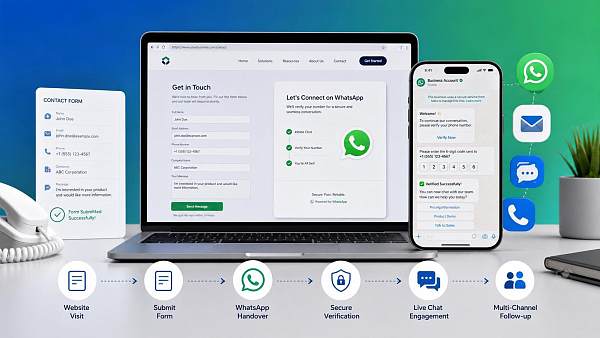
In an integrated website + marketing service scenario, WhatsApp is often used to handle ad clicks, official website inquiries, supplementary communication after form submission, and follow-up engagement. Once customers pause during steps such as adding a contact, receiving a verification code, confirming identity, or verifying a device, the issue companies worry about most is: will WhatsApp security verification lead to customer loss?
The answer cannot simply be summarized as “yes” or “no.” What truly affects conversion is often not the security verification itself, but the timing of the verification, the way prompts are displayed, the network environment, customer expectations, and whether the company has prepared explanations and alternative contact paths in advance.
This is especially true for foreign trade companies, manufacturing factories, cross-border e-commerce sellers, and brands expanding overseas. Overseas customers often have short decision-making journeys and limited communication windows. If the verification process is complicated, page redirects are unclear, and customer service response is slow, customers may easily switch to email, social media direct messages, or even drop off completely.
- When customers first encounter a brand, trust has not yet been established, so they are more sensitive to any additional steps.
- Mobile network fluctuations are common, and delays in verification codes can directly increase the probability of drop-off.
- If the transition between an ad landing page and WhatsApp is not smooth, users may mistakenly believe there is a risk in the process.
- Users in different countries do not have the same level of acceptance toward privacy, number verification, and account security.
In which scenarios is security verification more likely to affect inquiry conversion?
If a company treats WhatsApp only as a contact method, it will be difficult to accurately identify drop-off points. In practice, the impact of verification on conversion is usually most obvious in scenarios where advertising, independent website customer acquisition, and multilingual marketing operate in parallel. The following table can help identify high-risk stages.
As shown in the table above, whether WhatsApp security verification leads to customer loss mainly depends on the customer source and the communication stage. The closer it is to the first conversion entry point, the greater the impact of verification on the drop-off rate; the closer it is to repeat purchases or in-depth negotiation, the more limited the impact becomes.
How can you determine whether drop-off is caused by verification or by problems in the website and marketing funnel itself?
Many companies mistakenly attribute “fewer inquiries” directly to verification. However, in actual operations, page loading speed, landing page content relevance, button placement, country-specific network routes, customer service availability hours, and the quality of automated welcome messages can all affect whether customers continue communicating.
Start with three core indicators
- Whether the number of people clicking the WhatsApp button remains stable. If clicks remain unchanged but conversations decrease, it is more likely related to verification or redirects.
- Whether drop-off rates differ significantly across countries and regions. If certain markets have higher loss rates, it is often related to network conditions and local usage habits.
- Whether alternative channels such as forms, email, and Messenger are growing at the same time. If alternative channels increase, it means customers have not completely lost interest.
This is also why website + marketing services cannot focus on a single tool only. A truly effective solution integrates the independent website, advertising, social media traffic, SEO content, and instant messaging handoff into a trackable, analyzable, and replaceable closed loop for customer acquisition.
How should companies optimize the verification process to reduce drop-off caused by WhatsApp security verification?
If a company has confirmed that WhatsApp is a primary conversion entry point, it should not focus only on “whether verification exists.” Instead, it needs to redesign the customer experience before and after entering communication. The following table is suitable as an execution checklist.
This type of optimization is not complicated, but it requires coordinated work across website development, content, advertising, and data analytics. For companies expanding overseas, the earlier verification issues are included in the overall conversion design, the more they can reduce losses such as “ad budget was spent, but leads broke off at the communication entry point.”
Why is integrated website + marketing service more effective than handling WhatsApp alone?
Many companies ask: if the concern is simply whether WhatsApp security verification will lead to customer loss, why is integrated website + marketing service still necessary? The reason is straightforward: customer loss rarely happens at just one point; it occurs across the entire funnel.
The value of an integrated solution is not just “connecting a tool”
- Plan multilingual pages, CTA button placement, and alternative contact methods during the website building stage, rather than making patch-like changes later.
- During the SEO and content stage, create landing pages with higher relevance based on search intent in different markets, reducing invalid clicks into WhatsApp.
- During the advertising stage, distinguish cold traffic from warm traffic, allowing high-intent customers to prioritize instant communication while guiding low-intent customers into form-based nurturing first.
- During the data analytics stage, track button clicks, conversation starts, form submissions, and transaction sources to identify the real drop-off points.
易营宝 has long served foreign trade companies, manufacturing factories, cross-border e-commerce sellers, and brands expanding overseas. Its advantage does not lie in operating a single channel, but in using AI-driven intelligent website building, SEO optimization, advertising systems, and social media operations to connect the customer journey from search, ads, and social media to inquiry conversion.
For companies concerned about whether WhatsApp security verification will lead to customer loss, this capability is especially important. What truly needs to be solved is not a single button, but the stability, substitutability, and sustainable growth capability of the entire overseas customer acquisition system.
What should companies focus on when purchasing or selecting a solution?
If you are choosing a website building service provider or an overseas marketing partner, it is recommended not to ask only “Can WhatsApp be connected?” Instead, evaluate whether the provider has complete conversion design capabilities. The following dimensions are closer to real purchasing decisions.
- Whether multilingual independent websites are supported, with the ability to deploy page and button strategies separately for markets such as North America, Europe, Southeast Asia, and the Middle East.
- Whether SEO, advertising, and social media coordination can be provided, instead of only page construction.
- Whether data tracking and attribution capabilities are available to determine whether drop-off is caused by verification, redirects, or page content.
- Whether consultation paths can be customized based on industry characteristics. For example, the logic of B2B inquiries, B2C stores, and ad landing pages is not the same.
- Whether continuous optimization is supported after launch, rather than lacking iteration support once the project goes live.
For companies with limited budgets, tight delivery requirements, or complex markets, the clearer the selection criteria, the less rework will be needed later. Rather than focusing only on whether one verification step blocks customers, it is more worthwhile to ask: can your entire customer acquisition system steadily handle inquiries across different markets?
Common misconceptions and FAQ: What else should be noted about whether WhatsApp security verification leads to customer loss?
Does customer loss always become serious once verification appears?
Not necessarily. High-intent customers are usually willing to complete reasonable security steps. What is truly serious is the lack of explanation, page lag, absence of backup entry points, and slow customer service response. When these issues overlap, they significantly amplify drop-off.
Which companies should pay more attention to this issue?
Companies that rely on overseas independent websites for customer acquisition, mainly receive mobile traffic, have relatively high advertising budgets, and operate with short sales follow-up cycles should pay more attention. For example, foreign trade factories, cross-border brands, B2B inquiry-based websites, and social-media-driven projects are all more sensitive to this issue.
Is it too risky to have only WhatsApp as the entry point?
Yes. A single entry point magnifies the impact of changes in platforms, networks, and verification mechanisms. A more stable approach is to also keep forms, email, phone, social media direct messages, or online customer service available, allowing customers to contact the company in the way they are most familiar with.
How can an optimization plan be implemented faster?
It is recommended to start with three steps: first review existing traffic sources, then check the breakpoints from WhatsApp clicks to conversation starts, and finally complete backup contact paths and welcome message templates. This can reveal clear room for improvement without significantly increasing costs.
Why choose us
If you are evaluating whether WhatsApp security verification will lead to customer loss, 易营宝 can help you move from “single-point suspicion” to “systematic diagnosis.” What we provide is not only website building or advertising placement, but an integrated solution around the full overseas customer acquisition funnel: from AI-powered intelligent website building, multilingual official websites, and B2B marketing websites to coordinated execution across Google SEO, Google Ads, Facebook Ads, overseas social media operations, and GEO optimization.
You can focus your consultation on the following topics: whether your existing website is suitable for handling WhatsApp inquiries, how multilingual pages should be structured, how buttons and forms should be allocated, how conversion paths should be designed for different country markets, how delivery timelines should be arranged, and whether SEO, advertising, or landing page optimization should be prioritized within your budget.
If you want to reduce potential drop-off caused by verification while improving inquiry quality and overseas conversion efficiency, we can further discuss parameter confirmation, solution selection, implementation pace, and quotation recommendations based on your industry, target markets, promotion channels, and delivery requirements.
Related Articles
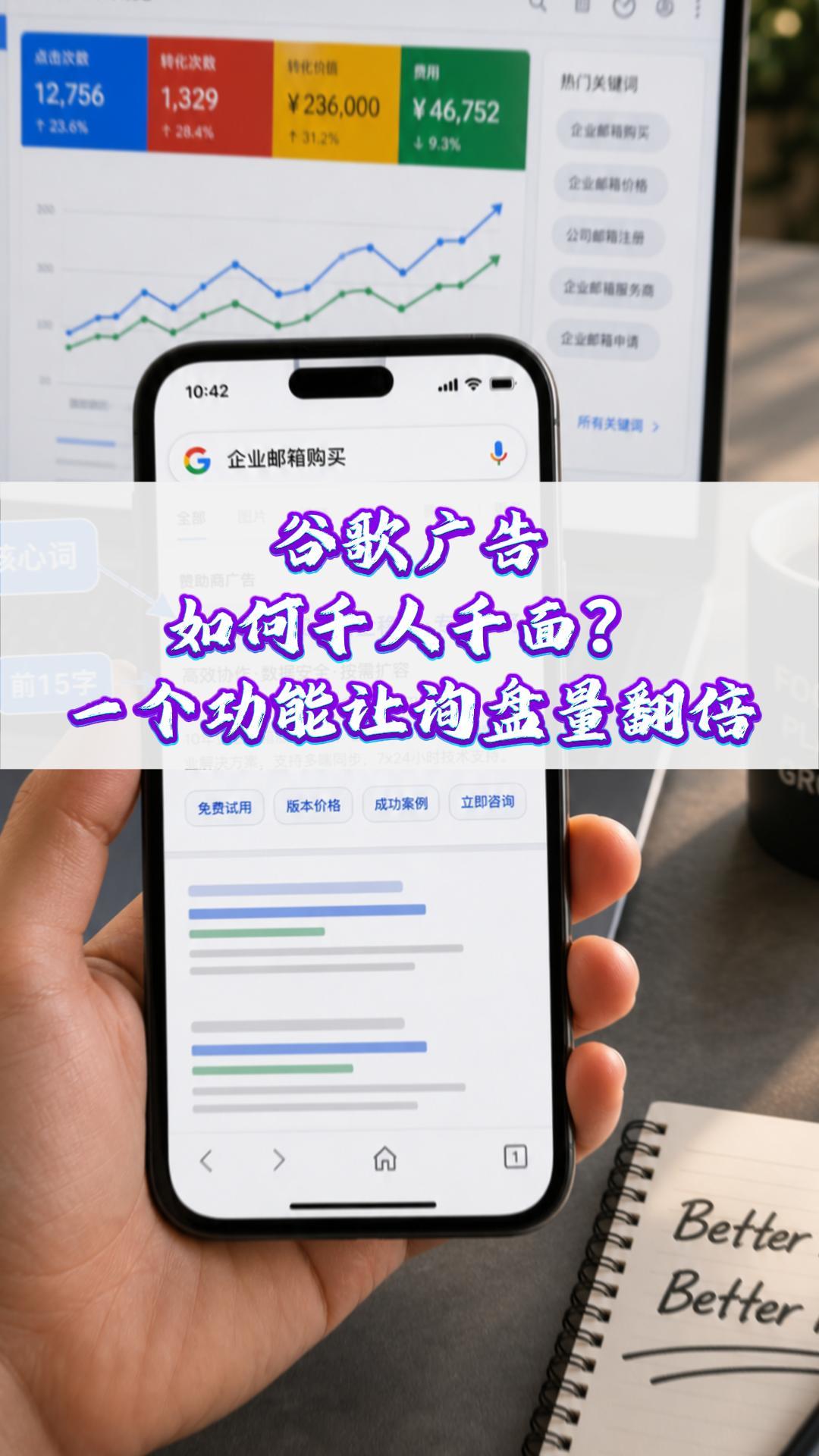
 How Can Google Ads Personalize Content for Every User? One Feature That Doubles Your Inquiry Volume
 Why a Google-optimized independent website is essential for trailer exports
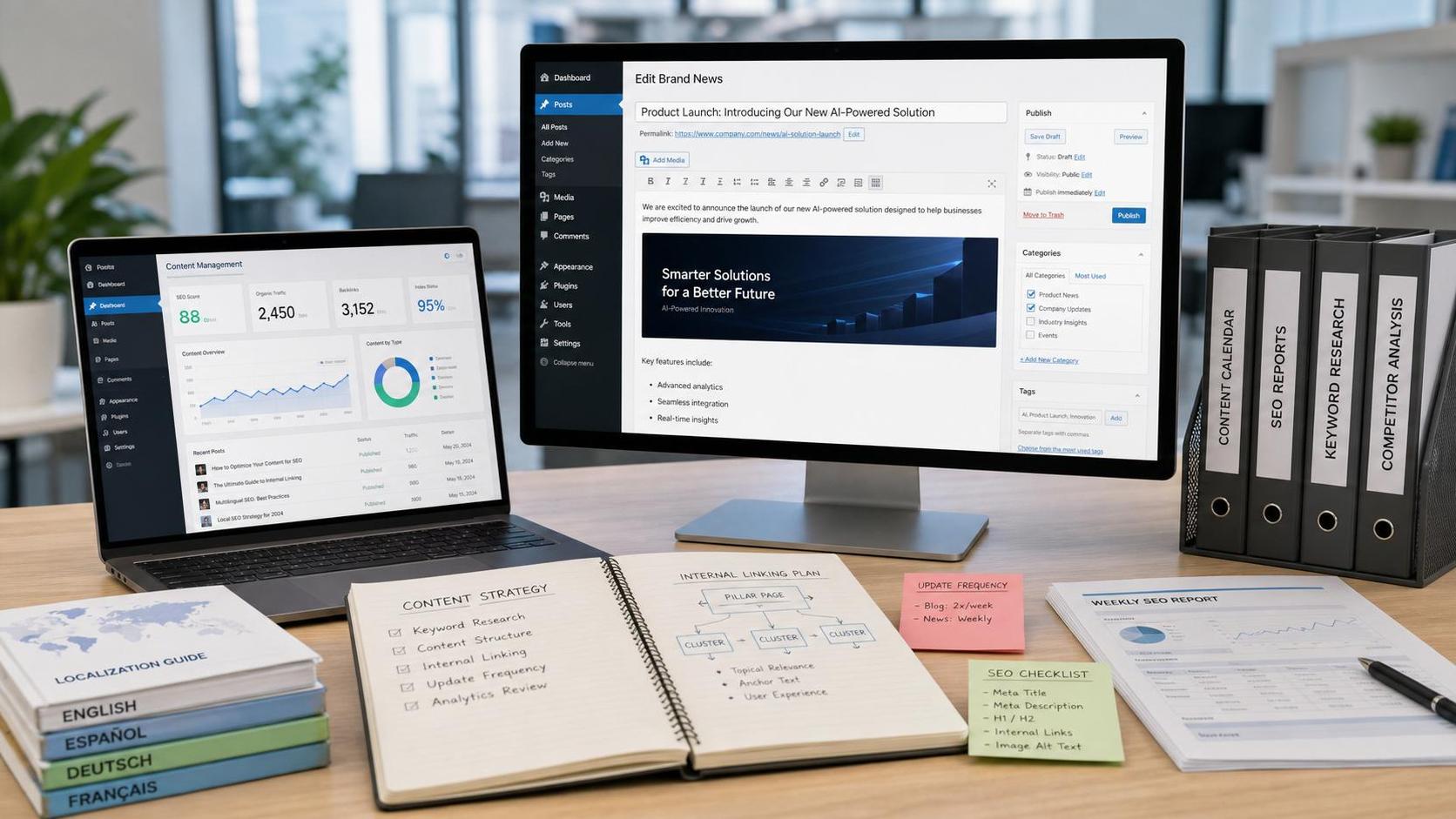
 How Can a Brand Updates Page Be Made More SEO-Friendly? Analysis of Update Frequency, Content Structure, and Internal Linking Strategy

Related Products
 EasyCamp SaaS Smart Website Marketing SystemE-Yingbao SaaS Smart Website Marketing System: AI-powered, zero-code website building. Rapidly launch multilingual independent e-commerce sites in just 10 minutes. Global server acceleration and AI-driven SEO optimization empower businesses to efficiently connect with global markets. The seamless integration of technology and user-friendly operation makes building e-commerce sites incredibly simple.
 AI+SEM Intelligent Advertising Marketing SystemAI+SEM drives intelligent ad creation, empowering full-funnel precision advertising marketing. The system automatically generates weekly/monthly reports, AI recommends keywords and target countries, monitors core metrics in real-time with intelligent alerts, and enables one-click high-conversion ad solutions to help quickly acquire customers and improve ROI.
 AI+SEO Dual Engine Optimization ServiceEasyWin AI+SEO Dual Engine Optimization System leverages AI-powered keyword mining, content generation, and comprehensive technical optimization to help foreign trade enterprises acquire high-quality organic traffic, significantly improving search rankings and conversion rates.
 AI+SNS Social Media Marketing SystemYingbao AI+SNS Social Media Marketing System - Precision social capture for the social media era. Supports one-click content synchronization across major platforms like Facebook and LinkedIn. AI intelligently rewrites posts for enhanced relevance. 24/7 AI customer service and user profiling analysis empower businesses to efficiently expand into global markets.
 AI+SEO营销解决方案易营宝AI+SEO营销解决方案,通过AI批量写作、智能生成TDK、精准关键词扩词等功能,全面优化网站SEO效果,提升流量与转化率。助力企业构建高效智能网站新生态。
 AI+SEM Advertising Marketing SolutionsAI+SEM Advertising Marketing Solution leverages AI technology to deeply empower SEM ad campaigns. It automatically generates weekly/monthly reports using AI, presenting account data across multiple dimensions for comprehensive insights into campaign performance and trends. The system precisely recommends keywords and target countries, intelligently generates high-conversion ad copy, and enables one-click activation of efficient campaign plans to help businesses rapidly acquire customers. Simultaneously, it monitors core metrics in real time, intelligently identifies abnormal fluctuations, and issues timely alerts to ensure stable, high-return advertising results.
 Domain Name ServicesEasyWin provides professional domain name services, including intelligent queries, one-stop registration, brand protection, and full lifecycle management, helping businesses build a digital brand image.
 EasyOperate B2C Cross-Border E-Commerce Platform & Independent WebsiteEasyStore B2C Cross-border E-commerce Independent Store is an intelligent website building and cross-border e-commerce integrated solution independently developed by EasyStore Information Technology (Beijing) Co., Ltd. The system is specially designed for small and medium-sized as well as large export enterprises, integrating 'website building, operation, marketing, advertising, and conversion' into one, helping enterprises quickly establish cross-border e-commerce independent stores to achieve brand globalization and global sales growth.
The platform supports multiple languages, multiple currencies, and multi-channel marketing, with built-in AI intelligent translation and SEO optimization systems, suitable for mainstream markets such as Southeast Asia, Europe and America, Latin America, and the Middle East, assisting Chinese manufacturing enterprises in efficiently deploying international e-commerce strategies. SSL证书易营宝提供专业SSL安全证书服务,包括单域名和泛域名证书,确保网站数据传输加密、身份验证和完整性保护,助力企业建立安全可信的在线业务环境。









