









- How Can a Brand Updates Page Be Made More SEO-Friendly? Analysis of Update Frequency, Content Structure, and Internal Linking StrategyJun 28, 2026View details
- What stages does the cross-border services ecosystem include? How do website building, promotion, payment, and compliance work togetherJun 22, 2026View details
- How will email marketing costs change in 2026Jun 22, 2026View details
- The China-US tariff arrangement has reached a preliminary consensus, and the trade association will be establishedJun 15, 2026View details
- Should overseas brand marketing start with ads or contentJun 21, 2026View details
- What determines B2C cross-border e-commerce website development costs? A breakdown of features, interfaces, and deployment methodsJun 17, 2026View details
What pitfalls should you avoid when choosing a B2B export marketing website?
What pitfalls should you avoid when selecting a B2B foreign trade marketing website? Many companies focus only on price and templates, while overlooking SEO fundamentals, inquiry conversion, multilingual adaptation, and long-term operation capabilities, ultimately making it difficult to grow traffic and accumulate customer assets.
For foreign trade companies, manufacturing factories, and global brand teams, a website is no longer just a simple online business card. It is the core hub for receiving search traffic, ad visits, social media referrals, and customer inquiries. A website that looks “cheap and fast” often starts to expose problems 3 to 6 months after launch if it lacks a marketing structure and underlying technical support.
Therefore, when discussing what pitfalls to avoid when selecting a B2B foreign trade marketing website, companies should not only look at whether the homepage design is attractive. More importantly, they should assess whether the website-building system supports SEO indexing, whether it is suitable for multilingual expansion, whether it can connect with subsequent Google promotion, and whether it has long-term operation capabilities.
1. Why B2B Foreign Trade Website Selection Should Not Focus Only on Price and Templates
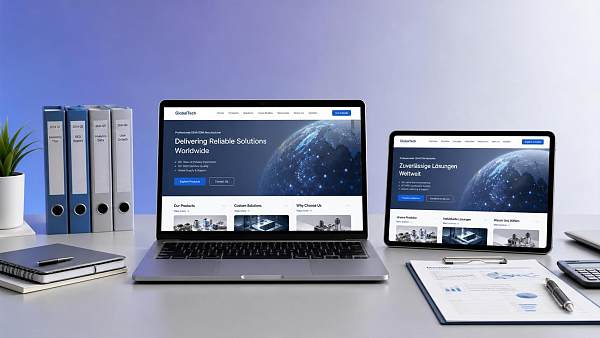
When many companies build an overseas official website for the first time, they usually set the budget between 10,000 yuan and 30,000 yuan, and first compare whether the price is low, whether there are many pages, and whether delivery is fast. This approach may seem practical, but it can easily overlook the underlying factors that affect customer acquisition. As a result, the website may go live, but it may not necessarily generate inquiries.
1. Template Website Building Is Not the Same as Marketing-Oriented Website Building
A standard template website solves the question of “whether you have a website,” while a B2B foreign trade marketing website needs to solve the questions of “whether it can be found through search, whether it can build trust, and whether it can drive conversion.” The difference between the two is reflected not only in page design, but also in URL structure, content modules, conversion entry points, and technical scalability.
If a website has only 5 to 8 basic pages, with no product category logic, industry application scenario pages, case study pages, FAQ pages, or inquiry guidance pages, then no matter how visually polished the pages are, it will be difficult to build stable content coverage on Google and even harder to serve visitors at different purchasing stages.
2. Four Common Hidden Costs in Low-Cost Solutions
Many low-cost websites appear to have an advantage in the initial quotation, but later continue to charge for domain binding, multilingual additions, page modifications, form features, code adjustments, SEO settings, and other items. The 20% to 30% budget saved by the company in the early stage is often paid back repeatedly within the following 6 months.
- Low first-year price but high renewal fees in the second year
- Limited visual editing, with redesigns dependent on the service provider
- No support for independent SEO settings, limiting later optimization
- Weak data accumulation capabilities, with incomplete visitor and inquiry analysis
3. Clarify Delivery Boundaries Before Making a Purchase Decision
The common delivery cycle for foreign trade website projects is 7 days to 30 days, but “going live” is not the same as “being ready for promotion.” Some service providers are only responsible for page construction and do not handle keyword structure, page copywriting, form strategy, speed optimization, or basic indexing settings. If a company does not confirm these boundaries before signing the contract, there will be an obvious gap in subsequent promotion.
The table below can help companies quickly identify common selection misconceptions, especially for procurement teams that are comparing 2 to 4 website-building suppliers.
As the table shows, when companies evaluate what pitfalls to avoid when selecting a B2B foreign trade marketing website, what truly matters is long-term customer acquisition efficiency, not the one-time website-building price. A website that cannot be operated continuously usually has a higher real cost.
2. Six Pitfalls Most Easily Encountered When Selecting a B2B Foreign Trade Marketing Website
If a company plans to run Google SEO, Google Ads, Facebook advertising, or overseas social media traffic acquisition, the website must take on four tasks at the same time: presentation, traffic reception, conversion, and data analysis. The following 6 issues are the most common and most easily overlooked risks in foreign trade website selection.
Pitfall 1: No Underlying SEO Structure, Making Later Content Increasingly Difficult to Index
After many websites go live, users can only modify text and images, but cannot customize titles, descriptions, URLs, image Alt text, sitemaps, or 301 redirects. Even if such a website publishes 4 to 8 pieces of content every month, indexing and ranking accumulation may still be affected because the structure is not standardized.
5 Basic Capabilities Recommended for Review
- Whether page titles and descriptions can be set independently
- Whether URLs support static formatting and customization
- Whether XML sitemaps are generated automatically
- Whether multilingual pages support independent indexing
- Whether it is easy to add industry pages, product pages, and blog pages
Pitfall 2: Only Display Logic, No Inquiry Conversion Logic
The B2B purchasing decision cycle is usually between 2 weeks and 3 months, and buyers will not immediately send an inquiry simply because they see an attractive homepage. A marketing-oriented website must design its content around trust-building and conversion paths, such as product advantages, application industries, delivery capabilities, FAQs, certificate displays, form entry points, and instant communication tools.
If the entire site only has basic pages such as “About Us, Products, Contact,” and lacks information that customers care most about, such as delivery lead time, customization scope, minimum order quantity, quality inspection process, or after-sales instructions, the inquiry conversion rate often remains at a relatively low level.
Pitfall 3: Multilingual Means Only Translated Pages, Not True Localization
Many companies believe that a multilingual website only requires translating the Chinese site into English, Russian, or Spanish. However, customers in different regions do not focus on the same things. North American customers value delivery time and certifications, European customers care about standards and details, while Middle Eastern and Latin American markets rely more on communication efficiency and mobile experience.
A multilingual website truly suitable for going global should support at least three capabilities: independent management of language versions, adjustment of page content by market, and differentiated keyword layout for different regions. Otherwise, even if more languages are added, traffic and conversion may not improve accordingly.
Pitfall 4: The Backend Is Difficult to Use, Preventing the Operations Team from Updating Continuously
A qualified foreign trade marketing website does not end once it is built. It needs to continuously update products, content, and landing pages over 6 months, 12 months, or even longer. If publishing one article in the backend requires 3 to 5 complicated steps, or if every module change requires technical staff, operational efficiency will be seriously slowed down.
Pitfall 5: Inability to Work Together with Advertising, Social Media, and AI Search
Today, foreign trade customer acquisition no longer relies only on Google organic rankings. More companies are combining SEO, Google Ads, Facebook Ads, short-form video content, and AI search entry points in parallel. If the website does not support quick landing page duplication, tracking statistics, form tracking, and content expansion, it will be difficult to support multi-channel promotion.
Pitfall 6: Only Discussing Website Building, Not Follow-Up Services or a Growth Closed Loop
Many service providers only deliver the website and do not provide keyword planning, content optimization, advertising coordination, data review, or iteration suggestions. After launch, companies often find that although the website has been built, no one tells them what to do next, whether to start with SEO or advertising, or which pages should be redesigned first.
For companies that want to continuously generate inquiries, website building, optimization, traffic acquisition, and conversion analysis are essentially a closed loop, not four isolated actions.
3. How to Establish the Right Selection Criteria: Evaluate Website Building and Customer Acquisition Together
If a company wants to truly answer what pitfalls to avoid when selecting a B2B foreign trade marketing website, the most effective method is not to keep reviewing quotations, but to establish an executable evaluation framework. It is recommended to score at least four dimensions: system capability, marketing capability, delivery capability, and service capability, with each item evaluated on a 25-point scale.
1. System Capability: Determines Whether the Website Can Be Used Long Term
System capability mainly depends on whether the backend is easy to use, whether it supports multiple languages, whether it supports page expansion, whether it is conducive to SEO settings, and whether page loading speed is stable. Companies are usually advised to request a backend demonstration and operate it on-site for at least 10 minutes to 15 minutes to observe whether content publishing is smooth.
2. Marketing Capability: Determines Whether the Website Can Generate Inquiries
Marketing capability is not about whether the designer can create visuals, but whether the pages have a clear conversion layout. For example, whether the homepage has more than 3 effective conversion entry points, whether product pages include parameters and application scenarios, whether landing pages are customized for different advertising themes, and whether forms support field management and source tracking.
To compare suppliers more intuitively, companies can refer to the table below to set up selection checklist items and compare different solutions in the same table.
The value of this type of evaluation table is that it turns “it feels good” into “quantifiable judgment.” For procurement departments and business owners, choosing a website system that can be promoted, indexed, and converted is more important than choosing a site that is simply visually attractive.
3. Delivery Capability: Determines Whether the Project Can Be Implemented on Schedule
A standard foreign trade website project can be divided into three stages: requirements clarification, page production, and launch testing. If the project includes multiple languages, content planning, and basic SEO configuration, a reasonable timeline is usually between 2 weeks and 6 weeks. Faster delivery is not necessarily an advantage; the key is whether each step can be accepted and reviewed.
3 Types of Acceptance Milestones Recommended for Confirmation
- Whether the prototype and section structure have been confirmed
- Whether page content and conversion modules are complete
- Whether basic SEO items and form functions pass testing after launch
4. What Capabilities Should an Implementation Solution Suitable for Foreign Trade Companies Have?
For foreign trade companies, the ideal website solution should not be merely “building a site,” but should cover website building, optimization, customer acquisition, and growth. Especially in today’s overseas marketing environment where multiple channels operate in parallel, the earlier the website system forms integrated synergy with SEO, advertising, and social media, the higher the efficiency of later growth.
1. Integrated Services Are More Suitable for Long-Term Growth Than Single-Point Delivery
If a website supplier understands not only website building, but also Google SEO, ad placement, overseas social media, and AI search visibility planning, then the company’s later trial-and-error cost from 0 to 1 will be much lower. This is because the team can start from the same business goal and plan page structure, content strategy, and customer acquisition paths in a unified way.
Taking an integrated website + marketing service platform such as 易营宝 as an example, its value lies not only in providing website-building tools, but also in helping companies complete the continuous process from setup to promotion within one platform through AI-driven intelligent website building, multilingual capabilities, SEO/GEO optimization, and advertising marketing systems.
2. Which Companies Should Prioritize Marketing-Oriented Website Solutions?
- Manufacturing factories that want to obtain long-term organic traffic through Google
- Global brand companies that need to cover more than 3 overseas markets
- Cross-border teams that handle B2B inquiries and also need advertising landing pages
- Companies preparing to operate their official website as a long-term overseas sales asset
3. Execution Recommendations Before and After Launch
Before launch, it is recommended to complete keyword layering, page structure planning, form path design, and multilingual market priority assessment. After launch, the first 90 days should focus on indexing, traffic sources, time on site, and inquiry form data, before deciding whether to continue strengthening SEO content or increase cooperation with advertising and social media placement.
Generally speaking, the first 30 days should focus on basic configuration, 30 days to 60 days on content and landing page supplementation, and 60 days to 90 days on data-based iteration. This approach is more likely to create stable growth than “launching once and then leaving the site unchanged for a long time.”
4. Frequently Asked Questions
Should the Website Start with an English Site or a Multilingual Site?
If the company is currently mainly targeting 1 to 2 core markets, it can start with an English main site. If it has already clearly planned to cover Europe, Latin America, or Russian-speaking regions, it is recommended to plan 2 to 4 languages in the first phase to avoid restructuring directories and page architecture later.
How Long After Launch Can Results Be Seen?
If you do SEO, it usually takes 3 months to 6 months to gradually accumulate content rankings. If Google Ads or social media ads are used at the same time, visits and inquiry feedback will come faster, provided that the website itself has clear traffic reception and conversion capabilities.
When foreign trade companies judge what pitfalls to avoid when selecting a B2B foreign trade marketing website, the core is not to choose a “website that can go live,” but to choose a “website system and service team that can continuously bring overseas customer opportunities.” From SEO fundamentals, inquiry conversion, and multilingual adaptation to advertising coordination, content operations, and follow-up growth support, every item determines whether the website can ultimately become a true overseas customer acquisition asset.
If you are evaluating a foreign trade official website rebuild, upgrading a multilingual independent website, or hoping to connect website building with Google SEO, ad placement, and overseas social media operations, it is recommended to prioritize a platform solution with integrated capabilities. To learn more about the website structure and promotion path suitable for your industry, feel free to contact us now for a customized solution and product details.
Related Articles
 What is the difference between global CDN acceleration services and website acceleration providers? Understand this before purchasing
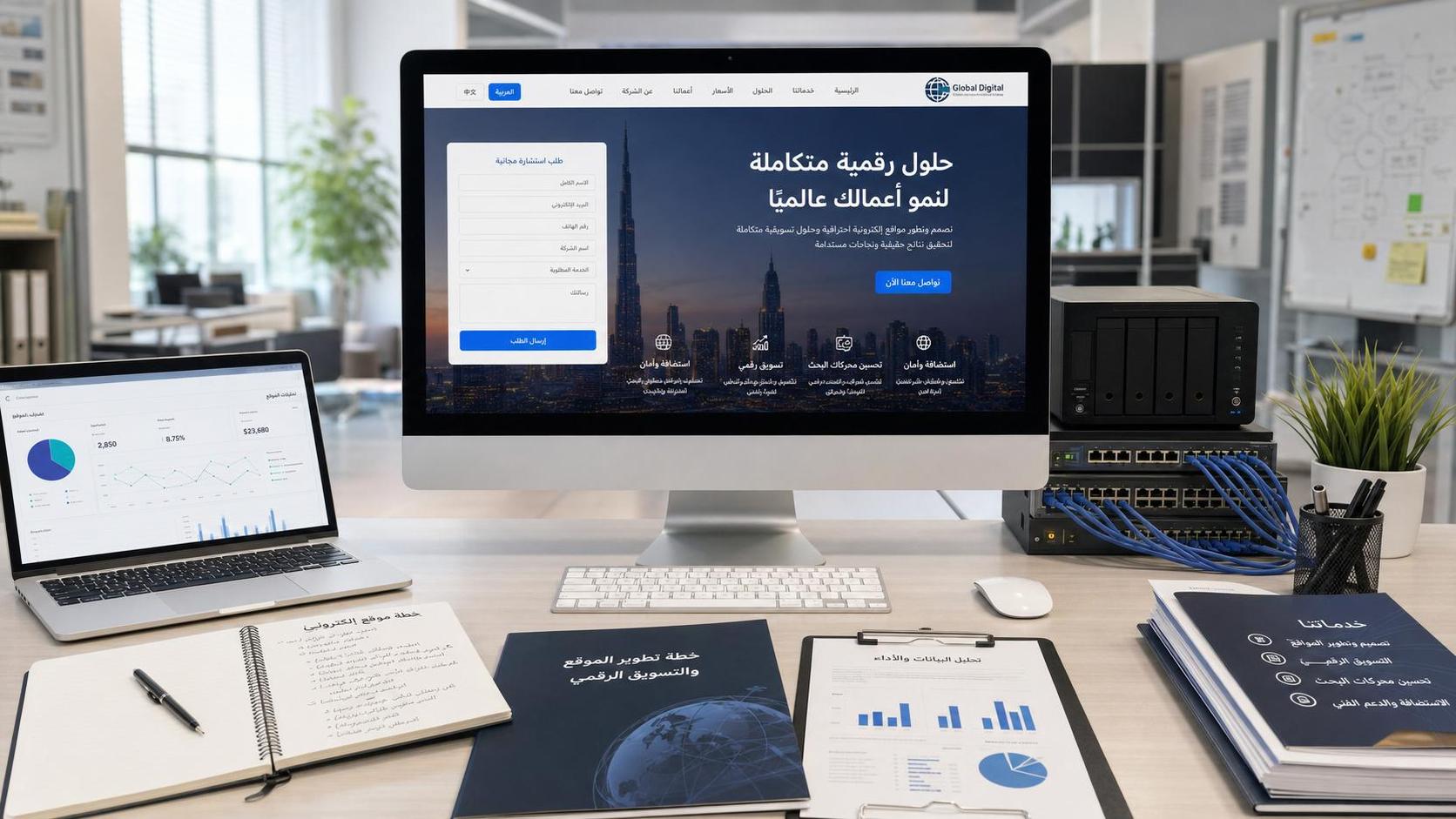
 What Drives the Price Differences Among Arabic Website Development Companies? A Breakdown of Features, Languages, and After-Sales Costs
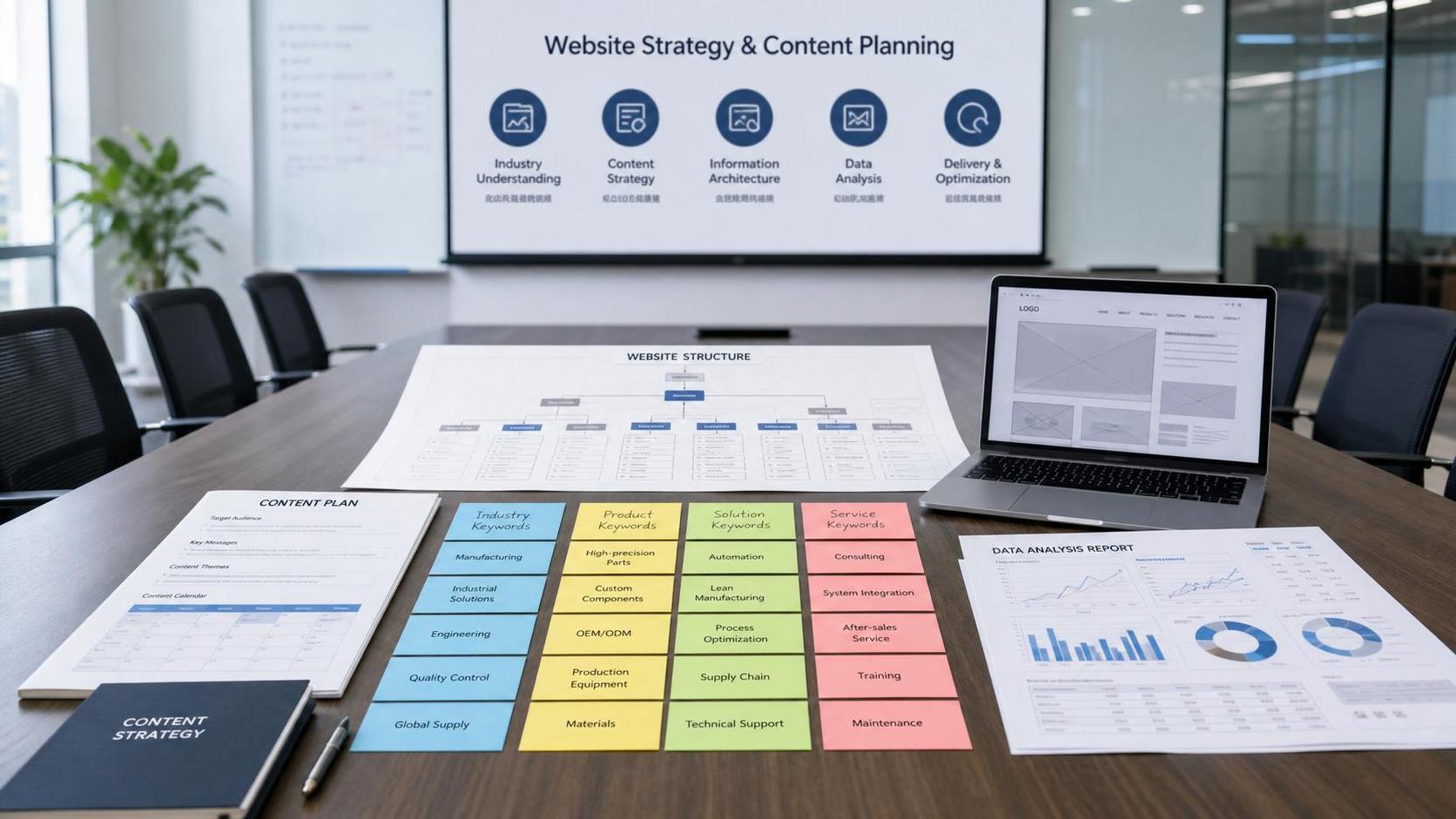
 How should you choose a content company for product selection guides? Industry understanding and delivery depth are key

Related Products
 EasyCamp SaaS Smart Website Marketing SystemE-Yingbao SaaS Smart Website Marketing System: AI-powered, zero-code website building. Rapidly launch multilingual independent e-commerce sites in just 10 minutes. Global server acceleration and AI-driven SEO optimization empower businesses to efficiently connect with global markets. The seamless integration of technology and user-friendly operation makes building e-commerce sites incredibly simple.
 AI+SEM Intelligent Advertising Marketing SystemAI+SEM drives intelligent ad creation, empowering full-funnel precision advertising marketing. The system automatically generates weekly/monthly reports, AI recommends keywords and target countries, monitors core metrics in real-time with intelligent alerts, and enables one-click high-conversion ad solutions to help quickly acquire customers and improve ROI.
 AI+SEO Dual Engine Optimization ServiceEasyWin AI+SEO Dual Engine Optimization System leverages AI-powered keyword mining, content generation, and comprehensive technical optimization to help foreign trade enterprises acquire high-quality organic traffic, significantly improving search rankings and conversion rates.
 AI+SNS Social Media Marketing SystemYingbao AI+SNS Social Media Marketing System - Precision social capture for the social media era. Supports one-click content synchronization across major platforms like Facebook and LinkedIn. AI intelligently rewrites posts for enhanced relevance. 24/7 AI customer service and user profiling analysis empower businesses to efficiently expand into global markets.
 AI+SEO营销解决方案易营宝AI+SEO营销解决方案,通过AI批量写作、智能生成TDK、精准关键词扩词等功能,全面优化网站SEO效果,提升流量与转化率。助力企业构建高效智能网站新生态。
 AI+SEM Advertising Marketing SolutionsAI+SEM Advertising Marketing Solution leverages AI technology to deeply empower SEM ad campaigns. It automatically generates weekly/monthly reports using AI, presenting account data across multiple dimensions for comprehensive insights into campaign performance and trends. The system precisely recommends keywords and target countries, intelligently generates high-conversion ad copy, and enables one-click activation of efficient campaign plans to help businesses rapidly acquire customers. Simultaneously, it monitors core metrics in real time, intelligently identifies abnormal fluctuations, and issues timely alerts to ensure stable, high-return advertising results.
 Domain Name ServicesEasyWin provides professional domain name services, including intelligent queries, one-stop registration, brand protection, and full lifecycle management, helping businesses build a digital brand image.
 EasyOperate B2C Cross-Border E-Commerce Platform & Independent WebsiteEasyStore B2C Cross-border E-commerce Independent Store is an intelligent website building and cross-border e-commerce integrated solution independently developed by EasyStore Information Technology (Beijing) Co., Ltd. The system is specially designed for small and medium-sized as well as large export enterprises, integrating 'website building, operation, marketing, advertising, and conversion' into one, helping enterprises quickly establish cross-border e-commerce independent stores to achieve brand globalization and global sales growth.
The platform supports multiple languages, multiple currencies, and multi-channel marketing, with built-in AI intelligent translation and SEO optimization systems, suitable for mainstream markets such as Southeast Asia, Europe and America, Latin America, and the Middle East, assisting Chinese manufacturing enterprises in efficiently deploying international e-commerce strategies. SSL证书易营宝提供专业SSL安全证书服务,包括单域名和泛域名证书,确保网站数据传输加密、身份验证和完整性保护,助力企业建立安全可信的在线业务环境。









