









- Cross-Border Marketing Trend Research: Why More and More Companies Are Starting to Deploy AI Search and GEO OptimizationJun 30, 2026View details
- Cross-Border Marketing Trend Research: How Independent Sites, AI Content, and Short-Video Customer Acquisition Are ChangingJun 30, 2026View details
- How Can a Brand Updates Page Be Made More SEO-Friendly? Analysis of Update Frequency, Content Structure, and Internal Linking StrategyJun 28, 2026View details
- What stages does the cross-border services ecosystem include? How do website building, promotion, payment, and compliance work togetherJun 22, 2026View details
- How will email marketing costs change in 2026Jun 22, 2026View details
- The China-US tariff arrangement has reached a preliminary consensus, and the trade association will be establishedJun 15, 2026View details
- Should overseas brand marketing start with ads or contentJun 21, 2026View details
- What determines B2C cross-border e-commerce website development costs? A breakdown of features, interfaces, and deployment methodsJun 17, 2026View details
Is multilingual support for SaaS website building platforms troublesome to maintain later on
Will maintenance necessarily become more complicated after a multilingual website goes live?

Many after-sales maintenance personnel are concerned that after multilingual support is launched for SaaS platform website building, version updates, content synchronization, and daily troubleshooting will become more troublesome. In fact, if you choose the right platform and service solution, not only can maintenance pressure remain controllable, but the operational efficiency of global websites can also be improved.
In the integrated website + marketing service scenario, enterprises are not just creating an official website that can be accessed, but also need to take into account search engine indexing, ad landing pages, localized content management, and form lead tracking. At this point, whether multilingual support for SaaS platform website building is easy to maintain depends on the underlying architecture, permission design, translation workflow, and the service provider's responsiveness.
If the platform supports modular updates, unified template calling, and language pack management, the maintenance workload of multilingual websites will not increase linearly. On the contrary, it can also reduce resource waste caused by repeatedly building websites, allowing pages in different regions to remain consistent in terms of brand, speed, and conversion paths.
Assess maintenance difficulty more accurately by first identifying the business scenario
When discussing whether multilingual support for SaaS platform website building is troublesome, it cannot be separated from actual application. Under different business scenarios, the focus of maintenance is completely different. Some websites update content frequently, some place more emphasis on technical stability, and some focus more on overseas marketing collaboration.
For showcase corporate websites, the core lies in page consistency, news publishing, and proper form functionality. For marketing-oriented corporate websites, the focus shifts to landing page duplication, keyword placement, tracking code deployment, and data attribution. For websites operating in multiple countries, language-switching logic, regional version differences, and server access speed must also be considered.
Yiyingbao Information Technology (Beijing) Co., Ltd. has long been deeply engaged in full-chain services such as intelligent website building, SEO optimization, social media marketing, and advertising placement. Relying on artificial intelligence and big data capabilities, it helps enterprises maintain efficient operations and continuous growth even after multilingual website construction is completed.
These three typical scenarios best reveal the differences in multilingual maintenance
Scenario 1: Brand showcase corporate websites, where maintenance focuses on consistency and stability
These types of websites usually do not have a large number of pages, but they have high requirements for brand presentation. If multilingual support for SaaS platform website building includes unified templates, a centralized asset library, and a language-based publishing mechanism, maintenance will be relatively worry-free. With one modification to the header, footer, or key brand visual, multiple language versions can be updated simultaneously.
The place where problems are truly likely to occur is not the number of languages, but scattered content. If each language is built as an independent website, later redesigns, certificate renewals, and link fixes will be extremely time-consuming. Therefore, the key to maintenance difficulty is not “multilingual,” but “whether it is managed in a unified way.”
Scenario 2: Marketing and lead-generation corporate websites, where maintenance focuses on content synchronization and data tracking
Marketing websites rely more on frequent updates. Event pages, product pages, and case study pages often need to be quickly duplicated into different language versions. At this point, if multilingual support for SaaS platform website building comes with page cloning, field mapping, and translation to-do prompts, maintenance efficiency will improve significantly.
In addition, both advertising placement and SEO operations are inseparable from analytics code. If every newly added language page requires manual tagging, the error rate will be very high. A more ideal approach is for the platform to support site-wide code injection and page-level differentiated configuration, so that consistency and flexibility can both be achieved.
Scenario 3: Multi-country business websites, where maintenance focuses on localized collaboration
When enterprises promote their business in multiple countries, language is only the first layer, while localization is the deeper issue. Expression habits, form fields, policy descriptions, and contact methods may all differ across regions. If multilingual support for SaaS platform website building can copy pages by region and allow partial modifications, maintenance becomes more flexible.
This type of scenario also requires permission collaboration. Headquarters is responsible for templates and standards, while regional teams are responsible for fine-tuning content. Only with clear permission hierarchies can accidental deletion, incorrect changes, and version confusion be avoided. Much of the maintenance trouble is actually caused by incomplete process design rather than problems with the platform itself.
Under different scenarios, what are the differences in requirements for multilingual support in SaaS platform website building?
If you want to make later maintenance less troublesome, prioritize these adaptation suggestions
- Give priority to platforms that support unified templates and component calling to reduce repeated modifications.
- Confirm whether language version mapping is available to avoid missing translated pages after content updates.
- Check whether SEO settings can be configured independently by language, such as titles, descriptions, and indexing rules.
- Confirm whether analytics code, forms, and conversion tracking can be deployed in batches.
- Choose a system with permission hierarchies and log records to facilitate collaborative maintenance by multiple people.
- Evaluate the service provider's after-sales response speed, especially its troubleshooting capabilities after launch.
If the enterprise is also involved in the digital construction of internal processes, it can also pay attention to an exploration of enterprise financial digital transformation under the financial shared services model, so as to understand the importance of unified system management from the perspective of business collaboration. This way of thinking also applies to multilingual website maintenance.
A common misjudgment: it is not that multilingual websites are difficult to maintain, but that these links are overlooked
The first misjudgment is equating translation work with multilingual maintenance. In fact, maintenance is more focused on structural updates, data tracking, permission management, and troubleshooting. Translation is only one part of it. If the platform workflow is clear, multilingual support will not greatly increase the technical burden.
The second misjudgment is ignoring differences in search rules. If multilingual support for SaaS platform website building only enables page switching, but lacks standardized language paths, tag logic, and independent metadata, it will affect indexing and rankings, making later rectification even more troublesome.
The third misjudgment is failing to plan content priorities before launch. Not all pages need to be synchronized in all languages. By making core pages multilingual first and launching secondary pages in phases, enterprises can not only reduce maintenance workload, but also better align with the input-output logic of marketing investment.
From website building to integrated marketing management, this is the key action for reducing maintenance costs
For enterprises focused on long-term operations, multilingual support for SaaS platform website building should not only be judged by “whether it can be done,” but more importantly by “whether it can be managed well afterward.” A truly efficient solution should coordinate website building, SEO, content updates, data tracking, and after-sales service within the same system.
With more than ten years of industry experience, Yiyingbao Information Technology (Beijing) Co., Ltd. has developed a solution that gives equal importance to technological innovation and localized services. For multilingual website projects, it not only values launch speed, but also places greater emphasis on later operation and maintenance efficiency, integration with overseas marketing, and global growth conversion.
If you are evaluating whether multilingual support for SaaS platform website building is suitable for your business, it is recommended to first sort out your target markets, page update frequency, marketing channels, and team collaboration methods, and then choose a cooperation solution with a unified backend and continuous service capabilities. In this way, after launch, it will not become more troublesome, but instead more time-saving, more stable, and more conducive to growth.
Related Articles
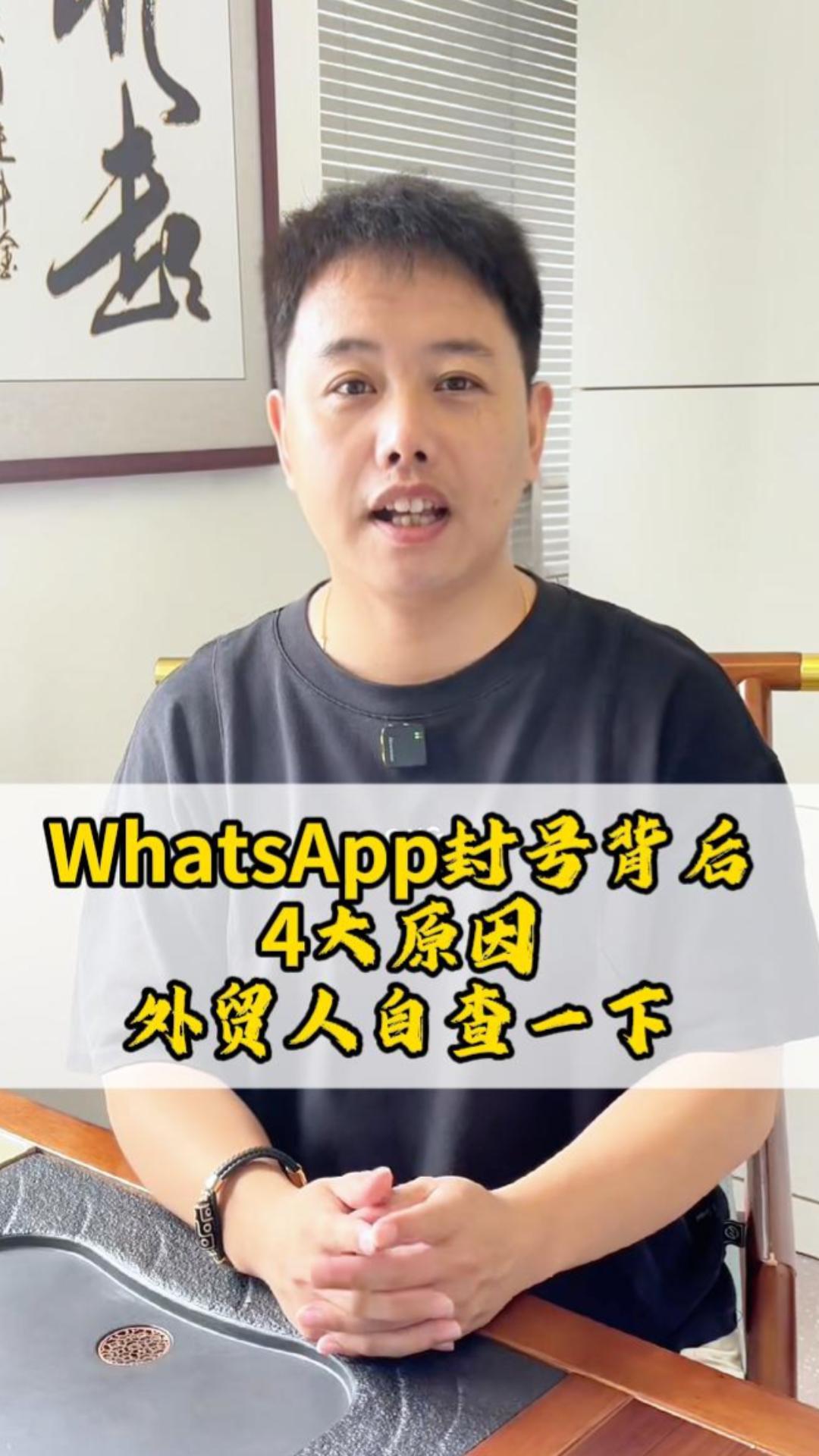
 4 Major Reasons Behind WhatsApp Account Bans, A Quick Self-Check for Foreign Trade Professionals
 Cross-Border Marketing Trend Research: Why More and More Companies Are Starting to Deploy AI Search and GEO Optimization
 Cross-Border Marketing Trend Research: How Independent Sites, AI Content, and Short-Video Customer Acquisition Are Changing


Related Products
 EasyCamp SaaS Smart Website Marketing SystemE-Yingbao SaaS Smart Website Marketing System: AI-powered, zero-code website building. Rapidly launch multilingual independent e-commerce sites in just 10 minutes. Global server acceleration and AI-driven SEO optimization empower businesses to efficiently connect with global markets. The seamless integration of technology and user-friendly operation makes building e-commerce sites incredibly simple.
 AI+SEM Intelligent Advertising Marketing SystemAI+SEM drives intelligent ad creation, empowering full-funnel precision advertising marketing. The system automatically generates weekly/monthly reports, AI recommends keywords and target countries, monitors core metrics in real-time with intelligent alerts, and enables one-click high-conversion ad solutions to help quickly acquire customers and improve ROI.
 AI+SEO Dual Engine Optimization ServiceEasyWin AI+SEO Dual Engine Optimization System leverages AI-powered keyword mining, content generation, and comprehensive technical optimization to help foreign trade enterprises acquire high-quality organic traffic, significantly improving search rankings and conversion rates.
 AI+SNS Social Media Marketing SystemYingbao AI+SNS Social Media Marketing System - Precision social capture for the social media era. Supports one-click content synchronization across major platforms like Facebook and LinkedIn. AI intelligently rewrites posts for enhanced relevance. 24/7 AI customer service and user profiling analysis empower businesses to efficiently expand into global markets.
 AI+SEO营销解决方案易营宝AI+SEO营销解决方案,通过AI批量写作、智能生成TDK、精准关键词扩词等功能,全面优化网站SEO效果,提升流量与转化率。助力企业构建高效智能网站新生态。
 AI+SEM Advertising Marketing SolutionsAI+SEM Advertising Marketing Solution leverages AI technology to deeply empower SEM ad campaigns. It automatically generates weekly/monthly reports using AI, presenting account data across multiple dimensions for comprehensive insights into campaign performance and trends. The system precisely recommends keywords and target countries, intelligently generates high-conversion ad copy, and enables one-click activation of efficient campaign plans to help businesses rapidly acquire customers. Simultaneously, it monitors core metrics in real time, intelligently identifies abnormal fluctuations, and issues timely alerts to ensure stable, high-return advertising results.
 Domain Name ServicesEasyWin provides professional domain name services, including intelligent queries, one-stop registration, brand protection, and full lifecycle management, helping businesses build a digital brand image.
 EasyOperate B2C Cross-Border E-Commerce Platform & Independent WebsiteEasyStore B2C Cross-border E-commerce Independent Store is an intelligent website building and cross-border e-commerce integrated solution independently developed by EasyStore Information Technology (Beijing) Co., Ltd. The system is specially designed for small and medium-sized as well as large export enterprises, integrating 'website building, operation, marketing, advertising, and conversion' into one, helping enterprises quickly establish cross-border e-commerce independent stores to achieve brand globalization and global sales growth.
The platform supports multiple languages, multiple currencies, and multi-channel marketing, with built-in AI intelligent translation and SEO optimization systems, suitable for mainstream markets such as Southeast Asia, Europe and America, Latin America, and the Middle East, assisting Chinese manufacturing enterprises in efficiently deploying international e-commerce strategies. SSL证书易营宝提供专业SSL安全证书服务,包括单域名和泛域名证书,确保网站数据传输加密、身份验证和完整性保护,助力企业建立安全可信的在线业务环境。









