









- Is Brand Globalization Marketing Consulting Worth Buying? At What Stage Should Companies Bring It InJul 01, 2026View details
- Cross-Border Marketing Trend Research: Why More and More Companies Are Starting to Deploy AI Search and GEO OptimizationJun 30, 2026View details
- Cross-Border Marketing Trend Research: How Independent Sites, AI Content, and Short-Video Customer Acquisition Are ChangingJun 30, 2026View details
- How Can a Brand Updates Page Be Made More SEO-Friendly? Analysis of Update Frequency, Content Structure, and Internal Linking StrategyJun 28, 2026View details
- What stages does the cross-border services ecosystem include? How do website building, promotion, payment, and compliance work togetherJun 22, 2026View details
- How will email marketing costs change in 2026Jun 22, 2026View details
How to Choose the Right Social Media Automation Marketing Tools
How should you choose recommended social media automation marketing tools? The key is not only publishing efficiency, but also customer acquisition, conversion, and data collaboration. Only by choosing the right tool can you truly improve overseas marketing performance and amplify the growth value of your brand.
When many companies choose social media automation tools, they tend to first look at whether the tool can “schedule posts”. But for overseas marketing, this is only the most basic layer. A tool that is truly worth investing in should help teams produce content more consistently, manage multi-platform accounts more efficiently, and direct social media traffic as much as possible toward inquiries, orders, or accumulated brand assets.
Especially for foreign trade companies, cross-border e-commerce sellers, manufacturing factories, and global brand expansion teams, the core of recommending social media automation marketing tools is not to find a product with “the most features”, but to find a solution that matches the business stage, team capabilities, and growth goals. Choosing the wrong tool often leads to chaotic collaboration, fragmented data, and even increased ineffective investment.
Why companies need to rethink recommendations for social media automation marketing tools
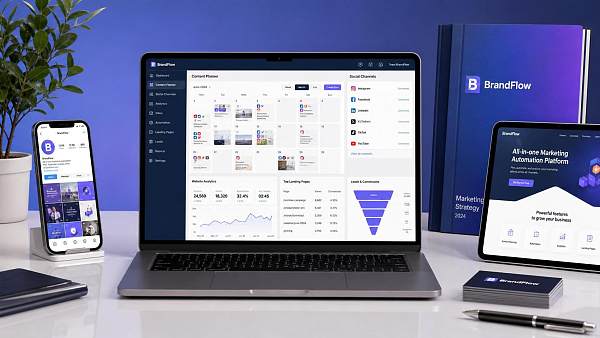
When companies search for “recommended social media automation marketing tools”, they are usually not simply looking for a basic ranking list. In essence, they want to solve several real problems: multi-platform operations consume too much manpower, content updates cannot keep up, paid ads and organic traffic are disconnected, data cannot be reviewed effectively, and social media leads are difficult to move into the subsequent conversion process.
Therefore, truly valuable evaluation criteria should not stop at “which platforms are supported” or “whether the price is high”. What companies care more about is whether the tool can reduce repetitive work, improve the quality of content execution, and enable social media operations to collaborate with the website, advertising, SEO, and sales follow-up.
For teams aiming to acquire customers overseas, social media is only one touchpoint in the overall journey. After users see content on social media, whether they are willing to click through to the official website, whether they can see a matching landing page, and whether they can submit a form or initiate an inquiry determine the true value of an automation tool.
Before choosing a tool, first clarify which type of problem you most need to solve
Different companies have very different needs for social media automation. If the goal is brand exposure, the focus should be on content scheduling, account matrix management, and cross-platform distribution. If the goal is inquiry growth, more attention should be paid to lead collection, landing page connection, CRM synchronization, and data tracking capabilities.
For foreign trade factories and B2B companies, simply improving posting efficiency has limited significance. What matters more is using channels such as LinkedIn and Facebook to deliver industry content, case study content, and product content to target customers in a planned rhythm, while bringing visit behavior back to the website to create follow-up opportunities.
For cross-border e-commerce or brand independent website teams, whether social media tools support short video scheduling, comment interaction management, campaign marketing collaboration, and asset reuse will directly affect content conversion efficiency. In other words, tool selection must first serve business goals, rather than automating for the sake of “automation”.
How to choose recommended social media automation marketing tools: focus on these 5 evaluation dimensions
First, look at whether the multi-platform management capability is stable. Companies often operate Facebook, Instagram, LinkedIn, X, TikTok, and even YouTube at the same time. If a tool can only perform basic synchronization and cannot handle differences in platform formats, publishing times, and content rhythms, subsequent execution will be greatly limited.
Second, look at whether the content workflow supports team collaboration. For companies involving copywriters, designers, operators, and managers, if the tool lacks approval, comments, version management, and permission control, problems such as incorrect publishing, missed publishing, and inconsistent style can easily occur, and these hidden costs are very high.
Third, look at whether the data can support decision-making. A high-quality tool should not only display likes and impressions, but also help companies see clicks, redirects, lead submissions, inquiry sources, and high-performing content topics. A data dashboard without a conversion perspective can often only prove that the team has “been busy”, but cannot prove that the work has been “effective”.
Fourth, look at whether it can connect with the website and marketing systems. For overseas marketing, social media does not operate in isolation. If the tool can connect with the official website, landing pages, advertising pixels, email systems, or CRM, it can turn social media traffic into customer assets that are trackable, nurture-ready, and reviewable.
Fifth, look at localized service and adaptation capabilities. When many companies try overseas tools, they find them difficult to get started with, slow in after-sales response, and dependent on English documentation for configuration, making it hard for the team to move forward. For companies hoping to implement quickly, service support, deployment efficiency, and strategic guidance are also important parts of the purchasing decision.
Why focusing only on “automated publishing” can easily lead to pitfalls
When many companies filter recommended social media automation marketing tools, the first things they compare are whether the tool can publish posts in bulk and whether it supports scheduled publishing. But if a tool only solves the problem of “sending content out” without solving “who it is sent to, who will click, where they go after clicking, and how they convert afterward”, its value will be clearly overestimated.
A more practical issue is that the content logic of overseas social media platforms is not exactly the same. B2B customers pay attention to professional insights on LinkedIn, brand consumers value visual expression more on Instagram, and short video platforms require higher frequency and stronger rhythm. Simple one-click synchronization often causes overall content performance to decline.
In addition, automation does not mean no human involvement. A truly mature approach is to hand repetitive tasks over to the system, while leaving strategic judgment, content refinement, and interaction management to the team. If companies understand automation as “saving so much manpower that no operations are needed”, they often end up losing account quality and user trust.
What suits companies better is an integrated “social media + website + conversion” approach
For companies with clear overseas growth goals, the ideal state of social media automation tools is not to exist independently, but to become part of the entire digital marketing system. At the front end, it connects content distribution and social media reach. At the back end, it connects official website conversion, SEO accumulation, advertising remarketing, and customer follow-up.
This is also why more and more companies no longer purchase scattered tools separately, but pay more attention to whether integrated service capabilities are available. For example, after social media content drives traffic to a multilingual independent website, whether the page is suitable for conversion, whether it supports form collection, and whether it can be indexed by search engines will all affect the final customer acquisition results.
Companies oriented toward overseas markets especially need to consider whether content distribution and page connection match across different regions. Markets such as North America, Europe, Southeast Asia, and the Middle East differ significantly in language, habits, and platform preferences. If a tool cannot support localized marketing strategies, even a high level of automation will struggle to generate real growth.
From this perspective, the final answer to recommendations for social media automation marketing tools is often not a single-point software product, but a more complete growth configuration. Only by connecting AI website building, SEO optimization, advertising, social media operations, and data tracking can companies better align with the logic of long-term return on investment.
Different types of companies should focus on different tool selection priorities
If you are a foreign trade B2B company, it is recommended to prioritize LinkedIn operations, content scheduling, customer interaction records, lead form tracking, and official website integration capabilities. Because these companies have long transaction cycles, the value of social media is reflected more in building professional trust and continuous nurturing, rather than short-term traffic spikes.
If you are a cross-border e-commerce or brand independent website team, you should pay more attention to short video content distribution, asset reuse, campaign calendar scheduling, comment management, and conversion link management. For this type of business, social media not only undertakes the role of awareness and interest building, but also directly affects promotional traffic and repeat purchase reach.
If your team is relatively small and still in the early stage of overseas expansion, it is not recommended to pursue a complex system from the very beginning. Choosing a tool that is easy to use, covers core platforms, and provides basic data analysis and landing page tracking capabilities is often more helpful for quickly validating content direction and channel effectiveness.
Before purchasing, companies are advised to make a final judgment with these 3 questions
First, can this tool help the team improve results, not just increase the number of actions? Faster posting and a fuller calendar do not mean better performance. Automation investment is only justified when the journey from reach to clicks, lead submission, and conversion becomes smoother.
Second, can the tool fit into the existing marketing system? If a company already has an official website, advertising accounts, SEO content, and customer management processes, the new tool must be able to connect smoothly, rather than creating new data silos. The more fragmented the systems are, the higher the management cost will be later.
Third, does the service provider truly understand overseas marketing scenarios? Companies need more than software access. They also need strategic advice, scenario adaptation, and execution support. Especially for companies expanding globally, service providers that understand platform rules, content operations, and website conversion can often deliver more practical value.
Conclusion: when choosing a social media automation tool, the core is whether it can serve growth
Returning to the original question, how should recommended social media automation marketing tools be selected? The answer is not to stare at the feature list and score items one by one, but to first look at business goals, then collaboration capabilities, and finally evaluate return on investment. Publishing efficiency is only the starting point. Customer acquisition capability, conversion connection, and a closed data loop are the key.
For companies that hope to operate overseas markets over the long term, a tool truly worth investing in should help teams reduce repetitive work, improve the quality of content execution, and continuously convert social media traffic into website visits, customer leads, and brand growth assets. Only in this way is automation not merely superficial efficiency improvement, but real value creation.
If a company is also advancing independent website development, Google SEO, advertising, and overseas social media operations at the same time, adopting a more integrated digital marketing solution is usually more likely to create growth synergy than purchasing a single-point tool, and it is also better suited to today’s increasingly competitive global expansion environment.
Related Articles
 What are the key items for landing page experience optimization?A practical checklist for increasing dwell time and conversion rate
 How to Establish High-Intent Customer Scoring? B2B Lead Grading Rules and Scoring Dimension Examples
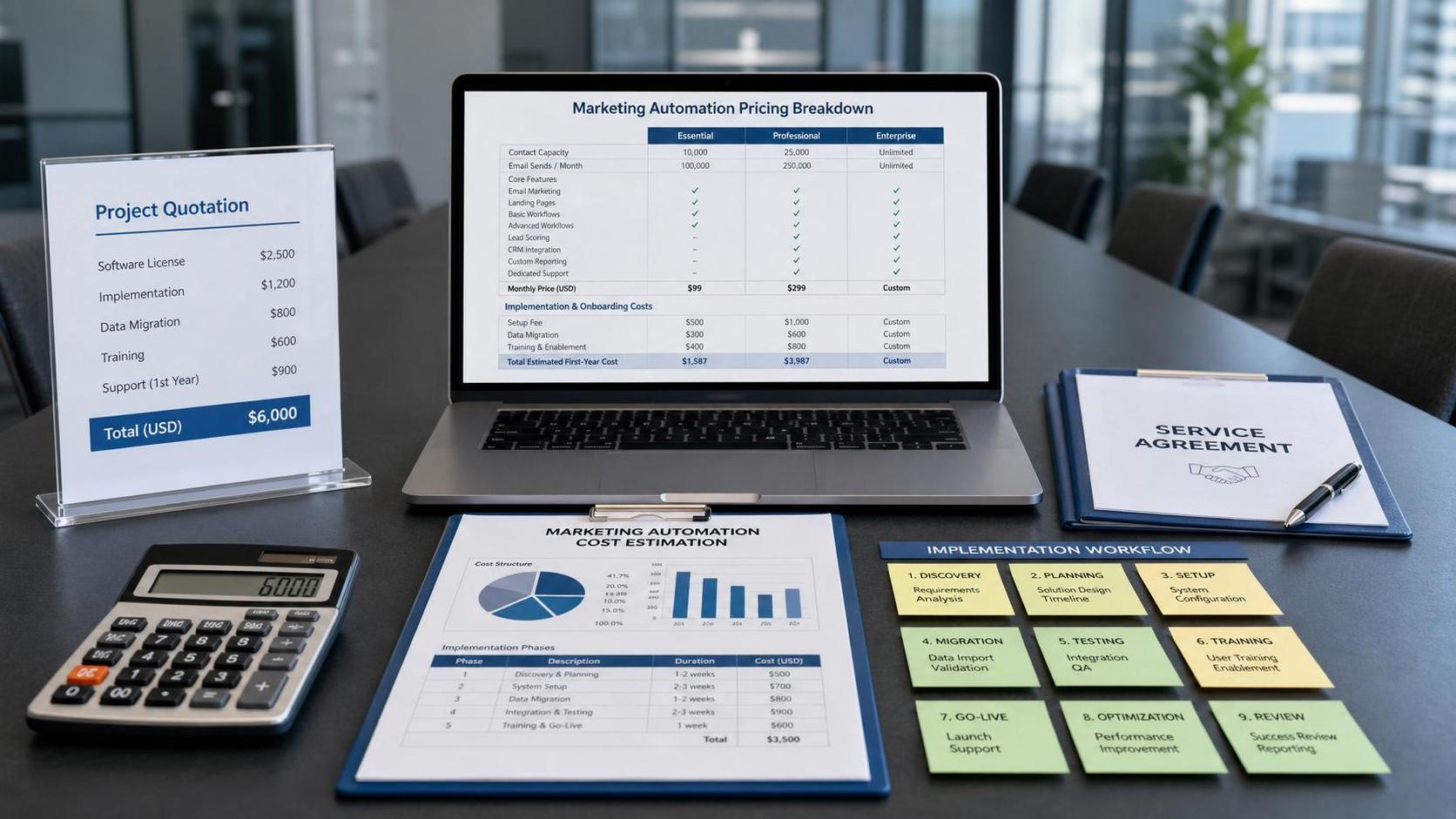
 Why do marketing automation prices vary so much?Breakdown of functional modules and implementation costs


Related Products
 EasyCamp SaaS Smart Website Marketing SystemE-Yingbao SaaS Smart Website Marketing System: AI-powered, zero-code website building. Rapidly launch multilingual independent e-commerce sites in just 10 minutes. Global server acceleration and AI-driven SEO optimization empower businesses to efficiently connect with global markets. The seamless integration of technology and user-friendly operation makes building e-commerce sites incredibly simple.
 AI+SEM Intelligent Advertising Marketing SystemAI+SEM drives intelligent ad creation, empowering full-funnel precision advertising marketing. The system automatically generates weekly/monthly reports, AI recommends keywords and target countries, monitors core metrics in real-time with intelligent alerts, and enables one-click high-conversion ad solutions to help quickly acquire customers and improve ROI.
 AI+SEO Dual Engine Optimization ServiceEasyWin AI+SEO Dual Engine Optimization System leverages AI-powered keyword mining, content generation, and comprehensive technical optimization to help foreign trade enterprises acquire high-quality organic traffic, significantly improving search rankings and conversion rates.
 AI+SNS Social Media Marketing SystemYingbao AI+SNS Social Media Marketing System - Precision social capture for the social media era. Supports one-click content synchronization across major platforms like Facebook and LinkedIn. AI intelligently rewrites posts for enhanced relevance. 24/7 AI customer service and user profiling analysis empower businesses to efficiently expand into global markets.
 AI+SEO营销解决方案易营宝AI+SEO营销解决方案,通过AI批量写作、智能生成TDK、精准关键词扩词等功能,全面优化网站SEO效果,提升流量与转化率。助力企业构建高效智能网站新生态。
 AI+SEM Advertising Marketing SolutionsAI+SEM Advertising Marketing Solution leverages AI technology to deeply empower SEM ad campaigns. It automatically generates weekly/monthly reports using AI, presenting account data across multiple dimensions for comprehensive insights into campaign performance and trends. The system precisely recommends keywords and target countries, intelligently generates high-conversion ad copy, and enables one-click activation of efficient campaign plans to help businesses rapidly acquire customers. Simultaneously, it monitors core metrics in real time, intelligently identifies abnormal fluctuations, and issues timely alerts to ensure stable, high-return advertising results.
 Domain Name ServicesEasyWin provides professional domain name services, including intelligent queries, one-stop registration, brand protection, and full lifecycle management, helping businesses build a digital brand image.
 EasyOperate B2C Cross-Border E-Commerce Platform & Independent WebsiteEasyStore B2C Cross-border E-commerce Independent Store is an intelligent website building and cross-border e-commerce integrated solution independently developed by EasyStore Information Technology (Beijing) Co., Ltd. The system is specially designed for small and medium-sized as well as large export enterprises, integrating 'website building, operation, marketing, advertising, and conversion' into one, helping enterprises quickly establish cross-border e-commerce independent stores to achieve brand globalization and global sales growth.
The platform supports multiple languages, multiple currencies, and multi-channel marketing, with built-in AI intelligent translation and SEO optimization systems, suitable for mainstream markets such as Southeast Asia, Europe and America, Latin America, and the Middle East, assisting Chinese manufacturing enterprises in efficiently deploying international e-commerce strategies. SSL证书易营宝提供专业SSL安全证书服务,包括单域名和泛域名证书,确保网站数据传输加密、身份验证和完整性保护,助力企业建立安全可信的在线业务环境。









