









- Is Brand Globalization Marketing Consulting Worth Buying? At What Stage Should Companies Bring It InJul 01, 2026View details
- Cross-Border Marketing Trend Research: Why More and More Companies Are Starting to Deploy AI Search and GEO OptimizationJun 30, 2026View details
- Cross-Border Marketing Trend Research: How Independent Sites, AI Content, and Short-Video Customer Acquisition Are ChangingJun 30, 2026View details
- How Can a Brand Updates Page Be Made More SEO-Friendly? Analysis of Update Frequency, Content Structure, and Internal Linking StrategyJun 28, 2026View details
- What stages does the cross-border services ecosystem include? How do website building, promotion, payment, and compliance work togetherJun 22, 2026View details
- How will email marketing costs change in 2026Jun 22, 2026View details
What to Look for When Comparing Overseas Social Media Management Service Providers
When comparing overseas social media operation service providers, what truly matters is not “who can publish posts” or “who offers a lower quote,” but who can genuinely connect content operations, channel strategy, lead conversion, and data review into one coherent system. For companies aiming to build a global brand presence and drive customer acquisition growth, choosing the wrong service provider often does not simply mean slower results; it means budgets continue to be consumed without producing replicable growth outcomes.
Especially for foreign trade companies, manufacturing factories, cross-border brands, and independent website sellers, overseas social media operation is not a single content outsourcing task, but a systematic project closely tied to market positioning, website conversion support, advertising collaboration, and sales conversion. Therefore, when comparing overseas social media operation service providers, the evaluation logic must be upgraded from “operational actions” to “business results.”
When Comparing Overseas Social Media Operation Service Providers, First See Whether They Can Serve Your Business Goals
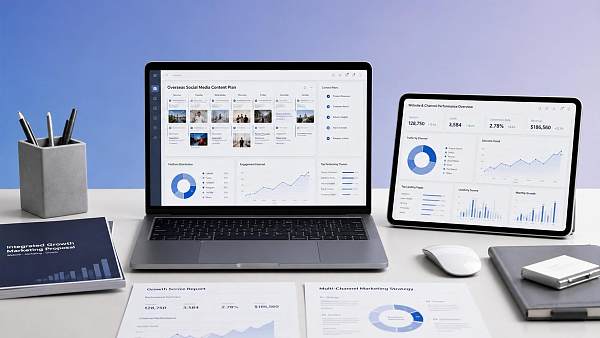
When many companies screen service providers, their first reaction is to look at case studies, follower numbers, and package prices. However, this information can only serve as a reference and cannot directly indicate whether a provider is suitable for them. This is because different companies have very different goals when using overseas social media.
Some companies hope to generate B2B inquiries through LinkedIn and Facebook; some brands place more emphasis on content-driven product discovery and brand awareness on Instagram and TikTok; and some cross-border sellers want to use social media to continuously drive traffic to their independent websites. These three types of goals require completely different capabilities from service providers.
Therefore, when comparing overseas social media operation service providers, the first step is not to ask, “Which platforms can you operate?” but rather, “How do you develop platform combinations, content strategies, and conversion paths based on corporate goals?” Service providers that can answer this clearly are more worthy of moving into the next round of evaluation.
If a service provider only emphasizes account operation outsourcing, daily posting, and basic engagement, but cannot explain how it supports customer acquisition, user retention, or deal conversion, then this type of service is usually more like execution outsourcing rather than growth-oriented cooperation.
Why You Should Not Look Only at Quotes, but Also at Strategy and Localization Capabilities
In comparisons of overseas social media operation service providers, price is often the easiest factor to compare side by side. However, what truly differentiates social media projects is usually not the volume of execution, but the depth of strategy and localization capabilities. Cheap services do not necessarily save money; low-quality operations can instead increase trial-and-error costs.
Many companies encounter this situation: a lot of content has been published, the account is updated regularly, but engagement is weak, inquiries are few, and brand awareness has not improved noticeably. The problem is usually not whether content has been posted, but whether the content matches the expression habits, key concerns, and decision-making logic of the target market.
Overseas users differ from domestic markets in how they receive information, visual preferences, communication tone, and sensitivity to industry topics. If a service provider simply translates Chinese materials and publishes them, the results are usually limited. Truly effective service providers restructure content based on market, language, and industry characteristics, rather than mechanically copying and moving content.
For example, account operations targeting B2B customers in Europe and the United States place greater emphasis on professionalism, credibility, industry insights, application scenarios, and solution-oriented messaging. By contrast, cross-border brands targeting consumers place more value on visual content, user participation, product storytelling, and content shareability. This difference determines that service providers must have strong localized content planning capabilities.
The 5 Questions Companies Should Ask Most Clearly When Evaluating Service Providers
First, ask whether the provider has industry understanding. Social media approaches vary greatly across different sectors. Machinery and equipment, industrial components, home consumer goods, beauty and personal care, and SaaS software do not follow the same content logic. Service providers that understand the industry are more likely to create content that makes target customers willing to stop, read, and engage.
Second, ask whether the provider has a complete strategic plan, rather than just a content calendar. High-quality service providers usually first clarify brand positioning, user personas, platform selection, content direction, posting rhythm, and conversion goals before moving into execution. Without an upfront strategy, later data often lacks a clear basis for evaluation.
Third, ask what level of data analysis the provider can deliver. Some service providers only report impressions, likes, and follower growth, but what companies truly care about is website visits, lead capture, direct message quality, lead sources, and conversion costs. Whether data can be connected to business results is extremely important.
Fourth, ask whether the provider can collaborate with the website, advertising, and SEO. Social media is not an isolated channel. Whether published content can drive traffic to the official website, landing pages, or online store, and whether it can form a closed loop with Google Ads and SEO content, will directly affect the final value. If the focus is only on activity within the platform, it is often difficult to achieve sustained growth.
Fifth, ask about team structure and the delivery mechanism. Companies need to know who is responsible for strategy, who handles content, who handles design, who conducts reviews, and whether the communication frequency, revision process, and monthly reporting method are clear. Many cooperation problems are not essentially caused by insufficient capability, but by delivery getting out of control.
What Capabilities Do Truly Worthwhile Service Providers Usually Have?
A mature overseas social media operation service provider usually does not merely know how to “manage accounts,” but can build multi-channel growth capabilities around global brand expansion. At minimum, it should have several key modules, including account positioning, content planning, visual production, advertising collaboration, data analysis, and conversion support.
Especially for companies that hope to acquire customers over the long term, social media operations cannot be separated from independent websites and search traffic systems. Account content is responsible for building awareness and generating interest; the website is responsible for receiving traffic and collecting leads; SEO and advertising are responsible for expanding exposure and amplifying the value of high-quality content. This combination is more efficient.
From the perspective of integrated website + marketing services, if a service provider has capabilities in intelligent website building, SEO optimization, advertising placement, and overseas social media operations at the same time, it is often better able to help companies connect the entire chain from reach and visits to conversion, rather than turning social media into an isolated standalone project.
Platform-based service providers such as 易营宝, which are centered on AI, big data, and global marketing capabilities, have the advantage of integrating overseas social media operations with multilingual website development, independent website conversion optimization, Google SEO, Google Ads, Facebook advertising, and AI search visibility improvement. They are better suited to companies with clear requirements for growth results.
The Number of Case Studies Matters, but What Matters More Is Whether the Cases Are Similar to Yours
When many companies compare overseas social media operation service providers, they regard the “number of case studies” as an important criterion. But what they should truly examine is whether the provider has worked on projects similar to theirs in terms of market stage, industry attributes, and target regions. The more similar the cases are, the higher their strategic reference value.
For example, if a manufacturing company targeting the European and American B2B market chooses a team that has long served consumer brands, the team may be very good at content packaging, but it may not necessarily understand how technical products build trust and generate inquiries. Conversely, teams that have served industrial, equipment, and foreign trade clients usually understand better how professional content converts.
When reviewing case studies, it is recommended not to look only at whether “the pages look good,” but to ask further questions: What was the project goal? Which platforms were used? How was the content strategy developed? How long was the operation cycle? What results were ultimately achieved? Only case studies that can clearly explain both the process and results have real reference value.
If a service provider can only show screenshots, follower counts, or like data, but cannot explain the conversion logic and growth path, then these cases are more like display materials and do not prove that the provider has stable delivery capabilities.
Common Misconceptions When Companies Choose Service Providers
The first misconception is understanding overseas social media operation as “finding someone to post content.” In fact, social media is only one touchpoint in a company’s overseas digital marketing system. Whether it can generate value largely depends on whether it works in synergy with the official website, landing pages, advertising, private-domain leads, and sales actions.
The second misconception is focusing too much on short-term results. Overseas social media operations, especially organic content operations, usually require time to complete account positioning, content testing, and user accumulation. If a company has no foundational content assets and no receiving pages, simply demanding explosive growth in a short time is often unrealistic.
The third misconception is directly copying domestic practices. Overseas platforms differ in content mechanisms, user preferences, and engagement methods. Promotional expressions, intensive push tactics, and hard-sell advertising content that work in the domestic market may not be suitable for overseas platforms. If a service provider lacks localization experience, the operation direction can easily go off track.
The fourth misconception is ignoring consistency in data definitions. If social media operation reports only look at platform data, while the sales team focuses on inquiries and transactions, both sides will find it difficult to determine whether the project is effective. Mature service providers define the indicator system clearly at the beginning of cooperation to avoid misalignment of goals later.
When Comparing Overseas Social Media Operation Service Providers, How Should You Make the Final Choice?
If your goal is only to maintain account updates and show brand presence, you can choose an execution-oriented service provider, focusing mainly on content quality, response efficiency, and whether the basic costs are reasonable. But if your goal is global brand expansion, lead generation, and long-term growth, you should prioritize a service team with integrated marketing capabilities.
Specifically, partners worth prioritizing should have four characteristics at the same time: they can understand your business model, develop localized content strategies for the target market, connect social media with website and advertising conversion support, and use clear data to prove the value of their work.
From the perspective of long-term input and output, a truly high-quality overseas social media operation service provider does not merely help companies “produce content,” but helps them establish a sustainable overseas reach and conversion mechanism. This kind of cooperation is closer to the growth-oriented service that companies need.
Therefore, when comparing overseas social media operation service providers, the core evaluation criterion can be summarized in one sentence: whoever understands your market, your customers, and your growth path better is more worth working with. Quotes are only the threshold; whether the provider can continuously deliver real business results is the final answer.
In summary, comparisons of overseas social media operation service providers should not stop at surface-level information such as price, number of case studies, and posting frequency. Instead, they should return to the results that companies truly care about: whether the provider can achieve brand exposure, traffic reception, lead growth, and long-term conversion. Only by including strategy, localization, data analysis, and marketing closed loops in the evaluation can companies choose a service provider that is truly suitable for them.
For companies that hope to systematically promote global brand expansion, social media operation is no longer essentially a single-point action, but part of global digital marketing capability. Only by choosing the right partner can overseas social media move from “appearing to be active” to “truly generating growth.”
Related Articles
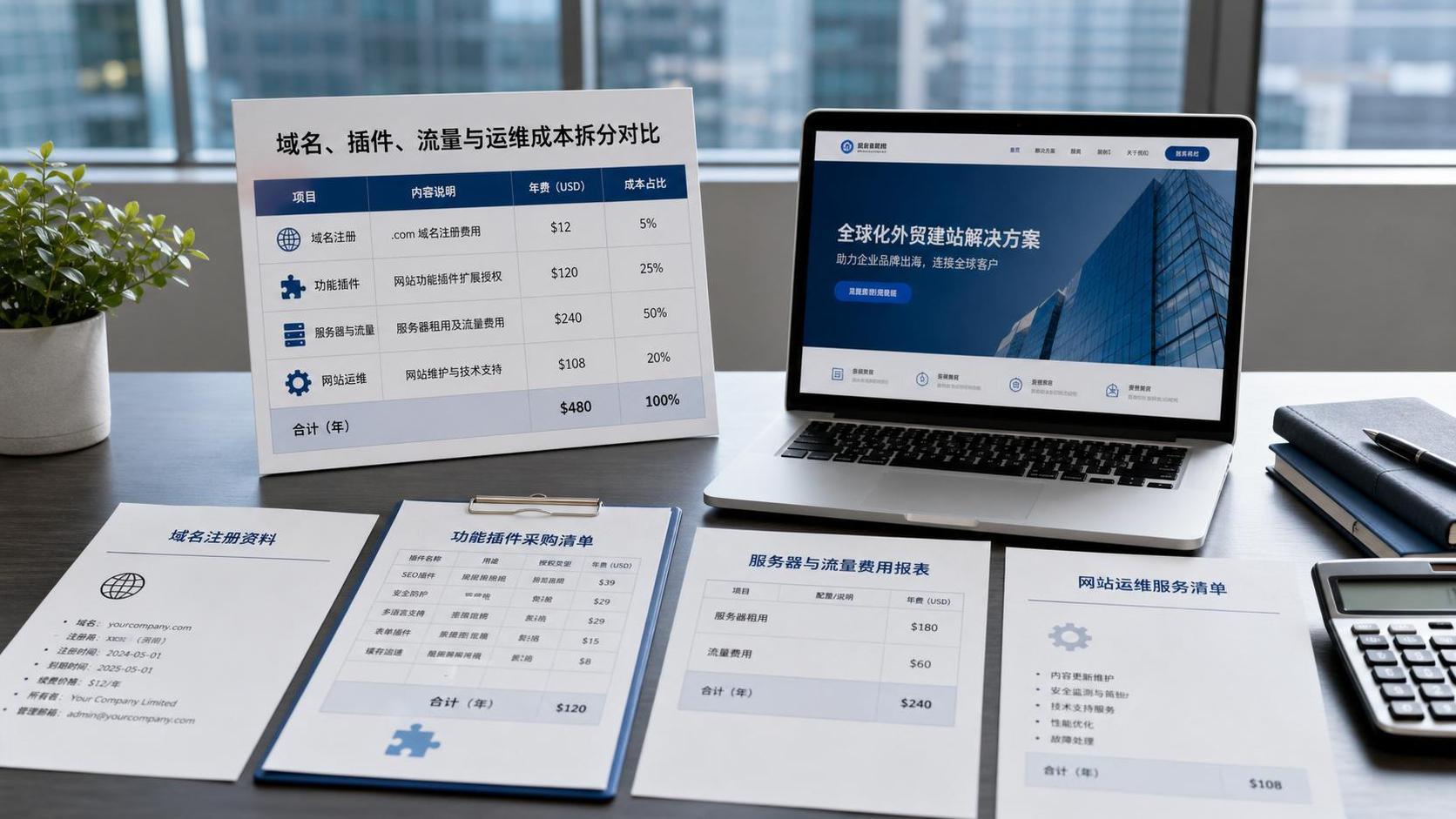
 Why do renewal fees vary so much for foreign trade website building platforms?A breakdown of domain, plugin, and traffic costs item by item
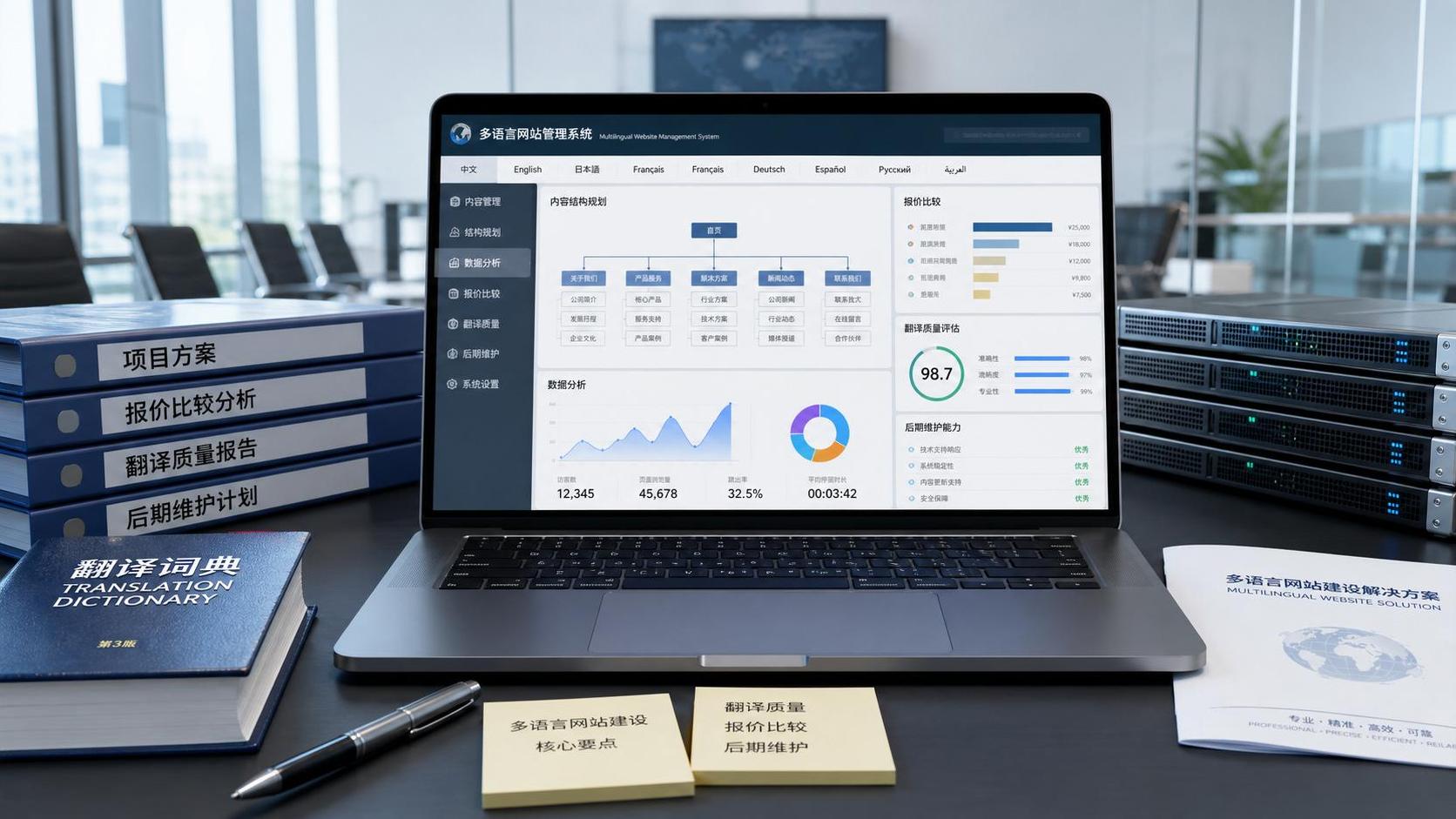
 Which multilingual website building service is best? Compare quotations、translation quality and post-launch maintenance capabilities
 Yiyingbao Competitor Comparison:Where Are the Differences in Website Building、SEO and Inquiry Conversion Capabilities?

Related Products
 EasyCamp SaaS Smart Website Marketing SystemE-Yingbao SaaS Smart Website Marketing System: AI-powered, zero-code website building. Rapidly launch multilingual independent e-commerce sites in just 10 minutes. Global server acceleration and AI-driven SEO optimization empower businesses to efficiently connect with global markets. The seamless integration of technology and user-friendly operation makes building e-commerce sites incredibly simple.
 AI+SEM Intelligent Advertising Marketing SystemAI+SEM drives intelligent ad creation, empowering full-funnel precision advertising marketing. The system automatically generates weekly/monthly reports, AI recommends keywords and target countries, monitors core metrics in real-time with intelligent alerts, and enables one-click high-conversion ad solutions to help quickly acquire customers and improve ROI.
 AI+SEO Dual Engine Optimization ServiceEasyWin AI+SEO Dual Engine Optimization System leverages AI-powered keyword mining, content generation, and comprehensive technical optimization to help foreign trade enterprises acquire high-quality organic traffic, significantly improving search rankings and conversion rates.
 AI+SNS Social Media Marketing SystemYingbao AI+SNS Social Media Marketing System - Precision social capture for the social media era. Supports one-click content synchronization across major platforms like Facebook and LinkedIn. AI intelligently rewrites posts for enhanced relevance. 24/7 AI customer service and user profiling analysis empower businesses to efficiently expand into global markets.
 AI+SEO营销解决方案易营宝AI+SEO营销解决方案,通过AI批量写作、智能生成TDK、精准关键词扩词等功能,全面优化网站SEO效果,提升流量与转化率。助力企业构建高效智能网站新生态。
 AI+SEM Advertising Marketing SolutionsAI+SEM Advertising Marketing Solution leverages AI technology to deeply empower SEM ad campaigns. It automatically generates weekly/monthly reports using AI, presenting account data across multiple dimensions for comprehensive insights into campaign performance and trends. The system precisely recommends keywords and target countries, intelligently generates high-conversion ad copy, and enables one-click activation of efficient campaign plans to help businesses rapidly acquire customers. Simultaneously, it monitors core metrics in real time, intelligently identifies abnormal fluctuations, and issues timely alerts to ensure stable, high-return advertising results.
 Domain Name ServicesEasyWin provides professional domain name services, including intelligent queries, one-stop registration, brand protection, and full lifecycle management, helping businesses build a digital brand image.
 EasyOperate B2C Cross-Border E-Commerce Platform & Independent WebsiteEasyStore B2C Cross-border E-commerce Independent Store is an intelligent website building and cross-border e-commerce integrated solution independently developed by EasyStore Information Technology (Beijing) Co., Ltd. The system is specially designed for small and medium-sized as well as large export enterprises, integrating 'website building, operation, marketing, advertising, and conversion' into one, helping enterprises quickly establish cross-border e-commerce independent stores to achieve brand globalization and global sales growth.
The platform supports multiple languages, multiple currencies, and multi-channel marketing, with built-in AI intelligent translation and SEO optimization systems, suitable for mainstream markets such as Southeast Asia, Europe and America, Latin America, and the Middle East, assisting Chinese manufacturing enterprises in efficiently deploying international e-commerce strategies. SSL证书易营宝提供专业SSL安全证书服务,包括单域名和泛域名证书,确保网站数据传输加密、身份验证和完整性保护,助力企业建立安全可信的在线业务环境。









