









- What stages does the cross-border services ecosystem include? How do website building, promotion, payment, and compliance work togetherJun 22, 2026View details
- How will email marketing costs change in 2026Jun 22, 2026View details
- The China-US tariff arrangement has reached a preliminary consensus, and the trade association will be establishedJun 15, 2026View details
- Should overseas brand marketing start with ads or contentJun 21, 2026View details
- What determines B2C cross-border e-commerce website development costs? A breakdown of features, interfaces, and deployment methodsJun 17, 2026View details
- China-Morocco zero-tariff access, a breakthrough in the cost of Moroccan goods exports to ChinaJun 11, 2026View details
What is the difference between WhatsApp two-step verification and verification codes?

What's the difference between WhatsApp two-step verification and CAPTCHA? Many businesses often confuse the two when registering, logging in, or operating overseas accounts. In fact, one concerns identity verification, while the other focuses on account security. Understanding the differences is crucial to better reduce risk of risk control and account suspension.
For foreign trade companies, cross-border e-commerce sellers, and brand overseas expansion teams, WhatsApp is not just a communication tool, but also a private touchpoint for receiving overseas inquiries, following up with customers, and converting advertising leads. Once an account is restricted due to improper handling of the verification process, it often affects the customer conversion cycle of 7 to 30 days, and may even disrupt the entire marketing chain.
CAPTCHAs and two-step verification solve two different types of problems.
First, let's look at the definition. Verification codes typically appear during registration, first login, device switching, or abnormal login. The platform sends a 6-digit code via SMS, voice, or system message to confirm whether the current user can control this phone number. It's a one-time verification, usually valid for only 1 to 10 minutes.
Two-step verification is different. It's a long-term security mechanism that users actively activate, typically in the form of a 6-digit PIN code. Even if someone obtains the SIM card or receives the verification code, they still cannot easily re-register or migrate the account without knowing this PIN. Therefore, two-step verification is more like a "second lock."
The core differences can be understood from three dimensions.
One of the most common mistakes businesses make when building an overseas marketing system is treating CAPTCHAs as a complete security solution. In reality, CAPTCHAs focus on login confirmation, while two-step verification focuses on ongoing protection; the two address different stages in the account lifecycle.
From an operational perspective, CAPTCHA determines whether you "can enter," while two-step verification determines whether others "can grab" the entry. This difference is especially critical for marketing teams that require multi-person collaboration, cross-regional logins, and frequent device changes.
Common Misconceptions
- They believe that receiving a verification code means their account is absolutely safe.
- Multiple people share one overseas business account, but no one saves the two-step verification PIN;
- Frequent verification code requests, triggering multiple verifications within 24 hours, led to risk control upgrades.
- Entrusting account security to individual employees' mobile phones and lacking standard procedures for handover upon departure.
Why do companies going global need to distinguish between these two mechanisms?
In integrated website and marketing service scenarios, WhatsApp is frequently integrated with independent website forms, Facebook ads, Google Ads landing pages, and social media messaging. Behind each account, there are often three types of assets: customer leads, sales conversations, and advertising conversion paths.
If businesses only focus on CAPTCHAs and don't implement two-step verification, risks will concentrate on three key areas: changing devices, personnel changes, and logins from different locations. For a team that processes over 100 overseas inquiries per month, a single account anomaly could result in being unable to respond to customers for several consecutive days.
Four typical risks in marketing operations
- After the advertisement was launched, inquiries flooded in, the account was flagged as suspicious, and the response rate dropped.
- Even after team members left the company, they still had access to the old equipment and the verification code receiving link.
- Overseas phone numbers are unreliable, resulting in SMS delays of more than 5 minutes, which affects login.
- There is no unified standard operating procedure (SOP), and one account is frequently switched between two to four devices.
For businesses that rely on overseas customer acquisition, account security is no longer just an IT issue, but a marketing delivery problem. Whether a website can continuously receive orders and whether advertising leads can be processed in a timely manner often depends on whether the communication accounts are stable and controllable.
How can businesses configure a more robust WhatsApp operation plan?
A more prudent approach is not to choose one or the other, but to manage both the CAPTCHA process and the two-step verification strategy simultaneously. For foreign trade and cross-border teams, it is recommended to integrate account management into the overall process of website building, advertising, and customer service, covering at least four aspects: account number, device, permissions, and backup.
Recommended 5-step management process
The key to this process isn't its technical complexity, but rather its proactive integration of account security into the operational workflow. Typically, completing two-step verification within 24 hours of account activation significantly reduces the risks associated with subsequent migration and takeover.
Implementation suggestions suitable for B2B enterprises
If your business is already running multilingual websites, implementing Google SEO, advertising, and social media customer acquisition, it's recommended to include WhatsApp account security as a separate checklist in your monthly operational reviews. Checking the CAPTCHA receiving process monthly and reviewing two-step verification and device permissions quarterly will better meet the needs of long-term overseas operations.
Platforms like Yiyingbao, which offer integrated services such as intelligent website building, SEO optimization, advertising, and overseas social media operations, are better suited to help businesses connect website customer acquisition, lead generation, and account management, reducing the disconnect between "traffic arriving and account dropping out," and making the conversion path of independent websites more stable.
Frequently Asked Questions and Decision-Making Recommendations
If I don't receive the verification code, does that mean my account is unusable?
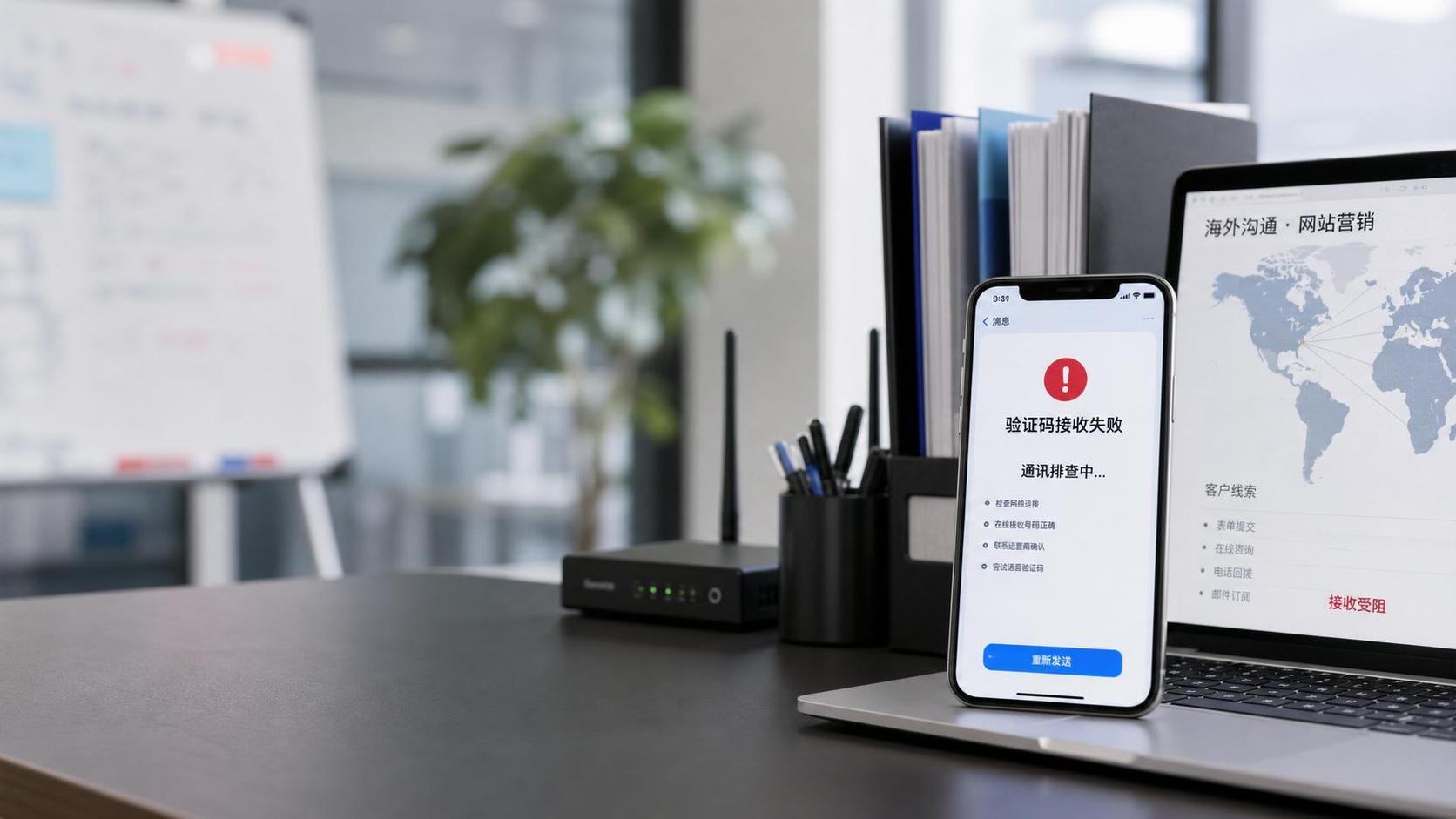
Not necessarily. First, check the phone number status, SMS blocking, network environment, and request frequency. If you request verification codes multiple times within 15 minutes, the platform may temporarily restrict sending them. A safer approach is to wait a while before trying again and avoid operating on multiple devices simultaneously.
Who should keep a two-step verification PIN?
It is recommended that accounts be centrally managed by the company, rather than being privately stored by individual sales or operations personnel. For overseas teams of 5 or more people, one primary manager and one backup manager can be designated to prevent account loss of control due to staff turnover.
Should WhatsApp be integrated into the overall marketing strategy?
The answer is yes. Especially when businesses are simultaneously developing independent websites, SEO, Google Ads, Facebook Ads, and overseas social media, WhatsApp has become a crucial link in the conversion chain. The earlier security configurations are implemented, the easier it is to control subsequent customer acquisition costs and operational losses.
Distinguishing between WhatsApp verification codes and two-step verification essentially involves differentiating between "login verification" and "account protection." For businesses aiming to acquire overseas customers steadily, only by integrating communication accounts, independent websites, advertising, and lead generation into a unified operational mechanism can they truly reduce risk and improve conversion rates. If you are planning to integrate an overseas independent website, social media customer acquisition, or marketing system, please contact us immediately for customized solutions and implementation suggestions tailored to your specific business stage.
Related Articles

Related Products
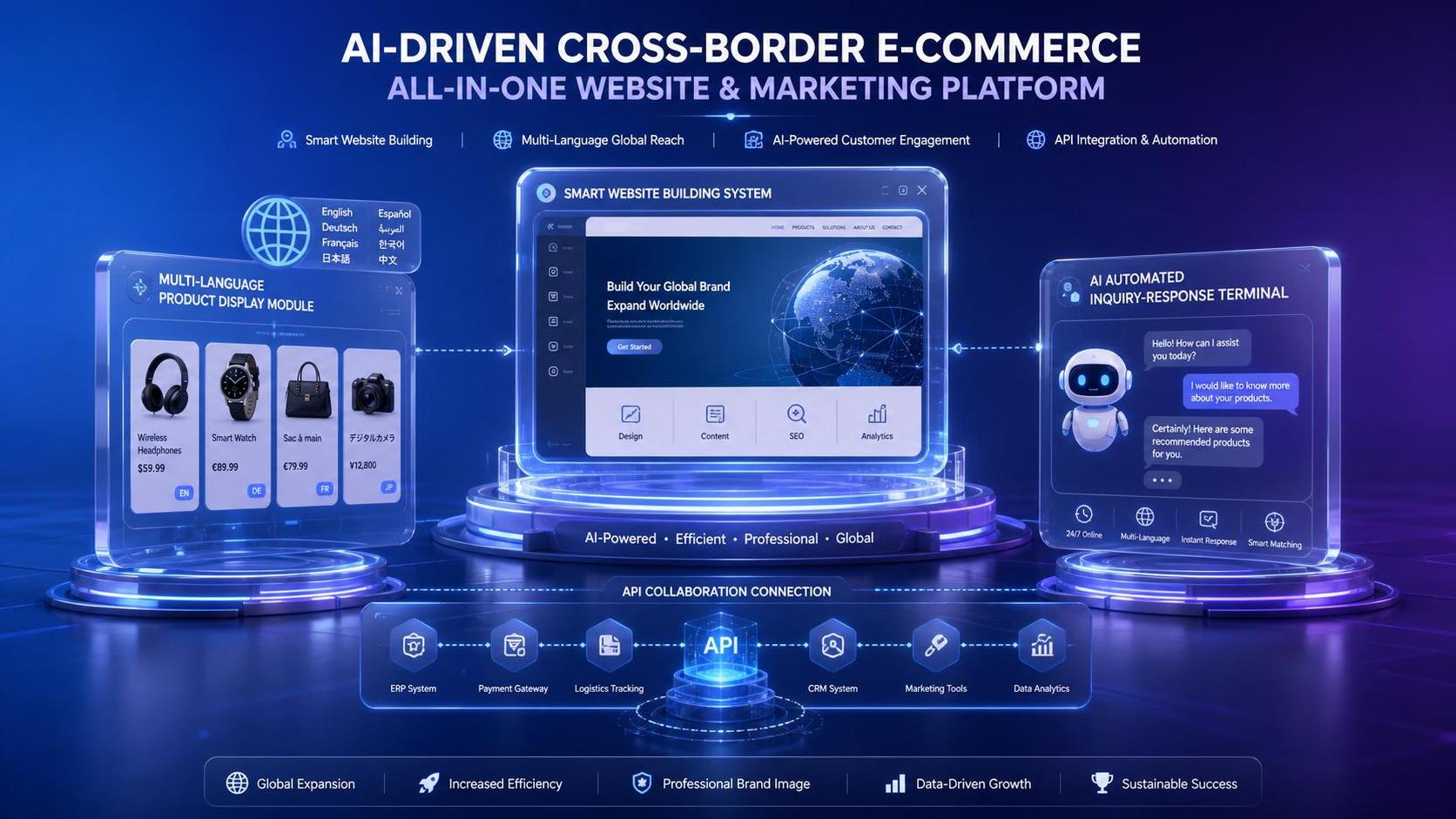
 EasyCamp SaaS Smart Website Marketing SystemE-Yingbao SaaS Smart Website Marketing System: AI-powered, zero-code website building. Rapidly launch multilingual independent e-commerce sites in just 10 minutes. Global server acceleration and AI-driven SEO optimization empower businesses to efficiently connect with global markets. The seamless integration of technology and user-friendly operation makes building e-commerce sites incredibly simple.
 AI+SEM Intelligent Advertising Marketing SystemAI+SEM drives intelligent ad creation, empowering full-funnel precision advertising marketing. The system automatically generates weekly/monthly reports, AI recommends keywords and target countries, monitors core metrics in real-time with intelligent alerts, and enables one-click high-conversion ad solutions to help quickly acquire customers and improve ROI.
 AI+SEO Dual Engine Optimization ServiceEasyWin AI+SEO Dual Engine Optimization System leverages AI-powered keyword mining, content generation, and comprehensive technical optimization to help foreign trade enterprises acquire high-quality organic traffic, significantly improving search rankings and conversion rates.
 AI+SNS Social Media Marketing SystemYingbao AI+SNS Social Media Marketing System - Precision social capture for the social media era. Supports one-click content synchronization across major platforms like Facebook and LinkedIn. AI intelligently rewrites posts for enhanced relevance. 24/7 AI customer service and user profiling analysis empower businesses to efficiently expand into global markets.
 AI+SEO营销解决方案易营宝AI+SEO营销解决方案,通过AI批量写作、智能生成TDK、精准关键词扩词等功能,全面优化网站SEO效果,提升流量与转化率。助力企业构建高效智能网站新生态。
 AI+SEM Advertising Marketing SolutionsAI+SEM Advertising Marketing Solution leverages AI technology to deeply empower SEM ad campaigns. It automatically generates weekly/monthly reports using AI, presenting account data across multiple dimensions for comprehensive insights into campaign performance and trends. The system precisely recommends keywords and target countries, intelligently generates high-conversion ad copy, and enables one-click activation of efficient campaign plans to help businesses rapidly acquire customers. Simultaneously, it monitors core metrics in real time, intelligently identifies abnormal fluctuations, and issues timely alerts to ensure stable, high-return advertising results.
 Domain Name ServicesEasyWin provides professional domain name services, including intelligent queries, one-stop registration, brand protection, and full lifecycle management, helping businesses build a digital brand image.
 EasyOperate B2C Cross-Border E-Commerce Platform & Independent WebsiteEasyStore B2C Cross-border E-commerce Independent Store is an intelligent website building and cross-border e-commerce integrated solution independently developed by EasyStore Information Technology (Beijing) Co., Ltd. The system is specially designed for small and medium-sized as well as large export enterprises, integrating 'website building, operation, marketing, advertising, and conversion' into one, helping enterprises quickly establish cross-border e-commerce independent stores to achieve brand globalization and global sales growth.
The platform supports multiple languages, multiple currencies, and multi-channel marketing, with built-in AI intelligent translation and SEO optimization systems, suitable for mainstream markets such as Southeast Asia, Europe and America, Latin America, and the Middle East, assisting Chinese manufacturing enterprises in efficiently deploying international e-commerce strategies. SSL证书易营宝提供专业SSL安全证书服务,包括单域名和泛域名证书,确保网站数据传输加密、身份验证和完整性保护,助力企业建立安全可信的在线业务环境。









