









- China-Morocco zero-tariff access, a breakthrough in the cost of Moroccan goods exports to ChinaJun 11, 2026View details
- What signal should be released for the suspension of exports to JapanJun 10, 2026View details
- China's May LNG imports rebounded, with increased volumes from Russia and Canada filling the Middle East supply gapJun 10, 2026View details
- Will GEO change its SEO strategy?Jun 04, 2026View details
- What types of businesses are end-to-end solutions suitable for?Jun 03, 2026View details
- 2026 Global Growth Channel TrendsJun 02, 2026View details
- Changes in Search Engine Ranking Factors in 2026Jun 06, 2026View details
- Which stages is the brand visibility enhancement service suitable forMay 29, 2026View details
Yiyingbao Social Media Automation Operations Tutorial: Where to Start Learning
If you want to learn Yingyingbao’s social media automation operations tutorial, start with the thinking framework of a Shenzhen service provider for building a multilingual marketing system, and combine it with AI smart advertising platform precision placement and methods for optimizing social media operations to quickly master the full-chain service of digital marketing solutions.
What to learn first: why social media automation operations cannot be viewed only through posting tools
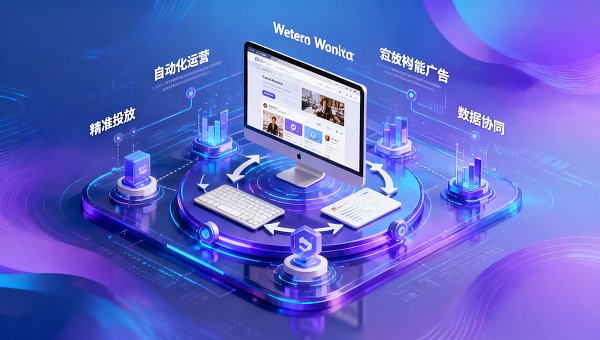
Many users, when they first begin learning social media automation operations, focus on scheduled publishing, bulk scheduling, and account linkage. However, in the website + marketing integrated services industry, the truly effective starting point is not tool buttons, but the complete chain: whether the five links of website building for conversion, content distribution, ad placement, data feedback, and lead follow-up are fully connected.
If you only know how to publish content but do not know how to build landing pages, operators will find that engagement exists but inquiries do not; business decision-makers will find that the budget has been spent but returns are difficult to measure; after-sales maintenance staff will remain trapped in recurring issues such as account anomalies, lost forms, and scattered data. This is also why, when learning tutorials, you must first understand the system rather than memorizing features first.
Since 2013, Yingyingbao Information Technology (Beijing) Co., Ltd. has been deeply engaged in global digital marketing services. Its core advantage lies in placing intelligent website building, SEO optimization, social media marketing, and advertising into the same growth logic. For beginners, this means the learning path can be reverse-engineered from “business goals” rather than rigidly learned from the “platform interface.”
It is generally recommended to divide the learning process into 3 stages: Stage 1 is understanding channels and goals, Stage 2 is building automated workflows, and Stage 3 is establishing a review and optimization mechanism. Each stage can be practiced for 7–15 days, totaling about 3–6 weeks, making the transition from zero to execution more stable and reliable.
The correct learning framework for social media automation tutorials
For operators, the first things to learn are account matrix rules, content tagging strategies, and publishing schedule management; for decision-makers, the priority should be customer acquisition paths, ROI measurement methods, and team collaboration boundaries; for channel partners, the priority is mastering templated capabilities for multi-client, multi-region, and multilingual operations.
- First confirm the goal: is it brand exposure, inquiry generation, or distributor recruitment? Different goals determine different content and media-buying structures.
- Then build the system: including the connections among the official website, landing pages, forms, tracking tags, customer service interfaces, and advertising accounts.
- Finally set automation rules: such as lead distribution, comment alerts, private message replies, weekly report generation, and anomaly monitoring.
Only by learning in this order can a social media automation operations tutorial truly serve business growth rather than remaining at the level of merely “knowing how to use software.”
From multilingual marketing systems to AI ad placement, how to arrange the implementation process more efficiently
In the website + marketing integrated services scenario, social media automation is not a single-point action but a typical implementation project. Especially when it involves foreign trade promotion, multi-regional market expansion, and multilingual official website construction commonly seen among Shenzhen service providers, whether the process arrangement is clear directly affects launch speed and subsequent maintenance costs.
A more reliable approach is to divide the project into 4 steps: requirement clarification, system setup, coordination of content and ad placement, and data review and optimization. A standard small or medium-sized project can usually complete its first launch in 2–4 weeks; if it involves more than 3 languages, more than 2 advertising channels, and CRM integration, the cycle usually extends to 4–8 weeks.
Yingyingbao’s strength lies in being able to create front-end marketing pages while also handling back-end data tracking and the connection of placement strategies. In this way, companies do not need to separately hire a website-building company, an operations agency team, and an advertising service provider, reducing delivery deviations caused by multi-party communication and making it more suitable for companies with limited budgets and time.
For after-sales maintenance personnel, process standardization also has another important value: clearer troubleshooting afterward. If account permissions, pixel tracking, form sources, API interfaces, domain name resolution, and other links are archived in advance, later maintenance efficiency is usually higher.
How to break down the 4-step implementation process
The table below is suitable both for training beginners and for internal enterprise project division of labor. It is not a theoretical process, but a service-node arrangement closer to actual implementation.
As can be seen from the table, what truly affects delivery quality is not a single function, but whether “the chain is coherent.” If, after going live, source data cannot be found or leads cannot be distributed in time, even the most advanced automation tools will struggle to produce stable results.
Maintenance points that are easy to overlook during learning
- Check account permissions and interface status once a week to avoid ad placement interruption caused by personnel changes.
- Verify form fields and CRM mappings once a month to reduce lead loss or duplicate entry.
- Review multilingual page content once every quarter to ensure promotional messaging, policy information, and contact details stay synchronized.
These maintenance actions may seem basic, but they determine whether social media automation operations can move from merely “going live” to becoming “stable and reproducible.”
How different roles should learn: operators, decision-makers, agents, and after-sales teams do not focus on the same things
Even when learning the same Yingyingbao social media automation operations tutorial, different roles have completely different focus points. If enterprises use the same training content for everyone, operators often learn the details, management cannot see results, agents cannot replicate the process, and after-sales staff cannot keep up with maintenance needs.
Therefore, it is recommended to divide training into 4 target groups: frontline operations, management, channel partners, and maintenance teams. If each group concentrates on 3–5 key tasks, learning efficiency will be higher, and it will be easier to move directly into practical execution after 1 training session rather than repeatedly reworking tasks.
For example, frontline operations most need to master content scheduling, asset tagging, automated replies, and data dashboards; business decision-makers care more about budget allocation, channel priorities, inquiry cost, and project delivery rhythm; distributors or agents often care about reusable templates, brand consistency, and regional permission allocation.
In this kind of systematic learning, cross-departmental understanding is also very important. An internal methodology that may seem unrelated to marketing, such as application strategies of lean cost concepts in enterprise inventory management, can actually offer reference value for budget control, resource turnover, and content production rhythm, and is especially suitable for growing enterprises that need refined operations.
Comparison of differentiated learning priorities by role
If an enterprise is preparing to establish an internal training manual, the comparison table below can better help the team quickly divide responsibilities and avoid everyone learning the same modules while no one is truly responsible for results.
The value of the comparison table lies in helping enterprises match “what to learn” with “who is responsible for what” one by one. This not only reduces internal training costs, but also helps with subsequent assessment and project acceptance.
What to focus on during procurement and selection: more features do not necessarily mean a better fit
When companies choose a social media automation operations solution, the most common misunderstanding is comparing only feature lists. In fact, for website + marketing integrated service projects, procurement decisions should evaluate at least 4 dimensions: system compatibility, delivery efficiency, data traceability, and ongoing service capability. A solution with many features but poor implementation is often the most expensive choice.
If a company has a multilingual official website, advertising plans, and overseas social media presence, then the tool or service provider must support page conversion and lead feedback; if the company relies on an agency system, it must also pay attention to permission hierarchies, content templates, regional management, and data ownership. Otherwise, the front end may be lively while the backend remains unmanageable.
Yingyingbao’s value lies in its end-to-end collaboration capability. It does not sell website building, SEO, social media, and advertising separately, but integrates implementation around enterprise growth goals, making it more suitable for companies that want to reduce vendor switching, shorten communication chains, and quickly establish reproducible processes.
For small and medium-sized enterprises with limited budgets, it is recommended to start with a basic configuration and then gradually expand based on data over 3 to 6 months. This procurement strategy is usually more stable than stuffing in all functions at once, and it also makes it easier to see which modules truly bring inquiries and deal opportunities.
Selection checklist
- Whether it supports data integration among the official website, landing pages, forms, social media, and advertising accounts, rather than being a single-point tool.
- Whether it can complete the first deployment within 2–4 weeks and provide clear delivery boundaries, acceptance milestones, and a maintenance checklist.
- Whether it has multilingual, multi-region, and multi-role collaboration capabilities suitable for agents or cross-regional teams.
- Whether it provides continuous optimization support, including weekly reports, monthly reports, conversion analysis, anomaly troubleshooting, and strategy adjustment.
Common misunderstandings and evaluation recommendations
The first misunderstanding is looking only at the monthly quote and not the long-term maintenance cost. The second misunderstanding is looking only at publishing functions and not inquiry tracking. The third misunderstanding is looking only at demo results and not the team’s real collaboration method. During evaluation, you can ask the service provider to clearly define 3 types of content: implementation scope, acceptance standards, and follow-up optimization mechanisms. This is more valuable for reference than price comparison alone.
If the company is also synchronously optimizing processes such as procurement, inventory, and sales internally, management thinking like application strategies of lean cost concepts in enterprise inventory management can also help the management team understand the business logic of “low waste, high turnover, strong collaboration” and transfer it to the construction of the marketing system.
Common questions: when learning social media automation operations from scratch, which pitfalls are the easiest to fall into?
When truly starting from zero, the easiest pitfall is not being unable to operate, but heading in the wrong direction. Some people learn only content publishing and not data; some learn only ad placement and do not build conversion pages; some set up the system but do not arrange after-sales inspections. The result is a lot of actions taken, but it is still difficult to form stable conversions.
Therefore, in the first 2 weeks of learning and execution, it is recommended to first establish a problem checklist before starting batch operations. This can expose errors early and avoid discovering only after 1 month that tracking tags have failed, forms are missing submissions, or multilingual page information is inconsistent.
The following questions are also the real concerns most frequently encountered by companies when searching for “how to optimize social media operations,” “AI smart advertising platform precision placement,” and “how to build a multilingual marketing system.”
How to determine whether to prioritize organic operations or advertising first?
If a company already has relatively mature website content, brand assets, and a certain fan base, it can prioritize organic operations and automated content scheduling first, then use advertising to amplify key campaigns. If the official website has just gone live, brand visibility is low, and leads are needed within 30 days, then it is more suitable to let advertising take the lead while simultaneously supplementing content assets and page trust elements.
How long is a reasonable delivery cycle in general?
For a standard project, 2–4 weeks is common from requirement confirmation to the first launch; if it involves more than 3 languages, multiple social media platforms, advertising accounts, and CRM interfaces, it usually requires 4–8 weeks. To judge whether it is reasonable, do not only look at the length of time, but also whether there is phased acceptance and post-launch optimization planning.
Will social media automation weaken content quality?
No, provided that automation serves the process rather than replacing strategy. Automation is suitable for handling repetitive tasks such as publishing time, tag archiving, lead alerts, and data aggregation; topic selection, copywriting angles, product value expression, and regional market differentiation still require human judgment. The ideal division of labor is that machines handle high-frequency repetition, while humans make high-value decisions.
If a company does not have a dedicated in-house team, can it still learn it?
Yes, but it is more suitable to adopt a “light operations + strong system” model. That is, first build standardized pages, forms, automated replies, and an advertising framework, then have 1–2 people responsible for content and data review. As long as the process is clear, many companies do not need to configure a complete multi-person marketing team from the very beginning.
Why choose us: if you want to learn, you should also learn a reproducible growth system
The ultimate goal of learning Yingyingbao’s social media automation operations tutorial should not only be “knowing how to operate,” but “knowing how to build systems, read data, optimize, and support conversions.” This is exactly the value of a website + marketing integrated solution: allowing the official website, content, advertising, social media, and lead management to form a closed loop instead of fighting separate battles.
Headquartered in Beijing, Yingyingbao Information Technology (Beijing) Co., Ltd. has continuously expanded its global digital marketing services driven by artificial intelligence and big data since its establishment in 2013. Driven by both technological innovation and localized services, the company has provided more than 100,000 enterprises with end-to-end support including intelligent website building, SEO optimization, social media marketing, and advertising, and was selected in 2023 as one of the “Top 100 China SaaS Enterprises.”
If the problems you are currently facing are: not knowing which module to start learning from, being unclear about how to plan a multilingual marketing system, being uncertain about how an AI smart advertising platform should work with social media operations, or wanting to judge whether the first deployment can be completed within 2–4 weeks, then now is the right time to enter the consultation stage rather than continue relying on trial and error based on experience.
You can further discuss these specific topics: confirmation of target markets and language versions, integrated selection of official website and social media, planning of advertising accounts and tracking tags, delivery cycle evaluation, after-sales maintenance processes, permission configuration in distributor and agency scenarios, as well as customized solutions and pricing paths suitable for the current budget. Only by clarifying these key items first can social media automation operations truly move from tutorials to results.
Related Articles



Related Products
 EasyCamp SaaS Smart Website Marketing SystemE-Yingbao SaaS Smart Website Marketing System: AI-powered, zero-code website building. Rapidly launch multilingual independent e-commerce sites in just 10 minutes. Global server acceleration and AI-driven SEO optimization empower businesses to efficiently connect with global markets. The seamless integration of technology and user-friendly operation makes building e-commerce sites incredibly simple.
 AI+SEM Intelligent Advertising Marketing SystemAI+SEM drives intelligent ad creation, empowering full-funnel precision advertising marketing. The system automatically generates weekly/monthly reports, AI recommends keywords and target countries, monitors core metrics in real-time with intelligent alerts, and enables one-click high-conversion ad solutions to help quickly acquire customers and improve ROI.
 AI+SEO Dual Engine Optimization ServiceEasyWin AI+SEO Dual Engine Optimization System leverages AI-powered keyword mining, content generation, and comprehensive technical optimization to help foreign trade enterprises acquire high-quality organic traffic, significantly improving search rankings and conversion rates.
 AI+SNS Social Media Marketing SystemYingbao AI+SNS Social Media Marketing System - Precision social capture for the social media era. Supports one-click content synchronization across major platforms like Facebook and LinkedIn. AI intelligently rewrites posts for enhanced relevance. 24/7 AI customer service and user profiling analysis empower businesses to efficiently expand into global markets.
 AI+SEO营销解决方案易营宝AI+SEO营销解决方案,通过AI批量写作、智能生成TDK、精准关键词扩词等功能,全面优化网站SEO效果,提升流量与转化率。助力企业构建高效智能网站新生态。
 AI+SEM Advertising Marketing SolutionsAI+SEM Advertising Marketing Solution leverages AI technology to deeply empower SEM ad campaigns. It automatically generates weekly/monthly reports using AI, presenting account data across multiple dimensions for comprehensive insights into campaign performance and trends. The system precisely recommends keywords and target countries, intelligently generates high-conversion ad copy, and enables one-click activation of efficient campaign plans to help businesses rapidly acquire customers. Simultaneously, it monitors core metrics in real time, intelligently identifies abnormal fluctuations, and issues timely alerts to ensure stable, high-return advertising results.
 Domain Name ServicesEasyWin provides professional domain name services, including intelligent queries, one-stop registration, brand protection, and full lifecycle management, helping businesses build a digital brand image.
 EasyOperate B2C Cross-Border E-Commerce Platform & Independent WebsiteEasyStore B2C Cross-border E-commerce Independent Store is an intelligent website building and cross-border e-commerce integrated solution independently developed by EasyStore Information Technology (Beijing) Co., Ltd. The system is specially designed for small and medium-sized as well as large export enterprises, integrating 'website building, operation, marketing, advertising, and conversion' into one, helping enterprises quickly establish cross-border e-commerce independent stores to achieve brand globalization and global sales growth.
The platform supports multiple languages, multiple currencies, and multi-channel marketing, with built-in AI intelligent translation and SEO optimization systems, suitable for mainstream markets such as Southeast Asia, Europe and America, Latin America, and the Middle East, assisting Chinese manufacturing enterprises in efficiently deploying international e-commerce strategies. SSL证书易营宝提供专业SSL安全证书服务,包括单域名和泛域名证书,确保网站数据传输加密、身份验证和完整性保护,助力企业建立安全可信的在线业务环境。









