









- What stages does the cross-border services ecosystem include? How do website building, promotion, payment, and compliance work togetherJun 22, 2026View details
- How will email marketing costs change in 2026Jun 22, 2026View details
- The China-US tariff arrangement has reached a preliminary consensus, and the trade association will be establishedJun 15, 2026View details
- Should overseas brand marketing start with ads or contentJun 21, 2026View details
- What determines B2C cross-border e-commerce website development costs? A breakdown of features, interfaces, and deployment methodsJun 17, 2026View details
- China-Morocco zero-tariff access, a breakthrough in the cost of Moroccan goods exports to ChinaJun 11, 2026View details
- What signal should be released for the suspension of exports to JapanJun 10, 2026View details
- China's May LNG imports rebounded, with increased volumes from Russia and Canada filling the Middle East supply gapJun 10, 2026View details
What Practical Problems Can an Enterprise-Grade Self-Service Website Builder Tutorial Solve
This tutorial on an enterprise-grade self-service website building system helps after-sales maintenance personnel quickly handle high-frequency tasks such as page updates, permission assignment, troubleshooting, and data maintenance, reducing dependence on the technical team and improving response efficiency and customer service quality.
What problems does an enterprise-grade self-service website building system tutorial actually solve?
When many after-sales maintenance personnel take over website operation support work, the most common challenge is not a lack of computer skills, but the complexity of tasks, dispersed permissions, and lengthy modification processes when dealing with enterprise websites. The reason enterprise-grade self-service website building system tutorials are frequently searched is essentially that they turn the question from “Can I edit the website?” into “Can I handle business issues efficiently?”. In integrated website + marketing service scenarios, a website is not only a display page, but also an important entry point for lead capture, brand communication, campaign execution, and customer service.
The practical issues that after-sales maintenance personnel often encounter include: news content cannot be updated in time, campaign pages go live too slowly, form information is missed, account permissions are disorganized, page abnormalities cannot be quickly identified, basic SEO items are left unmaintained, and cross-department communication costs are too high. Through systematic learning of enterprise-grade self-service website building system tutorials, maintenance personnel can complete most basic operation and maintenance tasks without repeatedly relying on developers, thereby shortening processing time and stabilizing the customer experience.
Why do after-sales maintenance personnel especially need to learn enterprise-grade self-service website building system tutorials?
Because after-sales roles often stand on the front line of customer issues. Customers do not distinguish whether this is a front-end issue, a back-end issue, or a marketing configuration issue; they only care whether the page can open, whether information can be updated, and whether leads can be submitted properly. The value of an enterprise-grade self-service website building system tutorial lies in enabling maintenance personnel to handle issues more independently.
For example, in projects where smart website building and marketing work together, the speed of website content updates directly affects promotion results. If landing page copy is outdated, button links fail, or search titles are missing, continuing ad placements may still result in wasted budget. For integrated service providers such as Yiyingbao Information Technology (Beijing) Co., Ltd., which focus deeply on smart website building, SEO optimization, social media marketing, and ad placement, long-term service experience shows that what truly affects customer satisfaction is often not how many features the system itself has, but whether maintenance personnel can use those features quickly, reliably, and in a standardized way.
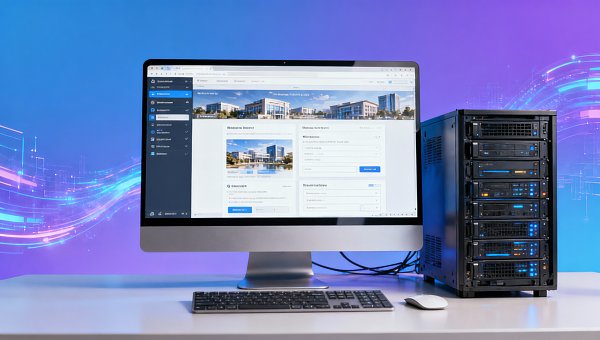
What high-frequency tasks are usually covered by enterprise-grade self-service website building system tutorials?
From the after-sales maintenance perspective, this type of tutorial should not only explain “how to build pages”, but also cover “how to reduce failures, how to avoid rework, and how to ensure marketing continuity”. Common high-frequency tasks are mainly concentrated in the following categories:
First, page content maintenance. This includes updating company profiles, adjusting product categories, publishing news, adding new case studies, modifying contact information, and replacing banners. These operations may seem simple, but they are the most likely to reduce page experience due to formatting confusion, link errors, and oversized images.
Second, permission and account management. Enterprise websites often involve collaboration among the marketing department, customer service department, technical department, and external service providers. Without clear role-based permission allocation, problems such as accidental content deletion, unauthorized editing, and unclear responsibilities can easily occur.
Third, form and data maintenance. If inquiry forms, appointment forms, download forms, and event registration forms are not properly configured, lead generation for sales will be directly affected. Enterprise-grade self-service website building system tutorials usually help maintenance personnel understand field settings, notification mechanisms, data export, and backup logic.
Fourth, basic SEO and marketing coordination. Many after-sales personnel mistakenly believe that SEO belongs only to promotion roles, but in fact basic items such as page titles, descriptions, category paths, image alt text, and redirect rules are all closely related to daily maintenance. The more complete the tutorial is, the more stable the website will be in search visibility and conversion capture.
When judging whether this type of tutorial is useful, what should enterprises focus on?
To determine whether an enterprise-grade self-service website building system tutorial has practical value, enterprises should not only look at whether it is detailed, but whether it addresses role-specific issues, shortens operation paths, and helps establish standard processes. The table below can help after-sales maintenance personnel make a quick judgment:
If a set of enterprise-grade self-service website building system tutorials can both guide specific operations and help the team establish maintenance standards, then the value it brings will go far beyond merely “learning how to edit a few pages”.
What is the difference between enterprise-grade self-service website building system tutorials and ordinary website building tutorials?
The biggest difference between the two lies in their different goals. Ordinary website building tutorials are more focused on “how to build a website” and are suitable for individual webmasters or people encountering websites for the first time; enterprise-grade self-service website building system tutorials are more focused on “how to continuously manage an operating website”, with emphasis on stability, collaboration, permission management, data security, and marketing support.
For after-sales maintenance personnel, websites in an enterprise environment almost never serve only one department. A landing page may be associated with ad placement, a content page may affect search indexing, and a download page may be linked to sales follow-up. Therefore, maintenance work must balance technology, content, and business outcomes. At this point, whether the tutorial includes multi-role collaboration, process management, exception handling, and performance tracking becomes especially critical.
When training internal personnel, some enterprises also introduce management-related materials to help teams build a more complete operational mindset, for example by combining the reading method of research materials such as Research on Tax Planning Issues for Power Grid Enterprises, training personnel to move from “single-point operations” to “systematic judgment”. Although the topics are different, the methods are similar: both emphasize rules, processes, and risk control, rather than focusing only on surface-level actions.
What common pitfalls are easiest to encounter during learning and use?
The first misconception is only knowing how to modify content without checking the results. Many people consider the work done after updating a page, but fail to check mobile display, button links, form submission, search titles, and loading speed. As a result, customers discover the problems first, affecting the professional image.
The second misconception is setting permissions too loosely. For convenience, giving the highest permissions to many people may seem to save effort in the short term, but in the long term it can easily lead to risks such as accidental content deletion, template changes, and style disorder. Enterprise-grade self-service website building system tutorials usually emphasize tiered authorization, which is especially important for after-sales maintenance.
The third misconception is ignoring backup and version management. Especially when campaign pages are iterated frequently and promotional content is revised intensively, without a backup strategy, a single mistaken overwrite may lead to a large amount of rework.
The fourth misconception is separating website maintenance from marketing operations. In fact, whether website updates are timely, whether the page structure is clear, and whether the conversion path is smooth will directly affect SEO performance and advertising conversions. The core of integrated website + marketing services is not simply combining several services together, but creating a closed loop among website building, maintenance, optimization, and customer acquisition.
If an enterprise is preparing for practical implementation, what issues should after-sales maintenance personnel confirm first?
It is recommended to first confirm five aspects. First, whether the system supports low-threshold editing and visual operations, to avoid requiring technical intervention for every change. Second, whether it has clear permission management and log records for easy tracing of issue sources. Third, whether it can conveniently coordinate with marketing links such as SEO, forms, data analytics, and advertising landing pages. Then, confirm whether there are standardized tutorials, training mechanisms, and after-sales support. Finally, check whether the troubleshooting path is clear and whether issues such as images not displaying, pages not opening, or forms not being delivered can be quickly identified.
If an enterprise is in the stage of operating multiple websites, multiple languages, or multiple business lines, then the value of enterprise-grade self-service website building system tutorials becomes even more evident. They not only help individuals get started, but also help teams accumulate processes and reduce the risk of maintenance gaps caused by staff turnover. When necessary, enterprises may also refer to materials such as Research on Tax Planning Issues for Power Grid Enterprises, which emphasize logical structuring and risk identification, so as to elevate website maintenance from an execution task to a systematic task that can be managed, evaluated, and reviewed.
How can tutorials truly be converted into daily work efficiency?
The most effective way is not to learn all the content at once, but to build operation checklists around high-frequency tasks. For example, organize “news publishing workflow”, “campaign page launch checklist”, “form issue troubleshooting steps”, “approval rules for adding permissions”, and “SEO checklist after page updates” into internal standards. In this way, enterprise-grade self-service website building system tutorials are no longer just learning materials, but become reproducible working methods.
For website operations teams pursuing growth, after-sales maintenance is not passive response, but a key support point in the brand and customer acquisition system. Whoever can solve page issues faster, handle traffic more steadily, and manage content more systematically will be more capable of improving customer satisfaction and marketing conversions.
What other questions are suitable to clarify before discussing a solution?
If the next step is to further confirm the specific solution, implementation timeline, training method, service quotation, or cooperation model, it is recommended to first clarify the following questions: what maintenance scenarios the system supports, how long it takes for after-sales personnel to get started, whether standard tutorials and hands-on demonstrations are provided, whether content updates will affect basic SEO settings, whether permission and backup mechanisms are complete, what the response process is when abnormalities occur, and whether it can coordinate smoothly with existing marketing promotion work. Only by clarifying these questions can enterprise-grade self-service website building system tutorials truly serve daily maintenance, customer satisfaction, and long-term growth goals.
Related Articles
 It's easy to turn a foreign trade website into a piece of art, but it's the ultimate culprit behind your order decline
 Foreign trade website efficiency revolution! Yiyingbao component upgrade + inquiry optimization, inquiries surge!
 B2B Must-Know | The Difference Between Demand Gen and Legacy Video Ads



Related Products
 EasyCamp SaaS Smart Website Marketing SystemE-Yingbao SaaS Smart Website Marketing System: AI-powered, zero-code website building. Rapidly launch multilingual independent e-commerce sites in just 10 minutes. Global server acceleration and AI-driven SEO optimization empower businesses to efficiently connect with global markets. The seamless integration of technology and user-friendly operation makes building e-commerce sites incredibly simple.
 AI+SEM Intelligent Advertising Marketing SystemAI+SEM drives intelligent ad creation, empowering full-funnel precision advertising marketing. The system automatically generates weekly/monthly reports, AI recommends keywords and target countries, monitors core metrics in real-time with intelligent alerts, and enables one-click high-conversion ad solutions to help quickly acquire customers and improve ROI.
 AI+SEO Dual Engine Optimization ServiceEasyWin AI+SEO Dual Engine Optimization System leverages AI-powered keyword mining, content generation, and comprehensive technical optimization to help foreign trade enterprises acquire high-quality organic traffic, significantly improving search rankings and conversion rates.
 AI+SNS Social Media Marketing SystemYingbao AI+SNS Social Media Marketing System - Precision social capture for the social media era. Supports one-click content synchronization across major platforms like Facebook and LinkedIn. AI intelligently rewrites posts for enhanced relevance. 24/7 AI customer service and user profiling analysis empower businesses to efficiently expand into global markets.
 AI+SEO营销解决方案易营宝AI+SEO营销解决方案,通过AI批量写作、智能生成TDK、精准关键词扩词等功能,全面优化网站SEO效果,提升流量与转化率。助力企业构建高效智能网站新生态。
 AI+SEM Advertising Marketing SolutionsAI+SEM Advertising Marketing Solution leverages AI technology to deeply empower SEM ad campaigns. It automatically generates weekly/monthly reports using AI, presenting account data across multiple dimensions for comprehensive insights into campaign performance and trends. The system precisely recommends keywords and target countries, intelligently generates high-conversion ad copy, and enables one-click activation of efficient campaign plans to help businesses rapidly acquire customers. Simultaneously, it monitors core metrics in real time, intelligently identifies abnormal fluctuations, and issues timely alerts to ensure stable, high-return advertising results.
 Domain Name ServicesEasyWin provides professional domain name services, including intelligent queries, one-stop registration, brand protection, and full lifecycle management, helping businesses build a digital brand image.
 EasyOperate B2C Cross-Border E-Commerce Platform & Independent WebsiteEasyStore B2C Cross-border E-commerce Independent Store is an intelligent website building and cross-border e-commerce integrated solution independently developed by EasyStore Information Technology (Beijing) Co., Ltd. The system is specially designed for small and medium-sized as well as large export enterprises, integrating 'website building, operation, marketing, advertising, and conversion' into one, helping enterprises quickly establish cross-border e-commerce independent stores to achieve brand globalization and global sales growth.
The platform supports multiple languages, multiple currencies, and multi-channel marketing, with built-in AI intelligent translation and SEO optimization systems, suitable for mainstream markets such as Southeast Asia, Europe and America, Latin America, and the Middle East, assisting Chinese manufacturing enterprises in efficiently deploying international e-commerce strategies. SSL证书易营宝提供专业SSL安全证书服务,包括单域名和泛域名证书,确保网站数据传输加密、身份验证和完整性保护,助力企业建立安全可信的在线业务环境。









