









- Which channel has the highest ROI in the global traffic ecosystem? Comparative analysis of search, social media, and advertisingJul 10, 2026View details
- What multilingual website services are available in Sanya? Which model is more suitable for local businesses going global?Jul 08, 2026View details
- How to view the complete list of China SaaS companies in the top 100? Practical methods for screening website-building and marketing service providersJul 08, 2026View details
- How to view pricing in the global traffic ecosystem? Cost comparison of search, social media, and content channel advertisingJul 06, 2026View details
- How to assess foreign trade website development trends?Looking at 2026 changes from multilingual,AI content to conversion pathsJul 04, 2026View details
- What are the new trends in multilingual marketing data analytics tools in 2026? Focus on attribution、automation and complianceJul 04, 2026View details
- Is Brand Globalization Marketing Consulting Worth Buying? At What Stage Should Companies Bring It InJul 01, 2026View details
- Cross-Border Marketing Trend Research: Why More and More Companies Are Starting to Deploy AI Search and GEO OptimizationJun 30, 2026View details
Which projects should be launched first when quickly building a website?
Building a website quickly isn't just about speed; it's ideal for projects like independent e-commerce websites, corporate websites, and marketing websites where you need to quickly capture market share. Combining SEO optimization techniques, responsive design, and multilingual capabilities allows you to control costs while also improving conversion rates and future growth.
For business decision-makers, project managers, and frontline operations staff, the window for launching a website is often only 7 days, 15 days, or 1 month. Even with thorough preparation, missing key events like trade shows, advertising campaigns, or channel recruitment periods can lead to lost initial inquiries and market opportunities. Therefore, quickly building a website is not about "simplified construction," but rather about efficient implementation focused on prioritizing business goals.
In the integrated website + marketing service scenario, what truly matters is not just how quickly the page is created, but whether it can simultaneously handle search engine crawling, lead generation, mobile access, multilingual expansion, and subsequent campaign coordination. E-Creative Information Technology (Beijing) Co., Ltd., with over 10 years of experience in the industry, has developed integrated solutions encompassing intelligent website building, SEO optimization, social media marketing, and advertising, making it ideal for enterprise projects that require a launch followed by sustained growth.
Which projects are best suited to launch a website quickly first?
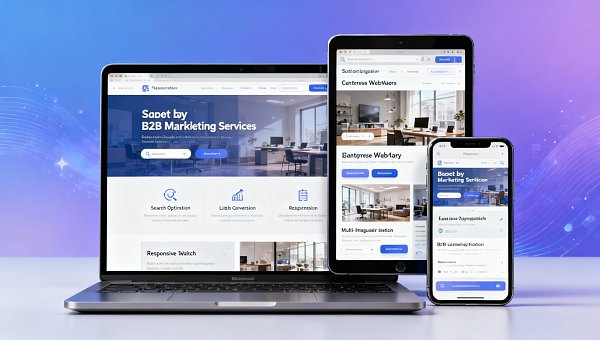
Not all projects need to be developed from scratch. For businesses with clear objectives, tight launch schedules, and moderate functional complexity, quickly building a website usually offers a better return on investment. Especially in scenarios such as foreign trade customer acquisition, brand display, and investment promotion, completing a usable version first is more important than waiting a long time for a "perfect site."
The first type of suitable project is an independent e-commerce website for foreign trade. These websites typically need to be launched within 2 to 4 weeks in English or multilingual formats, and quickly begin to attract organic traffic from Google, advertising, and social media. As long as the product structure is clear and the inquiry path is well-defined, rapid website setup is sufficient to support initial market validation and customer acquisition.
The second category is corporate website construction. For manufacturing, equipment manufacturing, and service companies, the primary task of a website is often to establish a credible image, showcase their business scope, and provide a contact portal. In this case, it is even more important to complete the brand facade construction within 10 to 20 days, rather than excessively consuming budget and time on functional details.
The third category is marketing websites, such as new product promotion pages, franchise recruitment pages, and event-specific websites. These projects usually have clear conversion goals, and keeping the number of pages between 5 and 20 facilitates rapid execution. If forms, tracking points, basic SEO settings, and customer service entry points are configured simultaneously, effective leads can often begin to be collected within one week of going live.
Commonly compatible project types
The table below helps businesses quickly determine during the project initiation phase whether to prioritize rapid deployment or continue with custom development. The judgment criteria are not solely based on budget, but rather on factors such as business timeliness, page depth, system integration, and the clarity of marketing objectives.
If a project involves complex ERP integration, closed-loop membership transactions, and hundreds of custom business processes, rapid deployment may not be the best option. However, if the core objective is to first showcase the product, acquire customers, and establish an online presence, then rapid deployment is usually more in line with the business rhythm.
The 3 most important outcomes for projects that go live quickly
Many businesses mistakenly believe that "speed" means sacrificing quality. In reality, truly mature rapid website building projects typically revolve around three outcomes: being found, being trusted, and generating conversions. As long as these three points are achieved, the initial website version has commercial value, and subsequent upgrades can be implemented in stages.
The first is search visibility. The website's homepage, product pages, application pages, and contact pages should at least have basic title settings, keyword placement, URL standardization, image ALT information, and internal linking logic. Typically, a website with around 10 pages should initially have at least 20 to 50 core and long-tail keywords to ensure search engines can effectively understand the page's theme after launch.
Secondly, there's brand trust. B2B websites, especially, can't just be filled with pictures and slogans. Company introduction, service capabilities, project experience, delivery scope, contact information, FAQs, and inquiry forms are fundamental modules. For industrial companies expanding overseas, regional coverage maps, case study structures, and data presentation can further enhance overseas clients' intuitive understanding of their supply capabilities.
Third, the conversion path should be clear. The fewer steps a visitor takes from entering the page to submitting a lead, the better. A common practice is to keep it to three steps or less: browsing information, clicking to inquire, and submitting a form. If multilingual support, WhatsApp, or email are needed, these should be clearly displayed on the first screen or a fixed area on the right to minimize drop-off.
Key page modules suitable for B2B projects
- Homepage: Highlights value proposition, core business, service areas, and main conversion entry points.
- Product or service pages: It is recommended to expand them into a 3-layer structure, namely category page, details page, and application scenario page.
- About Us: Showcases the company's founding date, headquarters location, team capabilities, and service philosophy.
- Contact page: Include at least two of the following methods: forms, email, telephone, or instant messaging.
How to integrate display logic into industrial overseas websites
For industrial companies expanding overseas, a website is not just a business card, but also a digital business portal. For example, a page for heavy vehicles and logistics solutions targeting overseas buyers is suitable for including information on supply scale, product portfolio, service regions, and contact information, helping bulk purchasing clients make informed decisions about cooperation in a short time.
Integrating interactive maps, customer logo displays, data dashboards, and professional consultation forms into the page not only strengthens the sense of global reach but also helps improve the quality of inquiries. This type of content doesn't necessarily require complex development and can be quickly implemented using a responsive framework.
How to determine if a rapid website building solution takes into account future growth?
Many projects launch quickly, but need to be redone after three months. The reason is often not a design problem, but rather that the underlying structure cannot support SEO, content expansion, and marketing campaigns. For business decision-makers, when choosing a rapid website building solution, they must consider both "readiness for immediate launch" and "potential for future growth."
First, consider page scalability. A website suitable for long-term operation should at least support adding new sections, batch publishing of content, multilingual page expansion, customizable form fields, and basic data tracking. Otherwise, operating costs will increase significantly when the number of products increases from 20 to 100.
Secondly, consider the mobile experience. While B2B customers primarily access the platform via desktop, 30% to 60% of initial visits actually come from mobile devices, especially ad clicks, social media redirects, and QR code scans at trade shows. Inadequate responsive design, such as misaligned home screens, difficult-to-reach buttons, and slow loading times, will directly impact conversion rates.
Let's revisit content management efficiency. Users and maintenance personnel should be able to learn how to update basic content such as news, products, case studies, and contact information within one day. An overly complex backend can lead to a website that, although launched, remains unmaintained for extended periods, ultimately impacting search performance and user experience.
Six capabilities to check during product selection
The table below is suitable for use when selecting suppliers or evaluating solutions, and is especially suitable for project managers, after-sales maintenance personnel, and team members responsible for subsequent operations to participate in the judgment.
If only one or two of the above four criteria are met, the website is likely just a "display page" and unlikely to become a true marketing asset. Conversely, solutions that balance launch efficiency with ongoing operational capabilities are usually more suitable for medium- to long-term investments.
Implementation process and risk control for rapid website setup
A mature rapid website building project should not involve endless rework and constant modifications, but rather a phased approach. A common practice can be broken down into five steps: requirements gathering, page planning, content preparation, development deployment, and testing and launch. Each step should have deliverables to consistently keep the project timeline between two and four weeks.
During the requirements gathering phase, businesses should clarify three core questions: What is the website's primary goal? Who are the target customers? And who will maintain it after launch? If these three points are unclear, subsequent issues such as repeated adjustments to website sections, complete redesigns of page structures, and inconsistent form logic are highly likely to arise.
During the content preparation phase, it is recommended to prioritize completing five basic categories of information: company introduction, core services, product categories, application scenarios, and contact information. For projects with a large number of products, it is advisable to launch 20% to 30% of the core content first, and then gradually expand according to search demand, rather than waiting for all information to be complete before starting.
During the testing and launch phase, at least four types of issues should be checked: mobile app compatibility, form submission functionality, page loading stability, and the completeness of basic search information. For e-commerce websites, multilingual support, time zone compatibility, and overseas access speed should also be included in the pre-launch checklist.
Recommended delivery steps
- Days 1-3: Determine the site structure, number of sections, main keyword direction, and visual style.
- Days 4-10: Complete the development of the homepage, core inner pages, forms, and mobile adaptation.
- Days 11-15: Enter content, improve basic SEO settings, complete testing and release.
- Days 16-30: Supplement pages based on visit data, optimize conversion paths, and launch promotions.
3 common misconceptions
- Myth 1: Thinking that a pretty homepage is enough. In reality, product pages and contact pages often determine the quality of inquiries.
- Myth 2: Doing everything at once. The first version of a website should prioritize launching convertible content, rather than pursuing information overload.
- Myth 3: Neglecting maintenance responsibilities. If no one continues to update the website, its value will significantly decrease after 3 months.
For businesses that need to balance website building and marketing, having a single service team coordinate site management, SEO, content creation, and ad placement makes it easier to reduce communication breakdowns. This is especially true for service providers like EasyCare, which offer intelligent website building and global digital marketing solutions; they are particularly suitable for projects that prioritize efficiency, collaboration, and future growth.
What questions should businesses ask when purchasing rapid website building services?
When procuring website services, the real factors influencing the outcome are often not the price itself, but whether the delivery boundaries are clearly defined and whether the operational capabilities are sustainable. This is especially true for distributors, agents, industrial enterprises, and overseas expansion teams, who typically need to handle search engine optimization, content marketing, and customer inquiries after the website goes live. Therefore, it is crucial to thoroughly understand and address key issues during the procurement phase.
First, clarify whether the solution supports future growth. For example, is it scalable to multiple languages? Is it easy to add landing pages? Does it support consultation form allocation? Is it easy to update content for future SEO? A cheap, non-scalable solution may have subsequent rebuild costs exceeding double the initial investment.
Secondly, clarify the delivery standards. It's recommended to specify the number of pages, the number of languages, the number of revision rounds, the items to be tested before launch, and the after-sales response time. For example, a common project might agree on two rounds of design adjustments, one round of testing and rectification, and a technical response within 24 hours. This helps project managers better control the progress.
Third, it's crucial to ascertain whether they possess a marketing mindset. Being able to build a website doesn't equate to being able to acquire customers. If a service provider can only deliver web pages but cannot coordinate keyword placement, conversion structure, ad handling, and content planning, the website will easily remain at the "launch complete" level, failing to generate sustained inquiries.
FAQ: Frequently Asked Questions about Quick Website Building
How long does it typically take to quickly build and launch a website?
A standard corporate website typically takes 7 to 20 days to complete, while independent websites for foreign trade and marketing websites usually take 14 to 30 days. If multiple languages are involved, there are many product pages, or complex form logic, the timeframe will increase accordingly, but the core version can still be launched first.
Will rapid website creation negatively impact subsequent SEO performance?
The key is not speed, but whether the structure is standardized. As long as the page hierarchy, titles and descriptions, content layout, internal linking, and mobile experience are handled properly, a quickly built website can still have a good search foundation and support subsequent content expansion.
Which businesses are not suitable for rapid website building?
If the project requires deep integration with business systems, complex online transaction loops, highly personalized membership logic, or extensive customized interactions, custom development is recommended. However, if the core objectives are brand promotion, lead generation, overseas customer acquisition, and channel integration, a rapid launch is usually more suitable.
How can industrial enterprises make their websites more trustworthy?
It is recommended to highlight production capacity, business coverage areas, delivery processes, core product categories, service scenarios, and consultation channels. For industrial export pages, such as those for heavy vehicles and logistics , adding a search center, map display, and data-driven information can further improve the decision-making efficiency for B2B clients.
Building a website quickly is truly suitable for projects that need to go live, validate, and acquire customers first, rather than blindly pursuing low cost or superficial speed. For independent websites for foreign trade, corporate websites, and marketing websites, as long as responsive design, multilingual capabilities, search engine optimization, and conversion paths are all taken into account, a sustainable online presence can be established in a relatively short period.
If you are evaluating your website development cycle, launch strategy, or subsequent marketing coordination plan, we recommend that you outline your website structure, content priorities, and promotion plan as early as possible, in conjunction with your business objectives. Leveraging the integrated service capabilities of EasyCare Information Technology (Beijing) Co., Ltd., businesses can more efficiently bridge the gap between website building and customer acquisition. Contact us today for customized solutions and implementation suggestions tailored to your project stage.
Related Articles
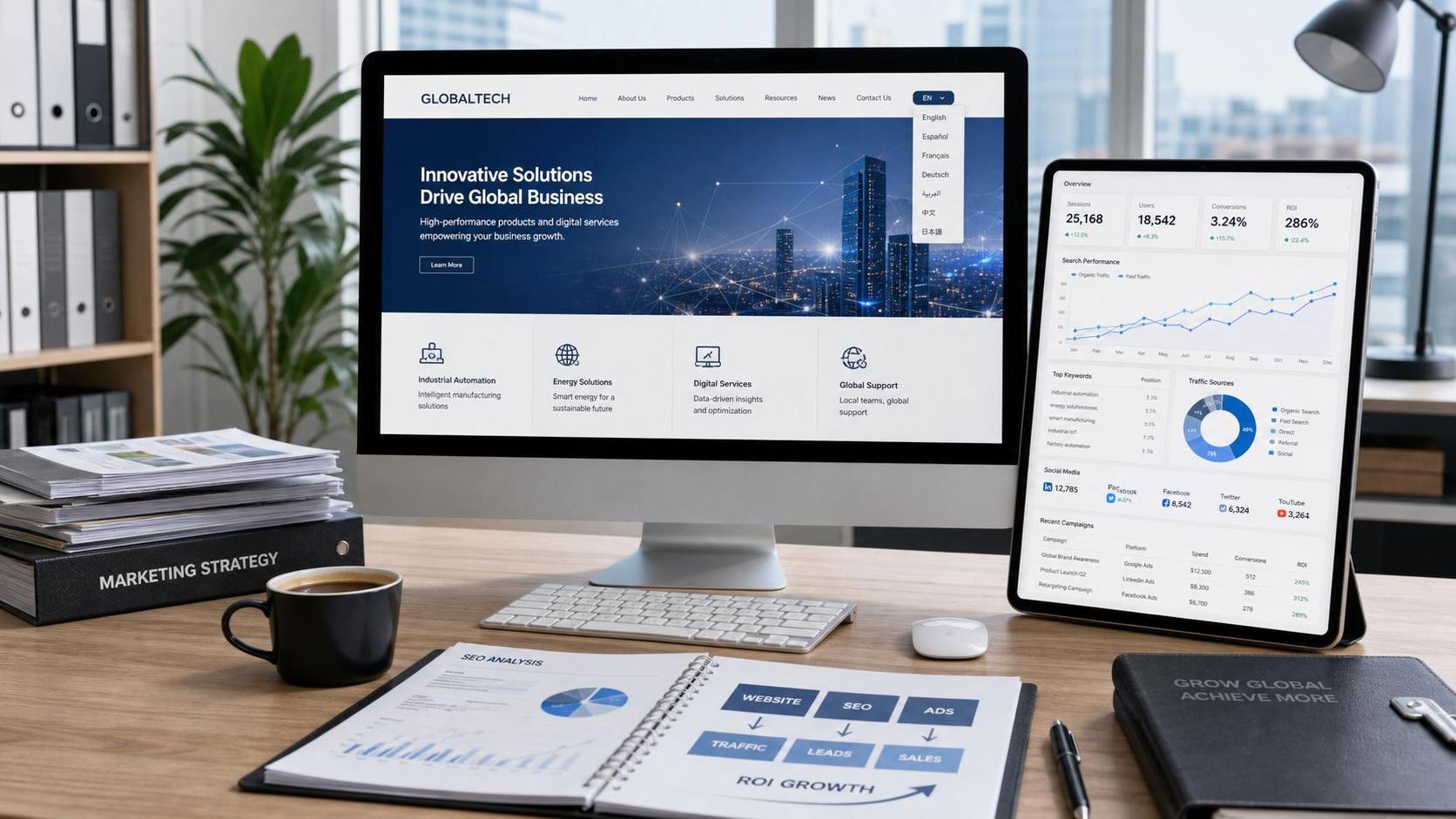
 Which channel has the highest ROI in the global traffic ecosystem? Comparative analysis of search, social media, and advertising
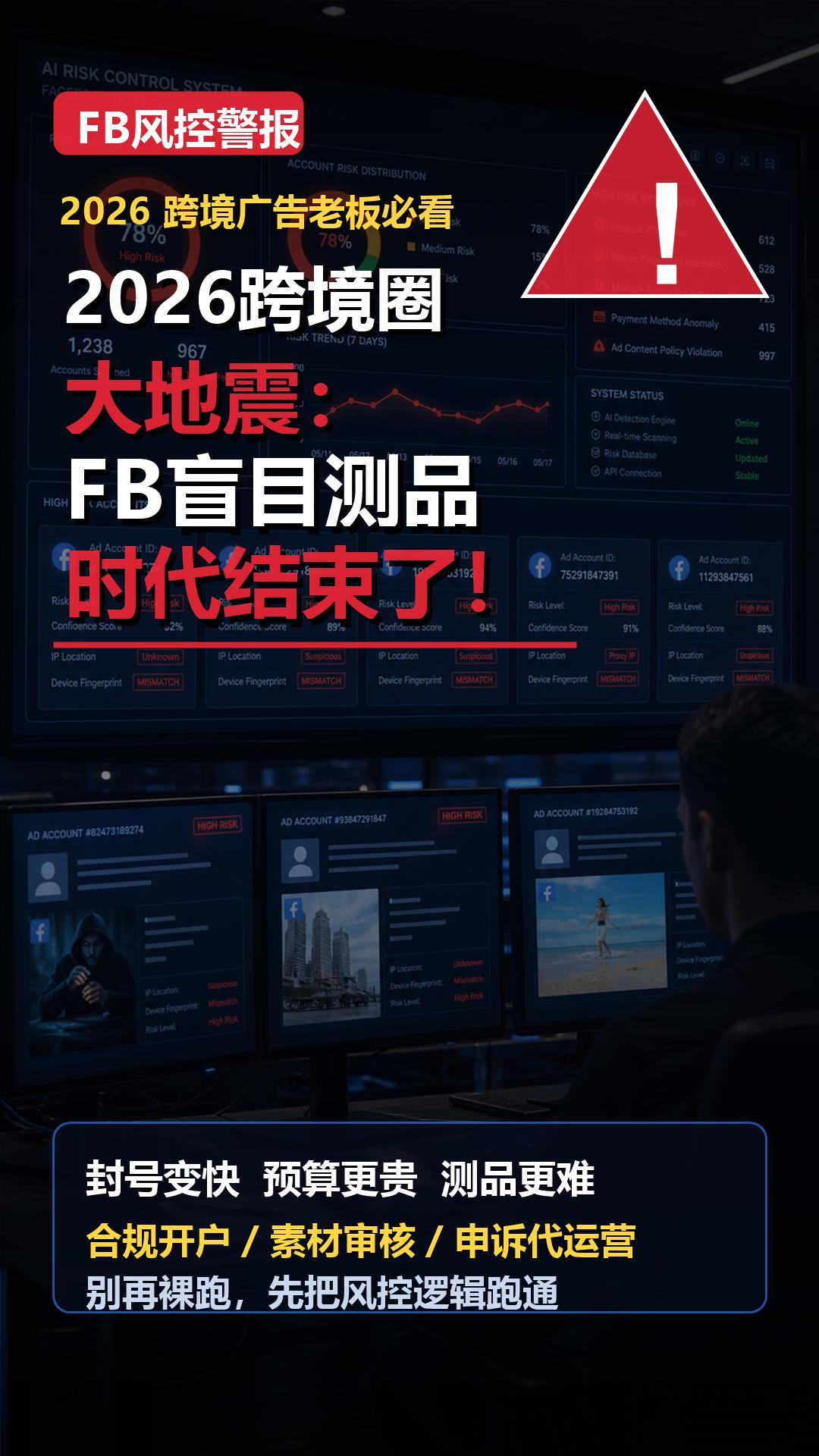
 The Era of Cross-Border Earthquakes in 2026: The Era of Blindly Testing FB Products Has Ended!
 Three key points of domestic-to-foreign trade most important, see if you really did your homework! Don’t take shortcuts.

Related Products
 EasyCamp SaaS Smart Website Marketing SystemE-Yingbao SaaS Smart Website Marketing System: AI-powered, zero-code website building. Rapidly launch multilingual independent e-commerce sites in just 10 minutes. Global server acceleration and AI-driven SEO optimization empower businesses to efficiently connect with global markets. The seamless integration of technology and user-friendly operation makes building e-commerce sites incredibly simple.
 AI+SEM Intelligent Advertising Marketing SystemAI+SEM drives intelligent ad creation, empowering full-funnel precision advertising marketing. The system automatically generates weekly/monthly reports, AI recommends keywords and target countries, monitors core metrics in real-time with intelligent alerts, and enables one-click high-conversion ad solutions to help quickly acquire customers and improve ROI.
 AI+SEO Dual Engine Optimization ServiceEasyWin AI+SEO Dual Engine Optimization System leverages AI-powered keyword mining, content generation, and comprehensive technical optimization to help foreign trade enterprises acquire high-quality organic traffic, significantly improving search rankings and conversion rates.
 AI+SNS Social Media Marketing SystemYingbao AI+SNS Social Media Marketing System - Precision social capture for the social media era. Supports one-click content synchronization across major platforms like Facebook and LinkedIn. AI intelligently rewrites posts for enhanced relevance. 24/7 AI customer service and user profiling analysis empower businesses to efficiently expand into global markets.
 AI+SEO营销解决方案易营宝AI+SEO营销解决方案,通过AI批量写作、智能生成TDK、精准关键词扩词等功能,全面优化网站SEO效果,提升流量与转化率。助力企业构建高效智能网站新生态。
 AI+SEM Advertising Marketing SolutionsAI+SEM Advertising Marketing Solution leverages AI technology to deeply empower SEM ad campaigns. It automatically generates weekly/monthly reports using AI, presenting account data across multiple dimensions for comprehensive insights into campaign performance and trends. The system precisely recommends keywords and target countries, intelligently generates high-conversion ad copy, and enables one-click activation of efficient campaign plans to help businesses rapidly acquire customers. Simultaneously, it monitors core metrics in real time, intelligently identifies abnormal fluctuations, and issues timely alerts to ensure stable, high-return advertising results.
 Domain Name ServicesEasyWin provides professional domain name services, including intelligent queries, one-stop registration, brand protection, and full lifecycle management, helping businesses build a digital brand image.
 EasyOperate B2C Cross-Border E-Commerce Platform & Independent WebsiteEasyStore B2C Cross-border E-commerce Independent Store is an intelligent website building and cross-border e-commerce integrated solution independently developed by EasyStore Information Technology (Beijing) Co., Ltd. The system is specially designed for small and medium-sized as well as large export enterprises, integrating 'website building, operation, marketing, advertising, and conversion' into one, helping enterprises quickly establish cross-border e-commerce independent stores to achieve brand globalization and global sales growth.
The platform supports multiple languages, multiple currencies, and multi-channel marketing, with built-in AI intelligent translation and SEO optimization systems, suitable for mainstream markets such as Southeast Asia, Europe and America, Latin America, and the Middle East, assisting Chinese manufacturing enterprises in efficiently deploying international e-commerce strategies. SSL证书易营宝提供专业SSL安全证书服务,包括单域名和泛域名证书,确保网站数据传输加密、身份验证和完整性保护,助力企业建立安全可信的在线业务环境。









