









- Which channel has the highest ROI in the global traffic ecosystem? Comparative analysis of search, social media, and advertisingJul 10, 2026View details
- What multilingual website services are available in Sanya? Which model is more suitable for local businesses going global?Jul 08, 2026View details
- How to view the complete list of China SaaS companies in the top 100? Practical methods for screening website-building and marketing service providersJul 08, 2026View details
- How to view pricing in the global traffic ecosystem? Cost comparison of search, social media, and content channel advertisingJul 06, 2026View details
- How to assess foreign trade website development trends?Looking at 2026 changes from multilingual,AI content to conversion pathsJul 04, 2026View details
- What are the new trends in multilingual marketing data analytics tools in 2026? Focus on attribution、automation and complianceJul 04, 2026View details
- Is Brand Globalization Marketing Consulting Worth Buying? At What Stage Should Companies Bring It InJul 01, 2026View details
- Cross-Border Marketing Trend Research: Why More and More Companies Are Starting to Deploy AI Search and GEO OptimizationJun 30, 2026View details
Do website-building agencies need technical skills, and where do bottlenecks usually occur?
Many people ask: Does a website-building agency need technical expertise? The real bottlenecks are often not just in building the site itself, but more in the B2B foreign trade website solution, why website loading speed is so important, and the coordination of subsequent marketing conversions. Choosing the right one-stop marketing platform provider helps avoid unnecessary detours.
For users, project owners, business management teams, and channel partners, what truly determines whether a project succeeds or fails is often not “whether they can build pages,” but whether they can connect website building, content, traffic, data, and conversion into one complete chain. Especially in the integrated website + marketing services industry, if an agency only understands front-end presentation but does not understand delivery processes, performance optimization, and follow-up customer acquisition, the project can easily get stuck during the critical window from day 30 to day 90 after launch.
From a market practice perspective, a website-building agency does not necessarily need to write code personally, but it must have basic technical judgment, solution integration capabilities, and marketing collaboration awareness. Since its establishment in 2013, Yiyingbao Information Technology (Beijing) Co., Ltd. has long provided full-chain services centered on intelligent website building, SEO optimization, social media marketing, and advertising placement. This kind of integrated capability is exactly the key to whether the current agency model can achieve sustainable growth.
Whether a website-building agency needs technical knowledge depends on how much technical understanding is required

Many people understand “technology” as being able to write programs, deploy servers, and modify databases. But for most website-building agencies, what matters more is understanding the boundaries of technology. In other words, you do not necessarily need to know development, but you must understand what impact basic elements such as domain name resolution, HTTPS certificates, CDN acceleration, form tracking, page indexing, and mobile adaptation each have on outcomes.
If an agency has no technical understanding at all, common problems usually break out in 3 areas: first, overpromising during the pre-sales stage; second, being unable to judge whether requirements are reasonable during delivery; third, being unable to explain the causes when problems such as slow speed, poor indexing, and few inquiries appear after launch. The result is that a project cycle originally expected to take 7 to 15 days gets dragged out to 4 weeks or even longer.
Conversely, if an agency has “solution-level technical awareness,” it can connect suppliers and clients more efficiently. For example, understanding the difference between a showcase website and a marketing website, and knowing that a B2B foreign trade site needs multiple languages, inquiry forms, search structure, and landing page expansion, can usually improve client communication efficiency by more than 30%, while also significantly reducing the probability of rework.
4 basic capabilities that a website-building agency should at least master
- Understanding website structure: Be able to distinguish the different purposes of the homepage, product pages, case study pages, article pages, and landing pages, and know that controlling navigation depth within 2 to 3 levels is more beneficial for user browsing and search crawling.
- Basic performance judgment: Understand that image compression, caching strategies, server nodes, and the number of scripts affect above-the-fold loading, and be able to identify the risk when loading speed exceeds 3 seconds.
- Marketing collaboration awareness: Understand that SEO, social media traffic generation, and advertising are not add-ons after the website is built, but conversion paths that should be included in planning before launch.
- Data tracking awareness: Understand conversion tracking points such as form submissions, phone clicks, WhatsApp redirects, and source channel tagging; otherwise, it will be difficult to review the effectiveness of marketing investment after the website goes live.
This is also why more and more agencies choose to cooperate with service providers that have integrated website-building and marketing capabilities, rather than simply purchasing templates or hiring scattered outsourcing resources. Because what clients are really buying is not a webpage, but a digital solution that can continuously generate business leads.
Common project bottlenecks are not about “whether it can be done,” but about “whether the solution is complete”
In actual delivery, the most common bottlenecks website-building agencies encounter are often not that pages cannot be created, but that the target market, content structure, language versions, conversion paths, and follow-up promotion methods were not planned together in advance. Especially for B2B foreign trade projects, if only the visual aspect of being “good-looking” is considered while keyword layout and lead capture are ignored, the website can easily fall into a situation of “having traffic but no inquiries” after launch.
The table below can help agencies quickly determine where a website project usually gets stuck and who should solve the corresponding issue.
As can be seen from the table, what truly affects project efficiency is not a single production action, but whether the 3 stages of requirement definition, content preparation, and operational setup form a closed loop. If an agency misses just 1 of these links, the client experience will be noticeably discounted.
3 misconceptions most easily overlooked in B2B foreign trade website building
Misconception 1: Treating the corporate website as an electronic brochure
Many corporate websites contain only a company profile, a few product images, and contact information, with fewer than 10 pages in total. This kind of structure is difficult to cover industry search needs and also hard to support buyer comparison. B2B websites are better suited to be built around product series, application scenarios, certification materials, delivery capabilities, and FAQs.
Misconception 2: Going live first and considering promotion later
If the website structure does not reserve article sections, landing page templates, and conversion entry points during construction, adding SEO or ad pages later will require a secondary redesign. One redesign usually increases communication and production costs by 20% to 50%.
Misconception 3: Ignoring the service provider’s collaboration capability
If website building, traffic acquisition, social media, and data analysis are handed over to different teams, inconsistent messaging and unclear responsibility boundaries often arise. For agencies, choosing a platform that can provide full-chain support can significantly reduce after-sales pressure and the risk of projects getting out of control.
Why website loading speed is so important: it directly affects inquiries and advertising efficiency
In integrated website + marketing service projects, speed is not a technical detail, but the foundation of conversion. If the above-the-fold loading time of a page exceeds 3 seconds, the probability of users leaving increases significantly; if it exceeds 5 seconds on mobile devices or in overseas network environments, the waste of traffic after ad clicks becomes even more severe. For agencies, speed issues are often the most direct client complaint and also the hardest part to explain.
A slow website loading speed affects at least 4 aspects: search crawling frequency, user dwell time, ad landing page quality, and overseas access stability. Especially in scenarios such as major e-commerce promotions, media content distribution, or global business operations, traffic fluctuations become more obvious. If bandwidth and traffic costs are not planned in advance, the project budget can easily get out of control.
At this time, resource solutions such as Website Traffic Packages that integrate seamlessly with the website-building system are not just “cloud resource procurement,” but an important part of stabilizing marketing campaigns. For websites with periodic traffic peaks, prepaying to lock in traffic costs, prioritizing deductions for outbound traffic, and supporting consolidated management across multiple accounts can help agencies and enterprises make budget and operations arrangements in advance.
Main factors affecting website speed
- Server and node deployment: If the target market is in Southeast Asia, Europe, or North America, different access node choices can create latency differences of 100ms to 300ms or more.
- Page resource size: If a single page contains too many images, videos, and JS scripts, and the homepage size exceeds 4MB, the mobile experience usually declines significantly.
- Traffic strategy configuration: Usage-based billing can easily lead to uncontrollable costs in fluctuating scenarios, while balance alerts and anomaly monitoring can reduce sudden risks.
- Third-party tool calls: Too many online customer service tools, analytics scripts, and map plugins can lengthen the request chain and affect page stability.
For agencies, speed optimization does not mean blindly stacking configurations, but matching resources according to business traffic peaks. For example, content sites, corporate sites, and advertising landing pages have different traffic models, so the appropriate caching, bandwidth, and monitoring strategies also differ. 7×24 traffic anomaly detection and real-time balance alerts are often more practical than simply increasing bandwidth one time.
If an agency team needs to serve multiple clients and multiple websites, it should also focus on API support, BI data integration, and automated procurement capabilities. In this way, when 5, 10, or even more projects are running in parallel, traffic consumption and budget management will not become an operational blind spot.
How website-building agencies can choose a one-stop supplier and avoid the easy pre-sales but difficult after-sales trap
For distributors, resellers, and project managers, the biggest concern when choosing a supplier is that pre-sales promises everything while after-sales cannot fill the gaps. A truly reliable one-stop platform is not one with a long feature list, but one that has clear response mechanisms and executable processes from website building to promotion, from content to data, and from delivery to maintenance.
With more than 10 years of deep industry experience, Yiyingbao Information Technology (Beijing) Co., Ltd. offers more than just intelligent website-building tools. Its real advantage lies in combining AI and big data capabilities with localized services to form a full-chain solution that coordinates website building, SEO, social media marketing, and advertising placement. For agencies hoping to build long-term client operations, this model is better suited to amplifying repurchase and renewal value.
The table below is suitable for agencies to use for internal evaluation when screening partner platforms.
From a procurement perspective, what deserves the most attention is the integration of “delivery + marketing + operations and maintenance,” rather than looking only at the unit price of website building. This is because every additional round of rework, reinvestment, or redesign later will increase the overall cost.
5 key questions recommended for review
- Whether it supports subsequent content expansion and can continuously add new sections, pages, and campaign topics within 3 months.
- Whether it has multilingual and cross-border compliance support, especially suitable for foreign trade and global business scenarios.
- Whether it can connect on-site data with BI systems or advertising data, making it easier for management to evaluate input-output performance.
- Whether it has an experienced technical support team and can respond quickly when access anomalies or form failures occur.
- Whether it can provide agencies with standardized pre-sales materials, presentation logic, and implementation rhythm, reducing internal training costs.
If these questions are not clearly discussed before cooperation, the project may appear to be a “successful deal,” but in reality it only postpones complex problems to the after-sales stage.
From launch to conversion, what website-building agencies need more is a replicable operational closed loop
The real profit for agencies does not come from one-time delivery, but from subsequent operational services, content updates, promotional coordination, and client renewals. Therefore, to judge whether a website-building project is successful, it is not enough to see whether it launched on time; it is also necessary to see whether a trackable, iterative, and scalable lead-generation closed loop has formed within 30 days, 60 days, and 90 days after launch.
A mature closed loop usually includes at least 5 steps: goal definition, website setup, content launch, traffic acquisition, and data review. Each step must have clear responsible roles and time nodes. For example, the first month focuses on indexing and speed, the second month optimizes inquiry conversion, and the third month fine-tunes pages and promotional strategies based on source data.
An implementation rhythm suitable for agencies to replicate
Phase 1: Requirement and structure confirmation
It is recommended to spend 3 to 5 working days completing planning for the market, products, languages, and sections, and determining the core page list. At this stage, form fields, online communication methods, and follow-up promotion directions should also be confirmed simultaneously to avoid secondary rework.
Phase 2: Website building and performance configuration
Complete page production, mobile adaptation, basic speed testing, tracking setup, and security configuration within 7 to 15 days. If the client has phased campaigns or advertising plans, separate landing pages and resource assurance plans should be prepared in advance.
Phase 3: Content and promotion coordination
The first 90 days after launch are the critical observation period. It is recommended to update 4 to 8 pieces of content every month, continuously optimize product pages and FAQ pages, and conduct source analysis combined with SEO or advertising channels. If website traffic has peak fluctuations, resource packages can be added according to budget strategy to reduce the uncertainty caused by usage-based charges.
For teams pursuing scaled management, solutions such as Website Traffic Packages that support automatic renewals, balance alerts, API procurement, and data integration are more suitable for parallel management of multiple projects, and also help incorporate technical resources into standardized operational processes.
FAQ: Several practical questions agencies often ask
Can you still operate as a website-building agency without a technical team?
Yes, but the premise is that you must have basic technical judgment and choose a partner with a complete delivery and after-sales system. Not developing by yourself does not mean completely failing to understand the process and risk points.
How many pages does a B2B foreign trade website generally need to be more practical?
A common recommended starting configuration is between 15 and 30 pages, including the homepage, about us, product categories, product details, case studies, FAQ, article sections, and contact page. If there are too few pages, it is difficult to support search and conversion.
What is a reasonable delivery timeline?
A standard corporate website usually takes 7 to 15 days. When multiple languages, complex product structures, or custom functions are involved, 2 to 4 weeks is more common. The key is not speed, but clear requirements, complete content preparation, and clear acceptance milestones.
What capability should agencies strengthen first?
Prioritize strengthening “solution understanding” and “conversion thinking.” Because what clients buy is not just a website, but the possibility of business growth. If you can only introduce templates but cannot explain the target market, traffic paths, and lead capture, both closing deals and renewals will be affected.
Does a website-building agency need technical expertise? The answer is not simply “yes” or “no,” but that it must have sufficient technical awareness, project collaboration capability, and marketing execution capability. The real bottlenecks usually lie in unclear requirements, unstable speed, insufficient content, and incomplete conversion chains, rather than in the inability to create the pages themselves.
For business decision-makers, project managers, and channel agencies, choosing an integrated service provider with intelligent website building, SEO optimization, social media marketing, advertising placement, and operational support is more conducive to controlling timelines, reducing rework, and improving inquiry quality. If you are evaluating a website-building agency model or looking for a more reliable cooperation solution, it is recommended to sort out your requirements as soon as possible based on your business scenario, obtain a customized solution, and further understand the solution path that is more suitable for your own business.
Related Articles
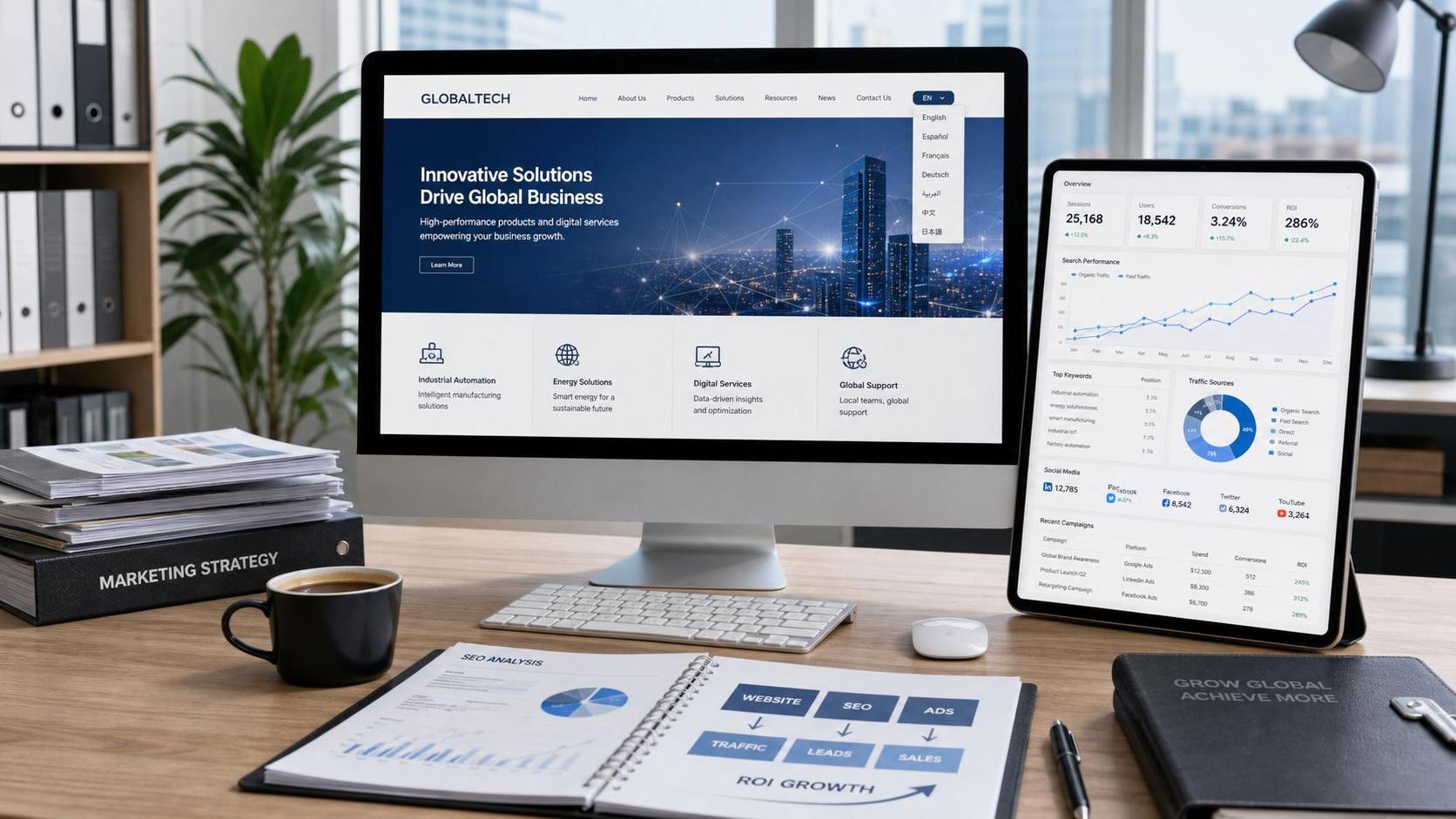
 Which channel has the highest ROI in the global traffic ecosystem? Comparative analysis of search, social media, and advertising
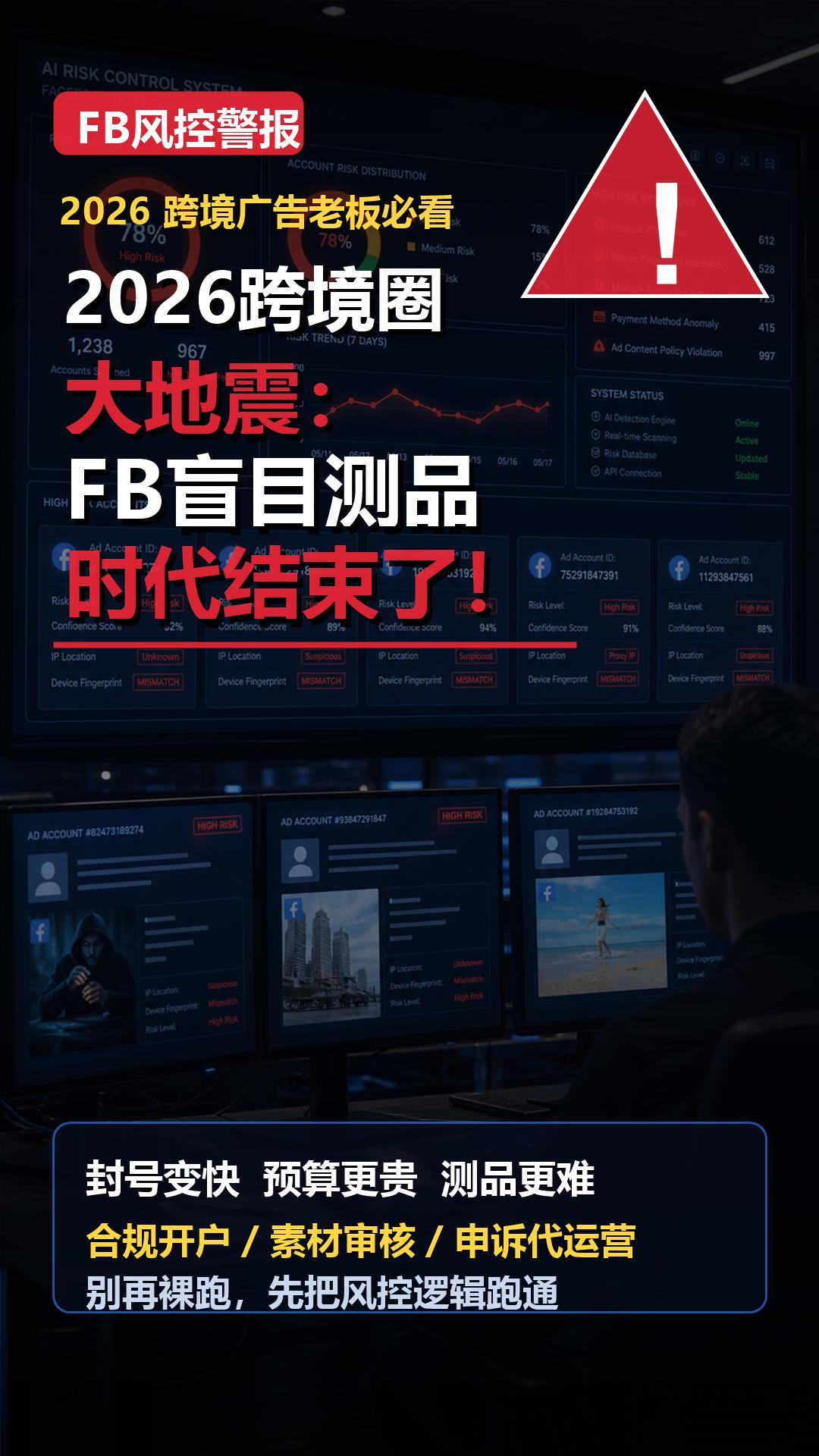
 The Era of Cross-Border Earthquakes in 2026: The Era of Blindly Testing FB Products Has Ended!
 Three key points of domestic-to-foreign trade most important, see if you really did your homework! Don’t take shortcuts.

Related Products
 EasyCamp SaaS Smart Website Marketing SystemE-Yingbao SaaS Smart Website Marketing System: AI-powered, zero-code website building. Rapidly launch multilingual independent e-commerce sites in just 10 minutes. Global server acceleration and AI-driven SEO optimization empower businesses to efficiently connect with global markets. The seamless integration of technology and user-friendly operation makes building e-commerce sites incredibly simple.
 AI+SEM Intelligent Advertising Marketing SystemAI+SEM drives intelligent ad creation, empowering full-funnel precision advertising marketing. The system automatically generates weekly/monthly reports, AI recommends keywords and target countries, monitors core metrics in real-time with intelligent alerts, and enables one-click high-conversion ad solutions to help quickly acquire customers and improve ROI.
 AI+SEO Dual Engine Optimization ServiceEasyWin AI+SEO Dual Engine Optimization System leverages AI-powered keyword mining, content generation, and comprehensive technical optimization to help foreign trade enterprises acquire high-quality organic traffic, significantly improving search rankings and conversion rates.
 AI+SNS Social Media Marketing SystemYingbao AI+SNS Social Media Marketing System - Precision social capture for the social media era. Supports one-click content synchronization across major platforms like Facebook and LinkedIn. AI intelligently rewrites posts for enhanced relevance. 24/7 AI customer service and user profiling analysis empower businesses to efficiently expand into global markets.
 AI+SEO营销解决方案易营宝AI+SEO营销解决方案,通过AI批量写作、智能生成TDK、精准关键词扩词等功能,全面优化网站SEO效果,提升流量与转化率。助力企业构建高效智能网站新生态。
 AI+SEM Advertising Marketing SolutionsAI+SEM Advertising Marketing Solution leverages AI technology to deeply empower SEM ad campaigns. It automatically generates weekly/monthly reports using AI, presenting account data across multiple dimensions for comprehensive insights into campaign performance and trends. The system precisely recommends keywords and target countries, intelligently generates high-conversion ad copy, and enables one-click activation of efficient campaign plans to help businesses rapidly acquire customers. Simultaneously, it monitors core metrics in real time, intelligently identifies abnormal fluctuations, and issues timely alerts to ensure stable, high-return advertising results.
 Domain Name ServicesEasyWin provides professional domain name services, including intelligent queries, one-stop registration, brand protection, and full lifecycle management, helping businesses build a digital brand image.
 EasyOperate B2C Cross-Border E-Commerce Platform & Independent WebsiteEasyStore B2C Cross-border E-commerce Independent Store is an intelligent website building and cross-border e-commerce integrated solution independently developed by EasyStore Information Technology (Beijing) Co., Ltd. The system is specially designed for small and medium-sized as well as large export enterprises, integrating 'website building, operation, marketing, advertising, and conversion' into one, helping enterprises quickly establish cross-border e-commerce independent stores to achieve brand globalization and global sales growth.
The platform supports multiple languages, multiple currencies, and multi-channel marketing, with built-in AI intelligent translation and SEO optimization systems, suitable for mainstream markets such as Southeast Asia, Europe and America, Latin America, and the Middle East, assisting Chinese manufacturing enterprises in efficiently deploying international e-commerce strategies. SSL证书易营宝提供专业SSL安全证书服务,包括单域名和泛域名证书,确保网站数据传输加密、身份验证和完整性保护,助力企业建立安全可信的在线业务环境。









